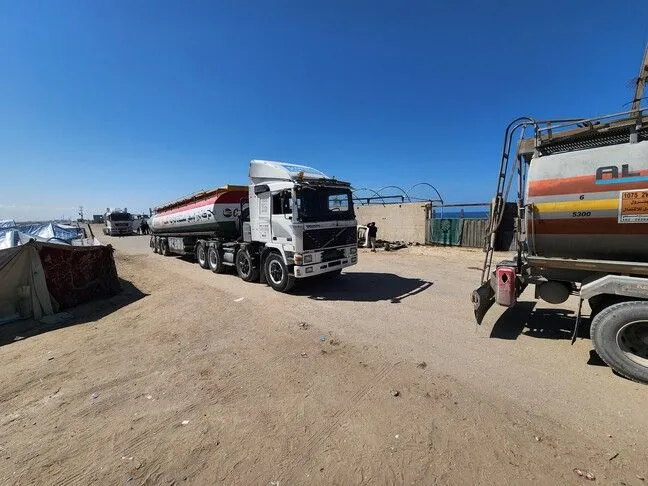
周四,加沙地带政府媒体办公室否认曾对商业运输卡车征收税费,指责以色列散布不实言论以为其限制物资入境的行为寻找借口,并要求以色列必须允许每天有600辆卡车进入加沙。这一表态是对以色列政府巴勒斯坦领土事务协调员约拉姆·哈列维周三言论的回应。哈列维称,加沙当局向商人征收费用,还实施了管控现金交易的措施。
The Government Media Office in the Gaza Strip on Thursday denied imposing taxes or fees on commercial trucks, accusing Israel of promoting allegations to justify restrictions on the entry of goods and demanding that Israel be compelled to allow 600 trucks into the enclave daily. It came in response to allegations made Wednesday by Yoram Halevi, the Israeli government’s coordinator of activities in the Palestinian territories, regarding the imposition of financial charges on traders and measures regulating cash transactions in Gaza.
该媒体办公室指责以色列正在开展“虚假信息宣传”,试图让加沙政府为卡车入境受阻承担责任。他们表示已向各调解方及国际机构发送信息,阐明自身立场并警告称以色列可能采取更多措施,进一步加剧当地的人道主义危机。媒体办公室强调:“政府从未对商业运输卡车征收任何税费。”鉴于加沙当前严峻的人道与经济状况,过去三年里政府也从未对各类商业活动征收过任何费用。
The media office accused Israel of waging a “disinformation campaign” and attempting to hold Gaza’s government authorities responsible for delays in allowing trucks to enter the enclave. It said it sent messages to mediators and international bodies to clarify its position and warn against additional Israeli measures that could worsen the humanitarian crisis. The media office stressed that “no government taxes or fees have been imposed on commercial trucks,” and that it had collected no taxes or fees on commercial activities in the last three years, given the enclave's exceptional humanitarian and economic conditions.
此前,哈列维在致国际官员的信中声称,巴勒斯坦抵抗组织哈马斯要求每辆进入加沙的卡车须缴纳1万谢克尔(约合3225美元),并称这一要求导致私营部门暂停了物资入境的协调工作。对此,媒体办公室解释称,该金额与一项由商界人士、公众人物、各类机构及企业共同参与的“自愿性社区倡议”有关。
Halevi alleged in a letter to international officials that the Palestinian resistance group, Hamas, was demanding traders pay 10,000 shekels ($3,225) for each truck entering Gaza, claiming that it had prompted the private sector to halt coordination for the entry of goods. The media office said the amount was linked to a “voluntary community initiative” involving businesspeople, public figures, institutions and companies.
据悉,这些资金被用于资助孤儿、寡妇、贫困儿童及学生,同时用于住房建设、卫生设施改善及各类救济项目。哈列维还声称,哈马斯要求商贩以现金形式出售30%的商品,以此来控制资金流向。媒体办公室则解释称,实施30%现金交易的规定是为了应对严重的现金短缺问题、解决大量破损纸币流通的现象,并便利商品买卖。
It said the funds were allocated to support orphans, widows, children and students in need, as well as housing, sanitation and relief projects. Halevi also alleged that Hamas was requiring traders to sell 30% of their goods in cash to control funds. The media office said the 30% cash-transaction measures were introduced to address a severe cash shortage, the widespread circulation of worn-out banknotes, and the need to facilitate buying and selling.
该办公室强调,这一举措是由商会发起并达成共识的,并非政府单方面决定。媒体办公室指出:“当前最紧迫且最重要的任务就是确保各类物资能够持续、充足地运入加沙地带。”此外,根据已达成的协议,包括沙姆沙伊赫会谈的成果,以色列有义务允许援助物资和生活必需品进入加沙,每日需放行600辆卡车。媒体办公室呼吁各调解方、加沙管理国家委员会、联合国及国际机构向以色列施压,促使其履行承诺,并建议通过与加沙当地当局直接沟通来核实相关事实。
It stressed that the Chamber of Commerce initiated the measures and agreed to them, rather than the government deciding unilaterally. The media office said the “most urgent and highest priority is to ensure the regular and sufficient flow of goods into the Gaza Strip.”It added that announced understandings, including those reached through the Sharm el-Sheikh track, required Israel to allow aid and supplies into Gaza, specifically 600 trucks daily. The media office urged mediators, the National Committee for the Administration of Gaza, the UN and international bodies to pressure Israel to honor its commitments and verify the facts through direct communication with authorities in the enclave.