台积电(Taiwan Semiconductor Manufacturing Co.)创纪录的季度业绩清楚地表明:芯片制造商的需求丝毫没有放缓的迹象。事实上,台积电的产能甚至远远无法满足市场需求。
Taiwan Semiconductor Manufacturing Co 's record quarter makes clear, demand from chipmakers shows no sign of slowing down. In fact, TSMC can't manufacture quickly enough.
人工智能的蓬勃发展极大地增加了对芯片制造产能的需求,这可能限制整个行业的发展速度。去年,台积电表示其产能可生产超过1700万片12英寸规格的晶圆;但客户们的需求仍在持续增长。
The artificial intelligence boom has created unending need for space on factory lines at the world's leading chip manufacturer, and it could put a chokehold on the entire industry's ability to scale. Last year, TSMC said it had the capacity to make more than 17 million 12-inch equivalent wafers. But customers want more.
“市场竞争异常激烈,”瑞穗证券(Mizuho Securities)的分析师乔丹·克莱因(Jordan Klein)指出:“关键在于谁能获得更大的议价权并确保稳定的供应。”台积电生产了全球绝大多数最先进的半导体产品,包括英伟达(Nvidia)和博通(Broadcom)所需的图形处理器及中央处理器,这些产品对于运行人工智能应用程序至关重要。如今,越来越多的科技公司(如苹果、谷歌、亚马逊、微软、Meta和OpenAI)也依赖台积电来定制用于自身人工智能系统的专用芯片。
"The competition is extremely fierce," said Jordan Klein, an analyst at Mizuho Securities. "It's a game of who can get the most leverage and supply." TSMC makes the vast majority of the world's most advanced semiconductors, the graphics processors and central processors from Nvidia Broadcom that are necessary for running AI workloads. Now a growing number of tech firms –Apple Google Amazon Microsoft Meta and OpenAI – also rely on TSMC to make custom in-house AI accelerators.
台积电北美分公司首席执行官萨吉夫·达拉尔(Sajiv Dalal)告诉CNBC:“我每天至少会接到10个关于晶圆产能的咨询电话。”
TSMC North American CEO Sajiv Dalal told CNBC he gets at least 10 calls a day about wafer capacity.
台积电在周四发布了连续第六个季度的创纪录利润,并预计第四季度的收入将比去年同期增长58%,这主要得益于对其先进芯片制造技术的强劲需求。
TSMC posted record profit for a sixth straight quarter on Thursday and expects fourth-quarter revenue to be 58% higher than a year earlier, driven by strong demand for its advanced chipmaking technologies.
克莱因警告称,如果未来12至18个月内计算需求继续以当前的速度增长,台积电的产能瓶颈可能会威胁到整个行业的巨额基础设施投资,以及那些依赖台积电产品的科技公司所设定的“激进的收入增长目标”。美国的大型云计算企业今年计划投入超过7000亿美元的资本用于基础设施建设,分析师预计这一数字在2027年还会进一步上升。
If compute demand continues to grow at the current rate over the next 12 to 18 months, Klein said capacity constraints at TSMC could threaten some of the industry's massive infrastructure investments and the "aggressive revenue growth targets" from the AI companies. U.S. hyperscalers are projecting well over $700 billion in capital expenditures this year, and analysts expect that figure to jump in 2027.
人工智能领域的雄心壮志也面临全球内存芯片短缺的威胁。台积电生产的逻辑芯片在制造上更为复杂且成本更高。这意味着英伟达和AMD等GPU与CPU领域的领导者,往往需要提前数年与台积电在幕后签订长期合同和定制协议。英伟达首席执行官黄仁勋和AMD首席执行官苏姿丰今年都曾多次访问台湾。
AI ambitions are also threatened by a global shortage of memory chips. The logic chips that TSMC manufactures are more complex and expensive to produce. That means GPU and CPU leaders like Nvidia and AMD work out lengthy contracts and bespoke deals with TSMC behind closed doors years in advance. Nvidia CEO Jensen Huang and AMD CEO Lisa Su have both visited Taiwan multiple times this year.
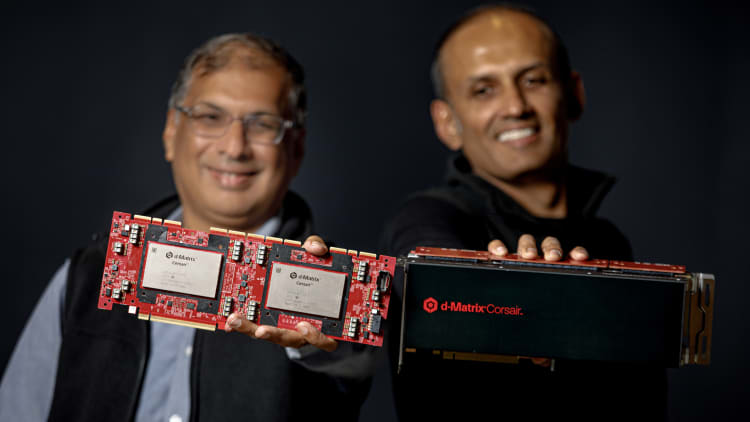
人工智能芯片初创公司D-Matrix的首席执行官西德·谢思(Sid Sheth)与台积电建立了超过20年的合作关系,而他的公司也依赖台积电制造其处理器。谢思表示,对于台积电的客户而言,许多渠道最终都会指向张凯文(Kevin Zhang)——这家台湾公司的高级副总裁,也是决定哪些芯片制造商能够获得其备受青睐的工厂产线的关键人物。
Sid Sheth, CEO of AI chip startup D-Matrix, has fostered a relationship with TSMC for more than 20 years, and his company relies on TSMC to manufacture its processors. Sheth said that for TSMC customers, many roads lead to Kevin Zhang, a senior vice president of the Taiwanese company and a central figure in determining which chipmakers get access to its coveted factory lines.
“他目前可能是地球上最受欢迎的人,”谢思在一次采访中表示。他还提到,D-Matrix的制造副总裁杰里·库拜恩(Jerry Qubain)自1992年以来就一直在与台积电保持联系,每年会前往台湾三到四次。
He's "currently probably the most popular person on the planet," Sheth said in an interview. Sheth said that Jerry Qubain, D-Matrix's vice president of manufacturing, has been visiting TSMC since 1992 and goes to Taiwan three to four times a year.
“这甚至发生在英伟达成立之前,”谢思说,“这正是一个很好的例子:我们之所以聘请他,正是因为他与台积电之间建立的关系。”库拜恩于2024年加入D-Matrix。台积电拒绝参与此次报道。
"This was even before Nvidia was founded," Sheth said. "That's a good example of a person we brought on board because of the relationships he has at TSMC." Qubain joined D-Matrix in 2024. TSMC declined to participate in this story.
押注初创企业 2025年,台积电共有534家客户。尽管公司并未公布这些客户的具体名称或排名,但其前十大客户贡献了78%的净收入,其中前两大客户分别贡献了19%和17%。
Betting on startups TSMC had 534 customers in 2025. While it doesn't name or rank them, its top 10 customers accounted for 78% of net revenue with its top two bringing in 19% and 17%, respectively.
这意味着初创企业必须在产能分配上与订单规模大得多的客户展开竞争。谢思表示,台积电在客户选择上“有所取舍”,但也有动力去支持那些前景光明的新晋企业。
That leaves startups competing for capacity against customers with far bigger orders. Sheth said TSMC is "selective," but has an incentive to back promising newcomers.
“当英伟达(Nvidia)和博通(Broadcom)还只是小型公司时,这些企业就给予了它们大力支持;如今,它们已成为英伟达和博通最大的客户,”Sheth说道。“他们希望这种合作关系能够再次出现。”台积电(TSMC)正在加紧扩大产能,在台湾、日本和亚利桑那州新建工厂;该公司首次在美国生产先进芯片。7月,台积电宣布将在亚利桑那州已规划的六座工厂基础上再投资1000亿美元,并建设更多新工厂,使其总投资额达到2650亿美元。据报道,台积电还在考虑在德克萨斯州建设新的生产基地。
"They were very supportive of Nvidia and Broadcom when they were very young companies, and now these are their biggest customers today," Sheth said. "They want to see a repeat of that." TSMC is hustling to bring much more capacity online, with new fabs in Taiwan, Japan and Arizona — it's making advanced chips in the U.S. for the first time. In July, TSMC announced it was adding $100 billion and "several more" fabs to the six planned in Arizona, bringing its total commitment to $265 billion. TSMC is also reportedly considering an entirely new fab location in Texas.
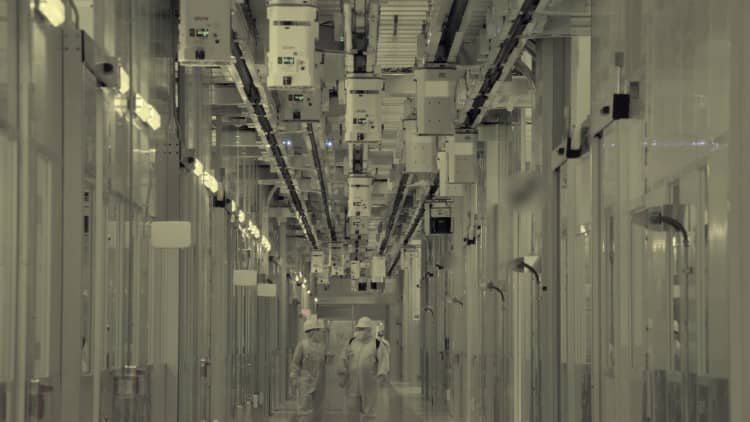
不过,所有这些新工厂都需要数年时间才能正式投入运营。在此期间,分析师们表示台积电正在现有工厂中引入诸如ASML公司的极紫外光刻设备等先进生产设备,以提升产能。ASML公司在周三发布的财报中大幅超出了市场预期,并表示客户们对未来至2030年的订单需求依然旺盛。
All of this will take years to come online. In the meantime, analysts say TSMC is adding tools like ASML's extreme ultraviolet lithography machines to existing factories to ramp up capacity. ASML smashed profit expectations in its earnings report Wednesday and said customers are interested in placing orders through 2030.
台积电并非唯一的芯片制造商——产能限制为其他两家领先的芯片制造商(三星和英特尔)提供了机会,使它们有机会争夺客户。
TSMC isn't the only option. Capacity constraints create an opening for the other two leading advanced chip manufacturers, Samsung Intel to win customers.
“客户希望拥有第二个供应商,以便能够对台积电施加压力,促使其在定价上保持透明和公平,”TechInsights公司的分析师Dan Hutcheson对CNBC表示。
"People want a second source to be able to twist TSMC's arm and keep them honest on pricing," Dan Hutcheson, an analyst at TechInsights, told CNBC.
这个“第二个供应商”很可能是英特尔——作为唯一一家总部位于美国的先进芯片制造商,尽管其代工业务多年来一直面临延误和挑战,但Hutcheson指出目前所有大型芯片制造商都在英特尔的工厂进行芯片测试。
That second source might be Intel, the only U.S.-based advanced logic manufacturer. Although its foundry business has been struggling with delays and setbacks for years, Hutcheson says all the big chipmakers are now testing there.
行业协会SEMI预计,到2029年全球将新增102座芯片工厂,其中15座位于美国,78座位于亚洲。中国是芯片产业的主要增长引擎,预计其芯片产能到2030年将增长近两倍。为了追赶这一发展势头,美国的芯片制造投资预计到2029年将增加一倍以上。
Trade association SEMI expects 102 new chip fabs will come online globally by 2029, including 15 in the U.S. and 78 in Asia. China is the primary growth engine, expected to nearly triplecapacity by 2030. In a race to catch up, American fab investments are projected to more than double by 2029.
鉴于台积电在亚利桑那州的产能不断扩张,以及芯片产能领域的竞争日益激烈,Klein认为“台积电是全球战略位置最为优越的芯片制造商之一”。无论是英伟达的GPU,还是谷歌和亚马逊开发的ASIC芯片,都离不开台积电的生产支持。
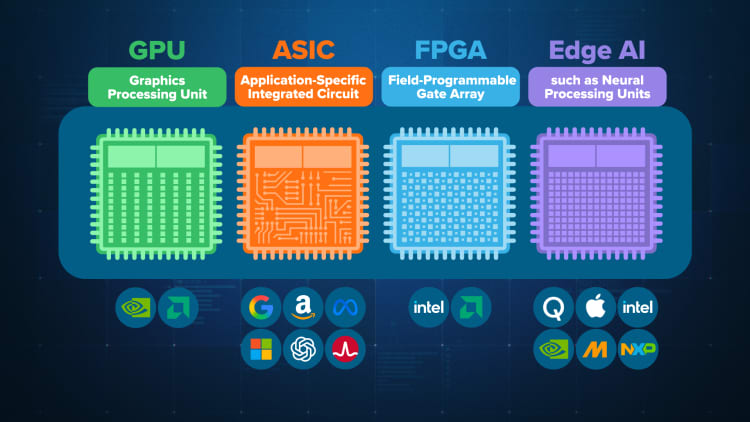
With an increasing Arizona presence and "extremely fierce" competition for wafer capacity, Klein says TSMC is "one of the best strategically positioned companies on the face of the planet." Breaking down AI chips, from Nvidia GPUs to ASICs by Google and Amazon