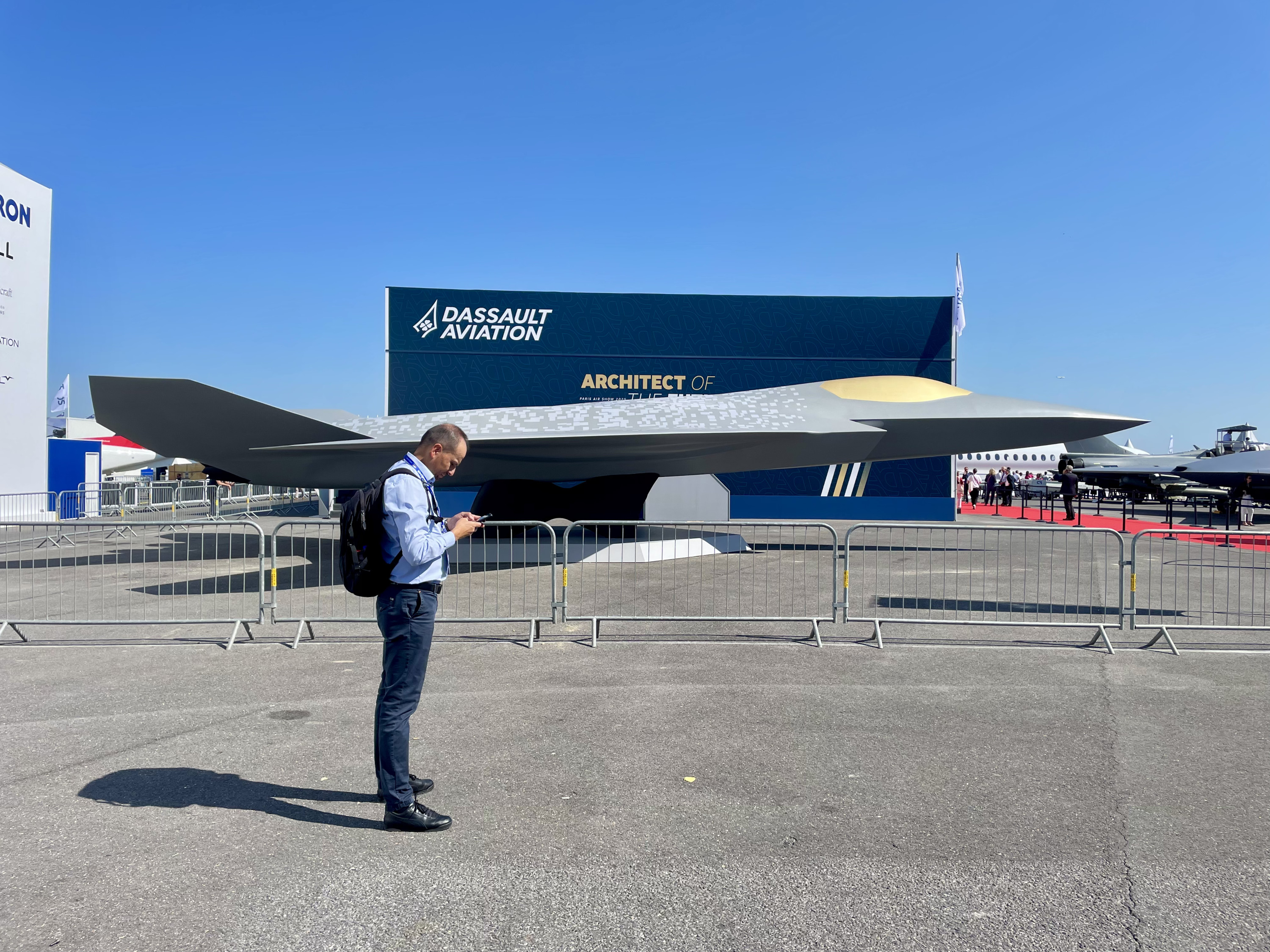
巴黎——法国将自主研发下一代战斗机,以取代现有的“阵风”(Rafale)战机。法国空军和航天部队参谋长热罗姆·贝朗热(Jérôme Bellanger)表示,此前与德国和西班牙共同开展的联合项目因种种原因已于今年早些时候失败。
PARIS — France will develop a next-generation combat aircraft domestically as a successor to the Rafale, after a joint project with Germany and Spain for a future combat air system collapsed earlier this year, Air and Space Force Chief of Staff Jérôme Bellanger said.
贝朗热在周三向国民议会的国防委员会表示,法国将把这款新型战斗机视为一个国家级项目,目标是使其能够在2040年执行常规作战任务。他说:“我们现在正着手开展相关准备工作,为这款新型战斗机的研发奠定基础。”
The country now conceives the future fighter, dubbed Avion de Combat du Futur or ACF, as a national project, with a target of flying conventional missions in 2040, Bellanger told the National Assembly’s defense committee in a hearing here on Wednesday. “We’re now moving on to work that will prefigure and enable the birth of this ACF, this future combat aircraft as a national program,” Bellanger said.
虽然法国仍愿意与其他国家合作,但合作方式将有所不同,且不会对战斗机的研发产生决定性影响。法国和德国于今年6月同意终止“未来战斗航空系统”(FCAS)项目——此前两国在达索航空(Dassault Aviation)与空中客车(Airbus)之间的技术规格和产业控制问题上长期存在分歧。目前,两国现有的“阵风”和“欧洲战斗机”(Eurofighter)战机均缺乏明确的替代机型;不过德国已经开始接收2022年订购的F-35战机,以取代其现有的“潘纳维亚·龙卷风”(Panavia Tornado)战机。
France remains open to possible cooperation with other countries, “but within different frameworks and which won’t be structural to the birth of this aircraft.”France and Germany agreed to scrap the FCAS project in June, after years of wrangling about specifications and industrial control between Dassault Aviation and Airbus. That’s left both countries without a clear successor for their existing fleets of Rafale and Eurofighter jets, respectively, though Germany has started receiving the first F-35 jets ordered in 2022 to replace the Panavia Tornado.
达索航空首席执行官埃里克·特拉皮埃(Éric Trappier)表示,该公司与法国、发动机供应商萨弗兰(Safran)以及国防电子公司泰雷兹(Thales)共同拥有研发下一代战斗机的全部技术和能力,并且可以在不超过500亿欧元(约合560亿美元)的预算内完成这项任务。贝朗热强调:“多年来在‘未来战斗航空系统’项目上的投入并未白费,我们在飞机设计、无人机技术、隐身技术、通信系统以及作战指挥系统等方面都取得了显著进展。”
Dassault Aviation CEO Éric Trappier has said his company and France have all the know-how and skills to develop a next-generation fighter jet, together with engine partner Safran and defense-electronics firm Thales, and he would be able to do so “well below” a budget of €50 billion (US$56 billion). All the years working on FCAS “haven’t been wasted,” with progress in areas including the aircraft, drones, stealth, connectivity and combat cloud, Bellanger said.
相关研发工作被分解为多个子项目,其中达索航空和空中客车主要负责核心的下一代战斗机研发工作。
Work had been split up in several so-called pillars that also included a new engine, with Dassault and Airbus working on the next-gen fighter pillar at the heart of the system.
“FCAS项目的中止并不意味着我们要放弃一切,”贝朗热表示。“我们的团队,包括工业团队,一直在研究NGF、隐身技术、云系统等等。所有这些都将使我们能够在现阶段以国家层面继续推进,同时聚焦于互操作性这一极其重要的方面。”法国必须“绝对继续”与德国及其他国家合作开发作战云系统,因为欧洲有人驾驶平台之间的互操作性至关重要,“这样才能避免把战争想象成并肩作战,而是真正协同作战,”贝朗热说。
“The halt of the FCAS program doesn’t mean we’re throwing everything away,” Bellanger said. “Our teams, the industrial teams have been working on the NGF, stealth, the cloud, and so on. All of that will allow us to continue at this stage on a national basis, while also focusing on this very important aspect of interoperability.”France must “absolutely continue” working with Germany and other countries on the combat cloud, as interoperability between European crewed platforms will be vital, “to avoid thinking of a war fought side by side, but rather one fought together,” Bellanger said.
贝朗热表示,即使FCAS从工业角度来看并未取得成功,他与德国同行之间仍保持着非常良好的工作关系。两位指挥官对未来空中作战的愿景高度一致,并且都主张为云系统组件制定共同的作战需求。
Bellanger said that even if FCAS wasn’t a success from an industrial standpoint, he has a very good working relationship with his German counterpart, with both commanders on the same page regarding their vision for future air combat, and both advocating for common operational requirements for the cloud component.
贝朗热指出,阵风战机的继任机型将在2050年需要搭载ASN4G高超音速核巡航导弹,而倒推计算意味着该飞机必须在2040年就能执行常规任务。他称,推进国家层面的项目将使法国能够确保在2040年前满足核威慑的关键时间节点。
The Rafale successor will need to carry the ASN4G hypersonic nuclear cruise missile in 2050, and working back from that date means the aircraft will need to be flying in 2040 for conventional missions, Bellanger said. Moving ahead with a national program will allow France to meet the deadlines essential for nuclear deterrence by 2040, he said.
根据贝朗热的说法,法国将在2035年需要推出阵风F5标准版本,其中将整合未来战斗机的首批组件,包括发动机、传感器以及用于摧毁敌方防空系统的Stratus RS导弹。
France will need to have a Rafale F5 standard in 2035 that incorporates the first components of the future combat aircraft, related to the engine, the sensors and the Stratus RS missile to neutralize enemy air defenses, according to Bellanger.
贝朗热表示,英意日三国联合开展的GCAP第六代战机项目正在致力于“一种不同类型的飞机,几乎接近战略轰炸机”。他还说,GCAP联盟内部“并非一帆风顺”,因为合作不可避免地需要做出妥协。
Bellanger said the British-Italian-Japanese GCAP project to develop a sixth-generation aircraft is working towards “a different kind of aircraft, it’s almost a strategic bomber.”He said “it’s not all roses” within the GCAP consortium, with cooperation inevitably requiring compromises.
空军负责人表示,法国将于2027年夏季接收首批远程一次性使用的弹药,这些弹药将由MBDA公司制造的“Deluge”无人机携带。这些无人机将成为该国首个轰炸与侦察无人机中队的基础。法国空军还在试验拦截无人机,旨在组建专门的无人机拦截中队。
The Air Force chief said France will receive its first long-range one-way munitions in the summer of 2027 with MBDA’s Deluge drone, which will form the basis for the country’s first squadron of bombing and reconnaissance drones. The force is also experimenting with interceptor drones with an eye on creating a dedicated drone-interceptor squadron.
此外,法国空军还计划组建一支高海拔作战中队,用于部署平流层气球。这些气球可用于通信中继或作为情报收集平台;同时,法国空军也在研发其他具有长续航能力的系统(例如系留气球)。
The Air and Space Force further plans to create a very-high altitude squadron to deploy stratospheric balloons, which can be used for communication relays or as a platform for intelligence sensors, as well as other systems with long-endurance capabilities such as tethered balloons.
根据贝朗热(Bellanger)的说法,法国空军设想未来的打击行动将首先出动大量一次性使用的无人机,以削弱敌方的防空系统——这正是新组建的无人机中队的主要任务。这些一次性使用的无人机不仅具备执行动能攻击的能力,还具备非动能攻击手段(如干扰、信息压制或欺骗等)。随后,第二波可重复使用但是一次性消耗的无人机将打开突破口,为使用有人驾驶或无人驾驶系统进行深入打击创造条件。
The air force envisages future strikes into enemy territory that will involve a first wave of a large number of disposable drones to weaken enemy air defenses, which will be the role of the new squadron, according to Bellanger. The disposable drones will be capable of kinetic operations, but also non-kinetic operations including jamming, saturation, or deception, the air force chief said. A second wave of reusable but expendable drones would then create a breach to allow for deep strikes using crewed and uncrewed systems, he said.
“要在敌方领土上发动攻击,我们现在必须考虑利用低成本轰炸无人机以及电子战手段(如进攻性干扰)来压制敌方的防空系统。”
“To strike the enemy on their own turf, we now have to think of overwhelming air defenses with low-cost bombing drones and electronic warfare capabilities such as offensive jamming.”