本月初,代理陆军部长亚当·R·泰勒签署了一项命令,安排处决尼达尔·哈桑,这名前陆军少校因在2009年德克萨斯州胡德堡枪击案中杀害13人而被定罪。两天后,自封的战争部长皮特·赫格塞斯做出了一个令人震惊的宣布。“我们会确保人们能够观看,它将是公开的,”赫格塞斯对保守派媒体“真实美国之音新闻网”说,采访者挑了挑眉毛。战争部的官方“快速反应”推特账号随即推广了该视频片段。
Earlier this month, Acting Secretary of the Army Adam R. Telle signed an order scheduling the execution of Nidal Hasan, a former Army major who was convicted of killing 13 people in a 2009 shooting at Fort Hood, Texas. Two days later, self-styled War Secretary Pete Hegseth made a startling announcement. “We’ll make sure that people are able to watch it, that it’s public,” Hegseth told the conservative Real America’s Voice News network, as the interviewer raised his eyebrows. The Department of War’s official “Rapid Response” Twitter account promptly promoted the clip.
赫格塞斯的计划显然不会得逞。就在人们对计划中的以枪决方式进行处决的直播——定于12月3日在胡德堡进行——的野蛮和视觉效果引发哗然之际,总统唐纳德·特朗普周四取消了直播。“我认为,让全世界观看处决直播,可能是一个强有力的威慑,让世界目睹美国如何对付像哈桑这样的恐怖分子和渣滓,但许多非常善良、出于好意的人宁愿不通过直播或任何其他视觉设备观看他死去,”特朗普在他的社交媒体网站上发帖说。
Hegseth’s plan apparently won’t come to fruition. Amid outcry about the barbarity and optics of streaming the planned execution by firing squad — scheduled for December 3 at Fort Hood — President Donald Trump on Thursday called off the broadcast. “I think streaming the execution for all to see might have been a strong deterrent for the World to witness how America deals with Terrorists and SCUM like Hasan but, many very good and well meaning people would rather not watch him die, through streaming, or through any other visual device,” Trump posted on his social media website.
一些新闻媒体,例如《纽约时报》,将计划中的处决描述为一种反常现象,声称“这样的直播几乎没有先例,发布处决视频最常与伊斯兰国等极端主义武装组织联系在一起”。然而,这种叙述忽略了一段被遗忘的美国文化历史,在那段历史中,拍摄处决将政府的处决变成了景观。在美国,拍摄处决的做法几乎与电影本身一样悠久。
Some news outlets, such as The New York Times, framed the planned killing as an aberration, claiming that “such a broadcast has little precedent, and releasing video of executions is most often associated with extremist militant groups like the Islamic State.”This narrative, however, overlooks a forgotten American cultural history in which filmed executions turned government killings into spectacle. The practice of filming executions in America is effectively as old as cinema itself.
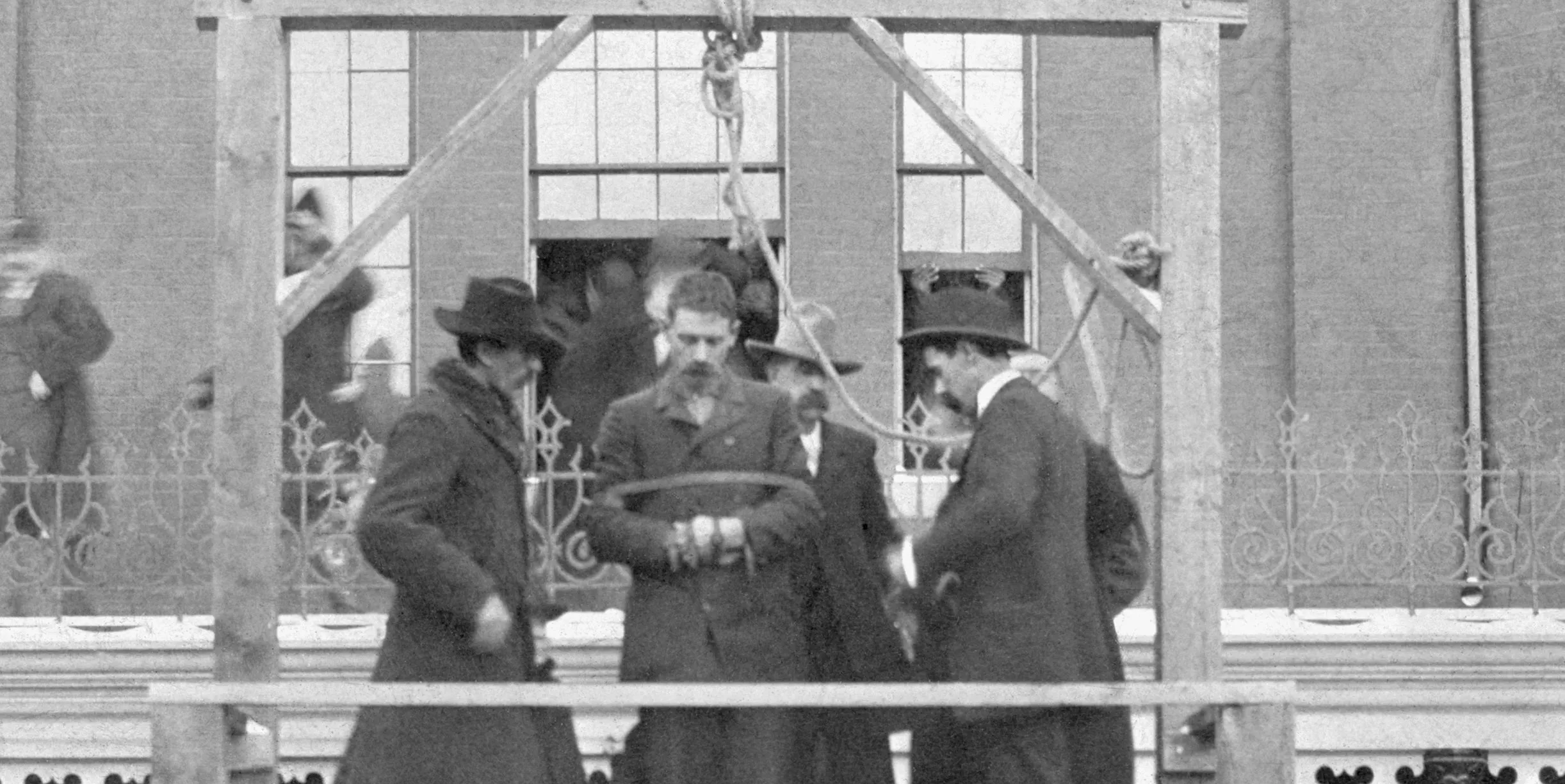
1897年,美国首批电影放映几年后,密苏里州农场工人威廉·卡因谋杀其女被定罪,判处绞刑。美国留声机公司电影制作人弗雷德里克·古斯此前曾在监狱中录制过卡的采访,他决定也拍摄这场处决——这标志着历史上首次拍摄处决的阴暗里程碑。这部电影《威廉·卡之死刑绞刑》(1897年)最初在堪萨斯城和圣路易斯放映,随后在全国各地放映。
In 1897, a few years after the first motion pictures began to be exhibited in the United States, a Missouri farmhand named William Carr was convicted of murdering his daughter and sentenced to death by hanging. Filmmaker Frederick Guth, of the American Phonographic Company, who had previously recorded an interview with Carr in prison, opted to film the execution as well — marking a grim milestone as history’s first filmed execution. The resulting motion picture, “The Hanging of William Carr” (1897), was first exhibited in Kansas City and St. Louis, then screened around the country.
第二年,《绞刑处决》全国首映,又名《佛罗里达州杰克逊维尔县监狱处决黑人》(1898年)。影片展示了爱德华·海因森的绞刑,他因对一名14岁白人女孩犯下刑事攻击罪被定罪并判处死刑。这部电影的制作公司美国电影机与生物图公司的目录中,将影片描述为“一个非常恐怖,但非常有趣的主题”,体现了长期塑造美国刑事司法系统和死刑的种族主义观点。
The following year saw the nationwide premiere of “An Execution by Hanging,” otherwise known as “Execution of Negro at County Jail, Jacksonville, Fla” (1898). It showed the hanging of Edward Heinson, who was convicted and sentenced to death for criminal assault of a 14-year-old white girl. Illustrating racist views that have long shaped the American criminal legal system and the death penalty, the catalog of the film’s production company, American Mutoscope and Biograph, teased the film as depicting “a very ghastly, but very interesting subject.”
随着这些早期电影在全国发行,它们引发了兴趣和愤慨。当时期刊《留声镜》将卡处决的拍摄描述为“令人作呕”,而《克利夫兰领袖报》则警告称,该电影可能对观众产生“残酷化影响”。一些报纸甚至声称,在卡的绞刑期间,古斯雇人冲上绞刑架以制造更大的混乱。
As these early films were distributed across the nation, they were met with interest and outcry. The journal Phonoscope at the time described the filming of Carr’s execution as “revolting,” while the Cleveland Leader cautioned that the film may have “brutalizing effects” on viewers. Some newspapers even claimed that during the hanging of Carr, Guth had hired people to storm the gallows to create added pandemonium.
很快,蓬勃发展的电影行业开始为日益增多的关于处决的电影采用不同的做法。电影制作人开始将现实与虚构相结合,将在实际处决地点拍摄的片段与对杀戮本身的虚构重演相结合。
Soon, the burgeoning cinema industry came to adopt a different practice for the growing number of films about executions. Filmmakers started blending reality with fiction, by combining clips recorded at actual execution locations with fictionalized reenactments of the killings themselves.
例如,在托马斯·爱迪生的爱迪生工作室未能获得当局许可,拍摄威廉·麦金莱总统遇刺者被电刑处决的真实过程后,电影制作人们将行凶当天的外景镜头与一具人体模型的影像结合,在《奥本监狱全景下的措尔戈什处决》(1901年)中再现了实际的死亡场景。
For instance, after Thomas Edison’s Edison Studios failed to gain permission from the authorities to film the actual execution by electrocution of President William McKinley’s assassin, filmmakers combined exterior location shots on the day of the killing with footage of a mannequin to depict the actual death in “Execution of Czolgosz with Panorama of Auburn Prison” (1901).
爱迪生对这种形式并不陌生:他此前已制作过多部历史处决重演影片,如《苏格兰女王玛丽之死》(1895年)和《圣女贞德之死》(1895年)。他的工作室还涉足过虐待动物的娱乐内容,拍摄了展示真实动物死亡过程的影片,例如《电死大象》(1903年)。该片记录了一头名为托普西的大象因杀死一名用雪茄灼伤它象鼻的观众而被处决的过程。
Edison was no stranger to the format: He had previously produced numerous historical execution reenactments like “The Execution of Mary, Queen of Scots” (1895) and “The Execution of Joan of Arc” (1895). His studio also dabbled in zoosadistic entertainment, with films showcasing actual animal deaths, such as “Electrocuting an Elephant” (1903), which presented an elephant named Topsy being put to death for killing a spectator who had burnt her trunk with a cigar.
1905年,美国穆托斯科普公司重用了其早期影片《绞刑处决》的片名,这次则重演了玛丽·罗杰斯被绞死的场景。她因杀害丈夫而被定罪(另一片名为《女谋杀者的处决》)。除了明显为真实拍摄的外景镜头外,美国穆托斯科普公司还加入了死亡瞬间的重演画面。该片作为三部曲的一部分上映,另外两部分别是《宣读死刑判决》和《暂缓行刑》,而第三部则呈现了一个虚构的替代结局:罗杰斯并未被处死。
In 1905, American Mutoscope reused the title of its earlier film, “An Execution by Hanging,” this time depicting a reenactment of the hanging of Mary Rogers, who was convicted of killing her husband (alternate title “Execution of a Murderess”). Along with what were apparently genuine location shots, American Mutoscope incorporated reenactments of the moment of death. The film was released as part of a trilogy, including “Reading the Death Sentence” and “Reprieve from the Scaffold,” with the third installment presenting an alternate fictional ending in which Rogers was not killed.
世纪之交的其他影片也采用了类似手法,将现实与虚构混为一谈,电影目录更刻意强调这些影片的刺激与惊悚性。卢宾电影公司在《斩首一名中国囚犯》(1900年)的简介中写道:“刽子手向观众展示被斩下的头颅,以警示作恶之人。极具刺激性。”卢宾公司此前还制作过另一部处决重演影片——《处决西班牙间谍》(1898年)。
Other films around the turn of the century used a similar technique to conflate reality and fiction, with film catalogs accentuating the lurid nature of these pictures. The description of “Beheading a Chinese Prisoner” (1900) in the Lubin production company catalog reads: “The executioner displays the head to the spectators to serve as a warning for evil doers. Very exciting.”Lubin had also earlier produced another execution reenactment, “Execution of the Spanish Spy” (1898).
许多电影关注的是暴徒而非政府实施的处决。有《爱迪生的私刑场景》,又名《私刑场景:马贼》,更委婉地称为《边境场景》(1898年),还有国际电影公司的《私刑场景:真实的私刑场景》,又名《德克萨斯州巴黎的私刑场景》(1897年),以及《克里普尔溪的私刑》,又名《血猎犬追踪》(1904年)。
Many films focused on executions carried out by mobs rather than the government. There was “Edison’s Lynching Scene,” also known as “Lynching of a Horse-Thief” and more coyly as “A Frontier Scene” (1898), as well as “Lynching Scene: A Genuine Lynching Scene,” also known as “Lynching Scene at Paris, Texas” (1897) from the International Film Company, and “A Lynching at Cripple Creek,” otherwise known as “Tracked by Bloodhounds” (1904).
当然,电影摄影机并非当时唯一改变公众对处决认知的新技术。1890年,威廉·凯姆勒在纽约成为首次电椅处决的受刑人,美国媒体宣告死刑进入“新时代”。目睹这种新型死亡技术,哪怕只是重演形式,多年来都令影迷着迷。
The motion picture camera, of course, wasn’t the only new technology at that time shifting the public’s perception of execution. When William Kemmler was killed in the first electric chair execution in New York in 1890, the American media heralded a “new era in capital punishment.”Witnessing the new death technology, even in reenactment form, would prove to be a fascination for filmgoers over the years.
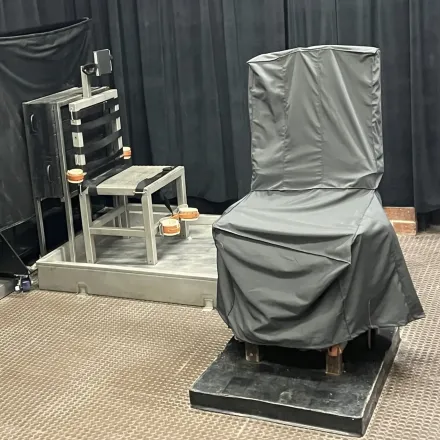
《辛格辛监狱电椅之死》(1902年)是美国米托斯科普公司五部曲《犯罪生涯》的最后一集,该公司1902年的目录将其描述为“对辛格辛电椅处决的准确而惊心动魄的再现”。随着新处决方式的新鲜感消退,其电影人气也开始下降,尽管20世纪30年代,电影推广者偶尔会在电影院外使用电椅作为道具来吸引观众。与此同时,随着美国公开绞刑的做法逐渐消失,处决移至室内,当局开始限制进入死亡室的人员,仅限特定的家属、死者亲属、官方人员和选定的媒体。这一做法延续至今,阻止了处决的实际录像向公众传播。
“Death in the Electric Chair at Sing Sing” (1902), the final installment in American Mutoscope’s five-part “A Career of Crime” series, is described in the company’s 1902 catalog as “an accurate and thrilling representation of an electric execution at Sing Sing.”As the novelty of new execution methods wore off, their cinematic popularity likewise began to taper, though film promoters occasionally used the electric chair as a prop outside the cinema to attract moviegoers in the 1930s. At the same time, as the practice of public hangings faded in the U.S. and executions moved indoors, authorities began restricting access to death chambers to select groups of family members, victims’ relations, official personnel, and chosen media. It’s a practice that continues to this day, preventing actual recordings of executions from reaching the public.
然而,随着20世纪70年代剥削电影院的兴起和20世纪80年代家庭录像带的热潮,美国娱乐业再次找到了通过描绘处决来吸引观众的方式。
With the advent of grindhouse exploitation cinema in the 1970s and the home video boom of the 1980s, however, the American entertainment industry once again found a way to court audiences by depicting executions.
那些将真实镜头与重新拍摄的执行场景结合在一起的影片,包括《电椅》(1976年)。这些电影的宣传材料中 prominently 展示了电椅,并声称:“影片中的所有场景都是在真正的死刑执行场所拍摄的;你们看到的一切都是真实的。”同样以震撼性内容著称的纪录片《死亡的面孔》(1978年)也强调其电刑场景的真实性,试图吸引观众“近距离体验死亡的残酷现实”。
Taking up the mantle of films that blended real footage and reenacted execution scenes were movies like “The Electric Chair” (1976), whose theatrical promotional materials prominently featured the titular chair and touted that “scenes in this picture were filmed in an actual death house. What you will see is real.”The infamous shockumentary “Faces of Death” (1978), whose marketing material similarly emphasized its staged electrocution scene, enticed viewers to “experience the graphic reality of DEATH, close-up.”
在《死亡的面孔》之后,从20世纪70年代末到21世纪中叶,出现了大量直接发行到录像带的死亡题材影片;这些影片将死刑执行场景与其他暴行片段拼接在一起,例如《死亡:生命的最后几秒》(1988年)和《2001年的死刑执行》(2001年)。
In the bloody wake of “Faces of Death” came a seemingly endless parade of straight-to-video death compilations, spanning from the late 1970s to the mid-2010s, which made death something to be consumed in private in the home, versus as theatrical spectacle. The films, which spliced together clips of executions with other atrocities, have titles such as “Dying: Last Seconds of Life” (1988) and “Executions 2001” (2001).
《死亡观察》(Death Watch)是这类影片的典型代表,它于20世纪90年代末或21世纪初以VHS格式发行,其标题充分概括了这类影片的性质:“未经剪辑的原始死亡场景记录——包括活体解剖、尸检、火葬、自杀、酷刑、斩首、国家或政府组织的死刑执行,以及动物吞食人类的行为。”该影片的 同样展示了电椅的图像,这与《电椅》(1976年)和《辛辛监狱中的电刑》(Death in the Electric Chair at Sing Sing, 1902年)等电影的宣传海报风格如出一辙。
“Death Watch,” a typical entry in the genre released on VHS in the late ’90s or early ’00s, adequately summed up its genre: “unedited first-hand footage of death, vivisection, autopsy, cremations, suicides, tortures, decapitations, state and governmental executions, animal ingestion of humans, as well as human limb extraction.”Its cover featured an electric chair, echoing the posters promoting films such as “The Electric Chair” (1976) and “Death in the Electric Chair at Sing Sing” (1902).
2006年12月30日,萨达姆·侯赛因被处以绞刑时,一名保安用手机记录下了整个执行过程。这段视频随后以《Sad Damn! Who’s Sane?》为标题在美国发行到了DVD上。虽然该DVD至今仍能在亚马逊等在线零售商平台上找到,但它早已绝版,就像那些20世纪初发行的死刑执行题材影片一样。
When Saddam Hussein was executed by hanging on December 30, 2006, a security guard used his cellphone to record the execution. The phone video was promptly released on DVD in the U.S. under the title “Sad Damn! Who’s Sane?”Though still listed on online retailers like Amazon, the DVD is now long out of print, much like turn-of-the-century execution films.
对哈桑的决队处决进行直播的提议,在某种程度上本会标志着重大转向。这起处决本将是政府本身而非电影制片厂首次已知的记录并传播处决的案例。批评家抨击赫格塞斯的计划是暴力宣传,可能招致对海外美国战俘的类似残暴行径。特朗普本人据报道对相关画面表示犹豫,担心美国军队处决哈桑的画面可能导致他被奉为烈士,哈桑因在胡德堡枪击案中受伤而使用轮椅。
The proposal to livestream Hasan’s firing squad execution would have, in some ways, marked a significant change in course. The killing would have been the first known execution to be recorded and disseminated by the government itself, rather than a film studio. Critics lambasted Hegseth’s plan as violent propaganda that could invite similar brutality against American prisoners abroad. Trump himself reportedly expressed hesitation about the imagery, fearing footage of the U.S. military killing Hasan, who uses a wheelchair after injuries during the Fort Hood shooting, might result in him being celebrated as a martyr.