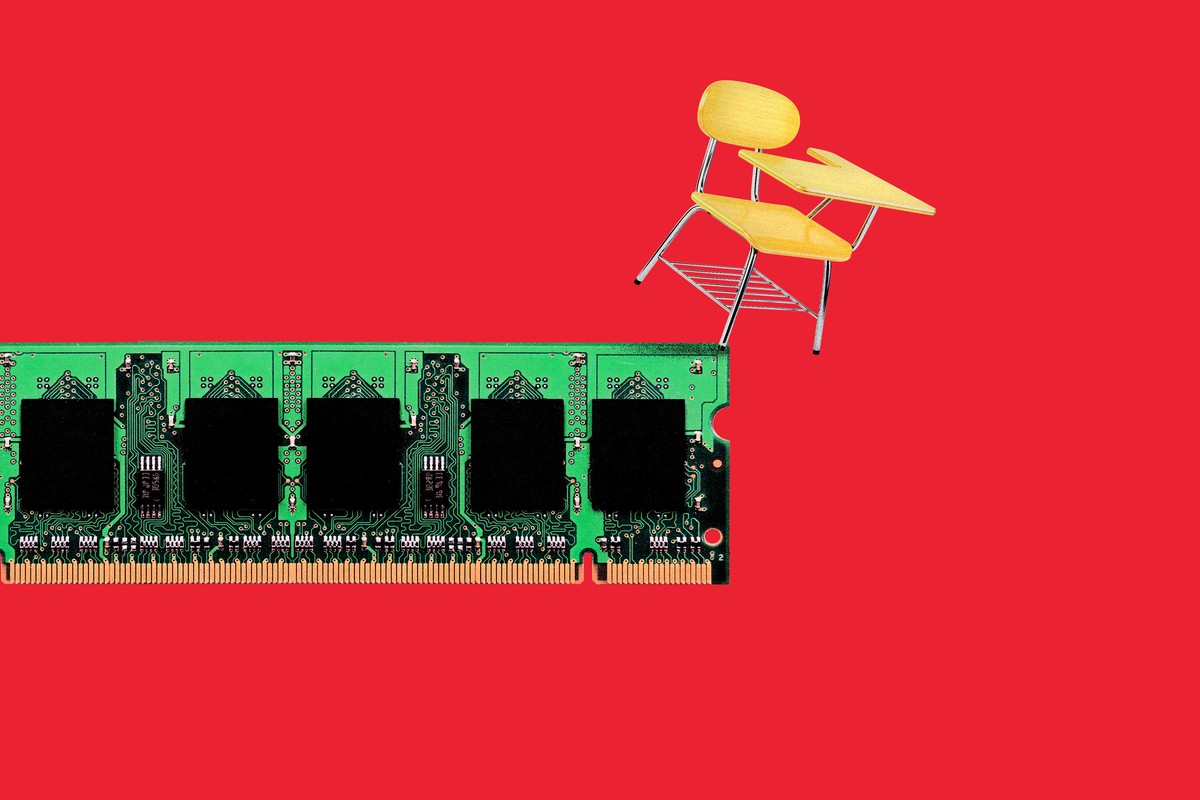
嗯,这就是让屏幕离开学校的一种方式。内存短缺正逼近课堂。作者:维多利亚·冯(Victoria Feng)对于如今的高中生来说,十年前的典型上学日子一定看起来像是黑暗时代的遗物。如今,学生们发放的是数字教材而非纸质教材,他们通过模拟科学实验室的应用程序学习如何进行化学实验,并在Chromebook上参加标准化考试。
Well, That’s One Way to Get Screens Out of Schools The memory shortage is coming for classrooms. By Victoria Feng For today’s high schoolers, a typical school day from a decade ago must seem like something from the Dark Ages. These days, students are issued digital textbooks instead of physical ones, they learn how to conduct chemistry experiments through apps that simulate a science lab, and they take standardized tests on a Chromebook. All of this is the result of many years of frenzied investment in ed tech, capped by a pandemic that forced virtual learning.
这一切都是多年疯狂投入教育科技的结果,而疫情则成为了压垮骆驼的最后一根稻草——它迫使学习转向线上。全国绝大多数学校现在为每位学生配备了一台笔记本电脑或平板电脑。
The overwhelming majority of schools nationwide provide each student with their own laptop or tablet. All of these screens have changed the dynamic of the classroom.
所有这些屏幕已经改变了课堂的动态。当学生本应用学校发放的iPad在数学课上认真做笔记时,他们可能实际上正在给朋友发消息。全国范围内,一些家长和老师正在对课堂中的屏幕使用发起反击。四月份,洛杉矶教育局投票决定不再向最小的学生发放设备,并对所有年级实施屏幕使用时间限制。
When a student is supposed to be using their school-issued iPad to diligently take notes during math class, they might instead be messaging a friend. Across the country, some parents and teachers are mounting a backlash against screens in the classroom. In April, the Los Angeles school board voted to stop giving devices to its youngest students and implemented screen-time limits for all grades. But other schools are pulling back on ed tech for an entirely different reason.
但其他学校减少教育科技投入的原因完全不同。就像几乎所有其他消费电子产品一样,Chromebook需要内存,即随机存取存储器(RAM)。为每一次与聊天机器人的对话提供动力的数据中心也需要内存。人工智能行业正在使用如此多的内存芯片,以至于导致了全球性短缺,使得电子设备变得更加昂贵。对个体消费者而言,内存紧张——如果你愿意,可以说是“内存末日”(RAMaggedon)——意味着购买新电脑时需要多花几百美元。
Chromebooks, like essentially all other consumer electronics, need RAM, or random-access memory. So do the data centers that power every conversation with a chatbot. The AI industry is using so many memory chips that it’s led to a global shortage, making gadgets much more expensive. For an individual consumer, the memory crunch—RAMaggedon, if you will—means having to spend a few hundred dollars more on a new computer. But school districts, many of which are already cash-strapped, buy hundreds or thousands of computers every year.
但许多已经入不敷出的学区,每年都要采购数百甚至数千台电脑。我为本故事采访的管理人员告诉我,他们不得不匆忙去获取如今所需的所有电子设备。随着“内存末日”持续蔓延,他们说,总得有东西妥协。
The administrators I spoke with for this story told me that they have had to scramble to acquire all the electronics they now need. As RAMaggedon drags on, they said, something has got to give. Schools started picking up on the memory shortage last winter, months before most of the country.
学校去年冬天就开始注意到内存短缺的问题,比全国大多数地区早了几个月。他们必须在学年开始前很久就规划笔记本电脑和平板电脑的大批量采购。许多学校会转向第三方供应商,这些供应商通常提供一个月内有效的报价,为技术主管争取时间,从各学区筹集资金以进行可能高达数百万美元的采购。随着内存价格飙升,北卡罗来纳州查塔姆县学校的首席技术官马克·桑伯格正在听到供应商传递出的不同信息。“现在报价的有效期可能只有48小时、一周或14天,”他告诉我。
They have to figure out bulk orders for laptops and tablets long before the academic year begins. Many of them turn to third-party vendors, which have typically provided quotes that are locked in for a month, giving technology directors time to secure the funds from their districts to make purchases that can run millions of dollars. As memory prices have soared, Mark Samberg, the chief technology officer of Chatham County Schools in North Carolina, is hearing a different message from his vendors. “Now quotes are going to be good for 48 hours, a week, or 14 days,” he told me. Samberg scooped up the Chromebooks he could find.
桑伯格尽力采购了他能找到的Chromebook。其他学区则没那么幸运。3月份,一家Chromebook供应商警告伊利诺伊州的Homewood-Flossmoor高中,其价格将很快上涨。该学区的IT总监史蒂夫·理查森迅速下了订单,但最终被告知无法交付,因为内存芯片处于缺货状态。“我们当时陷入了相当艰难的境地,”理查森告诉我。
Other districts have been less lucky. In March, a Chromebook vendor warned Homewood-Flossmoor High School in Illinois that its prices would be going up soon. Steve Richardson, the district’s IT director, quickly placed an order, only to be eventually told it couldn’t be fulfilled because memory chips were on back order. “We were kind of in dire straits,” Richardson told me. In 2023, Chromebooks cost the school $353 a piece.
2023年,Chromebook每台成本为353美元。随后价格升至400美元,然后是412美元,接着是427美元。理查森在8月份采购的最新一批Chromebook,每台成本达到508美元。但学区需要这些设备,以确保每位学生在PSAT考试前都能有一台Chromebook,而该考试如今已完全数字化。
The price rose to $400, then $412, and then $427. The most recent batch that Richardson purchased, in August, cost $508 each. But the district needed them to ensure that every student had a Chromebook ahead of the PSAT, which is now entirely digital. So far, schools have been willing to stomach the costs to continue giving every student a device.
到目前为止,学校一直愿意承担成本,以继续为每个学生提供一台设备。学区最初决定实施“一对一”政策,基于技术可以成为课堂中的平等力量这一前提;许多教育工作者和管理者仍然持这一观点。州教育技术主任协会董事会主席多兰·阿维告诉我,她担心RAMaggedon会扩大数字鸿沟。她说,设备不仅仅是用来“写论文”的。
Districts initially decided to implement “one to one” policies on the premise that technology can be an equalizing force in the classroom; many educators and administrators still believe that. Dorann Avey, the board chair of the State Educational Technology Directors Association, told me that she is concerned that RAMaggedon will widen the digital divide. Devices are not for “just writing papers,” she said. “We’re trying to prepare students to learn different software that is workplace- and workforce-appropriate.”
“我们正努力让学生学习适用于工作场所和劳动力的不同软件。”这意味着必须做出艰难的权衡。由于为学生购买笔记本电脑的额外支出,Homewood-Flossmoor学区今年没有为教师购买任何新的智能白板或电脑。得克萨斯州的帕拉迪斯独立学区正在考虑让学生自带笔记本电脑或平板电脑,技术主管道格·布赖恩特告诉我。
That has meant making difficult trade-offs. Because of the extra spending on laptops for students, Homewood-Flossmoor didn’t buy any new smart whiteboards or computers for teachers this year. In Texas, the Paradise Independent School District has considered asking students to bring in their own laptop or tablet, Director of Technology Doug Bryant told me. A common solution has been to extend the lifetime of a laptop.
一种常见的解决方案是延长笔记本电脑的使用寿命。学校不再每四年更换一次设备,而是选择使用七年或八年,以减少他们在某一年需要采购的设备数量。但这也带来了新问题:旧电脑有时无法更新到最新的操作系统,这可能会带来网络安全风险。学校已经成为黑客的主要目标,因为它们存储了大量敏感个人信息,但资源有限。
Instead of replacing a device every four years, schools are opting for seven or eight to reduce how many units they need to purchase in a given year. But that introduces new problems: Older computers sometimes aren’t able to update to the latest operating system, which could create cybersecurity risks. Schools are already a top target for hackers, because they store lots of sensitive personal information but have limited resources. Plus, as a device gets older, its battery degrades and may ultimately need to be replaced.
此外,随着设备使用时间的增长,其电池会老化,最终可能需要更换。这会花费“时间和金钱”,Avey 说。“但这仍然比购买全新设备便宜。”所有这些可能还不够。多位管理员告诉我,他们已经因为 RAMaggedon 而考虑回滚一对一设备政策,学校面临的挑战也可能进一步加剧。进入这个学年,一些学区通过在价格真的开始飙升之前购买 Chromebooks,成功规避了最严重的内存短缺。
That costs “time and money,” Avey said. “But it’s still less money than buying brand-new devices.”All of this may not be enough. Multiple administrators told me that they are already considering rolling back their one-to-one device policies because of RAMaggedon, and the challenges for schools are poised to mount. Heading into this school year, some districts were able to skirt the worst of the memory shortage by buying Chromebooks before prices really started to soar.
拉乌登县公立学校首席技术官 Aaron Smith 告诉我,他在二月而不是五月就向学校董事会申请了特别许可,承诺采购近 24,400 台 Chromebooks。他说,在这段时间内内存价格飙升,这一决定最终为学区节省了 166 万美元。但 Smith 和其他技术主管在为下一个学年采购设备时,可能不会如此幸运。美光公司(全球最大的内存制造商之一)的一位高管最近警告说,目前“看不到内存短缺结束的迹象”。
Aaron Smith, the CTO of Loudoun County Public Schools, told me that he sought special permission from his school board to commit to purchasing nearly 24,400 Chromebooks in February instead of May. Memory prices jumped so quickly over that time span that the decision ultimately saved the district $1.66 million, he said. But Smith and other technology directors may not have the same luck as they begin looking to purchase gadgets for the next school year. An executive at Micron, one of the world’s largest RAM manufacturers, recently warned that there’s “no line of sight” to the end of the memory shortage.
如果学校推迟采购,价格可能会进一步上涨。但提前采购又可能意味着设备会在仓库中闲置数月,而保修期却在不断流逝。
If schools wait to buy, prices could end up going up even more. But buying early might mean devices will languish in storage for months as the warranty clock ticks away.
RAMageddon 将迫使学校审查哪些技术采购实际上能提升学习效果,哪些不能。其影响将远超 Chromebook 设备。“我们将无法负担我们原本以为能够负担的服务器,”萨姆伯格说,他是查塔姆县学区的首席技术官。这些服务器支持诸如安防摄像头、门禁读卡器和账户系统等功能——而每一个都需要内存。
RAMageddon will force schools to scrutinize which tech purchases actually improve learning, and which don’t. The fallout will reach far beyond Chromebooks. “We’re not going to be able to afford the servers that we thought we were,” said Samberg, the Chatham County Schools CTO. Those servers power functions such as security cameras, badge readers, and accounts—and every one of them needs RAM.