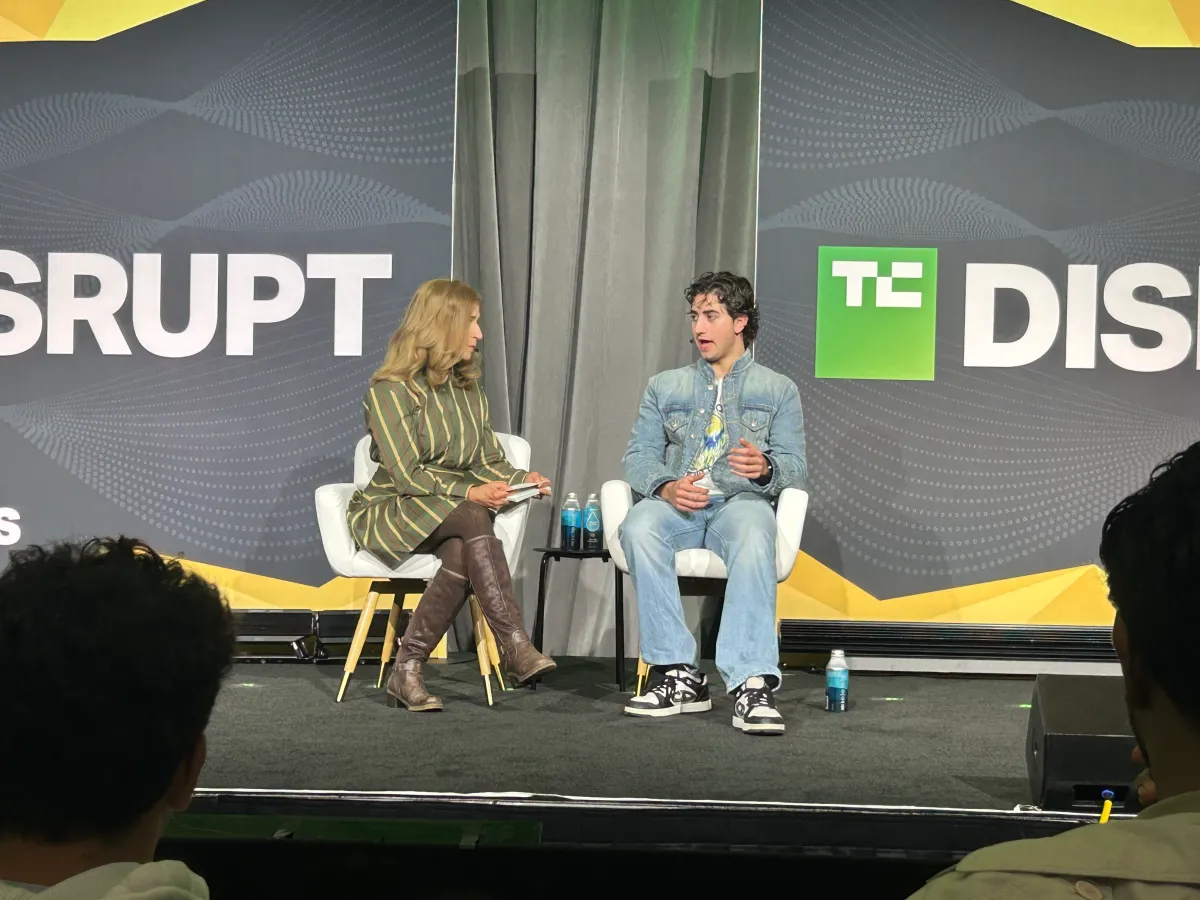
扎克·亚德加里(Zach Yadegari)年仅19岁,却凭借AI驱动的卡路里追踪应用Cal AI取得了令人惊叹的成功。作为Cal AI的创始人,他在高中毕业不久便创立了这家公司,并在过去两年里让公司迅速走红。周四在TechCrunch Disrupt大会上,亚德加里分享了他意外走向成功的细节。
Zach Yadegari has enjoyed an immense amount of success for someone who only recently graduated from high school. Founder of the AI-fueled calorie tracking app Cal AI, Yadegari is only 19 but his company has rocketed to viral fame over the past two years. At TechCrunch Disrupt on Thursday, Yadegari shared details of that surprising rise to prominence.
Cal AI成立于2024年,主要得益于亚德加里动用大量网红进行品牌推广的策略,因而迅速在互联网上走红。该公司在两年内创造了超过3000万美元的收入,并于今年3月被MyFitnessPal以未披露金额收购。
Cal AI, which was founded in 2024, exploded onto the internet thanks largely to Yadegari’s strategy of deploying a small army of influencers to promote the brand. The company generated over $30 million in revenue in two years and was acquired by MyFitnessPal for an undisclosed amount of money in March.
在台上谈及其社交策略时,亚德加里指出,成功的早期迹象出现在一位网红发布关于他们的帖子后,仅两天便带来了大约一千名新用户。
Discussing his social strategy onstage, Yadegari noted that an early sign of success came when an influencer’s post about them led to approximately a thousand new users over the course of two days.
他说道:“从那之后,我们意识到,好吧,这确实对我们有效,于是我们开始尽可能快地招募网红——尽可能多地付钱让他们开始为我们发帖。”“我们看到的是,这是一个清晰的公式。虽然增长相当线性,但速度极快。我的意思是,每条他们发布的帖子都会带来一定数量的观众,而这些观众又会转化为用户。”
“From there, we figured out, okay, this can actually work for us, and so we started recruiting influencers as fast as we could — paying as many people as possible to start posting for us,” he said. “What we saw was that it was a clear formula. It was pretty linear, but it was extremely fast. I guess linear in the sense that every post they did would get a certain number of viewers that would convert.”
这位《福布斯》30 Under 30榜单的校友告诉观众,他公司策略的一部分是与网红谈判费用,承诺根据一定的传播规模给予相应的报酬。亚德加里补充道,许多网红都是“手头紧张的大学生”,“他们只想要现金”。“你只需要问他们,好吧,我们会付你这笔钱,但我们需要至少达到这么多使用量,并且持续发帖直到达到目标。”另一个成功的重要组成部分是找到那些传播效果可量化的合适网红。“对我们来说,最重要的是找到那些拥有非常紧密社群的网红,”创始人说。
The Forbes 30 Under 30 alumnus told the audience that part of his company’s strategy was to negotiate rates with influencers, promising them certain payouts for a certain scale of reach. A lot of influencers are “broke college kids” who “just want cash,” Yadegari added. “You just ask them, okay, we’ll pay you this, but we need to get us at least this amount of use and keep posting until you get there.”Another important component of success was finding the right influencers whose reach can be quantified. “The biggest thing for us was finding influencers that had very tight communities,” the founder said.
雅德加里的父亲也在现场观众席上,他也把家人视为给予他追求抱负自由的人。他也把高等教育视为自己成功的原因吗?并不是这样。
Yadegari, whose father was in the audience, also credited his family with giving him the freedom to go after his ambitions. Does he also credit higher education for his success? Not so much.
“我认为上大学的唯一真正理由是,如果你想作为一个孩子拥有有趣的社交时光,并与他人在一起,”他说,引得观众笑声。
“I think the only real reason to go to college is if you want to have a fun social time as a kid and be with other people,” he said, to audience laughter.
本月早些时候,雅德加里还推出了Persona,这是一家新成立的AI代理初创公司,已经筹集了1000万美元。
Earlier this month, Yadegari also launched Persona, a new AI agent startup that has already raised $10 million.
雅德加里表示,Persona的“总体使命”是“让计算与人类生活无缝融合。”该公司的个人AI助手将“在任何有网络连接的地方运行”,他说,包括“iMessage、应用、电子邮件、电话通话。”他补充说,该公司对这个AI助手的计划之所以与众不同,部分原因在于他们打算“围绕该应用构建一个硬件生态系统”。
Yadegari said the “overarching mission” with Persona is to “make computing seamless with human life.”The company’s personal AI assistant will “live anyplace with internet connection,” he said, including “iMessage, app, email, phone call.”He added that part of what distinguishes the company’s plans for this AI assistant is to build a “hardware ecosystem around” the app.