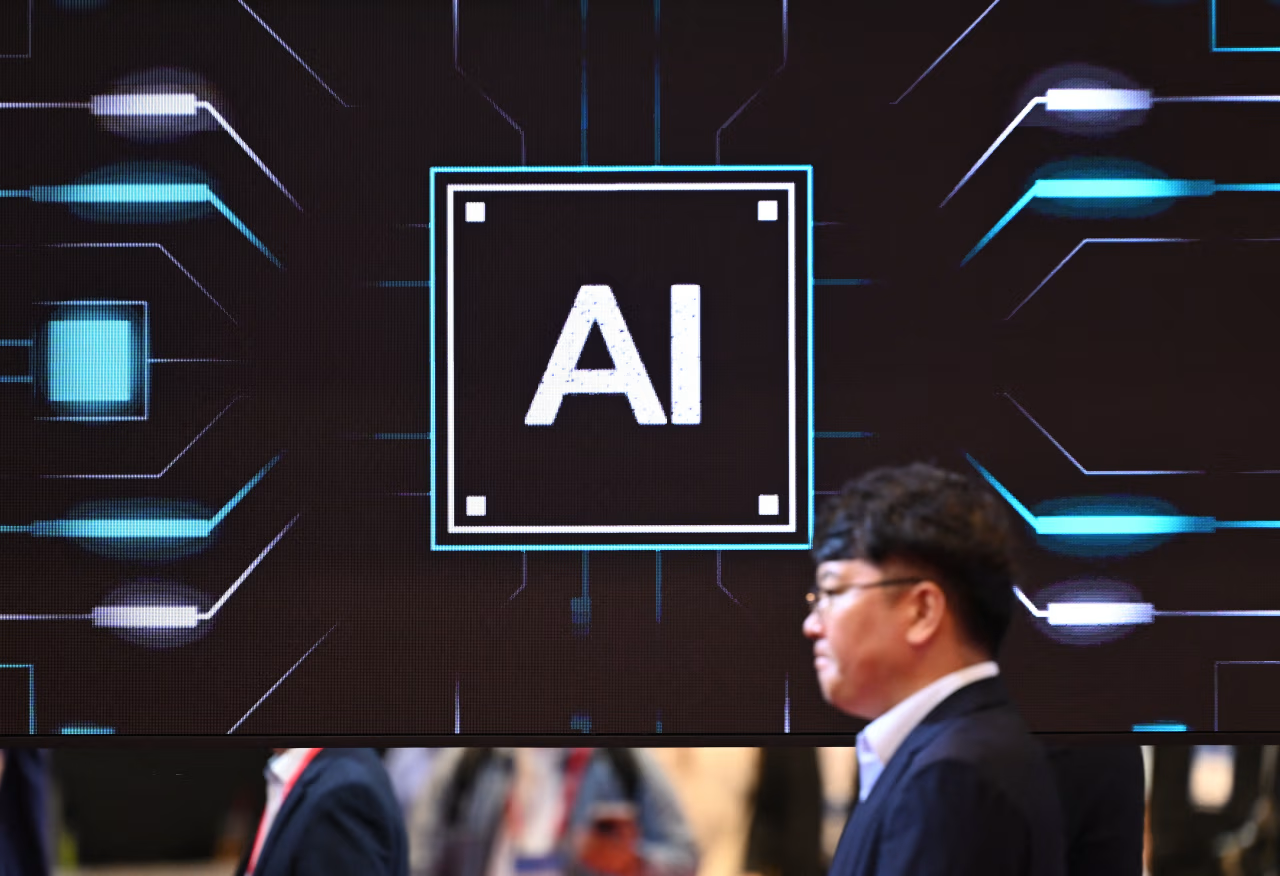
一系列人工智能安全事故正在暴露这个快速增长行业的一个巨大漏洞:缺乏可用的保险。
A string of artificial-intelligence safety incidents is exposing a gaping hole for the fast-growing industry: the lack of available insurance.
失控的智能体已入侵网站。AI聊天机器人被指控鼓励自杀和谋杀。一名智能体提交了虚假的未破谋杀案线索。最新事件叠加了AI公司面临的现有诉讼,这些诉讼指控聊天机器人造成伤害,以及模型在训练过程中侵犯版权。
Rogue agents have hacked into websites. AI chatbots have been accused of encouraging suicides and murders. An agent submitted fake unsolved murder tips. The latest episodes add to existing lawsuits AI companies face alleging chatbot harm and copyright violations when models are trained.
人工智能改变世界的看似无限可能性,也包括广泛的伤害能力,这可能使生产或使用AI的公司面临法律风险。
The seemingly limitless possibilities of artificial intelligence to change the world also include a wide-ranging capacity for harm that could leave companies that produce or use AI legally vulnerable.
专门从事AI风险的保险公司称,随着AI在经济中的应用不断扩散,最大的AI公司正面临高达数十亿甚至数百亿美元的潜在法律责任。一些行业官员甚至呼吁美国政府提供责任兜底。
The biggest AI companies are racking up potential legal liabilities running into the tens—if not hundreds—of billions of dollars, as AI adoption spreads through the economy, according to insurers specializing in AI risks. Some industry officials have even called for the U.S. government to provide a liability backstop.
保险经纪人称,AI公司拥有通常的企业传统保险组合,例如综合责任险和网络保险。但AI和保险业内部人士称,该行业惊人的增长速度意味着AI相关索赔有可能超过这些保险的限额。
AI companies have the usual corporate suite of traditional insurance policies, such as general liability and cyber-insurance, brokers said. But the industry’s phenomenal rate of growth means AI-related claims have the potential to outpace the limits on that coverage, according to AI and insurance industry insiders.
“AI资本热潮所创造的风险,在各个方面的承保能力都太不足了,”Marsh Risk首席执行官尼克·斯图德说,Marsh Risk是专业服务公司Marsh的保险经纪部门。“但这正在改变。”少数保险公司专门销售针对AI风险的保险,包括来自智能体的风险。但与AI巨头面临的潜在风险敞口相比,保单限额很小。再保险公司慕尼黑再保险的一位发言人称,该公司提供一项涵盖AI模型错误的保单,限额高达5000万美元。
“There’s too little capacity in every aspect of the risk that is being created by the AI capital boom,” said Nick Studer, chief executive of Marsh Risk, the insurance brokerage arm of professional-services firm Marsh. “But that is changing.”A few insurers sell coverage specifically for AI risks, including from agents. But the policy limits are small compared with the potential exposure of the AI giants. Reinsurer Munich Re offers a policy to cover errors by AI models with limits of up to $50 million, according to a spokesman.
初创公司希望填补这一空白,而更广泛的保险公司也将AI视为未来提供专业产品的新机遇。
Startups are hoping to fill the gap, and insurance companies more broadly see AI down the road as a new opportunity for offering specialty products.
前Anthropic员工鲁恩·克维斯特是人工智能承保公司的联合创始人,该公司得到劳合社保险市场的支持。
Rune Kvist, a former Anthropic employee, is a co-founder of the Artificial Intelligence Underwriting Company, which has backing from Lloyd’s of London’s insurance marketplace.
克维斯特表示,Anthropic和OpenAI计划进行首次公开募股,这使人们更加关注“这些风险在保险及其他安全网方面的缺口”。
The planned IPOs of Anthropic and OpenAI are adding to the focus on the “gaps in the insurance and other safety nets for those risks,” says Kvist.
Testudo首席执行官乔治·刘温-史密斯表示,最大的人工智能公司愿意购买数十亿美元的保险,并且有资产负债表和现金来负担得起。Testudo是一家总部位于英国的人工智能保险公司,也与劳合社有关联。他补充说,针对如此规模的此类责任的保险并不提供。“现实是——在地球上根本不存在,”他说。
The biggest AI companies are willing to buy billions of dollars of coverage and have the balance sheet and cash to afford it, said George Lewin-Smith, chief executive of Testudo, a U.K.-based AI insurer also affiliated with Lloyd’s. He added that coverage at that scale for such liabilities isn’t available. “The reality is—it just doesn’t exist on planet Earth,” he said.
人工智能初创公司可能面临以前几代科技公司不曾面临的责任风险。网络门户和社交媒体公司在很大程度上受到1996年通过的一项联邦法律条款的保护,该条款被称为第230条,使其免于因平台上的内容而承担责任。
AI startups might be exposed to liabilities in ways previous generations of tech companies weren’t. Web portals and social-media companies were largely shielded from being held liable for content on their platforms by a provision of federal law passed in 1996 known as Section 230.
根据穆迪分析公司的一份报告,这种保护对人工智能公司可能没那么有用,因为它们对内容有实质性贡献。
The protection may not be as useful for AI companies because they materially contribute to the content, according to a report by Moody’s Analytics.
最大的人工智能开发商资金雄厚,足以承担许多责任。但一起造成广泛经济或人员伤害的重大事件可能会耗尽公司的财务缓冲。
The biggest AI developers have deep enough pockets to cover many liabilities. But a major incident that causes widespread economic or human harm could swamp a company’s financial buffers.
保险公司正在向主要人工智能公司销售专业保单,以此向紧张的监管机构和投资者提供保证。
Insurance firms are selling specialty policies to the major AI companies as a way to reassure nervous regulators and investors.
即使保额远低于潜在损失,一份保单也能表明外部方已评估并愿意承担该风险。人工智能风险的保单通常基于对错误发生概率的模拟测试进行承保,从而对底层技术形成事实上的审计。
A policy, even for far less than the potential loss, demonstrates that an outside party has assessed and is willing to cover a risk. Policies for AI risks are often underwritten on the basis of simulation testing of the likelihood of errors, creating a de facto audit of the underlying tech.
经纪人和保险公司表示,保险——或无法以可负担的价格购买保险——有可能通过将保险条件作为对开发者和用户设置护栏,来帮助监管人工智能。
Insurance—or the inability to acquire it at an affordable price—has the potential to help police AI by imposing guardrails on both developers and users as a condition of coverage, brokers and insurers say.
风险投资家大卫·萨克斯,是新成立的白宫人工智能特别工作组成员之一,他建议保险可以为行业自愿控制协议增加约束力。他在社交媒体上的一篇帖子中表示,根据该协议内部报告的安全问题,在某些情况下可能被保险公司用于拒绝董事和高管责任险——这种保险旨在保护高管免受个人责任。
Venture capitalist David Sacks, part of a new White House task force on AI, suggested insurance could add teeth to a voluntary industry agreement on controls. In a social-media post, he said a safety issue reported internally under the agreement could in some circumstances be used by an insurer to deny directors-and-officers coverage—protection designed to shield executives from personal liability.
保险公司对如何最好地应对人工智能带来的不断攀升的风险——以及机遇——存在分歧。保险行业正竞相从人工智能数据中心获利,经纪公司安永将其描述为“保险市场有史以来最大的机遇”。但行业日益担心所谓的“静默风险”,即主流商业保单对使用人工智能的企业因该技术造成的损失既不明确承保也不明确免责。根据安永的数据,超过90%的保险承保的人工智能风险属于这一静默类别。
Insurers are divided over how best to respond to the spiraling risks—and opportunities—from AI. The industry is racing to profit from AI data centers, described by broker Aon as “the insurance market’s biggest ever opportunity.”But the industry is increasingly worried about so-called silent risk, where mainstream policies for businesses using AI neither affirmatively cover nor exclude losses caused by the technology. More than 90% of AI risks covered by insurance fall into this silent category, according to Aon.
人工智能损失不易归入现有的保险类别,这为关于哪些损失承保、哪些不承保的争议留下了空间,这是美国智库兰德公司今年发布的一份报告指出的。该报告指出,企业快速采用人工智能与人工智能使用保险(或不投保)的碎片化市场之间存在“新兴错位”,尤其是在美国。人工智能引发的损失类型各不相同,从身体伤害和财产损失——例如,由容易出错的工厂机器人造成——到版权侵权、未经授权的数据泄露、幻觉性错误和监管处罚。
AI losses don’t fit neatly into existing insurance categories, creating scope for disputes about what is and isn’t covered, according to a report this year by Rand, a U.S.-based think tank. The report flagged an “emerging mismatch between rapid enterprise adoption of AI and the fragmented market for insuring (or not insuring) AI use, particularly in the United States.”The different types of AI-inspired losses range from bodily injury and property damage—caused by, say, an error-prone factory robot—to copyright infringement, unauthorized data disclosures, hallucinated errors and regulatory penalties.
将人工智能从公司的综合责任险及其他保单中排除的选项正在整个行业传播。
An option to exclude AI from companies’ general liability and other policies is spreading through the industry.
提供广泛使用的标准化保险单格式的维瑞斯保险服务办公室,今年推出了针对生成式人工智能的可选免责条款。根据一位维瑞斯发言人的说法,该公司正在考虑针对其他人工智能相关风险敞口(包括代理人工智能)推出更多可选免责条款。
Verisk’s Insurance Services Office, which provides widely used standardized insurance policy forms, this year introduced optional exclusions for generative AI. It is weighing additional optional exclusions for other AI-related exposures, including agentic AI, according to a Verisk spokeswoman.
美国国际集团(AIG)和安盛(Chubb)是越来越多拥有使用现有Verisk除外条款选项的保险公司之一,如果它们未来希望这样做的话。一名AIG发言人表示,该保险公司会自动采用标准化条款,这是“整个行业的普遍做法”。作为全球最大的保险经纪商,Marsh代表公司与保险公司进行谈判,本月对除外条款发出了警报。其保险经纪业务负责人Studer在给主要保险公司的一封信中表示,排除人工智能风险将是行业的一项“倒退”。
American International Group and Chubb are among a growing band of insurers with the option to use the existing Verisk exclusions, should they want to do so in the future. An AIG spokesman said the insurer automatically adopts the standardized forms, which is a “common practice across the industry.”Marsh, the biggest global insurance broker, which acts on behalf of companies negotiating with insurers, this month sounded the alarm on exclusions. Studer, the head of its insurance brokerage, said in a letter to leading insurers that excluding AI risks would be a “backward step” for the industry.
Studer在信中写道,根据《华尔街日报》审阅的信件副本,“这将增加承保不确定性,并增加争议。”
“It will increase coverage uncertainty and increase disputes,” Studer wrote, according to a copy of the letter reviewed by The Wall Street Journal.
信中称,如果保险公司实施人工智能除外条款,Marsh将建议客户在其他地方寻求承保。但信中还补充称,经纪商、保险公司和客户需要共同努力,管理“围绕代理人工智能和自主决策的真正新颖的风险敞口”。
Marsh will recommend that clients seek cover elsewhere if an insurer imposes AI exclusions, the letter said. But it added that brokers, insurers and clients will need to work together to manage “genuinely novel exposures…around agentic AI and autonomous decision-making.”
请致函Jean Eaglesham,邮箱:Jean.Eaglesham@wsj.com
Write to Jean Eaglesham at Jean. Eaglesham@wsj.com