约翰·莱斯特,萨姆·麦克尼尔 巴黎——一方面,大批坚定的青少年通过封锁学校、参加有时会演变成暴力的游行,抗议他们的未来。
JOHN LEICESTER, SAM McNEIL PARIS — On one side, legions of determined teenagers protesting for their future by blockading schools and taking part in marches that have sometimes spiraled into violence .
另一方面,欧洲最大内部安全部队之一被不受欢迎且即将离任的总统政府部署。
On the other, one of the largest internal security forces in Europe , deployed by the government of an unpopular and outgoing president .
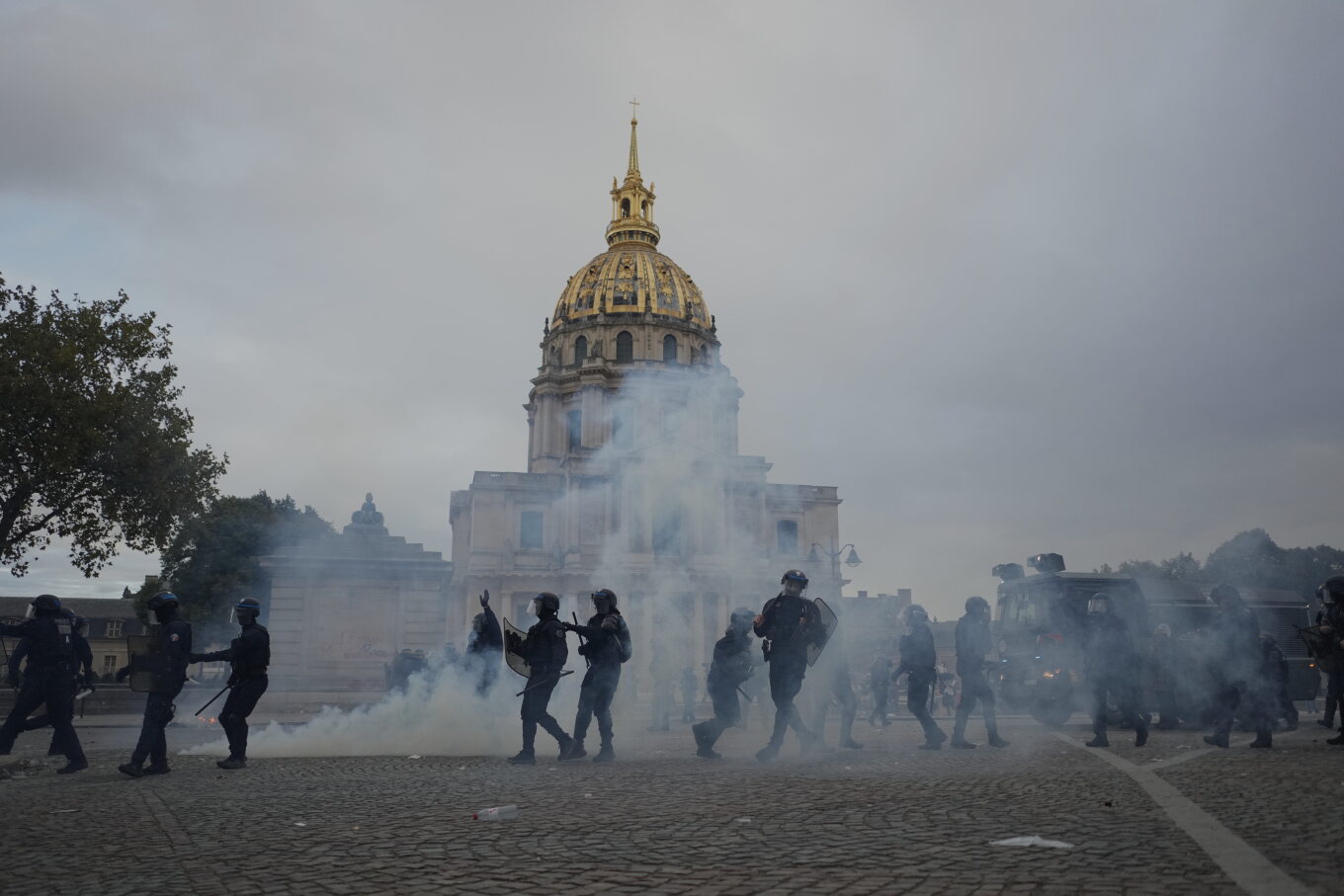
结果几乎每天在高中外和法国街头上演的,是全国范围的动荡风暴。近几周的混乱——大规模逮捕和数百人受伤——在这个拥有数百年抗议传统的国家引发了强烈轰动。甚至有警察对政府处理示威的方式表示不满。
The result, playing out almost daily outside high schools and on the streets of France , is a nationwide storm of unrest. The mayhem of recent weeks — with mass arrests and hundreds of injured — has sparked an uproar in a country steeped in a centuries-old culture of protest . Even some police have turned on the government’s handling of the demonstrations.
对于将在五月离任的总统埃马纽埃尔·马克龙来说,这绝非他十年执政的理想收场。他面对了一连串削弱其人气的抗议运动,并因其部长们动用警力对付示威者而受到广泛批评。
For President Emmanuel Macron , who leaves office in May, it’s hardly the dream ending to his decade in power. He has faced a succession of protest movements that sapped his popularity and fueled broad criticism of how his ministers use police against demonstrators.
在高中生中,抗议声浪尤为高涨。部分原因是最近几周被捕的8,000人中绝大多数是18岁以下的青少年,且警方的防暴武器被指导致一些年轻人受到改变人生的伤害。
With the high schoolers, the outcry has grown particularly loud. That’s partly because the vast majority of the 8,000 people arrested in recent weeks are teenagers under 18 and because police riot-control weapons are blamed for life-changing injuries suffered by some young teens.
抗议者要求为学校提供更多资源,尤其是巴黎贫困郊区及其他城市和城镇的学校,这一诉求也获得了同情的听众,因为法国正受到创纪录的贫困和创纪录的公共债务的冲击。
The protesters’ push for better-resourced schools , particularly in poorer Paris suburbs and other cities and towns, also has a sympathetic audience as France hurts from record poverty and record public debt.
但警方抱怨称,他们正面对利用抗议人群作为掩护、对警员进行攻击的暴力骚乱者,这些人投掷石块、烟花及其他投射物,并通过纵火、破坏和其他破坏行为制造混乱。根据政府统计,已有900多名警官以及近150名教师和其他学校工作人员受伤。
But police complain that they’re facing violent rioters who are latching onto the protests and using the crowds as cover to attack officers, pelting them with rocks, fireworks and other projectiles and wreaking havoc with fires, vandalism and other destruction. By the government’s count, more than 900 officers and nearly 150 teachers and other school staffers have been wounded.
“法国的历史在某种程度上解释了为什么抗议活动会演变成警察与一些示威者之间的冲突——这些示威者戴着面具、穿着黑色衣服,随时准备反抗,”巴黎北部郊区的警官兼工会代表瓦利德·赫拉尔(Walid Hrar)说道。“毕竟,这是法国大革命的发源地;每个人都在为此感到自豪。有些政党甚至公然鼓吹‘我们应该违抗法律’——这正是罗伯斯庇尔和其他革命者在1789年教给我们的。”
French history partly explains why protests are veering into confrontations between riot police and some demonstrators who come ready to fight in masks and black clothes, says Walid Hrar, a police officer and union representative in the northern suburbs of Paris. “This is the country of the French Revolution. Everyone boasts about it, in fact. Some political parties don’t hesitate to say that we need to disobey the law. That’s what Robespierre and other revolutionaries taught us in 1789,” he said.
“法国总是倾向于被动应对而非主动预防,”他补充道,“换句话说,我们总是走向极端。”警方因使用各种所谓的‘非致命性武器’(如手榴弹、催泪瓦斯、水炮以及装有强光闪烁装置的防暴盾牌)来控制人群而受到严厉批评。
“France always tends to react rather than anticipate,” he added. “In other words, we’re always going to extremes.”The police have drawn sharp scrutiny for their efforts to control crowds using a variety of so-called non-lethal weaponry, particularly grenades and other projectiles, but also tear gas, water cannons and riot shields equipped with powerful strobe lights.
“我们派去处理这些暴力抗议活动的警察装备简陋、缺乏训练,”专门研究法国警务体系的作家让-马里·戈达尔(Jean-Marie Godard)指出,“这些示威者很容易因愤怒和恐惧而变得失控。”
“We’re sending poorly equipped, untrained public security police officers to violent demonstrations who are likely to become agitated very quickly out of anger and fear,” said Jean-Marie Godard, an author who specializes in French policing.
赫拉尔表示:“有些警察并不擅长人群控制,也没有相应的装备。我们之所以派他们去,只是因为人手不足;他们所穿的制服并不具备防火性能,如果被烟花发射的弹丸击中,就有可能着火。我们的头盔也早已破旧不堪,使用的防暴盾牌也不符合标准。有些警察甚至没有被允许使用防暴投射物和手榴弹,因此他们很难将攻击者控制在安全距离之外。”
Hrar said some of his police colleagues “aren’t specialized in crowd control and aren’t equipped for it. We send them in because we need the manpower, so we have officers wearing uniforms that aren’t flame-resistant. And if you’re hit by a firework mortar and your uniform isn’t flame-resistant, you can catch fire. We also have officers with worn-out helmets. We have shields that aren’t suitable.”He said officers who haven’t been given permission to use riot-control projectiles and grenades sometimes struggle to keep attackers at a safe distance.
“他表示:‘很不幸,我们只能如此。’‘当这种情况发生时,你必然会陷入直接的身体冲突。在这种情况下,双方都会受伤。’
“So unfortunately we make do,” he said. “You’ll inevitably end up in direct physical confrontation. When that happens, there are injuries on both sides.”
法国警察联盟本周宣布,已向国家提起法律诉讼,指控其危及生命。该联盟称,警员被发布模糊且相互矛盾的指令,使他们“孤立、被背叛、被抛弃、暴露于暴力”。
His Alliance police union announced this week that it is filing a legal complaint against the state, accusing it of endangering lives. It alleged that officers are being issued with vague and contradictory orders, leaving them “isolated, betrayed, abandoned, exposed to violence.”
法国内政部长拉尔夫·努涅兹(Laurent Nunez)本周表示,在抗议期间,安全力量至少使用了18,000次暴力管制武器,主要是烟雾和催泪气体,也有子弹和手榴弹。
French Interior Minister Laurent Nunez said this week that security forces have used crowd-control weapons at least 18,000 times during the protests — mostly smoke and tear gas but also projectiles and grenades.
他指出,一枚震耳欲聋的榴弹发射器发射的手榴弹被使用“约40次”,随后在针对高中生时暂停了其部署,此前一名15岁少年失去了手。
They include a deafening launcher-fired grenade that Nunez said was used “about 40 times” before he suspended its deployment against high schoolers, after a 15-year-old lost a hand.
“所有这些装备、所有这些力量、所有这些中间武器,都是在必要时、遵循比例原则进行部署,以标志响应的升级,将人群保持在距离之外,或者有时使其无法行动,”他表示。
“All this equipment, all these forces, all these intermediate weapons, are used whenever necessary, with proportionality, to mark an escalation of the response, to keep people at a distance or sometimes to put them out of action,” he said.
该部长称,关于使用暴力管制弹药的规则“非常明确、非常严格”。“我们避免所有以上颈部的装备,”他补充道。
The minister said rules governing the use of riot-control projectiles are “very clear, very strict.”“We avoid everything above the neck,” he said.
然而,一名涉嫌开火导致16岁少年部分失明的警员本周被指控加重暴力罪。
Still, an officer suspected of firing a round that partially blinded a 16-year-old was this week charged with aggravated violence.
这一案件是截至周二已有36起调查的警方不当行为案件之一。其中四起涉及“残废性伤害”,另六起涉及“严重伤害”,其余案件涉及“拳击、侮辱和疑似性侵害”,包括一名警员被指控企图将抗议者溺死的案例,努涅兹表示。法国拥有超过25万名警察和宪兵。
That case is among a growing number of investigations — totaling 36 as of Tuesday — into alleged police misconduct. Four involve “mutilating injuries,” another six involve “significant injuries” and others are for “blows, insults and suspected sexual assaults” and include the case of an officer accused of attempting to drown a protester, Nunez said. France has more than 250,000 police and gendarmes.
法国国家科学研究中心的警务问题专家塞巴斯蒂安·罗谢指出,警方采取何种应对措施往往取决于下令行动的政府的政治需求。相较于以往面对那些向政府大楼倾倒粪肥、封锁道路甚至纵火的法国农民时表现得较为宽容,如今警方对参与抗议的青少年则严厉得多。
Sebastian Roché, a policing specialist at France’s National Center for Scientific Research, said their use can depend on the political needs of the government, which commands them. Officers have been less forgiving with the teenagers than they previously were with farmers, a powerful lobby in France, who doused government buildings with manure , blocked roads and set fires.
“正是政府对这场运动的政治定性决定了警方的应对方式,”罗谢说道。
“It’s the political definition of the movement that defines the police response,” Roché said.
赫拉尔还指出,公众对警察的看法也会随社交媒体上的内容而发生变化。他提到,在2015年发生恐怖袭击时,警察的英勇表现曾赢得民众的喝彩。
Public perceptions of the police also change and are influenced by what people see on social media, said Hrar, who noted that officers were applauded for their bravery during terror attacks in 2015 .
“如果每天不断向民众展示警察使用警棍、盾牌和催泪瓦斯实施管制的画面,必然会在人们心中形成负面印象。”麦克尼尔从布鲁塞尔发回报道。
“When you bombard people every single day with images of police intervening with batons, shields and tear gas, you’re inevitably going to create a negative impression.”McNeil reported from Brussels.