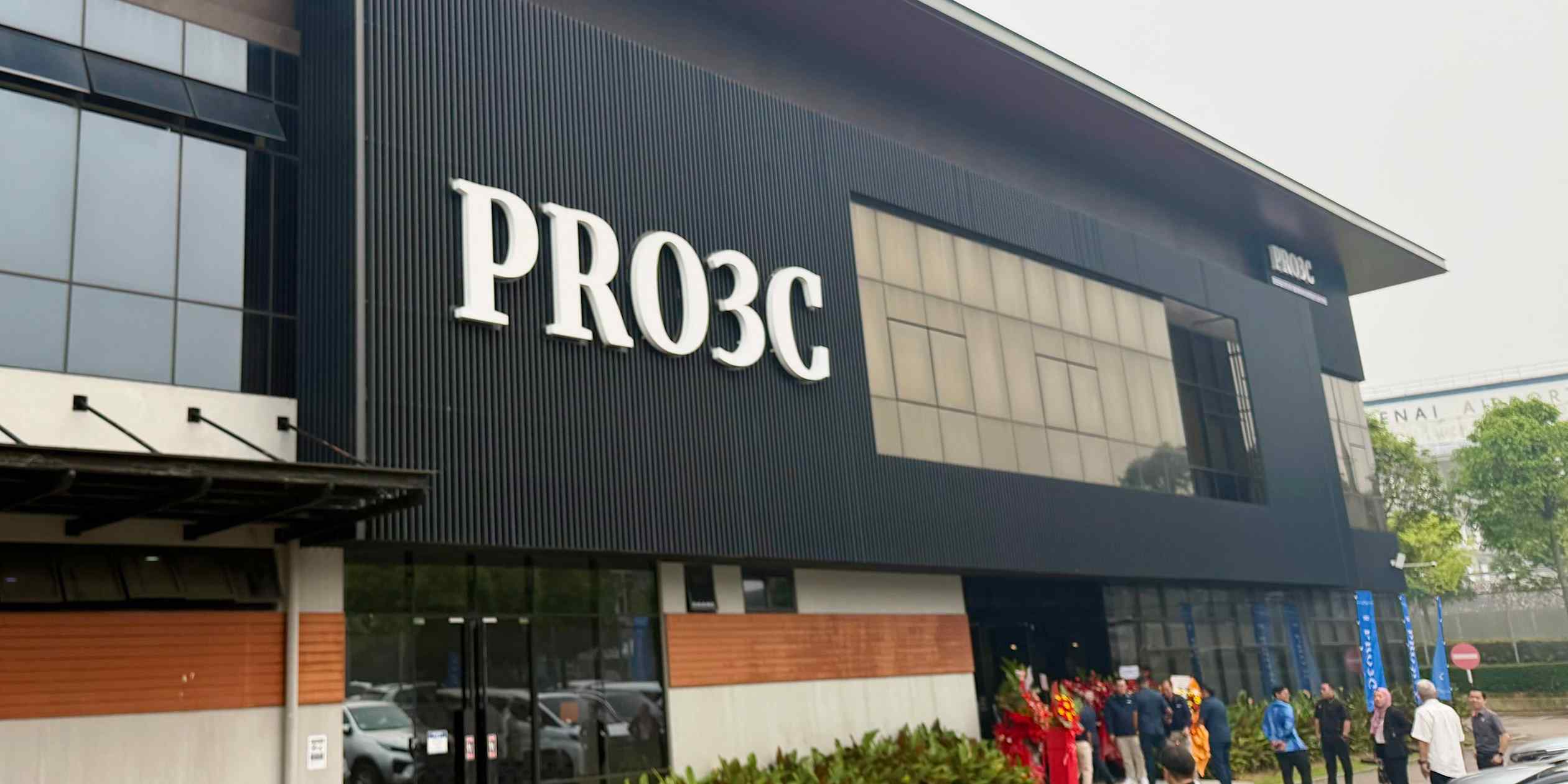
柔佛,马来西亚——为人工智能数据中心网络提供光通信关键组件的供应商表示,计划在2028年底前将其在马来西亚的制造产能提升至原来的三倍以上,以帮助满足空前的需求。
JOHOR, Malaysia -- A key component supplier for optical communications powering AI data center networks says it plans to more than triple its manufacturing capacity in Malaysia by the end of 2028 to help meet unprecedented demand.
“我们必须将产能至少提升三倍或四倍,才能满足客户的需求;通过如此大幅度的增产,我们有望巩固作为主要供应商的地位,”FIC Global董事长Leo Chien在周四该公司首座马来西亚工厂的开幕仪式后接受采访时表示。
"We must grow our capacity by at least triple or quadruple in order to meet our clients' demands, and by increasing output by this much, we could earn our position as a prime supplier," Leo Chien, chairman of FIC Global, said in an interview after Thursday's opening ceremony for its first Malaysian factory, in the southern state of Johor.
总部位于台北的FICG为美国的Coherent和Lumentum等领先光收发模块制造商组装印制电路板(PCB)。其竞争对手包括中国的Fast Train以及美国的Jabil和Sanmina。
Taipei-headquartered FICG assembles printed circuit boards (PCBs) for leading optical transceiver makers such as Coherent and Lumentum of the U.S. Its competitors include Fast Train of China and Jabil and Sanmina of the U.S.
“我们的合作关系可以追溯到2008年……我们已经建立了牢固的合作关系、信任以及解决所有挑战性问题的承诺,”Coherent数据通信供应链高级总监Steven Qian表示。
"Our relations date back to 2008...we've built a strong working relationship, trust and commitment to solve all challenging problems," said Steven Qian, a senior director for the data communications supply chain at Coherent.
FICG在东南亚国家的首座工厂正式开幕之际,全球光通信行业正因全球AI基础设施建设的指数级需求而面临最严峻的供应链瓶颈。激光器、印制电路板和数字信号处理器——这些可插拔光收发模块的关键组件,正为AI数据中心提供关键互连,而供应均出现严重受限。
The official opening of FICG's first factory in the Southeast Asian country comes as the global optical communications industry faces its severest supply chain bottlenecks due to the exponential appetite for worldwide AI infrastructure build-out. Supplies of lasers, PCBs and digital signal processors -- key components of the pluggable optical transceivers that provide crucial interconnectivity for AI data centers -- are all facing serious constraints.
“关键部件的广泛限制是个巨大的头痛问题……即使我们的客户规模足够大,能够获得更好的供应优先权,但他们得到的供应仍然远远不够,”董事长说。“这种情况至少会延续到明年。”FICG计划将其柔佛工厂的生产线从目前的八条增加到2028年的30条。(FICG)根据公司透露,FICG的柔佛工厂由其子公司Pro3C运营,今年第一季度进入大规模生产,截至上个月已实现盈利。
"The constraints in a wide range of key components are a huge headache...even as our client is large enough to have better supply priority, the supplies it gets are still far from enough," the chairman said. "The situation will at least extend to next year." FICG plans to increase production lines at its Johor facility from the current eight to 30 by 2028. (FICG) FICG's Johor site, under its subsidiary Pro3C, entered mass production in the first quarter of this year and has already turned profitable as of last month, according to the company.
目前该工厂有八条生产线,计划到2027年增加至18条,到2028年增加至30条。该工厂将生产支持下一代高速光收发器的组件,这些光收发器能够实现每秒800吉比特(Gbps)、1.6太比特(Tbps)及以上的总数据传输速率。
It currently has eight production lines, with plans to increase to 18 by 2027 and 30 by 2028. It is set to make components that support next-generation high-speed optical transceivers delivering aggregate data transfer rates of 800 gigabits per second (Gbps), 1.6 terabits per second (Tbps), and beyond.
FICG在中国目前拥有更大的产能,并且也在增加生产线数量以满足当地需求。但由于美国客户对供应链多元化的需求增长,马来西亚的产能将在明年超过中国的产能,钱恩表示,这是由地缘政治紧张局势驱动的所谓“中国+1”战略。
FICG currently has larger capacity in China, where it is also increasing the number of production lines to meet local demand. But Malaysian capacity would exceed China's next year due to growing requests from American customers for supply chain diversification, Chien said, referring to the so-called China +1 strategy driven by geopolitical tensions.
今年早些时候,英伟达宣布计划向Coherent投资20亿美元,以扩大产能并加强下一代光技术的研发。高速连接芯片供应商Marvell也正在与基板制造商AT&S合作,以提升马来西亚的先进芯片基板供应。
Earlier this year, Nvidia announced plans to invest $2 billion in Coherent to expand capacity and research and development for the next generation of optical technologies. High-speed connectivity chip provider Marvell is also collaborating with substrate maker AT&S to increase advanced chip substrate supplies in Malaysia.
研究机构Yole Group预测,随着AI数据中心需求增加对高速互连的需求,光收发器市场的价值将从2021年的100亿美元飙升至2031年的1120亿美元。
Research house Yole Group forecasts that the value of the optical transceiver market will soar from $10 billion in 2021 to $112 billion in 2031, as demand from AI data centers increases the need for high-speed interconnectivity.
除了传统的插入式光收发器,行业今年已开始部署新的光技术,例如英伟达、博通和台积电支持的共封装光学(CPO),在此技术中,光引擎被放置在比外部插入式光收发器更靠近主芯片的位置,从而大幅提升了服务器机架之间的数据通信速度。中国华为也开发了近封装光学(NPO)的标准,挑战英伟达和博通的方案,且NPO更具成本效益。
Apart from traditional plug-in optical transceivers, the industry has begun to deploy new optical technologies this year, such as co-packaged optics (CPO), backed by Nvidia, Broadcom and Taiwan Semiconductor Manufacturing Co. Here, optical engines are placed closer to the main chips than is possible with external plug-in transceivers, dramatically improving data communication speeds between server racks. China's Huawei has also developed the standard of near-packaged optics (NPO), challenging Nvidia and Broadcom's solutions, with NPO being more cost-effective.
台湾经济研究院科技供应链分析师邱世芳表示,过去一年,行业的思维方式已从用光学取代基于铜线的网络,转向在AI基础设施中两者共存的未来。这一转变受多种因素影响,如成本竞争力、供应链准备情况和可靠性。
Chiu Shih-fang, a tech supply chain analyst with the Taiwan Institute of Economic Research, said the industry had shifted its mindset over the past year from replacing copper wire-based networking with optics to a future where the two coexist in AI infrastructure. This was due to multiple factors, such as cost competitiveness, supply chain readiness and reliability.
“NPO和CPO的解决方案才刚刚起步,实际上可插拔光收发器的需求仍然非常强劲,未来两到三年的市场前景也非常清晰,”该分析师对《日经亚洲》表示。
"The solutions for NPOs and CPOs are just at their beginning, and in reality the demand for pluggable optical transceivers is still very strong with very clear market visibility for the next two to three years," the analyst told Nikkei Asia.
邱世芳表示,唯一的下行风险是供应链瓶颈持续存在以及中国对关键材料的出口管制,例如用于制造光收发器激光器的磷化铟。
Chiu said the only downside risks were continued supply chain bottlenecks and China's export controls on critical materials, such as indium phosphide, a material used to make the lasers in optical transceivers.
“美国政府尚未决定的关于[可能]禁止中国供应商或中国制造光产品的政策也可能对供应链造成冲击,”她补充道。“供应链必须做好应对地缘政治干扰的准备……FICG在马来西亚的新产能可被视为避免潜在中断的一种解决方案。”
"The U.S. government's yet-to-be-decided policy on [possibly] banning Chinese suppliers or made-in-China optical products could also send shocks to the supply chain," she added. "The supply chain will have to be prepared for geopolitical interference ... FICG's new capacity in Malaysia can be seen as a solution to avoid a potential disruption."