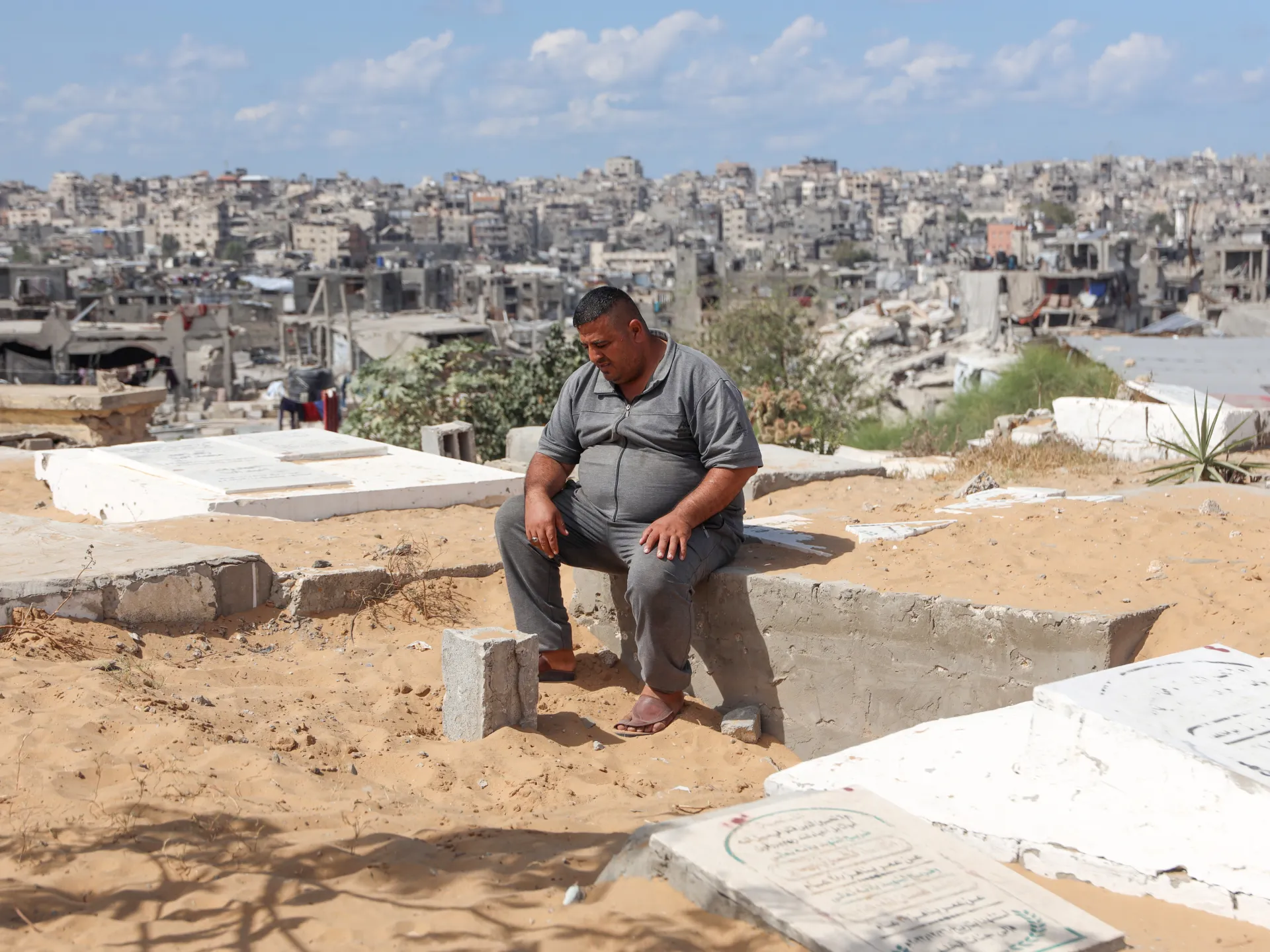
每天早上,马赫穆德·哈拉都会去附近的墓地,拜访他在以色列对加沙的种族灭绝战争中失去的家人的墓碑。
Every morning, Mahmoud Khalla goes to the nearby cemetery to visit the graves of the family members he lost during Israel’s genocidal war on Gaza.
自从他埋葬他们以来,他一直坚持这个早晨的例行程序,想象着他的家人仍然围在他身边。对40岁的马赫穆德来说,墓地是他一生中所爱之人的安息之地。
He has held on to this morning routine in the months since he buried them, imagining his family is still around. For Mahmoud, 40, the cemetery is the resting place of some of the people he has loved the most in his life.
他的妻子、三个孩子、父母、两个兄弟及其家人、姐姐及其孩子,以及其他亲戚,都曾于2023年12月21日聚集在位于加沙北部杰巴利耶的他们家的住所里。
His wife, his three children, his parents, his two brothers and their families, his sister and her children, and other relatives had all gathered in their family home in Jabalia, northern Gaza, on December 21, 2023.
随后,以色列的一次袭击瞄准了这栋五层楼的家庭住所,建筑被毁,屋内的39人全部遇难。马赫穆德在袭击发生前不久离开了家,是他家中唯一的幸存者。
An Israeli strike then targeted the five-storey family home, destroying the building and killing all 39 people inside. Mahmoud left his home shortly before it hit and is the only one left in his family.
马赫穆德回忆起那天时心痛不已。以色列坦克曾将杰巴利耶北部房屋附近的区域团团围住,使得人们在此地活动变得危险。由于以色列的持续围困,食物已经十分匮乏。傍晚时分,马赫穆德离开家去寻找食物,以供给家人。
The siege Mahmoud remembers that day with heartache. Israeli tanks had surrounded the area near the house in Jabalia, northern Gaza, making it dangerous for people to move around. Food was already scarce due to the ongoing Israeli siege. In the evening, Mahmoud left the house in search of provisions to feed his family.
“我告诉他们我会出去看看有什么可用的东西,”他对半岛电视台说。“刚出门大约15分钟,我就听到了一声巨爆。”
“I told them I would go and see what was available,” he told Al Jazeera. “As soon as I had been out for about 15 minutes, I heard a huge explosion.”
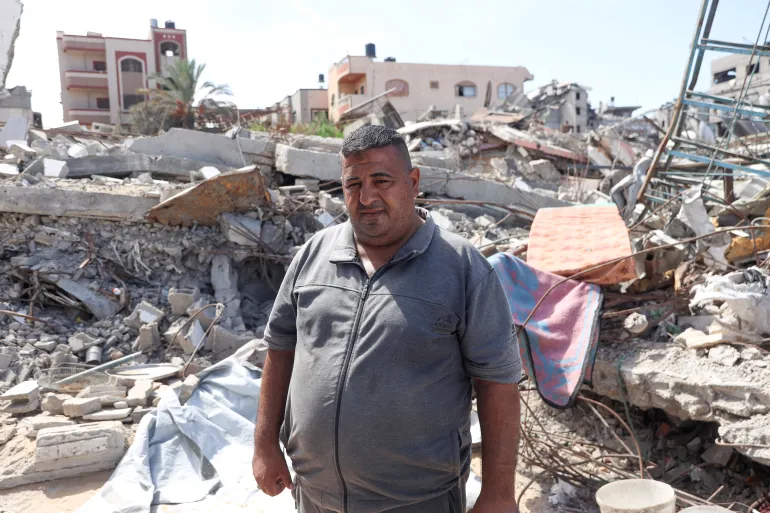
“我跑回去,发现被袭击的房子就是我们的。我当时震惊得说不出话来。但我让自己振作起来。在仍留在该地区的几位邻居的帮助下,我们试图营救可能被埋在废墟下的人。”马赫穆德站在他被以色列袭击摧毁的家庭住所旁,那次袭击导致39名亲戚遇害[阿卜杜勒哈基姆·阿布·里亚什/半岛电视台] 以色列的空袭、四旋翼无人机和监视飞机继续对该地区进行打击。这使得马赫穆德和他的邻居们无法寻找幸存者。
“I ran back and discovered that the targeted house was ours. I was in complete shock. But I pulled myself together. With the help of a few neighbours who were still in the area, we tried to rescue anyone who might be under the rubble.”Mahmoud stands beside his family home, destroyed in an Israeli strike that killed 39 relatives [Abdelhakim Abu Riash/Al Jazeera] Israeli air attacks, quadcopters and surveillance aircraft continued to target the area. It made it impossible for Mahmoud and his neighbours to search for survivors.
“一架监视飞机向我们投下了一枚炸弹,所以我们立刻逃开了,”他说。“我们第二天早上又回来了。”那天晚上,救护车和民防队也无法到达现场。
“A surveillance aircraft dropped a bomb on us, so we immediately ran away,” he says. “We came back the next morning.”Ambulances and civil defence teams were also unable to reach the site that night.
带着这种无助感,他想象着家人中的一些人可能仍然活着,被困在废墟下,等待被救出。他感觉自己在那晚已经死了上千次。
With this sense of helplessness, he imagined that some of his family might still be alive under the rubble, waiting to be rescued. He felt as though he had died a thousand times that night.
第二天早上,他回到现场,呼喊着可能被困在被毁家园下的家人。没有人回答,正是在这一刻,他意识到自己几乎失去了所有所爱的人。“废墟有五层楼高。我们根本不可能把任何人拉出来,”他说。
The following morning, he returned to the site and called out to his family members who might be beneath the ruined home. Nobody answered, and it was at this moment he realised he had lost nearly every person he loved. “There were five floors of rubble. It was impossible for us to pull anyone out,” he said.
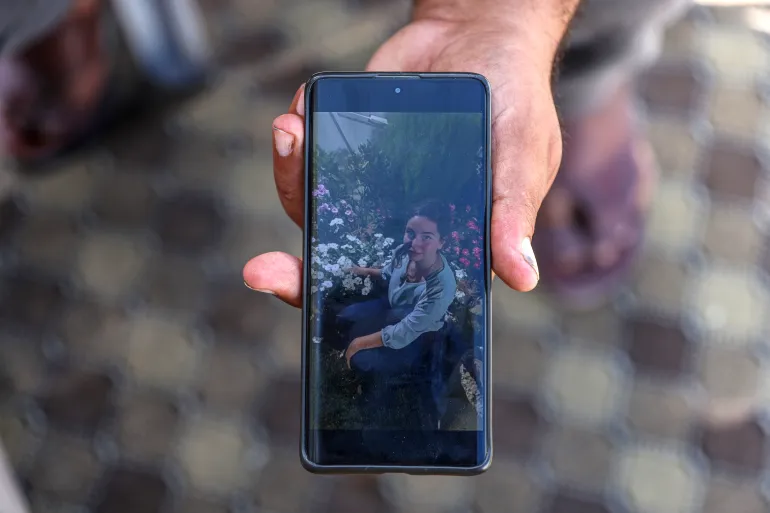
马赫穆德手里拿着女儿胡达的照片,胡达与母亲和兄弟姐妹一起遇害[阿卜杜勒哈基姆·阿布·里亚什/半岛电视台] 独自一人 那次袭击标志着马赫穆德一段漫长空虚时期的开始。他的房子被毁,几乎所有亲戚要么遇害,要么被迫南下流离失所,他已无处可去。
Mahmoud holds a photo of his daughter Huda, killed with her mother and siblings [Abdelhakim Abu Riash/Al Jazeera] Alone That attack marked the beginning of a long period of emptiness for Mahmoud. With his home destroyed and almost all of his relatives killed or displaced to the south, he had nowhere to go.
“连我的叔叔也被杀了,”他说。“他们家就在我们家对面,是在我们家被袭击前九天被毁的。那次袭击导致十八人死亡。其余家人都南下了。” 马赫穆德随后几个月一直流离失所、孤独一人。他在街头流浪,寻找晚上可以睡觉的地方。当他与流离失所的家人毫无关系时,想找到庇护所非常困难。
“Even my uncles had been killed,” he says. “Their house, opposite ours, was targeted nine days before our family home. Eighteen people were killed in that attack. The rest of the family had gone south.”Mahmoud spent the following months displaced and alone. He moved between the streets in search of somewhere to sleep for the night. It was difficult to find shelter among displaced families when he had no relation to them.
“我要么睡在街头,要么只要找到一辆敞开的车,就睡在车里或其他交通工具里,”他说。“我完全孤独,一无所有。” 由于完全没有庇护所,马赫穆德极易成为以色列袭击的目标。寻找食物的斗争变得和寻找一个安全睡觉的地方一样紧迫。
“I was sleeping in the streets, or in cars or vehicles whenever I found one that was open,” he says. “I was totally lonely and homeless.”With no shelter at all, Mahmoud was vulnerable to Israeli attacks. The struggle for food became as urgent as the need to find somewhere safe to sleep.
“你不知道子弹会不会击中你,火箭弹会不会袭来,你是否能找到食物,或者你将在哪里睡觉,”他说。
“You don’t know whether a bullet will hit you, whether a rocket will come, whether you will find food or where you will sleep,” he said.
马哈茂德用手从废墟下亲自挖出了家人的遗骸[阿卜杜勒哈基姆·阿布·里亚什/半岛电视台] 寻找家人 2025年10月,加沙宣布“停火”后,家人开始艰难地寻找失踪的亲人。近一年后,估计仍有8000人下落不明,他们的遗体很可能仍埋在自己家的废墟中或其他地方。
Mahmoud recovered the remains of his family by hand from beneath the rubble [Abdelhakim Abu Riash/Al Jazeera] Recovering his family After a “ceasefire” was announced for Gaza in October 2025, families began the difficult search for their missing loved ones. Nearly a year later, an estimated 8,000 people remain missing, their bodies likely under the rubble of their homes or in other locations.
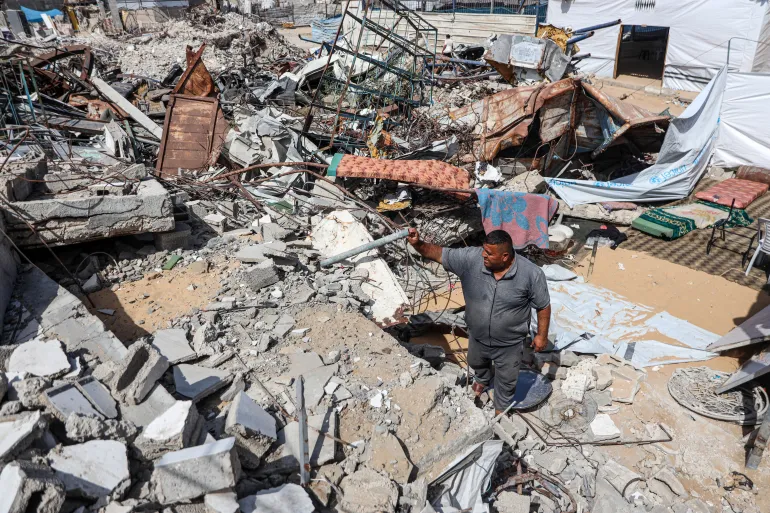
“停火”开始、轰炸减少几个月后,马哈茂德开始亲自用手挖掘家人的遗骸。他们在过去的29个月里一直被困在自己家的废墟之下。
Months after the “ceasefire” began and bombing decreased, Mahmoud started recovering the remains of his family members himself. They had been entombed among the remains of their home for the last 29 months.
“感觉我的家人仍然埋在废墟下,却未得到安葬,这非常痛苦,”他说。“这种感觉一直伴随着我。” 他曾向民防、红十字会和其他当局寻求帮助。但他说,设备严重短缺以及大量其他家庭也在寻求援助,意味着他们能提供的帮助甚微。
“The feeling that my family was still under the rubble, without being buried, was very difficult,” he says. “It never left me.”He approached the civil defence, the Red Cross and other authorities for help. But he says a severe shortage of equipment and a huge number of other families requesting assistance meant they could be of little help.
最终,在朋友和邻居自愿加入协助的帮助下,他开始亲手进行这项令人心碎的任务——寻回亲人的遗骸。他从今年五月开始这项工作,整个过程持续了三个月。“有时候,我们一天能找到一个人;有时候,需要两天,”他说。
Eventually, with the help of friends and neighbours who volunteered to work alongside him, he began the heartbreaking task of recovering his loved ones himself by hand. He began recovering the remains around May this year, in a process that took three months. “Sometimes, we managed to recover one person in a day. Sometimes, it took two days,” he said.
他找到的第一批人是两个曾与家人一起躲藏的亲戚;最后找到的是他的姐姐和她的孩子们,他们是被一起埋葬的。
The first people he found were two relatives who had been sheltering with the family. The last were his sister and her children, who had been buried together.
他将家人的遗骸安葬在加沙北部杰巴利耶-纳兹拉附近的一个墓地。
He buried his family members at a cemetery near Jabalia an-Nazla, in northern Gaza.
“我终于把他们安葬时,感到一种巨大的解脱,”他说。“我花了三个月时间,一天一天地工作,才把他们的遗骸全部找回。”
“I felt a great sense of relief when I finally buried them,” he said. “It took me three months to recover all of their remains, working day by day.”