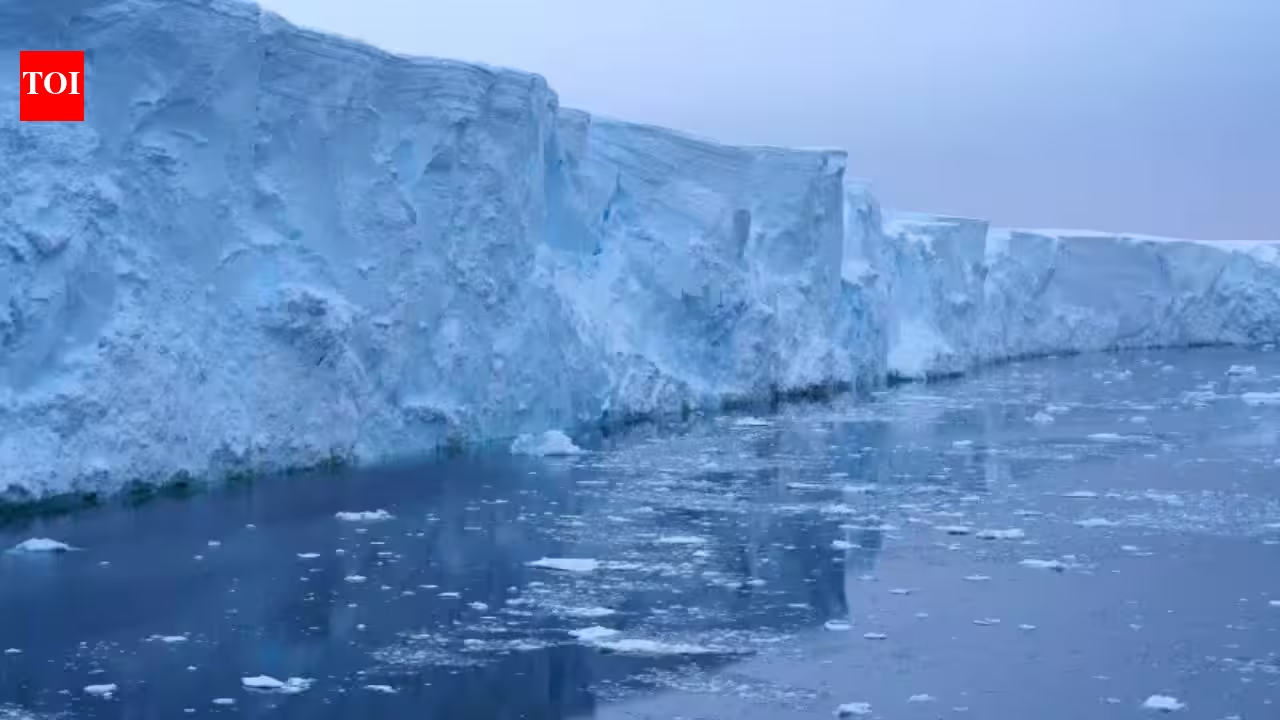
新研究警告,南极洲“末日冰川”可能释放出比之前担忧的更大威胁,到2100年可能导致的海平面上升是早先模型预测的两倍。据CNN报道,该研究发现,温暖的海水正渗透到特韦茨冰川下方数公里处,加速了传统冰盖模型在很大程度上忽略的区域的融化。加州大学欧文分校和美国宇航局喷气推进实验室的研究人员表示,将这一过程纳入考虑后,该冰川到2100年对海平面上升的预计贡献将达到高达30毫米,大约是早先估计的两倍。
Antarctica’s ‘Doomsday Glacier’ could unleash a bigger threat than previously feared, with new research warning that it could drive twice as much sea-level rise by 2100 as earlier models predicted. According to CNN, the study found that warm ocean water is penetrating several kilometres beneath Thwaites Glacier, accelerating melting in a zone that conventional ice-sheet models have largely overlooked. Researchers from the University of California, Irvine, and NASA’s Jet Propulsion Laboratory said accounting for this process pushed the glacier’s projected contribution to sea-level rise to up to 30 mm by 2100, roughly twice previous estimates.
如果该冰川失去与穆吉诺特山脊的接触,其稳定性可能面临进一步威胁,该水下地貌目前有助于阻止其退缩。主要研究人员马蒂亚·波内利表示,包含4至6公里宽接地带的模拟显示,该冰川到2100年与该山脊脱离的概率为60%。
The glacier’s stability could be further threatened if it loses contact with the Mouginot Ridge, an underwater feature that currently helps hold back its retreat. Lead researcher Mattia Poinelli said simulations incorporating a 4–6 kilometre-wide grounding zone indicate a 60 per cent probability of the glacier becoming detached from the ridge by 2100.
合著者埃里克·里尼奥警告说,现有预测难以捕捉冰川融化的速度,因为早期模型中缺少关键的物理过程。特威茨冰川面积大约相当于英国,是南极洲变化最快的冰川之一,也是全球海平面上升的主要贡献者。自1996年以来,其最快流动的西部区域已后退约25公里,目前其冰川损失约占全球海平面上升的4%。据国际特威茨冰川合作组织称,如果该冰川完全崩溃,最终可能使全球海平面上升约65厘米。
Co-author Eric Rignot warned that existing projections had struggled to capture the speed of ice loss because key physical processes were missing from earlier models. Thwaites Glacier, which is roughly the size of Britain, is one of Antarctica’s fastest-changing glaciers and a major contributor to global sea-level rise. It has retreated around 25 kilometres in its fastest-flowing western sector since 1996, while its ice loss currently accounts for about 4 per cent of global sea-level rise. According to the International Thwaites Glacier Collaboration,if the glacier were to collapse entirely, it could eventually raise global sea levels by around 65 centimetres.
特威茨冰川为何在缩小特威茨冰川后退的主要驱动因素是相对温暖的海水从下方融化冰川,这一过程因气候变化而加剧。据英国南极调查局称,温暖的咸水到达冰川的浮动冰架和接地带,即冰与海床相接的地方,使冰变薄并削弱减缓内陆冰流向海洋的结构。随着冰川变薄,其接地线向内陆后退,暴露出更多冰面与海水接触。
Why Thwaites Glacier is shrinkingThe primary driver of Thwaites Glacier’s retreat is relatively warm ocean water melting the ice from below, a process intensified by climate change. Warm, salty water reaches the glacier’s floating ice shelf and grounding zone, where the ice meets the seabed, thinning the ice and weakening the structure that slows the flow of inland ice towards the ocean, according to the British Antarctic Survey. As the glacier thins, its grounding line retreats inland, exposing more ice to seawater.
特威茨冰川部分区域下方的海床也向南极内陆更深处倾斜,使海水能够更深入地渗透到冰层下方,并可能加速后退。美国宇航局的研究将这一反馈机制确定为主要担忧原因。其后退可能如何影响气候最直接的全球后果将是海平面上升,因为更多陆地冰流入海洋。这将增加沿海洪水、侵蚀和风暴潮破坏的风险,尤其是在低洼沿海地区。
The seabed beneath parts of Thwaites also slopes deeper towards the Antarctic interior, allowing ocean water to penetrate further beneath the ice and potentially accelerate the retreat. NASA research has identified this feedback mechanism as a major reason for concern. How its retreat could affect the climateThe most immediate global consequence would be rising sea levels as more land-based ice flows into the ocean. This would increase the risk of coastal flooding, erosion and storm-surge damage, particularly in low-lying coastal regions.
如果特威茨冰川大幅后退,还可能使邻近冰川不稳定,增加西南极冰盖更广泛区域的潜在贡献。这些影响可能超出海平面范围。
If Thwaites retreats substantially, it could also destabilise neighbouring glaciers, increasing the potential contribution from the wider West Antarctic Ice Sheet. The effects could extend beyond sea levels.
大量淡水进入南大洋可能会改变其盐度和密度,从而可能影响海洋环流以及热量和养分的输送。减少排放能否减缓末日冰川的退缩?科学家表示,限制进一步融化最有效的方法是快速削减温室气体排放并遏制全球变暖,而全球变暖正在加热导致泰特斯冰川从底部融化的海水。减少化石燃料排放并加速向低碳能源转型,有望限制海洋进一步变暖,降低更严重冰损失的风险。
Large quantities of freshwater entering the Southern Ocean could alter its salinity and density, potentially affecting ocean circulation and the movement of heat and nutrients. Can cutting emissions slow the Doomsday Glacier’s retreat? Scientists say the most effective way to limit further melting is to rapidly cut greenhouse gas emissions and curb global warming, which is heating the ocean water responsible for melting Thwaites Glacier from below. Reducing emissions from fossil fuels and accelerating the shift to low-carbon energy could limit additional ocean warming and reduce the risk of more severe ice loss.A 2026 study led by the British Antarctic Survey found that Thwaites could continue losing ice for at least 150 years even when ocean-driven melting was switched off in simulations.
英国南极调查局主导的一项2026年研究发现,即使在模拟中关闭海洋驱动的融化过程,泰特斯冰川仍可能继续失去冰量至少150年。研究人员表示,目前没有经过验证的干预手段能够快速阻止冰川的退缩。首要任务是限制进一步变暖,同时通过加强海岸防护、改善洪水规划以及恢复红树林等自然屏障,为不可避免的海平面上升做好准备。
Researchers say there is no proven intervention that can quickly stop the glacier’s retreat. The priority is to limit further warming while preparing for unavoidable sea-level rise through stronger coastal protection, improved flood planning and restoration of natural barriers such as mangroves.