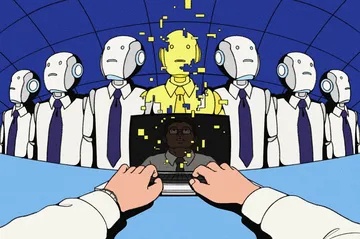
两位女性打开笔记本电脑。她们都是美国人。她们都是妈妈。她们都在登录,以数据工作者的身份上班,从事训练人工智能的人力劳动。布鲁克·汉森在因怀孕六个月被客服工作解雇后,开始认真从事数据工作。作为全职妈妈,数据工作提供了一种补充丈夫收入、每周赚取几百美元的方式。
Two women open their laptops. Both American. Both moms. Both logging on for shifts as data workers, the human labor that trains artificial intelligence. Brook Hansen started doing data work seriously after she was let go from her customer service job when she was six months pregnant. As a stay-at-home mom, data work offered a way to supplement her husband’s income and make a couple of hundred dollars a week.
安努·布里克西是一名放射科医生,她一小时就能赚到同样的金额。
Anu Brixey, a radiologist, makes that same amount in an hour.
数据工作长期与低工资挂钩,被视为蓝领劳动的数字等价物,如今正吸引能够获得更高报酬的白领专业人士。领英将数据标注员列为今年美国增长第四快的职位。随着人工智能模型的改进,招聘人员正在寻找软件工程师(时薪:最高可达120美元)、凝聚态物理专家(时薪:170美元)和民权律师(时薪:400美元),以“帮助训练下一代人工智能系统”。在业内被称为“专家”的这些工人,与从事较不专业任务、报酬较低的通用型工人共享数据经济。
Long associated with low wages and considered the digital equivalent of blue-collar labor, data work is now attracting white-collar specialists who can command much higher sums. LinkedIn named data annotators as the fourth-fastest-growing job role in the US this year. As AI models improve, recruiters are searching for software engineers (pay: up to $120 per hour), condensed matter experts ($170 per hour) and civil rights attorneys ($400 per hour), all to “help train next-generation AI systems.”Known in the industry as “experts,” these workers share the data economy with lower-paid generalists performing less specialized tasks.
这种日益扩大的分化对两类工人都有影响。低收入的通用型工人抱怨工作条件正在恶化:他们的任务变得更加困难,而稳定的工作机会也越来越难以找到。与此同时,白领专业人士的涌入引发了人们的担忧——人工智能模型正在吸收医生、数学家、会计师和科学家的专业知识。
The growing divide has implications for both groups. Lower-paid generalists complain that conditions are deteriorating: Their tasks are becoming more difficult while steady work is harder to find. Meanwhile, the influx of white-collar specialists is causing concerns that AI models are absorbing the expertise of doctors, mathematicians, accountants and scientists.
麻省理工学院教授丹妮尔·李研究人工智能和劳动力市场。她说,劳动——无论是体力劳动还是脑力劳动——长期以来一直被理解为雇主租用的东西。如果公司停止付款,就会失去对劳动的使用权。但她说,当雇主能够以人工智能模型的形式拥有该劳动的一个版本时,这种动态就会崩溃。
Labor — whether manual or intellectual — has long been understood as something employers rent, says Danielle Li, a professor at the Massachusetts Institute of Technology who studies AI and the labor market. If a company stops paying, it loses access. That dynamic breaks down, she says, when an employer can own a version of that labor in the form of an AI model.
当汉森(Hansen)在十年前开始从事数据工作时,她主要是在亚马逊的Mechanical Turk平台上转录音频,或者在照片中的人或汽车周围画框。(杰夫·贝佐斯曾将其称为“人工人工智能”。)这些微任务几乎不需要专注力,报酬按美分计算。维护数据工作者权益组织Turkopticon的组织者汉森表示,低工资曾是压力的来源。
When Hansen started data work a decade ago, she was mostly transcribing audio or drawing boxes around people or cars in photos on Amazon’s Mechanical Turk platform. (Jeff Bezos once called it “artificial artificial intelligence.”) These microtasks demanded little concentration and paid in cents. The low wages were a source of stress, says Hansen, an organizer for Turkopticon, which fights to improve conditions for data workers.
但只要孩子们不需要她照顾,她就可以随时进出。随着20世纪20年代大型语言模型的兴起,她的任务变得更加复杂:核实文件事实或对比聊天机器人的回答,这些任务可能需要一个小时,并需要高度专注。
But she could dip in and out whenever the kids didn’t need her. With the rise of large language models in the 2020s, her assignments grew more complex: fact-checking documents or comparing chatbot answers, tasks that could take an hour and that demanded deep focus.
汉森说,现在这些平台通常需要专攻数学或生物学等学科的数据工作者。偶尔,她会被录取从事与她获得的环保专业学位相关的工作。但大多数时候,她在各个平台之间奔波,寻找工作。曾经对像汉森这样的美国数据工作者最重要的平台Mechanical Turk,在上个月运营21年后关闭了。与此同时,新兴平台正在蓬勃发展。成立三年的Mercor专门招募白领数据工作者,一直在讨论以200亿美元的估值进行新一轮融资。
Now the platforms often want data workers who specialize in subjects like math or biology, Hansen says. Occasionally, she gets accepted for jobs linked to her degree in environmental conservation. But most days she flits between platforms, searching for work. Mechanical Turk, once the most important platform for American data workers like Hansen, shut down last month after 21 years. Meanwhile, newer platforms are thriving. Three-year-old Mercor, which recruits white-collar data workers, has been discussing new funding at a valuation of $20 billion.
对专业数据工作者日益增长的需求反映了人工智能训练的更广泛转变。虽然从互联网抓取的公开信息构成了当前人工智能模型的基础,但公司现在正竞相获取私人持有的定制数据,以区分其未来版本与竞争对手的版本。在一篇最近的博客文章中,前OpenAI工程师Will DePue认为,数据对行业的重要性与算力相当。中介公司不仅在征求放射科医生等专业人士的技能,还在为朋友之间的私人电话聊天记录以及普通人做家务的第一人称视频付费。
The growing demand for specialized data workers reflects a broader shift in AI training. While publicly available information scraped from the internet formed the foundation of today’s AI models, companies are now racing to secure bespoke, privately held data to distinguish future iterations from their rivals’. In a recent blog post, former OpenAI engineer Will DePue argued that data is just as important for the industry as computing power. Intermediary companies are soliciting not just the skills of professionals like radiologists but also paying for private phone chat logs between friends and first-person videos of ordinary people doing chores.
像SpaceXAI这样的公司也聘请了内部的“AI导师”,他们专攻金融、芬兰语和喜剧等多种学科。
Companies like SpaceXAI have also hired in-house “AI tutors” specializing in subjects as varied as finance, Finnish and comedy.
随着人工智能公司对专业知识的需求增加,招聘人员一直在LinkedIn上进行侦查,以寻找具备这些技能的人。四年前,Brixey收到一家公司的消息,该公司正在寻找能够为人工智能公司解读胸部、肺部和心脏扫描的放射科医生。当时,她在工作的医疗中心遇到了这项技术:一个设计用于检测肺部结节的模型容易出现假阳性。尽管如此,Brixey仍相信人工智能可以帮助放射科医生应对日益增长的扫描需求。
As AI companies demand more specialist knowledge, recruiters have been sleuthing LinkedIn to find people with those skills. Four years ago, Brixey received a message from one of these companies seeking radiologists who could interpret chest, lung and heart scans for an AI company. By then, she’d encountered the technology at a medical center where she worked: A model designed to catch lung nodules was prone to false positives. Still, Brixey believed AI could help radiologists deal with an ever-increasing demand for scans.
这就是为什么,在工作了一周之后,她有时会花周末时间标注数据,例如标记她能在心脏扫描中看到钙质的区域。她每年最多只参加两个项目,她的动力更多来自于技术的潜力,而不是报酬。“我这样做是为了改善患者护理,”她说。
That’s why, after a long week of work, she sometimes spends her weekends labeling data, highlighting areas where she can see calcium in a heart scan, for example. She signs up for at most two projects a year motivated less by the pay than by the technology’s potential. “I’m doing it for improved patient care,” she says.
研究过数据工作演变的研究人员对转向白领专家的转变规模持怀疑态度。巴黎综合理工学院教授安东尼奥·卡西利坚称,与低薪的通才相比,高薪专家参与的项目相对较少。他说,向投资者承诺超智能机器的公司更愿意显得在招募超智能人才,尽管它们仍然依赖与以前相同的劳动力。这些专家“只是锦上添花”。他说,大部分数据工作仍由面临不稳定状况和账号突然被封的低薪工人完成。
Researchers who have studied data work’s evolution are skeptical of the scale of the shift to white-collar specialists. Antonio Casilli, a professor at the Polytechnic Institute of Paris, maintains that highly paid experts participate in relatively few projects compared with lower-paid generalists. Companies promising investors superintelligent machines prefer to appear to be recruiting superintelligent people, he says, even as they remain reliant on the same workforce as before. These experts “are just the cherry on top.”Most data work, he says, is still done by low-wage workers who face precarious conditions and sudden account deactivations.
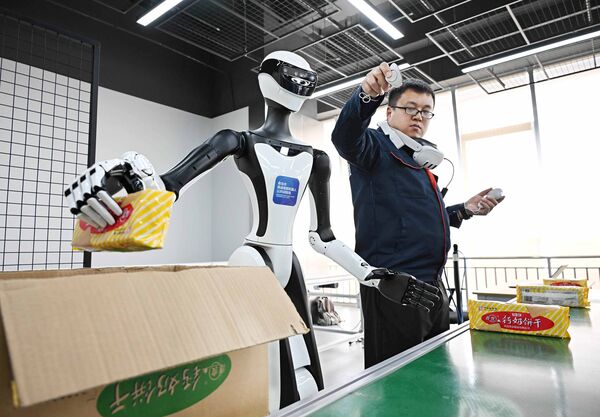
Mercor的平均薪酬现在为每小时110美元,尽管该公司表示没有关于多少比例的任务支付该薪酬的数据。英国数据工作平台Prolific也拒绝透露其有多少任务是由其“专家”完成的,这些专家占该平台参与者总数的30%。
Average pay at Mercor is now $110 per hour, though the company said it did not have data on what percentage of tasks pay that rate. British data-work platform Prolific also declined to say how many of its tasks are completed by its “experts,” who make up 30% of the platform’s total participants.
墨尔本法学院研究员范杨(音)一直在采访澳大利亚、加拿大、中国和日本的数据工人,她说,数据工作的兴起正在创造一种新型的外包。企业无需直接雇佣人员,而是可以购买仍然依赖人类(现在以签订更多临时合同的数据工人的形式)来对其进行微调的人工智能工具。范杨说,人工智能与其说是在取代人类,不如说是在劳动力市场中重新定位人类。
Fan Yang, a research fellow at Melbourne Law School who has been interviewing data workers in Australia, Canada, China and Japan, says the rise of data work is creating a new form of outsourcing. Rather than hiring people directly, businesses can buy AI tools that still rely on humans — now in the form of data workers on more ad hoc contracts — to fine-tune them. AI isn’t replacing humans so much as repositioning them in the labor market, Yang says.
但麻省理工学院的李认为,外包的比较低估了这些变化可能带来的戏剧性影响。她表示,理论上,一小群数据工作者就可能取代或大幅贬值整个职业。“当你提供数据时,其他人的选择会在很大程度上受到你的影响。”对于一些专业人士来说,这种可能性已经成为焦虑的来源。“人们很担心,”另一位兼职做数据工作者的放射科医生保利·切亚说。他表示,这种不确定性在仍有多年培训任务的医学生和住院医师中尤为明显。
But MIT’s Li thinks the outsourcing comparison understates how dramatic the changes could be. A small group of data workers could in theory replace or substantially devalue an entire profession, she says. “When you are supplying data, other people’s choices are very much impacted by yours.”For some professionals, that possibility is already a source of anxiety. “People are worried,” says Pauley Chea, another radiologist who has been moonlighting as a data worker. He says the uncertainty is particularly pronounced among medical students and residents who still have years of training ahead.
一些职业比其他职业更容易招聘人员。临床医生中兼职现象可能很普遍,但投资银行家往往受雇佣合同束缚,且几乎没有空闲时间,正如华尔街绿洲论坛的用户在回应招聘者时所指出的那样。为了吸引忙碌的专业人士,数据工作平台正在提供越来越丰厚的报酬,普罗利克公司副总裁安娜·普莱斯如此表示。“鉴于对白领的需求——这些人通常我会归类为时间紧张但更富裕,”她说。
Some professions are easier to recruit from than others. Moonlighting may be common among clinicians, but investment bankers are often bound by employment contracts and have little spare time, as users of the forum Wall Street Oasis pointed out in response to recruiters. To attract busy professionals, data-work platforms are offering increasingly generous pay, according to Ana Price, a vice president at Prolific. “Given the need for white collar — these are typically people who I would categorize as time-poor but more money-rich,” she says.
“因此,报酬需要具有吸引力。”一些数据公司设想一个未来,届时他们不再那么依赖招聘专业人士。相反,他们可能直接从雇主处批量购买数据。在这种未来中,几乎所有使用电脑工作的人都可能被视为数据工作者,无论他们是否愿意。
“So the compensation needs to be compelling.”Some data companies envision a future in which they are no longer so reliant on recruiting professionals. Instead, they could buy data wholesale from employers. In such a future, almost everyone working with a computer could be considered a data worker, whether they like it or not.
Micro1公司的创始人兼首席执行官阿里·安萨里认为,公司应将员工视为不仅生产商品和服务,还能创造具有自身市场价值的数据。这家估值达40亿美元的人工智能数据初创公司创始人在一月写道:“每一小时的工作可以同时:运行组织、训练AI模型、为组织创造额外收入。”
Ali Ansari, the founder and chief executive officer of Micro1, an AI data startup valued at $4 billion, argues that companies should think of their employees as not only producing goods and services but also generating data with its own market value. “Every hour of work can simultaneously: Run the organization, train AI models, generate additional revenue for the organization,” he wrote in January.
一些公司已经开始将员工的日常工作转化为训练数据。今年4月,Meta开始安装软件,以追踪员工的点击量、按键操作和鼠标移动。关于这一变动的内部备忘录写道:“通过日常工作,所有Meta员工都可以帮助我们的模型变得更好。”
Some companies are already turning their employees’ daily tasks into training data. In April, Meta started installing software to track its employees’ clicks, keystrokes and mouse movements. “This is where all Meta employees can help our models get better simply by doing their daily work,” said a memo about the change.
汉森(Hansen)花了一十年时间观察数据工作的发展,她并不确信人工智能会彻底不再需要像她这样的人。最近,她的大部分工作都是在Zoom会议室里花上长达20分钟的时间,与一个从未谋面的人交谈。她推测,这些对话正被用于训练人工智能说得更自然、减少机械感。汉森说,如果没有我们,这些模型永远无法做到完美。
Hansen, who has spent a decade watching data work evolve, isn’t convinced AI will ever stop needing people like her. Recently, most of her assignments have involved spending up to 20 minutes in a Zoom room talking to someone she’s never met. She assumes the conversations are being used to train AI to speak more naturally, less robotically. Without us, Hansen says, the models can never be perfect.