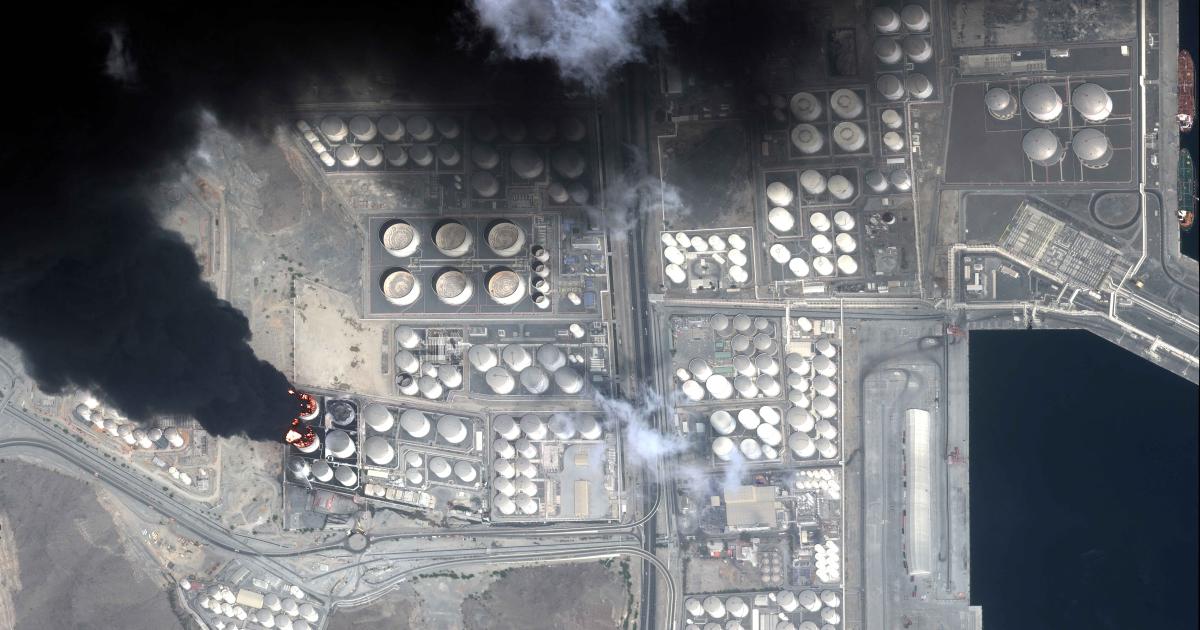
7月17日,一枚伊朗导弹击中了位于约旦的穆瓦法克萨尔蒂空军基地,造成3名美国士兵死亡、4人受伤。这次打击异常精准。在随后的几周里,美国官员发现,在袭击发生之前,德黑兰曾获得该基地的超高分辨率卫星图像,这些图像可能有助于其进行目标锁定。此后,伊朗获取了更多影像,这可能有助于其评估损失并改进未来的攻击。这些图像来自中国实体。
On July 17, an Iranian missile struck Muwaffaq Salti Air Base in Jordan, killing three American soldiers and wounding four others. The strike was unusually precise. In the weeks that followed, U.S. officials discovered that before the attack, Tehran had received high-resolution satellite images of the base that could aid its targeting. Afterward, Iran obtained more imagery, potentially helping it assess the damage and hone future attacks. The images came from Chinese entities.
并非只有中国在协助伊朗。俄罗斯也曾帮助德黑兰寻找并打击美国及其盟友的目标。在3月27日沙特阿拉伯苏丹王子空军基地遭袭、导致12名美方人员受伤的两天前,有14颗俄罗斯间谍卫星从该基地上空飞过。美国官员后来得出结论,莫斯科曾向伊朗提供卫星情报,从而协助了伊朗的精确打击。莫斯科还向伊朗提供了武器和军事专业知识,包括在乌克兰战场上经过改进的伊朗无人机升级版,俄罗斯工程师也正在帮助伊朗开发能够避开美以防空系统的超音速巡航导弹。
China is not alone in assisting Iran. Russia, too, has helped Tehran find and hit American and allied targets. Two days before the March 27 attack on Prince Sultan Air Base in Saudi Arabia that wounded 12 American personnel, 14 Russian spy satellites passed overhead. U.S. officials later concluded that Moscow had fed Iran satellite intelligence that aided Iranian precision strikes. Moscow has also provided Iran with weapons and military expertise, including upgraded versions of Iranian drones refined on the battlefield in Ukraine, and Russian engineers are helping Iran develop supersonic cruise missiles that could evade U.S. and Israeli air defenses.
俄罗斯和中国都没有直接卷入伊朗与美国的战争。它们不需要这样做。通过提供有关美国目标的情报、军事技术与部件以及经济和外交支持,它们能够在不加入战争的情况下为伊朗提供所需之物。
Neither Russia nor China has directly entered Iran’s war with the United States. They haven’t needed to. By providing intelligence on American targets, military technology and components, and economic and diplomatic support, they can give Iran what it needs without joining its war.
美国在进入这场冲突时拥有其对手所不具备的优势:一个横跨欧洲、中东和亚洲的庞大网络,包括正式盟友、军事基地、情报共享机制、防务伙伴关系以及可互操作的军队。然而,华盛顿的许多传统伙伴却不愿与这场行动产生关联,其中一些伙伴甚至拒绝向美国提供特定形式的军事准入,至少在一段时间内是如此。还有一些伙伴公开抵制美国要求协助确保霍尔木兹海峡安全的呼吁。
The United States entered the conflict with advantages its adversaries lacked: a vast network of formal allies, military bases, intelligence-sharing arrangements, defense partnerships, and interoperable forces spanning Europe, the Middle East, and Asia. Yet many of Washington’s traditional partners were reluctant to associate themselves with the campaign, and some denied the United States specific forms of military access, at least for a time. Others publicly resisted U.S. calls to help secure the Strait of Hormuz.
自两年前我们首次将俄罗斯、中国、伊朗和朝鲜描述为动荡轴心以来,局势出现了显著变化。美国的对手最初凭借较弱的网络发动了这场战争,而华盛顿则拥有远更强大的网络。但在过去几年中,轴心成员在帮助俄罗斯作战乌克兰的过程中,如今正寻找方法,使其网络在新的战场上发挥作用。他们正在精细调整合作,以使伙伴更具韧性——同时对美国更具威胁——同时限制成本和风险。
The contrast illustrates a striking shift since we first described Russia, China, Iran, and North Korea as an axis of upheaval in two years ago. The United States’ adversaries began this war with this weaker network, and Washington with the far stronger one. But after helping Russia fight its war in Ukraine over the past few years, members of the axis are now finding ways to make their network work in a new theater. They are fine-tuning their cooperation to make their partners more resilient—and more dangerous to the United States—while limiting costs and risks.
而华盛顿方面,其做法是在许多伙伴关系中制造摩擦,而非深化这些关系,正面临浪费其网络的风险,正如其对手正在学习如何更好地利用自身网络一样。
Washington, for its part, is creating friction in many of its partnerships instead of deepening them, and risks squandering its network just as its adversaries are learning to make more of theirs.
动荡的根源 自2024年以来,情况发生了巨大变化。最明显的是,美国自身已成为国际体系中的动荡源头。特朗普政府挑战了国际机构,紧张了传统盟友关系,并采取了更具交易性的外交政策方式。它推翻了贸易协定,威胁了加拿大和丹麦等盟友的主权,并拥抱了不可预测性。它还在寻求削弱伊朗的同时,试图改善与中国、朝鲜和俄罗斯的关系。然而,这一切都未能削弱美国对手之间的联系。
SOURCES OF UPHEAVAL Much has changed since 2024. Most obviously, the United States itself has become a source of upheaval in the international system. The Trump administration has challenged international institutions, strained traditional alliances, and adopted a more transactional approach to foreign policy. It has upended trade agreements, threatened the sovereignty of allies such as Canada and Denmark, and embraced unpredictability. It has also pursued improved relations with China, North Korea, and Russia while seeking to weaken Iran. None of this has loosened the ties among the United States’ adversaries.
特朗普政府早期,美国官员曾表达希望,认为通过与莫斯科正常化关系可能会让俄罗斯脱离该集团。然而,特朗普总统屡次表达的对克里姆林宫的亲善态度,并未与其他三国制造裂痕。从莫斯科的角度来看,该政府未能就乌克兰问题达成协议,且任何由特朗普推动的与华盛顿的和解都 unlikely 持续下去:国会继续对俄罗斯施压,且未来政府可能会采取更强硬的立场。
Early in the Trump administration, U.S. officials expressed hope that normalizing relations with Moscow might peel Russia away from the group. Yet President Donald Trump’s oft-expressed bonhomie toward the Kremlin has opened no gaps with the other three. As seen from Moscow, the administration has been unable to deliver a deal on Ukraine, and any Trump-driven rapprochement with Washington is unlikely to endure: Congress continues to pressure Russia, and a future administration may well adopt a tougher approach.
更根本地说,削弱轴心的尝试误解了它的凝聚力所在。其成员国反对他们认为以牺牲自身利益为代价而确立西方主导地位的国际秩序。但更直接的是,他们反对美国具有非凡能力来约束、孤立和惩罚他们,甚至可能威胁到他们的政权。美国最近的行动只会重新点燃这些担忧。美国对委内瑞拉领导人尼古拉斯·马杜罗的俘获以及对伊朗最高领袖阿里·哈梅内伊的暗杀,强化了北京、莫斯科、平壤和德黑兰长期以来对美国干涉和政权安全的担忧。
More fundamentally, attempts to weaken the axis misunderstand what holds it together. Its members object to an international order that they see as enshrining Western dominance at their expense. But more pointedly, they oppose the United States’ extraordinary power to constrain, isolate, and punish them, and potentially to threaten their regimes. Recent U.S. actions have only rekindled those concerns. The United States’ capture of Venezuelan leader Nicolás Maduro and the killing of Iranian Supreme Leader Ali Khamenei reinforce long-standing fears in Beijing, Moscow, Pyongyang, and Tehran about U.S. intervention and regime security.
轴心国家在战术上有用时可能会缓和其反美言论,但它们降低对美国脆弱性的动机仍然存在。特朗普政府对国际秩序本身的怀疑不会让轴心首都的人们感到安心。相反,特朗普努力打造一个更具交易性和胁迫性的世界可能会增加他们伙伴关系的价值。随着规则和制度的约束力减弱,而蛮横的力量变得更为重要,各国将寻求伙伴来帮助他们钝化制裁、获取关键技术、弥补军事弱点、扩大行动空间并抵御孤立。轴心合作正在演变以适应当下形势。
The axis countries may moderate their anti-American rhetoric when doing so is tactically useful, but their motivation to reduce their vulnerability to American power remains. The Trump administration’s own skepticism about international order will not ease minds in axis capitals. On the contrary, Trump’s efforts to create a more transactional and coercive world may increase the value of their partnerships. As rules and institutions constrain less and brute power matters more, countries will seek partners to help them blunt sanctions, access critical technologies, compensate for military weaknesses, expand their room for maneuver, and resist isolation. Axis cooperation is evolving to meet the moment.
新地区,新问题 当俄罗斯在2022年发动对乌克兰的全面入侵时,四国之间的合作相对容易描绘。伊朗向俄罗斯提供了无人机,朝鲜则送去了弹药、弹道导弹,随后又派出了部队。中国成为莫斯科最关键的生命线,购买俄罗斯石油并提供机床、微电子元件及其他俄罗斯首先需要维持,随后扩大其军事生产所需的组件。反过来,俄罗斯则日益向其合作伙伴转让越来越先进的军事技术。
NEW REGIONS, NEW PROBLEMS When Russia launched its full-scale invasion of Ukraine in 2022, cooperation among the four countries was relatively easy to map. Iran provided Russia with drones, and North Korea sent ammunition, ballistic missiles, and later, troops. China became Moscow’s most critical lifeline, buying Russian oil and supplying the machine tools, microelectronics, and other components it needed first to sustain and then to expand its military production. Russia, in turn, transferred increasingly sophisticated military technology to its partners.
这些交流影响深远,但在很大程度上仍然可以被理解为一系列聚焦于俄罗斯战争的双边交易。这种情况正在变得越来越不符合事实。合作正日益网络化,并朝着解决新地区的新问题方向发展。
These exchanges were consequential, but they could still largely be understood as a series of bilateral transactions focused on Russia’s war. That is becoming less true. Cooperation is increasingly networked and geared toward solving new problems in new regions.
俄罗斯的无人机项目说明了这一变化。伊朗最初向俄罗斯出售其“见证者”无人机,随后又帮助莫斯科在本土建立生产线。俄罗斯并未简单复制其接收到的装备;它融入了中国零部件,并根据乌克兰的防御情况,不断改进无人机的导航、通信、载荷、推进系统和战术。新的军事单位将成功的改进意见反馈回生产环节,产生了异常迅速的战场适应周期。
Russia’s drone program illustrates the change. Iran initially sold Russia its Shahed drones and then helped Moscow establish production at home. Russia did not simply replicate what it received; it incorporated Chinese components and continually modified the drones’ navigation, communications, payloads, propulsion, and tactics in response to Ukrainian defenses. New military units fed successful modifications back into production, generating an unusually rapid cycle of battlefield adaptation.
俄罗斯无人系统部队是俄罗斯武装力量下辖的一个无人机与机器人兵种,于去年成立,旨在协助将这一周期制度化。国内适应与轴心伙伴关系的结合已被证明是有效的。例如,俄罗斯最新的喷气动力“天竺葵”无人机比早期型号速度更快、载荷更大,乌克兰军队拦截起来也明显更加困难。
Russia’s Unmanned Systems Forces, a drone-and-robotics branch of the Russian armed forces, was established last year to help institutionalize this cycle. The combination of domestic adaptation and axis partnership has proved effective. Russia’s latest jet-powered Geran drones, for instance, are faster, carry larger payloads, and are significantly harder for Ukrainian forces to intercept than earlier variants.
俄罗斯的技术改进也不会只留在俄罗斯国内。它们在轴心网络中流转。对伊朗而言,最初流向俄罗斯的技术如今正在回流,并伴随着汲取自俄罗斯在乌克兰经验的战术建议。如果俄罗斯的喷气动力无人机也出现在中东(这很有可能发生),那么防御伊朗对美军和地区能源基础设施的攻击将变得更加困难、代价更高。
Russian improvements do not stay in Russia, either. They circulate through the axis network. For Iran, the technology that originally flowed to Russia is now returning, along with tactical advice drawn from Russia’s experience in Ukraine. If Russia’s jet-powered drones also show up in the Middle East, as they likely will, Iranian attacks on U.S. forces and regional energy infrastructure will become harder and costlier to defend against.
朝鲜和中国也在获益。据乌克兰报道,俄罗斯达成协议,帮助朝鲜扩大其“沙赫德”型无人机的产量。朝鲜工程师在俄罗斯巨大的叶拉布加无人机工厂工作期间学到了经验,与俄罗斯并肩作战的朝鲜部队在将无人机融入现代战斗方面获得了第一手经验。中国军事人员已接受俄罗斯部队的无人机战训练,中国供应商正在获得有关其技术在战斗中表现的宝贵信息。因此,北京正从始于伊朗技术并在俄乌战争中不断完善的无人机战争演变中获益。
North Korea and China are also benefiting. According to Ukrainian reports, Russia struck a deal to help North Korea expand production of its Shahed-type drones. North Korean engineers have learned from time spent working in Russia’s massive Yelabuga drone factory, and North Korean forces fighting alongside Russia have gained firsthand experience in integrating drones into modern combat. Chinese military personnel have received training in drone warfare from Russian forces, and Chinese suppliers are gaining valuable information about how their technologies perform in combat. Beijing is thus seeing gains from the evolution of drone warfare that began with Iranian technology and has been refined in Russia’s war in Ukraine.
该模式可长期运行。两年前,轴心四国之间的伙伴关系能否延续其形成所依赖的战争尚不明确。如果乌克兰战争结束,俄罗斯不再需要伊朗无人机、朝鲜弹药或中国的经济和技术支持,这些关系可能会失去动力。
THE MODEL CAN TRAVEL Two years ago, it was not clear whether partnerships among the four members of the axis could outlast the war that accelerated their formation. If the Ukraine war ended and Russia no longer needed Iranian drones, North Korean ammunition, or Chinese economic and technological support, the relationships might lose momentum.
然而,战争不仅创造了即时的合作需求。它还为这些伙伴关系能够实现的成果提供了概念验证,超出了任何单一国家可能独自取得的成就。乌克兰防御、西方制裁、美国军事援助和外交孤立,其效果都不如俄罗斯单独行动时那么显著。通过相互帮助抵御压力,轴心国家使美国及其盟友更难迫使它们改变方向。
Yet the war did not only create an immediate need for cooperation. It has also provided proof of concept for what these partnerships can accomplish, beyond what any country might attain on its own. Ukrainian defenses, Western sanctions, U.S. military supplies, and diplomatic isolation have all been less effective than would be the case if Russia were operating alone. By helping one another withstand pressure, the axis countries make it harder for the United States and its allies to compel them to change course.
伊朗现在正在证明,这一模式可以复制。俄罗斯对德黑兰的支持在行动上意义重大,但界限明确。即使在乌克兰作战,莫斯科也找到了帮助伊朗打击美国目标、维持战斗的方式,通过外交掩护和物资支持,但避免采取可能将俄罗斯拖入与美国直接冲突的行动。中国则更加谨慎,但其共享双用途电子产品和购买伊朗石油的行为,同样增强了伊朗抵御美国压力的能力。
Iran is now showing that the model can travel. Russia’s support for Tehran has been operationally meaningful but carefully bounded. Even as it fights its own war in Ukraine, Moscow has found ways to help Iran strike American targets and sustain the fight through diplomatic cover and material support while stopping short of actions that could draw Russia into direct conflict with the United States. China has been even more cautious, but its sharing of dual-use electronics and purchases of Iranian oil have similarly enhanced Iran’s ability to withstand U.S. pressure.
这种克制并非轴心减弱的证据,反而是这些伙伴关系运作方式的一个决定性特征。除了朝鲜士兵代表俄罗斯部署这一显著例外外,轴心国家通常避免为对方作战。相反,它们在符合自身利益且风险可控时,提供政治支持、经济支持、情报、技术和有限的军事援助。
Such restraint is not evidence that the axis is weakening but rather a defining feature of how these partnerships work. With the striking exception of North Korean soldiers deployed on Russia’s behalf, the axis countries have generally avoided fighting one another’s wars. Instead, they provide political backing, economic support, intelligence, technology, and limited military assistance when doing so advances their own interests at manageable risk.
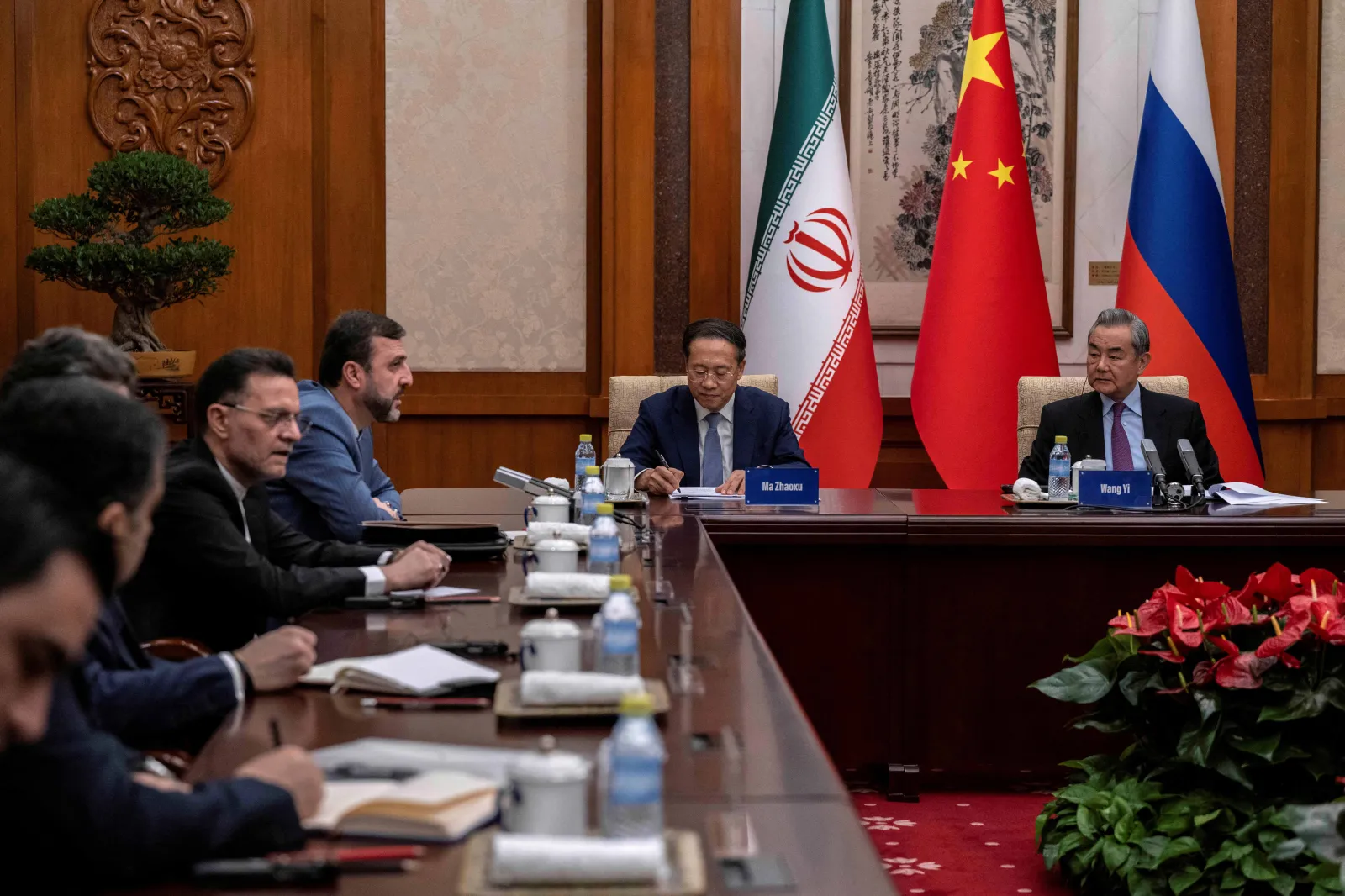
乌克兰和伊朗的战争给轴心带来了另一个教训:支持一名成员不仅能增强受援方。一个战区的冲突也能为其他地方的伙伴创造机会。例如,伊朗封锁霍尔木兹海峡导致油价飙升,给俄罗斯带来意外之财,并促使华盛顿暂时放宽对俄罗斯石油出口的限制。伊朗的战争因此为俄罗斯维持自身战争提供了资源。
The wars in Ukraine and Iran have taught the axis another lesson: supporting a fellow member does not merely strengthen the recipient. Conflict in one theater can also create opportunities for partners elsewhere. Iran’s closure of the Strait of Hormuz, for example, sent oil prices soaring, delivering a windfall to Russia and prompting Washington to temporarily ease restrictions on Russian oil exports. Iran’s war thus generated resources Russia could use to sustain its own.
在对伊朗发动攻击之前,美国将包括防空和导弹防御在内的关键军事资产,从印太地区重新部署到中东。随着战斗持续,美军在该地区部署了两艘航空母舰,印太地区一艘也没有。中国从西太平洋美军存在减少中获得了作战自由,且在美军弹药储备耗尽时更不脆弱。如果华盛顿采取长期遏制伊朗的战略,如同20世纪90年代对待伊拉克那样,北京可能从这些牵制中获益多年。
Before attacking Iran, the United States redeployed key military assets, including air and missile defenses, from the Indo-Pacific to the Middle East. As the fighting continued, U.S. forces put two aircraft carriers in the region, leaving none in the Indo-Pacific. China gains operational freedom from a thinner U.S. military presence in the western Pacific and is less vulnerable when U.S. munitions stocks are depleted. If Washington settles into a prolonged strategy of containing Iran, as it did with Iraq in the 1990s, Beijing could enjoy the advantages of those diversions for years.
不再造成进一步伤害 动荡轴心的经验表明,如果成员无法将各自的能力转化为集体力量,网络的规模和强度就不那么重要。美国及其盟友起步时拥有相当大的优势:更大的经济和技术资源、更强大的军队,以及远为庞大的盟友和伙伴网络。问题是哪个网络能更好地利用其资产。
DO NO FURTHER HARM The experience of the axis of upheaval shows that the size and strength of a network matter less if its members cannot turn their individual capabilities into collective power. The United States and its allies start from a position of considerable advantage: greater economic and technological resources, more capable militaries, and a far larger network of allies and partners. The question is which network can make better use of its assets.
这始于领导力。数十年来,美国倡导一种国际秩序,该秩序禁止征服战争,维护海上自由,维持总体开放的全球经济,并允许民众行使民主权利,即使专制政权依然存在。华盛顿将这一愿景与一种隐性交易相结合:任何希望加入该秩序的国家都可以这样做。维护该秩序的基本原则带来了好处,包括来自美国的好处:贸易关系、外交优惠,有时还有军事同盟。
That starts with leadership. For decades, the United States favored an international order that forbade wars of conquest, upheld freedom of the seas, maintained a generally open global economy, and allowed populations to exercise democratic rights, even if autocracies remained. Washington coupled this vision with an implicit bargain: any country that wished to join the order could do so. Upholding the order’s basic principles conferred benefits, including from the United States: trade relations, diplomatic preferences, sometimes military alliances.
对于那些拒绝开放国际秩序的国家,就像当今的轴心国所做的那样,其获得的好处远少,而所面临的惩罚则相当严厉。美国对流氓国家实施制裁、施压,有时还与之开战,并抵制建立诸如冷战时期共产主义集团等竞争性秩序。美国外交政策始于一个看似毫无争议的前提:华盛顿应当与志同道合的国家交好,并比对待拒绝者更好地对待它们。美国应当扭转那些削弱其自身网络的政策。
For countries that rejected the open international order, as the axis countries do today, the benefits were far fewer and the penalties considerable. The United States sanctioned, pressured, and sometimes went to war against rogue states, and it resisted the establishment of competing orders such as the Cold War communist bloc. U.S. foreign policy started from the seemingly uncontroversial premise that Washington should befriend like-minded countries and treat them better than rejectionists. The United States should reverse policies that undercut its own network.
特朗普政府至少有时表现出某种截然相反的倾向。美国驻中国大使最近表示,特朗普曾提出向北京出售武器,同时拖延对台湾的武器销售。总统对朝鲜领导人金正恩的兴趣和好感,超过了对韩国民主选举总统李在明的兴趣和好感。该政府还时不时地向乌克兰施压,要求其在对抗俄罗斯侵略的生存战争中让步。特朗普还威胁要轰炸阿曼,这是一个长期的伙伴。此类举动既增强了轴心国的力量,又削弱了最有能力对抗它们的网络的凝聚力。
The Trump administration demonstrates, at least at times, something like the opposite inclination. The U.S. ambassador to China recently said that Trump offered to sell Beijing weapons, while stalling arms sales to Taiwan. The president has expressed greater interest in and affection for North Korea’s dictator, Kim Jong Un, than for South Korea’s democratically elected president, Lee Jae-myung. The administration has also intermittently pressured Ukraine to cave in its war of survival against Russian aggression. And Trump has threatened to bomb Oman, a longtime partner. Such moves both strengthen the axis countries and weaken the cohesion of the network best positioned to confront them.
不再造成进一步伤害,将是应对这个轴心国集团的良好开端。除此之外,华盛顿应该帮助其伙伴变得更加强大。正如这个轴心国内部的国家正在互相帮助以规避制裁、保持对关键技术和零部件的获取途径、并在压力下维持各自经济一样,美国也应当援助自身的伙伴网络。这意味着要加强经由受信任伙伴的供应链,共享技术,并鼓励盟友承担更多的安全负担。
Doing no further harm would be a good start in dealing with the axis. Beyond that, Washington should help its partners grow stronger. Just as the axis countries are helping one another work around sanctions, preserve access to critical technologies and components, and sustain their economies under pressure, the United States should aid its own network. That means strengthening supply chains that run through trusted partners, sharing technology, and encouraging allies to take on greater security burdens.
然而,华盛顿必须谨慎,不能以快于盟友发展相应能力的速度去转移防务责任——也不能以削弱信任、互操作性和协调性的方式这样做。否则,美国及其盟友可能会各自能力增强,但总体效能反而下降。
Washington must take care, however, not to transfer defense responsibilities faster than allies can develop the capabilities to assume them—and not to do so in ways that erode trust, interoperability, and coordination. Otherwise, the United States and its allies could become individually more capable but collectively less effective.
美国还应扭曲那些削弱自身伙伴网络的政策。关税和其他保护主义措施会损害盟友的经济及其工业基础。表露出夺取盟友领土的愿望并试图破坏其政治领导人的稳定,无助于建立一个更有能力的国际网络。华盛顿应当向朋友展现远见和领导力,而不是刺耳的不确定性和霸凌式的交易主义。
The United States should also reverse policies that undercut its own network. Tariffs and other protectionist measures harm allied economies and their industrial bases. Expressing a desire to seize allies’ territory and attempting to undermine their political leaders do not make for a more capable international network. Washington should project vision and leadership to its friends, not jarring uncertainty and bullying transactionalism.
即使美国改变方针,美国和盟友的决策者也应为长期斗争做好准备。正如在伊朗推翻政权努力的失败所表明的那样,无论是集体还是单独战胜这个轴心国集团,都没有捷径可走。这场网络之间的较量将是几乎全球性的,在多个领域展开,其结果关系重大。美国及其盟友拥有取胜的能力。他们应当展现出相应的意志。
Even if the United States changes course, American and allied policymakers should prepare for a long struggle. As the unsuccessful regime-change effort in Iran demonstrated, there are no shortcuts to besting the axis countries, together or individually. The contest of networks will be nearly global, waged in multiple domains, with huge stakes riding on the outcome. The United States and its allies have the capacity to prevail. They should demonstrate the will.