犹太反法西斯抵抗战士埃娃·马姆洛克是谁?2026年10月16日 在德国反抗纳粹主义的历史中,有些名字已成为象征:苏菲·绍尔、克劳斯·冯·施陶芬贝格、迪特里希·朋霍费尔和格奥尔格·埃尔瑟。然而,许多其他人却大体上被遗忘了。
Who was Jewish anti-fascist resistance fighter Eva Mamlok? October 16, 2026 In the history of German resistance to Nazism, some names have become symbols: Sophie Scholl, Claus von Stauffenberg, Dietrich Bonhoeffer and Georg Elser. Yet many others have remained largely forgotten.
其中就包括埃娃·马姆洛克,她是一名来自柏林的年轻犹太女性,她的反抗行为从十几岁时开始,一直持续到她在纳粹集中营被谋杀。
Among them is Eva Mamlok, a young Jewish woman from Berlin whose acts of defiance began in her teenage years and continued until her murder in a Nazi concentration camp.
随着柏林于10月16日将克罗伊茨贝格区的广场布吕歇尔广场更名为埃娃·马姆洛克广场,现在将有更多人了解她的故事。
Now more people will get to know her story as Berlin renames Blücherplatz, a square in the district of Kreuzberg, Eva-Mamlok-Platz on October 16.
文化研究员亚历山德拉·韦尔茨-龙巴赫说:“埃娃·马姆洛克是一个非常了不起的人。作为一名来自柏林的年轻犹太女性,她的抵抗精神尤为引人注目。”她曾与历史学家网络“埃娃·马姆洛克小组”进行过广泛合作。“打倒希特勒”埃娃·马姆洛克于1918年5月6日出生于柏林的一个犹太家庭。他们经营一家葡萄酒批发业务,该家庭属于充满活力的犹太中产阶级,构成了魏玛共和国时期柏林社会和经济生活的重要组成部分。
"Eva Mamlok was a very remarkable person. As a young Jewish woman from Berlin, her spirit of resistance was particularly striking," says cultural researcher Alexandra Weltz-Rombach, who has worked extensively with the historians' network "Gruppe Eva Mamlok." 'Down with Hitler' Eva Mamlok was born on May 6, 1918, into a Jewish family in Berlin. They ran a wholesale wine business, and the family belonged to the vibrant Jewish middle class that formed an important part of Berlin's social and economic life during the Weimar Republic.
但埃娃成年之际,德国正陷入独裁统治。1933年希特勒成为总理时,她年仅14岁。她还是社会主义工人青年团的成员。在该左翼政治青年组织于同年晚些时候遭到镇压后,她开始活跃于地下抵抗运动。
But Eva came of age just as Germany was descending into dictatorship. When Hitler became chancellor in 1933, she was only 14 years old. She was also a member of the Socialist Workers' Youth (SAJ). Following the suppression of the left-wing political youth organization later that year, she became active in the underground resistance.
根据马姆洛克后来的抵抗小组中唯一的幸存者英格·伯纳(1922-2012)的证词,埃娃在十几岁时爬上了布吕歇尔广场一家百货公司的屋顶,并刷写了“打倒希特勒”的标语。韦尔茨-龙巴赫指出:“她因这样做而被抓住,尽管当时她并未被捕——那是在一年之后才发生的。”
According to testimony from Inge Berner (1922-2012), the sole survivor of Mamlok's later resistance group, Eva climbed onto the roof of a department store on Blücherplatz as a teenager and painted the slogan "Down with Hitler." "She was caught doing that, though she wasn't arrested at that particular moment — that didn't happen until a year later," notes Weltz-Rombach.
因纪念社会主义偶像卢森堡和李卜克内西而被捕 埃娃·马姆洛克(Eva Mamlok)首次出现在官方记录中是在1934年11月,当时她因在柏林腓特烈斯费尔德墓地参加纪念社会主义领袖罗莎·卢森堡(Rosa Luxemburg)和卡尔·李卜克内西(Karl Liebknecht)的活动而被捕。
Arrested for honoring socialist icons Luxemburg and Liebknecht Eva Mamlok first appeared in official records in November 1934, after she was arrested for taking part in commemorations for socialist leaders Rosa Luxemburg and Karl Liebknecht at Berlin's Friedrichsfelde Cemetery.
当局认定这名16岁的女孩持有“敌视国家的观点”,并将其置于“听候进一步通知的保护性拘留”之下——这是该政权用来为未经审判而监禁辩护的委婉说法。她被送往位于下萨克森州的莫林根女子集中营,在那里关押到1935年5月。
Authorities determined that the 16-year-old held "hostile views toward the state" and placed her in "protective custody until further notice" — a euphemism the regime used to justify imprisonment without trial. She was sent to the women's concentration camp at Moringen in Lower Saxony, where she remained until May 1935.
获释后,尽管危险日益增加,她仍继续开展反纳粹活动,同时面临着作为政治异见者和犹太人的双重迫害。
After her release, she continued her anti-Nazi activities despite the increasing danger, facing persecution both as a political dissident and as a Jew.
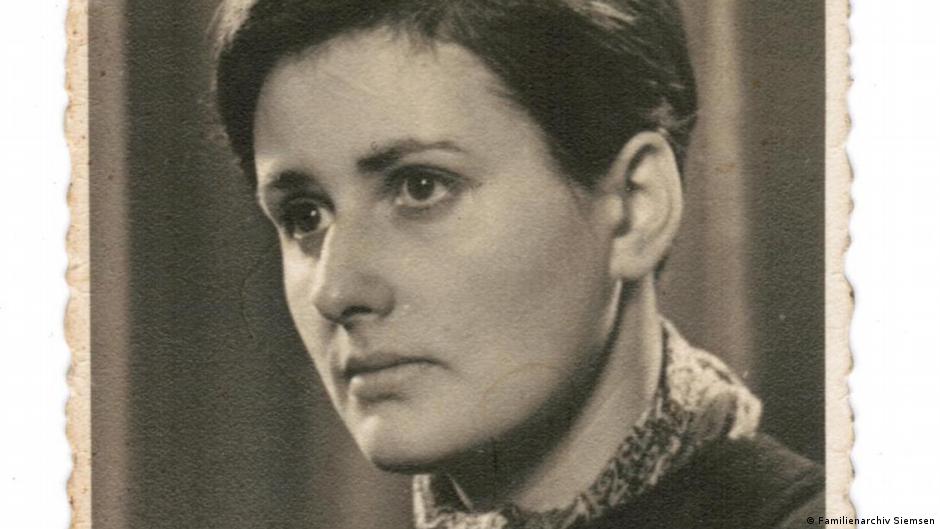
在这些地下圈子里,她遇到了彼得·西姆森(Pieter Siemsen,1914—2004),两人保持着情侣关系,直到他于1937年移民阿根廷。目前仅存的埃娃照片就出自他的个人档案。
In these underground circles, she met Pieter Siemsen (1914–2004), and they remained a couple until he emigrated to Argentina in 1937. The only known surviving photograph of Eva comes from his personal archive.
她在1939年生了一个女儿塔娜(Tana)。然而,生父的身份不详。这名儿童被寄养在柏林的一家犹太孤儿院,并于1942年被驱逐到奥斯威辛-比克瑙灭绝营,在那里被杀害。
She had a daughter, Tana, in 1939. The father's identity is unknown, however. The child was placed in a Jewish orphanage in Berlin and deported in 1942 to the Auschwitz-Birkenau extermination camp, where she was murdered.
与此同时,由于她是犹太人,埃娃·马姆洛克于1940年被迫在柏林F·布茨克螺丝工业公司(F. Butzke Schrauben-Industrie)进行强迫劳动。在那里,她遇到了其他与她有着共同反纳粹立场的女性。
Meanwhile, because she was Jewish, Eva Mamlok was forced to perform compulsory labor at the Berlin firm F. Butzke Schrauben-Industrie in 1940. There she met other women who shared her opposition to Nazism.
她们共同组成了后来被称为“埃娃·马姆洛克小组”的组织,这是一个由犹太女性和非犹太女性组成的非正式抵抗网络。她们分发反纳粹传单,并书写批评希特勒的标语。
Together they formed what later became known as the "Eva Mamlok Group," an informal resistance network of Jewish and non-Jewish women. They distributed anti-Nazi leaflets and wrote slogans critical of Hitler.
她们还分享被禁的书籍。“这些书是如今德国教育经典的一部分,”从托马斯·曼(Thomas Mann)到利翁·福伊特万格(Lion Feuchtwanger),韦尔茨-隆巴赫(Weltz-Rombach)指出。她补充说,德国最大的公共图书馆柏林中央和区域图书馆(ZLB)坐落在新建的埃娃·马姆洛克广场(Eva-Mamlok-Platz)上,这一事实是这种抵抗行为以及书籍重要性的绝佳象征。
They also shared banned books. "They were books that are today part of Germany's educational canon," from Thomas Mann to Lion Feuchtwanger, notes Weltz-Rombach. She adds that the fact that the Berlin Central and Regional Library (ZLB), Germany's largest public library, stands on the new Eva-Mamlok-Platz is a fitting symbol of this act of resistance and the importance of books.
马姆洛克和她小组中的其他人因分发这种被禁文学作品而被捕。1942年1月13日,她从柏林被驱逐到被占领的拉脱维亚的里加犹太人隔离区。
Mamlok and others in her group were arrested for distributing this forbidden literature. On January 13, 1942, she was deported from Berlin to the Riga Ghetto in occupied Latvia.
根据英格·贝尔纳的证词,马姆洛克在那里也依然积极参与抵抗活动。例如,她安排仍在柏林的一个联系人给她寄来了一个蛋糕,里面藏有一台微型相机,用于记录隔离区内的迫害情况。
According to Inge Berner's testimony, Mamlok remained active in the resistance there too. For example, she arranged for a contact still in Berlin to send her a cake with a miniature camera hidden inside it to document persecution in the ghetto.
1944年10月,她被送往施图特霍夫纳粹集中营,并于当年12月在那里逝世。
In October 1944, she was sent to the Stutthof Nazi concentration camp, where she died in December of that year.
取代法德敌对的旧象征 布吕歇尔广场是以普鲁士元帅格布哈德·莱贝雷希特·冯·布吕歇尔的名字命名的,他最著名的成就是在1813年的莱比锡战役和1815年的滑铁卢战役中率领军队对抗拿破仑。德国有几个地方,包括街道和公园,都是以他的名字命名的。
Replacing old symbols of Franco-German hostility Blücherplatz was named after the Prussian field marshal Gebhard Leberecht von Blücher, whose most renowned achievement was leading his army against Napoleon at the Battle of Leipzig in 1813 and the Battle of Waterloo in 1815. Several places, including streets and parks, have been named after him in Germany.
韦尔茨-龙巴赫说:“布吕歇尔的纪念地并不短缺。”她补充道:“也许这也是时候结束这种法德之间的旧敌意了——鉴于其普鲁士传统,这种敌意自然蕴含在布吕歇尔这个名字之中——并在其原址建立一种不同形式的纪念。”
"There is no shortage of Blücher memorial sites," says Weltz-Rombach. "And perhaps it's also time to put an end to this old Franco-German enmity — which is, of course, inherent in the name Blücher, given its Prussian tradition — and to establish, in its place, a different form of remembrance," she adds.
这个广场也恰好是文化狂欢节的举办地,这是一场每年举行一次的多元文化街头节日和游行,旨在庆祝柏林的全球多元化。
The square also happens to be the site of the Carnival of Cultures, a multicultural street festival and parade held every year to celebrate Berlin's global diversity.
新一代的榜样 自从2011年为纪念马姆洛克而铺设了一块绊脚石后第一次听说她以来,韦尔茨-龙巴赫在过去几年里一直在研究她的生平。这位常驻柏林的电影制作人、制片人和策展人还通过各种项目分享这位抵抗战士的故事,其中包括2024年的一场展览和一个面向柏林年轻人的播客系列。
Role models for a new generation Having first heard about Mamlok when a Stolperstein commemorating her was laid in 2011, Weltz-Rombach has been researching her biography for the past few years. The Berlin-based filmmaker, producer and curator has also been sharing the resistance fighter's story through various projects, including an exhibition in 2024 and a podcast series with young Berliners.
由于埃娃·马姆洛克投身政治时自己也只是一名青少年,工作坊的参与者们很容易对她的命运产生共鸣。
Since Eva Mamlok was only a teenager herself when she became politically active, the workshop participants can easily relate to her fate.
韦尔茨-隆巴赫解释说,这些青少年在马姆洛克实际活动过的地点了解她的经历,这有助于他们想象,如果因为做那些通常不被认为是犯罪的事情——例如仅仅是公开表达观点或在纪念活动上献花——而被捕并不经审讯关押六个月,会是什么样的感受。
These teenagers learn about Mamlok's experiences at the actual locations where she was active, helping them imagine what it would be like to be arrested and imprisoned for six months without trial for doing things that normally wouldn't be considered crimes — such as simply expressing an opinion publicly or laying flowers at a commemorative event, explains Weltz-Rombach.
韦尔茨-隆巴赫指出:“最重要的是,她当然是一个榜样——一个关于人们希望自己如何行动、希望自己如何勇敢的例子。”女性的“抵抗往往更具日常性质,而不是埋设炸弹”。她们的故事为“直到最近才获得更多关注的抵抗形式”提供了例子。例如,她提到了2024年的一场展览以及一个专门收录女性抵抗战士的数据库的推出。
"Above all, she is, of course, a role model — an example of how one would like to act oneself, and how courageous one would like to be." Women's "resistance was often of a more everyday nature, rather than planting bombs," notes Weltz-Rombach. Their stories offer examples of "forms of resistance that have only recently received more attention." She mentions, for example, a 2024 exhibition and the launch of a database dedicated to female resistance fighters.
尽管许多目击者现在已经去世,但韦尔茨-隆巴赫相信,还有更多这类故事值得被带到聚光灯下:“肯定有许多我们不知道的名字,正等待着被进一步研究。”
Even though many of the eyewitnesses have now died, Weltz-Rombach believes there are still many more of these stories that deserve to be brought into the spotlight: "There are definitely many names we do not know, that are waiting to be further researched."