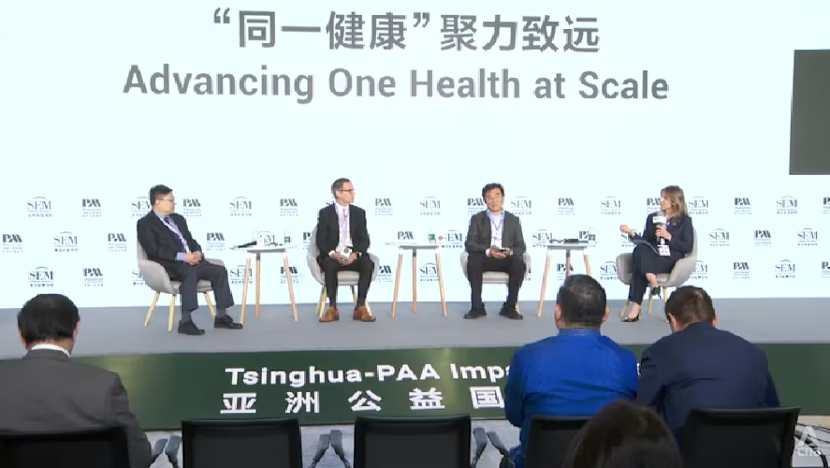
北京:慈善亚洲联盟(PAA)负责人表示,慈善事业可以通过测试政府和企业可能不愿承担风险的创新解决方案,在帮助社会适应人工智能快速发展和气候变化方面发挥更大作用。
BEIJING: Philanthropy could play a bigger role in helping societies adapt to rapid advances in artificial intelligence and climate change by testing innovative solutions that governments and businesses may be less willing to take risks on, said the head of Philanthropy Asia Alliance (PAA).
其首席执行官肖恩·塞奥表示,慈善组织可以将不同部门聚集在一起开展项目,这些项目最终可能通过私人投资或政府政策进行规模化扩展。
Its CEO Shaun Seow said philanthropic organisations could bring different sectors together for projects that could eventually be scaled up through private investment or government policy.
“慈善有能力将不同参与方聚集在一起并开展试点,因为慈善实际上可以投入风险资本,”他在北京举办的首届清华-PAA影响力峰会上表示。
“Philanthropy has the ability to bring different players together and pilot because philanthropy can actually put out a risk capital,” he said at the inaugural Tsinghua-PAA Impact Summit in Beijing.
即使这些尝试失败,“从中吸取的教训也将适用于所有人”,他补充道。
Even if such ventures fail, “lessons from (them) will be applicable to all”, he added.
为期三天的峰会将于周六(10月17日)结束,由中国清华大学和新加坡淡马锡信托发起的慈善亚洲联盟(PAA)共同主办。
The three-day summit, which concludes on Saturday (Oct 17), is jointly organised by China's Tsinghua University and PAA, an initiative of Singapore's Temasek Trust.
峰会汇聚了来自中国及其他地区的约220位领导人,涵盖慈善、商业、政府和学术界,探讨从人工智能对就业的影响到向清洁能源转型等多方面挑战。
It brought together around 220 leaders from China and beyond, spanning philanthropy, business, government and academia, to explore challenges ranging from AI's impact on jobs to the transition towards cleaner energy.
跨部门协作桥梁塞奥呼吁加强合作,将有前景的想法转化为能够惠及更广泛社区的解决方案。
BRIDGING THE GAP BETWEEN SECTORS Seow called for closer collaboration to turn promising ideas into solutions that could benefit communities on a larger scale.
“过去,慈善家们只在自己圈子里交流,多边银行也只在自己圈子里交流。我们真的需要政府、私营部门和慈善家们坐在一起交流,”他说。
“In the old days, it was philanthropists talking among themselves, multilateral banks talking among themselves. We really need the government, private sector and philanthropists talking together,” he said.
他补充表示,合作应从一开始就设计清晰的路径,以便通过商业投资或公共政策将成功项目规模化。
He added that partnerships should be designed from the outset with a clear path towards scaling up successful projects, whether through commercial investment or public policy.
非营利组织“科技向善研究所”创始主席伊拉里亚·陈表示,慈善事业有助于弥合政府和企业不同优先事项之间的差距。
Ilaria Chan, founding chairwoman of non-profit Tech For Good Institute, said philanthropy could help bridge the gap between the different priorities of governments and businesses.
“私营部门行动迅速,因为它追随金钱和商业利益的踪迹。政府通常会为民众的最佳利益制定长期愿景,”陈说,她同时也是北京大学斯坦福中心的顾问委员会成员。
"Private sector moves fast because it follows a trail of money and commercial interest. Government usually has a long-term vision for the best interest of civil society,” said Chan, who is also an advisory council member of Peking University’s Stanford Center.
“由于议程不同,总会存在差距。善用的慈善事业应当弥合这一差距。”她补充道,慈善事业需要兼具快速应对新兴挑战的能力和支持长期变革的耐心。
“There's always going to be a gap because of their different agendas. Philanthropy that is employed well should bridge this gap.”She added that philanthropy needed to combine the ability to respond quickly to emerging challenges with the patience to support longer-term change.
为人工智能驱动的未来做准备 在峰会上讨论的议题之一是人工智能如何重塑工作的未来,以及如何支持那些有被落下风险的人。
PREPARING FOR AN AI-DRIVEN FUTURE Among the issues discussed at the summit was how AI could reshape the future of work, and how to support those at risk of being left behind.
萧说,人工智能正日益接管个别任务,而非整个工作,这引发了关于教育体系和职业培训应如何演变的问题。
Seow said AI was increasingly taking over individual tasks rather than entire jobs, raising questions about how education systems and vocational training should evolve.
“大学教育应是什么样子,才能让学生真正具备在人工智能环境中工作的能力?”他问道。
“What does college education look like to prepare students to really work in an AI environment?” he asked.
他说,慈善事业可以在成功模式被更广泛采纳之前,帮助试点教育和劳动力发展的新方法。
He said philanthropy could help pilot new approaches to education and workforce development before successful models are adopted more widely.
与此同时,人工智能可能使基本服务更易于获取,特别是在服务不足的社区。
At the same time, AI could make essential services more accessible, particularly in underserved communities.
萧指出,人工智能驱动的医学诊断有潜力改善农村地区的医疗保健,包括通过降低超声波等检查程序的成本来实现。
Seow pointed to the potential for AI-powered medical diagnostics to improve healthcare in rural areas, including by reducing the cost of procedures such as ultrasounds.
他表示,挑战在于确保这些技术惠及更广泛的人群,而不仅仅是负担得起的人。亚洲慈善联盟(PAA)首席执行官萧绍伟接受CNA采访。
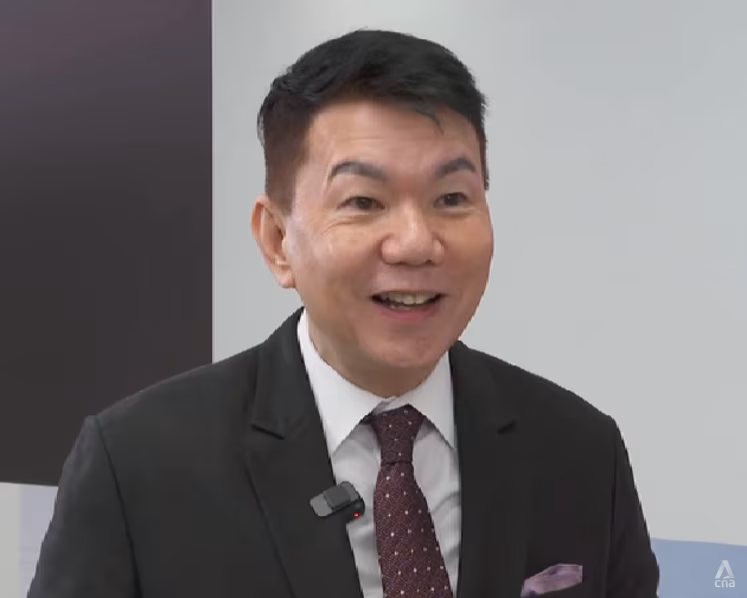
The challenge, he said, was ensuring that such technologies benefit a wider population rather than only those who can afford them. Philanthropy Asia Alliance (PAA) CEO Shaun Seow speaks to CNA.
在能源转型方面,与会者表示,扩大可再生能源发电仅是方程式的一部分。
On energy transition, attendees said expanding renewable energy generation is only one part of the equation.
“挑战不仅仅是增加可再生能源容量,而是使整个电力系统更具灵活性和效率,”亚洲开发银行中国副总监胡若宇说。
“The challenge is not simply about more renewable capacity, but making the entire power system more flexible and efficient,” said Hu Ruoyu, deputy China director at the Asian Development Bank.
“能源转型的下一阶段不仅仅是为额外基础设施融资。它还涉及加强制度、改进法规以及开发具有商业可行性的解决方案。” 从中国的规模能力中学习 组织者表示,在中国举办首届峰会的决定是经过深思熟虑的,鉴于该国在开发和推广创新解决方案方面的经验。肖说,中国的方法为亚洲其他地区提供了宝贵的经验。
“The next phase of energy transition is not just about financing additional infrastructure. It is also about strengthening institutions, improving regulations, and developing commercially viable solutions.”LEARNING FROM CHINA'S ABILITY TO SCALE Organisers said the decision to hold the inaugural summit in China was deliberate, given the country's experience in developing and scaling innovative solutions. Seow said China's approach offered valuable lessons for the rest of Asia.
“中国市场能够将一个小规模的解决方案推广到可能数十万甚至上百万人的规模,这确实非常惊人,”他说。
“The ability of the Chinese market to take a small solution to (reach) maybe hundreds of thousands or millions (is) really quite amazing,” he said.
作为峰会的一部分,代表团还计划参观北京周边的项目,以了解技术如何被应用于实际挑战。
As part of the summit, delegates were also scheduled to visit projects around Beijing to see how technology was being applied to real-world challenges.
这些包括利用人工智能支持自闭症儿童,以及使用数字工具帮助保护中国长城。
These included the use of AI to support children with autism, as well as digital tools to help preserve the Great Wall of China.
肖表示,亚洲公益联盟还计划邀请更多国际合作伙伴来华学习环境项目,包括内蒙古防治沙漠化的努力,以及将海上风电场与养殖业相结合的创新。
Seow said PAA also planned to bring more international partners to China to learn from environmental projects, including efforts to combat desertification in Inner Mongolia and innovations combining offshore wind farms with aquaculture.
“这些是我认为人们应该理解的创新,也许还能带回家乡加以借鉴,”他说。
“These are innovations that I think people should understand, and maybe adapt back home,” he said.
此次峰会筹备了两年,标志着组织者希望这将成为亚洲公益联盟、清华大学及其他中国合作伙伴之间深化合作的开始。
The summit, two years in the making, marked what organisers hope will be the start of deeper collaboration between PAA, Tsinghua University and other Chinese partners.
肖表示,讨论将在五月的亚洲公益峰会上继续进行,并强调重点必须从对话转向实际行动。“讨论不必止步于一场峰会。行动需要持续的努力,”他说。
Seow said discussions would continue at the Philanthropy Asia Summit in May, stressing that the focus must shift from conversations to practical action. “The conversation need not stop at one summit. Action requires continuous effort,” he said.