沙特社交媒体本周呈现不同景象。在战争前六个月,针对伊朗袭击的广泛反应是发布国旗、王储和为国家祈祷的图片。如今,随着胡塞武装对王国的袭击,我的社交动态(算法:女性,Z世代,相对自由派)充斥着敬礼国旗的士兵,或在导弹架旁读《古兰经》的人。
Saudi social media looks different this week. Throughout the first six months of the war, the widespread response to Iranian attacks was posting images of the flag, the crown prince, and a prayer for the country. Now, following Houthi strikes on the kingdom, my social feeds (algo: female, Gen Z, relatively liberal) are full of soldiers saluting the flag, or reading the Quran beside missile racks.
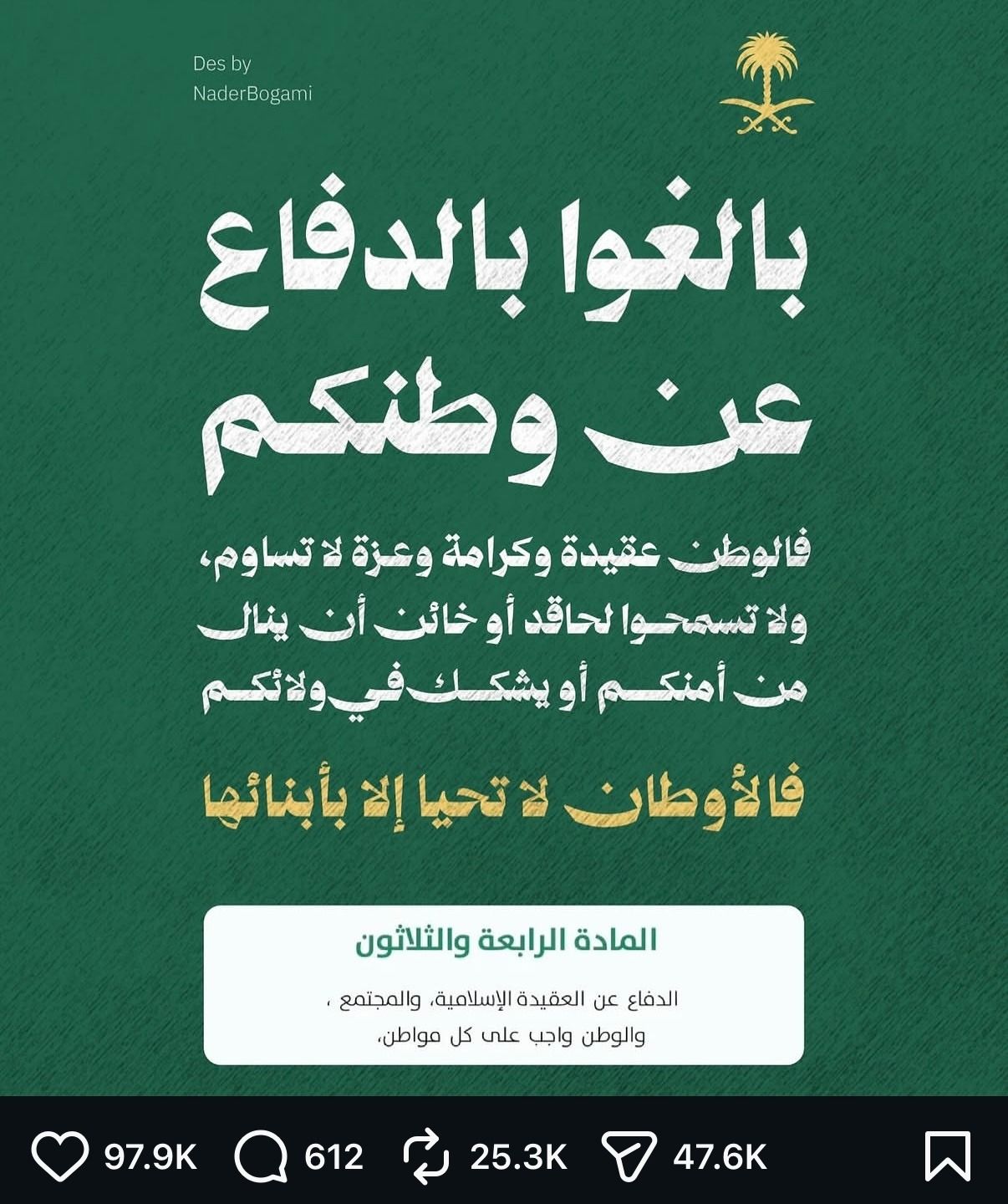
民族主义语言也趋于尖锐:一条病毒式传播的帖子告诉沙特人捍卫家园,并警告那些“动摇忠诚”的“叛徒”。许多人在重复官方口号——“沙特词典里没有恐惧”。战争的框架也发生了转变,从美国的冲突转变为王国自身的冲突。
Nationalist language has sharpened too: One viral post tells Saudis to defend their homeland and warns against “traitors” who would “cast doubt on their loyalty.”Many are repeating the official mantra that “there is no fear in the Saudi dictionary.”The framing of the war has also shifted, from a US conflict to the kingdom’s.