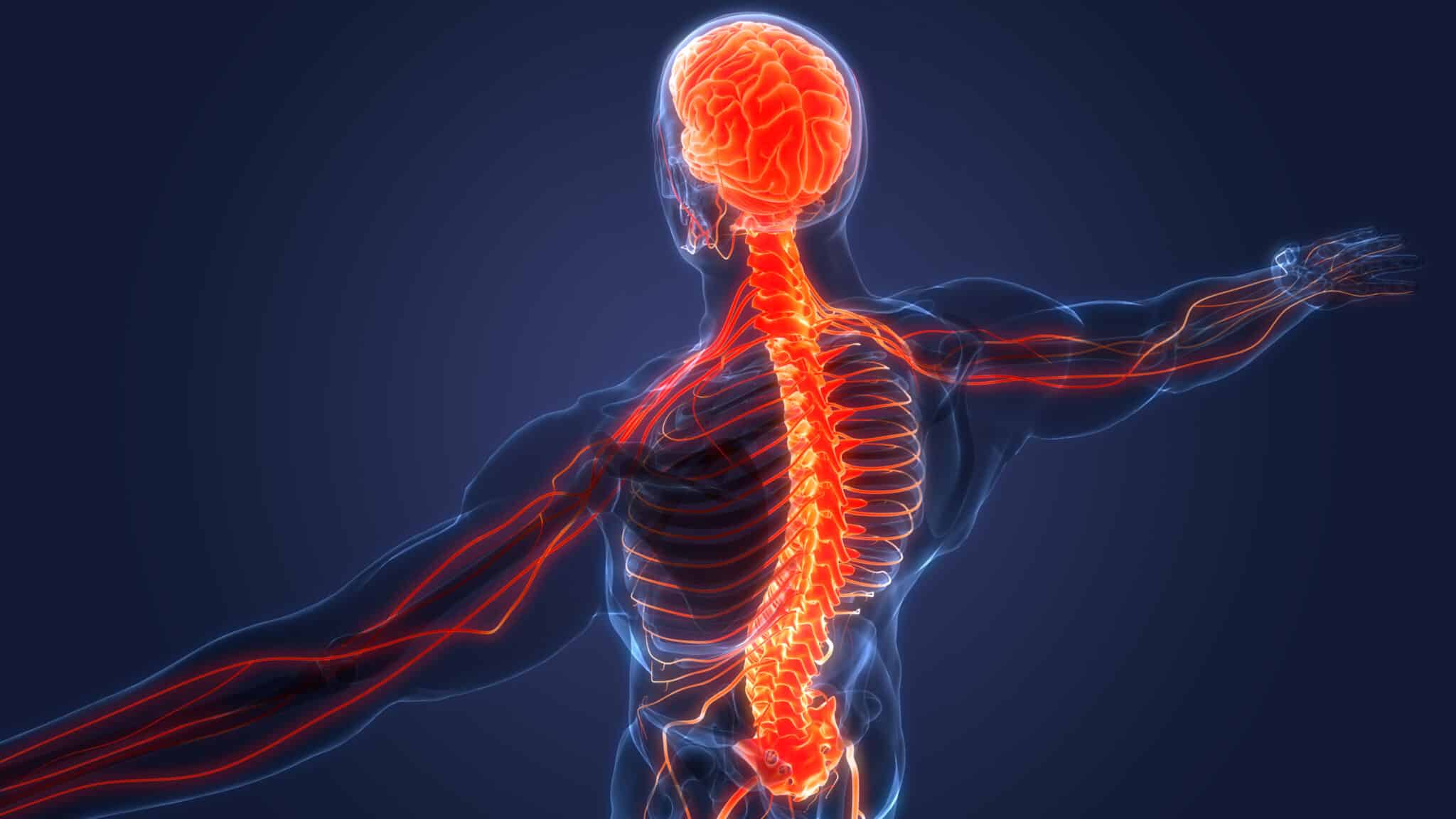
胸部CT扫描测得的下脊柱骨密度较低者,在数年的随访中表现出脑白质健康和思维能力下降更快。
People with lower spine bone density, measured from chest CT scans, showed a faster decline in brain white matter health and thinking skills over several years of follow-up.
骨骼脆弱与大脑变化之间的关联在特定脑区最为显著,且在糖尿病患者中更为突出。
The connection between weak bones and brain changes was strongest in specific brain regions and was more pronounced among participants with diabetes.
由于研究人员可以从已为其他原因进行的胸部CT扫描中提取骨密度数据,他们表示这可能提供一种低成本的方法,用于筛查脑老化风险较高的人群。
Because researchers can pull bone measurements from chest CT scans already done for other reasons, they say this could offer a low-cost way to flag people at higher risk for brain aging.
骨骼和大脑看似无关,但一项新研究发现它们可能以相同的节奏衰老。上脊柱骨骼较弱的成年人在随后的几年里思维能力下降更快,而研究人员在一个意想不到的地方发现了这一预警信号:用于肺部和心脏研究的常规胸部CT扫描,与大脑无关。
Bones and brains may seem unrelated, yet a new study finds they may age on the same clock. Adults with weaker bones in their upper spine lost thinking skills faster over the next several years, and researchers caught the warning an unlikely spot: ordinary chest CT scans taken for a lung and heart study, with nothing to do with the brain.
该研究发表在《放射学》期刊上,研究对象为715名成年人,随访约五年,其中约400人接受了重复的脑部MRI检查,更大规模的群体完成了认知测试。即使在考虑了年龄、教育程度、吸烟和心脏健康等因素后,基线时骨密度较低者仍表现出全球性思维和记忆评分下降更快,以及特定脑白质传导束受损加速。
Published in the journal Radiology, the study followed 715 adults over about five years, with roughly 400 undergoing repeat brain MRIs and larger groups completing cognitive tests. People with lower bone density at baseline showed faster declines in global thinking and memory scores, along with quicker damage to specific brain wiring tracts, even after accounting for age, education, smoking, and heart health.
在糖尿病患者中,骨骼较弱还与一种脑损伤类型的更快积累相关,而在未患糖尿病的人群中则未观察到这种关联。由于骨密度数据可直接从已存在于病历中的胸部CT扫描中获取,研究人员表示这可能提供一种低成本的方法,帮助识别脑老化加速风险较高的人群。科学家如何将骨密度与脑部衰退关联起来科学家利用了动脉粥样硬化多民族研究(Multi-Ethnic Study of Atherosclerosis)的数据,这是一项自2000年以来一直在全国范围内追踪成年健康的长期研究。
Among people with diabetes, weaker bones were also tied to a faster buildup of one type of brain damage, a connection that was absent in those without the condition. Because the bone reading comes free from chest CT scans already sitting in medical records, researchers say it could offer a low-cost way to help flag people at higher risk of faster brain aging. How Scientists Linked Bone Density to Brain Decline Scientists drew on data from the Multi-Ethnic Study of Atherosclerosis, a long-running health study that has followed adults across the country since 2000.
此次分析纳入了715名参与者,其年龄中位数为69岁,研究开始时,这些参与者均无痴呆或中风病史。该群体中男性略多于女性。
This analysis included 715 participants with a median age of 69, none of whom had a history of dementia or stroke at the start of the study period. The group had slightly more men than women.
在2016年至2024年之间,参与者平均每隔约五年接受两次胸部CT扫描、详细的脑部MRI扫描以及认知测试。一种深度学习计算机程序——一种经过训练以在医学影像中识别模式的人工智能——直接从胸部CT图像中测量了上脊椎的骨密度。此前的研究已验证该AI工具用于此目的的有效性。
Between roughly 2016 and 2024, participants underwent chest CT scans, detailed brain MRI scans, and cognitive testing at two time points, spaced about five years apart on average. A deep-learning computer program, a type of artificial intelligence trained to spot patterns in medical images, measured bone density in the upper spine directly from the chest CT images. Earlier research validated that same AI tool for this purpose.
在脑部方面,研究人员测量了两项指标。首先,他们观察了白质高信号区:脑部扫描中的亮斑,反映出常与衰老血管相关的小面积损伤。其次,他们测量了各向异性分数(fractional anisotropy),这是一种检查大脑白质纤维束组织程度和健康状况的方法。健康的白质就像大脑内部高效的布线。当这种布线受损时,信号传输变得不够顺畅,思维能力也常常受到影响。
On the brain side, researchers measured two things. First, they looked at white matter hyperintensities: bright spots on brain scans that reflect small areas of damage often linked to aging blood vessels. Second, they measured fractional anisotropy, a way of checking how well organized and healthy the brain’s white matter tracts are. Healthy white matter acts like efficient internal wiring for the brain. When that wiring breaks down, signals move less smoothly, and thinking often suffers.
认知测试则补充了整体图景。参与者接受了广泛使用的认知能力筛查工具(Cognitive Abilities Screening Instrument)测试,以及测量处理速度和工作记忆的测试。研究人员将其中几项测试结果合并为一个全球认知得分,以追踪随时间变化的整体精神敏锐度。
Cognitive testing rounded out the picture. Participants took the widely used Cognitive Abilities Screening Instrument, along with tests measuring processing speed and working memory. Researchers combined several of these into a single global cognitive score to track overall mental sharpness over time.
骨密度和脑部衰退数据显示,研究开始时骨密度较低的人倾向于表现出大脑白质组织整体衰退更快,但研究人员在调整了他们进行的统计比较次数后,这一结果未能成立。然而,当他们聚焦于特定脑区时,更清晰的模式浮现出来。
What the Bone Density and Brain Decline Data Showed People with lower bone density at the start of the study tended to show a faster overall decline in the brain’s white matter organization, though that result didn’t hold up once researchers adjusted for the number of statistical comparisons they ran. Still, when they zoomed into specific brain regions, clearer patterns emerged.
在大脑深处的一束神经纤维中,称为内囊前肢,它参与连接与运动和思维相关的脑部区域,骨密度较低与白质健康状况明显更快的衰退相关,这一结果在严格的统计检验下仍然成立。骨密度较低还与胼胝体中明亮的、与损伤相关的斑点更快积累相关,胼胝体是连接大脑左右半球的厚实组织带。
In one bundle of nerve fibers deep in the brain, known as the anterior limb of the internal capsule and involved in connecting the parts of the brain tied to movement and thinking, lower bone density was linked to a clearly faster decline in white matter health, a result that held up under strict statistical checks. Lower bone density was also tied to a faster buildup of those bright, damage-related spots in the corpus callosum, the thick band of tissue that connects the brain’s left and right hemispheres.
在认知方面,这种关联更为一致。骨密度较低预测全球认知评分更快下降,特别是在认知能力筛查工具上的表现更差,即使研究人员在调整了年龄、教育、吸烟、身体活动、胆固醇、血压以及其他已知影响骨骼和大脑健康的因素后,这一关联仍然存在。该关联出现在整体认知衰退中,但在诸如数字跨度之类的较窄测试中未出现,数字跨度测量短期注意力和数字记忆。
On the cognitive side, the connection was more consistent. Lower bone density predicted faster decline in the global cognitive score and, specifically, on the Cognitive Abilities Screening Instrument, even after researchers adjusted for age, education, smoking, physical activity, cholesterol, blood pressure, and other factors known to affect both bone and brain health. The link appeared in overall cognitive decline but not in narrower tests like digit span, which measures short-term attention and number memory.
一个因素被发现会进一步增加风险:糖尿病。在糖尿病患者中,骨质较弱与白质损伤明显更快的积累相关。而在非糖尿病患者中,这种关联基本消失。研究人员还指出,男女在骨密度与白质衰退之间的关系上可能存在差异,尽管他们将这种模式描述为具有提示性而非结论性。
One factor stood out as further increasing risk: diabetes. Among participants with diabetes, weaker bones were tied to a noticeably faster buildup of white matter damage. Among those without diabetes, that link mostly disappeared. Researchers also noted a possible difference between men and women in how bone density related to white matter decline, though they described this pattern as suggestive rather than conclusive.
研究人员注意到首发阵容出现了一个转折:骨骼最弱的人实际上具有一些优势,包括受教育程度更高以及某些代谢指标表现更好,例如糖尿病发病率较低、“好”胆固醇水平较高。这些基线差异很容易掩盖简单的骨骼-大脑比较,因此在得出结论之前,统计模型对这些因素进行了大幅调整。
Researchers noted a twist in the starting lineup: people with the weakest bones had some advantages, including higher education levels and better results on certain metabolic measures, such as lower rates of diabetes and higher “good” cholesterol. Those baseline differences could easily muddy a simple bone-brain comparison, so the statistical models adjusted heavily for them before drawing conclusions.
骨密度与大脑健康可能关联的原因研究人员指出了几种可能的解释,说明为何骨骼健康和大脑健康似乎随年龄增长而同步变化。骨组织会向血液释放物质,包括骨钙素,这些物质可到达大脑并可能影响神经细胞的交流方式。衰老的骨髓也与促进有害蛋白质堆积的过程相关联,这一现象在生物学上与大脑衰老具有一些共同特征。
Why Bone Density and Brain Health Might Be Linked Researchers pointed to a few possible explanations for why skeletal health and brain health seem to move together as people age. Bone tissue releases substances into the bloodstream, including osteocalcin, that can reach the brain and may influence how nerve cells communicate. Aging bone marrow has also been tied to processes that promote harmful protein buildup, a phenomenon that shares some biological features with brain aging.
另一种可能性更侧重于骨密度作为一个人身体在多年炎症、代谢不良或缺乏运动情况下应对情况的总体标志,而非直接的因果关系。根据这一观点,骨骼脆弱并不会直接导致大脑损伤;相反,两者都可能反映出身体在数十年间累积的相同磨损和老化过程。
Another possibility is less about direct cause and effect and more about bone density serving as a general marker of how well a person’s body has weathered years of inflammation, poor metabolism, or inactivity. Under this view, weak bones would not directly cause brain damage. Instead, both would reflect the same underlying wear and tear building up in the body over decades.
糖尿病在加强骨骼-大脑关联中的作用符合人们对该疾病的已有认识。糖尿病与血管损伤和慢性炎症相关,而这两者都可能使大脑组织更易受损。对于本已处于这种额外代谢压力下的人群,骨骼脆弱可能成为脑部风险的更易察觉的警示信号。
Diabetes’ role in strengthening the bone-brain link fits with what is already known about the condition. Diabetes is associated with damage to blood vessels and chronic inflammation, both of which can make brain tissue more vulnerable to injury. Weak bones may be an easier red flag for brain risk in people whose bodies are already under this added metabolic stress.
这些并不能证明骨密度直接导致大脑退化,至少仅凭这一证据尚不能得出此结论。它表明,已经存在于数百万例胸部CT扫描中的一种测量指标——目前尚未有人用于脑部评估——可能携带关于谁在大脑和骨骼方面衰老更快的真实信号。对于寻求更便宜、更早期方法来识别认知风险的医疗系统而言,这值得关注,尤其是对糖尿病患者而言,他们可能从密切监测中获益最大。
None of this proves that bone density directly wears down the brain, at least not on this evidence alone. It shows that a measurement already in millions of chest CT scans, one nobody currently uses for brain assessment, may carry a real signal about who is aging faster upstairs as well as in the skeleton. For a health system looking for cheaper, earlier ways to flag cognitive risk, that is worth attention, especially for patients managing diabetes, who may benefit most from close monitoring.
免责声明:本文描述了一项观察性研究,该研究可以揭示关联,但无法证明低骨密度导致大脑老化或认知衰退。研究结果反映了群体层面的模式,并非任何个体的诊断工具。任何担心自身骨骼或大脑健康的人应咨询合格的医疗保健提供者。
Disclaimer: This article describes an observational study, which can reveal associations but cannot prove that low bone density causes brain aging or cognitive decline. The findings reflect group-level patterns and are not a diagnostic tool for any individual. Anyone concerned about their bone or brain health should consult a qualified healthcare provider.
论文注释 研究人员坦诚地表示,这是一项观察性研究,意味着它无法证明骨质脆弱直接导致大脑损伤。共享的潜在因素,如胰岛素抵抗,可能解释了部分观察到的模式。随访期虽然足够长以捕捉早期变化,但可能不足以捕捉更严重的晚年大脑衰退或全面性痴呆。健康状况最好和最差的人可能也更倾向于或不太可能坚持参与随访检测,这可能导致结果向任何一方偏移,尽管研究人员使用了统计加权方法试图对此进行校正。
Paper Notes Limitations Researchers were upfront that this was an observational study, meaning it cannot prove that weak bones directly cause brain damage. Shared underlying factors, such as insulin resistance, could explain part of the pattern instead. The follow-up period, while long enough to catch early changes, may not have been long enough to capture more severe, later-life brain decline or full-blown dementia. The healthiest and sickest people may also have been more or less likely to stick around for follow-up testing, which could shift the results in either direction, even though the researchers used statistical weighting to try to correct for this.
此外,该研究未测量骨代谢、炎症标志物或骨髓脂肪,而这些都可能有助于解释该关联背后的生物学机制。最后,骨密度测量方法在可用于日常医疗实践之前,仍需在其他CT扫描仪和环境中进一步验证。
Additionally, the study did not measure bone turnover, inflammation markers, or bone marrow fat, all of which could help explain the biology behind the connection. Finally, the bone density measurement method needs further validation across other CT scanners and settings before it could be used in everyday medical practice.
资金和披露 美国国立卫生研究院通过多项合同和资助支持了这项研究,包括国家心肺血液研究所、国家关节炎及肌肉骨骼和皮肤病研究所以及国家转化科学促进中心。额外支持来自多民族动脉粥样硬化研究的空气和肺部研究,该研究部分得到美国环境保护署的资助,但该署未对该出版物进行正式审查。四位作者报告了与《放射学》杂志或其母学会的关联:两人担任《放射学》及其早期职业编辑委员会的副编辑,一人是该杂志编辑的顾问,一人在北美放射学会出版物伦理委员会任职。研究人员提供了完整的利益冲突表格作为补充材料。
Funding and Disclosures The National Institutes of Health supported this research through numerous contracts and grants, including the National Heart, Lung, and Blood Institute, the National Institute of Arthritis and Musculoskeletal and Skin Diseases, and the National Center for Advancing Translational Sciences. Additional support came through the Multi-Ethnic Study of Atherosclerosis Air and Lung studies, backed in part by the U.S. Environmental Protection Agency, which did not formally review the publication. Four authors reported ties to the journal Radiology or its parent society: two serve as associate editors, of Radiology and of its Early Career Editorial Board, one is a consultant to the journal’s editor, and one sits on the RSNA Publications Ethics Committee. Researchers provided full conflict of interest forms as supplemental materials.
出版详情 论文标题:“深度学习推导的骨矿物质密度与纵向白质微结构及认知衰退:多民族动脉粥样硬化研究” 作者:Sara Momtazmanesh、Quincy A. Hathaway、Michael P. Bancks、David A. Bluemke、R. Graham Barr、Wendy S. Post、Mohamad Habes、Ilya Nasrallah、Susan R. Heckbert、R. Nick Bryan、Jose A. Luchsinger、Mei Wan、Matthew Budoff、João A. C. Lima、Timothy M. Hughes、Christos Davatzikos 和 Shadpour Demehri。通讯作者 Shadpour Demehri 位于约翰霍普金斯大学放射学及放射科学系。
Publication Details Paper Title: “Deep Learning–derived Bone Mineral Density and Longitudinal White Matter Microstructure and Cognitive Decline: Multi-Ethnic Study of Atherosclerosis” Authors: Sara Momtazmanesh, Quincy A. Hathaway, Michael P. Bancks, David A. Bluemke, R. Graham Barr, Wendy S. Post, Mohamad Habes, Ilya Nasrallah, Susan R. Heckbert, R. Nick Bryan, Jose A. Luchsinger, Mei Wan, Matthew Budoff, João A. C. Lima, Timothy M. Hughes, Christos Davatzikos, and Shadpour Demehri. Corresponding author Shadpour Demehri is based in the Department of Radiology and Radiologic Sciences at Johns Hopkins University.
期刊:《放射学》2026年,第320卷,第3期(文章编号 e260656)。
Journal: Radiology in 2026, volume 320, issue 3 (article e260656).
该队列已在 ClinicalTrials.gov 注册,标识符为 NCT00005487。
The cohort is registered with ClinicalTrials.gov under identifier NCT00005487.