数十年来,患有镰状细胞病的人们一直忍受着一生的医院就诊、用药和输血,以应对这种可能使预期寿命缩短多达20年的痛苦遗传性血液疾病。
For decades, people living with sickle cell disease have endured a lifetime of hospital visits, medications and blood transfusions to manage a painful genetic blood disorder that can shorten life expectancy by up to 20 years.
但一个备受期待的突破在2023年到来,当时美国食品和药物管理局批准了Casgevy和Lyfgenia,这是首批两种针对该病重型患者的基因疗法。患者倡导者和临床医生表示,治疗方面的最新进展可能标志着镰状细胞病护理新时代的开始,这一时代可能使数千人摆脱反复发作的致残性疼痛,并改善长期健康结果。
But a long-awaited breakthrough came in 2023, when the U.S. Food and Drug Administration approved Casgevy and Lyfgenia, the first two gene therapies for patients with severe forms of the disease. Patient advocates and clinicians say the recent advancements in treatment could mark the beginning of a new era in sickle cell care, one that may free thousands from recurrent episodes of debilitating pain and improve long-term health outcomes.
“这为潜在地治愈镰状细胞病的个体打开了一个全新的世界,”国家患者倡导组织美国镰状细胞病协会的首席医疗官爱德华·唐纳尔·艾维博士说。
"That opens up a whole world of individuals potentially being cured of sickle cell disease," said Dr. Edward Donnell Ivy, chief medical officer for the national patient advocacy organization, Sickle Cell Disease Association of America.
然而,对于数千名患有该病的人来说,获得这些变革性疗法仍然远非简单直接。
Yet for thousands of people living with the disease, accessing the transformative therapies remains far from straightforward.
患者常常面临一个支离破碎且不均衡的医疗环境,其中治疗费用、复杂的治疗过程、医疗服务提供者的可及性以及专业治疗中心的可及性会因居住地而异。结果是,尽管这些疗法有可能显著改变疾病进程,但对许多符合条件的患者而言,它们仍然遥不可及。
Patients often face a fragmented and uneven healthcare landscape where treatment costs, a complex treatment process, provider availability, and access to specialized treatment centers can vary widely based on where they live. The result has left therapies with the potential to dramatically alter the course of the disease still out of reach for many eligible patients.
“患者的优先事项实际上是真正弄清楚获取障碍是什么以及如何克服它们的重要部分,”费城儿童医院血液科主治医师、美国血液学会发言人亚历克西亚斯·汤普森博士说。
"The patients' priorities are actually a big part of really trying to figure out what the barriers to access are and how we overcome them," said Dr. Alexias Thompson, an attending physician in the division of hematology at Children's Hospital of Philadelphia and spokesperson for the American Society of Hematology.
突破之路 有时被称为“最常见的罕见病”,因为全球有数百万人受到影响,根据美国疾病控制与预防中心的数据,镰状细胞病在美国影响着约10万人。超过90%的患者为非西班牙裔黑人或非裔美国人。
Path to a breakthrough Sometimes referred to as "the most common rare disease" because millions of people globally are affected, sickle cell disease impacts around 100,000 people in the U.S., according to the Centers for Disease Control and Prevention. More than 90% of the patient population are non-Hispanic Black or African American.
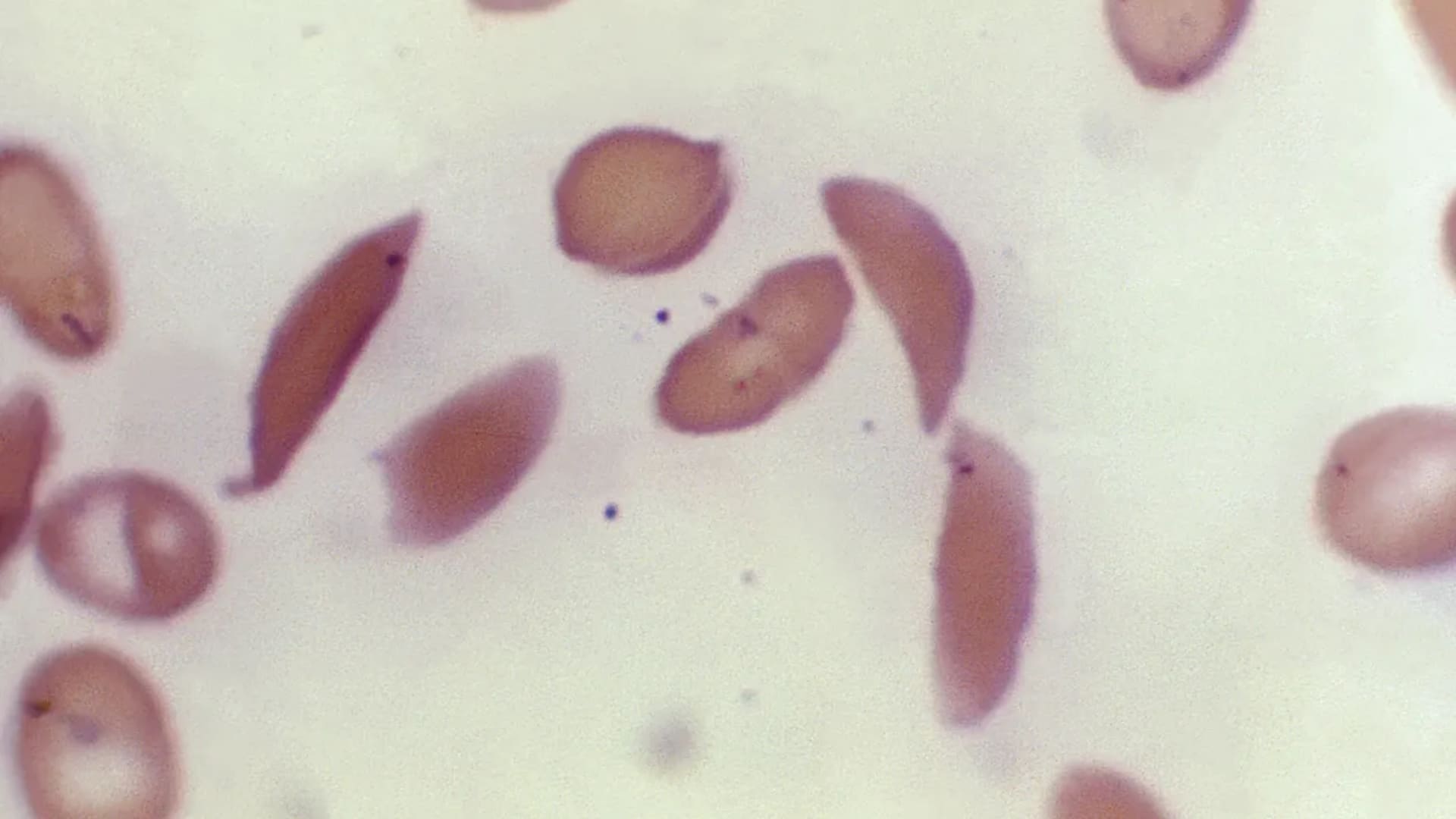
镰状细胞病是一种遗传性血液疾病,会导致通常柔韧、圆形的红细胞变得僵硬并呈新月形,这可能阻塞血管并减少组织的氧气供应。
Sickle cell disease is a genetic blood disorder that causes normally flexible, round-shaped red blood cells to become rigid and crescent-shaped, which can block blood vessels and reduce oxygen delivery to tissues.
一些更常见的健康并发症包括慢性疲劳和贫血,以及血栓和所谓的血管闭塞性或“疼痛”危象,这些是严重的致残性疼痛发作,持续时间可从几小时到几周不等。其他并发症可能包括中风、器官损伤和感染风险增加。
Some of the more common health complications that can occur include chronic fatigue and anemia, as well as blood clots and what is known as vaso-occlusive, or "pain" crises, which are severe episodes of debilitating pain that can last from a few hours to several weeks. Other complications can include stroke, organ damage, and increased risk of infection.
从1910年到大约2015年,镰状细胞病的疾病修饰性治疗几乎没有进展。”安德鲁·坎贝尔博士,儿童国家医院镰状细胞病项目主任。自1910年首次在美国记录镰状细胞病病例以来,超过一个世纪过去了,开发新疗法的进展一直缓慢,部分原因是数十年的投资不足以及相比其他罕见遗传性疾病获得的慈善支持水平较低。根据2020年的一项分析,2008年至2018年期间,美国国立卫生研究院用于镰状细胞病的研究资金平均每位患者为812美元;相比之下,影响美国约4万人的遗传性疾病囊性纤维化在同期的平均资金为每位患者2807美元。
from 1910 until about 2015, there was very little progress in disease-modifying treatments for sickle cell disease." Dr. Andrew CampbellChildren's National Director of Sickle Cell Disease Program More than a century after the first documented U.S. case of sickle cell disease in 1910, progress in developing new treatments remained slow, due in part to decades of underinvestment and lower levels of philanthropic support than those received by other rare genetic disorders. From 2008 through 2018, research funding from the National Institutes of Health given toward sickle cell disease averaged $812 per patient, according to a 2020 analysis, by comparison, funding for the genetic disorder cystic fibrosis, which affects approximately 40,000 people in the U.S., averaged $2,807 per patient for the same period.
“镰状细胞病新疗法的发展一直在缓慢增加,” 华盛顿特区儿童国家健康系统综合镰状细胞病项目主任安德鲁·坎贝尔博士说。“过去六七年里,这一领域出现了爆炸式增长,但我想说,从1910年到大约2015年,镰状细胞病的疾病修饰性治疗几乎没有进展。”1998年,羟基脲获得FDA批准,成为首款被证明能够改善镰状细胞病健康影响的药物,标志着一个重大突破的到来。
"There's been a slow increase in the development of new therapies for sickle cell disease," said Dr. Andrew Campbell, director of the comprehensive sickle cell disease program at Children's National health system in Washington D.C. "In the past six or seven years, there's been an explosion in that, but I would say from 1910 until about 2015, there was very little progress in disease-modifying treatments for sickle cell disease." A major breakthrough arrived in 1998 with the FDA approval of hydroxyurea, the first medication shown to modify the health effects of sickle cell disease.
研究发现,该药物可使患者疼痛危象的发生频率减半,同时减少住院和输血的需求。自问世以来,羟基脲已成为镰状细胞病治疗的基石,帮助数千名患者成功管理病情。
Studies have found the drug has helped to reduce the frequency of pain crises in patients by half, as well as the need for hospitalizations and blood transfusions. Since its introduction, hydroxyurea has become a cornerstone of sickle cell disease treatment that has helped thousands successfully manage their condition.
然而,直到基因疗法的出现,治愈性疗法的发现仍然难以捉摸。多年来,患者唯一的选择是接受骨髓移植,但这仅限于少数能够找到供体匹配的人。
Yet the discovery of a curative treatment remained elusive until gene therapy. For years, the only option available to patients was undergoing a bone marrow transplant, which was limited to only a select number able to find a donor match.
“骨髓移植一直是可选的,但并不是一个很好的选择,因为并不是很多人能够获得供体,” 同时也是镰状细胞病患者的艾维说。“如今我们有了细胞和基因疗法,个体可以成为自己的供体。” 患者接受度缓慢 基因疗法已被证明能够达到高疗效,88%至94%的患者经历了完全摆脱严重血管闭塞性危象。
"Bone marrow transplant was always available, but it wasn't a great option because not too many people had access to a donor," said Ivy, who is also a sickle cell disease patient. "Now that we have the cell and gene therapies, an individual can act as their own donor." Slow patient uptake Gene therapy has been shown to achieve a high rate of efficacy, with 88% to 94% of patients experiencing complete freedom from severe vaso-occlusive crisis.
然而,尽管基因疗法具有治愈潜力,镰状细胞病的基因疗法接受率仍然缓慢。根据制造商Vertex制药公司的全年财报,截至2025年底,全球共有64名患者接受了Casgevy输注,而另有147人已完成该疗法的首次细胞采集。Lyfgenia的制造商Genetix Biotherapeutics报告称,自2023年获批以来,已有115名美国患者接受了该基因疗法,另有216人在2025年底前启动了细胞采集。
Yet despite their curative potential, uptake of gene therapies for sickle cell disease has been slow. By the end of 2025, a total of 64 patients worldwide had received infusions of Casgevy, according to a full-year earnings report by maker Vertex Pharmaceuticals, while another 147 people had undergone their first cell collection for the treatment. Lyfgenia manufacturer Genetix Biotherapeutics reported that 115 U.S. patients had been treated with the gene therapy since its 2023 approval, with an additional 216 having initiated cell collection by late 2025.
基因疗法可能是一个令人畏惧的过程,可能会使一些患者却步。该疗法需要采集患者的造血干细胞,并对其进行修改,使其能够产生健康的血红蛋白,然后将这些细胞重新输回患者体内。在接受干细胞输注之前,患者需要经历一个预处理阶段,在此期间他们会接受化疗、输血,并忍受可能持续数周的频繁住院。
Gene therapy can be a daunting process that may deter some patients. It requires collecting the patient's blood-forming stem cells and modifying them so they produce healthy hemoglobin and then returning those cells back into the patient's body. Patients go through a condition stage prior to receiving the cells where they receive chemotherapy, blood transfusions, and endure frequent hospital stays that can last for weeks.
整个疗法最多可能需要一年时间才能完成,而预处理过程常常会导致永久性不育或无法生育。
The entire therapy can take up to a year to complete, with the conditioning process often causing permanent infertility or sterility.
目前,年龄小至2岁的镰状细胞病患者可以接受Casgevy治疗,而Lyfgenia适用于12岁及以上的患者。两种疗法均获批用于治疗重症镰状细胞病患者,例如具有HbSS基因型的患者——这类基因型占患者多数——或HbS beta“零”型地中海贫血。符合条件的患者可能包括在接受治疗前24个月内经历过至少四次疼痛危象或急性胸综合征发作的人。研究估计,患者总人数中有25%至35%符合目前基因疗法的临床标准。
Currently, patients as young as 2 years of age with sickle cell disease can receive Casgevy, while Lygfenia is available for patients 12 years and older. Both therapies are approved for patients with severe forms of the disease, such as those with genotypes like HbSS, which includes a majority of patients, or HbS beta "zero" thalassemia. Likely candidates include patients who have experienced at least four pain crises or acute chest syndrome episodes within 24 months prior to seeking treatment. Studies have estimated that anywhere between 25% and 35% of the patient population would meet the current clinical criteria for gene therapy.
艾维回忆说,在开始参加研究并服用羟基脲之前,他每年会经历四到五次需要住院治疗的疼痛危机。他说,这种药物彻底改变了他的生活,使他能够在没有疼痛发作的情况下完成医学教育。
Ivy recalls experiencing four to five pain crises a year that required him to be hospitalized each time before he began taking hydroxyurea as part of a research study. He said the medication dramatically changed his life, allowing him to complete his medical education free from pain episodes.
然而,在基因疗法方面,艾维表示,由于对身体和时间的要求,他选择放弃接受这种治疗。他说:“如果我年轻一些,我肯定会认真考虑。”但他补充道:“不过有很多事情需要考虑。”除了身体需求之外,基因疗法的高昂费用可能会阻止更多镰状细胞病患者寻求治疗。单次疗程的列表价格在220万至310万美元之间。这一费用不包括住院、化疗或所需的专科护理等医疗开支。
When it came to gene therapy however, Ivy, said he opted to forego seeking that treatment because of the demands on his body and time. "If I was younger, I might strongly consider it for sure," Ivy said. "But there are a lot of things to consider." Physical demands aside, the cost of gene therapy could potentially prohibit more sickle cell disease patients from seeking treatment. The list price for a single-course treatment ranges from $2.2 million and $3.1 million. This cost does not include such healthcare expenses as hospital stays, chemotherapy, or the specialized care needed.
但根据费城儿童医院的主治医生、美国血液学会发言人亚历克西斯·汤普森博士的说法,已经采取了一些措施来解决私人健康保险患者与通过医疗补助或儿童健康保险计划获得健康保障的大多数镰状细胞病患者之间可能存在的费用差距。
But efforts have been made to address potential cost disparities between patients with private health insurance and the majority of sickle cell disease patients who receive health coverage through Medicaid or the Children's Health Insurance Program, according to Dr. Alexis Thompson, an attending physician at Children's Hospital of Philadelphia and a spokesperson for the American Society of Hematologists.
其中最大的一项努力始于2024年,由医疗保险和医疗补助服务中心(CMS)发起。细胞和基因疗法可及性模式是一项计划,该机构通过该计划与各州和制造商达成协议,根据患者疗效设定基因疗法的价格,旨在降低实际疗法及其支持性护理相关的费用。目前,32个州、哥伦比亚特区和波多黎各参与了该CMS模式。
One of the largest efforts began in 2024 by the Centers for Medicare and Medicaid Services. The Cell and Gene Therapy Access Model is a program where the agency enters into agreements with states and manufacturers to set pricing for gene therapy care based on patient outcomes aimed at lowering the costs associated with both the actual therapy and supportive care. Currently 32 states, the District of Columbia and Puerto Rico, participate in the CMS model.
然而,汤普森博士承认,该项目覆盖的服务类型可能因州而异。她说:“根据一个人所在的州,有些地区的覆盖可能比其他地区更全面。”
Thompson acknowledged however that the type of services that are covered through the program can vary. "Depending on the state that someone is in, some of the coverage may be more comprehensive than others," she said.
虽然医疗补助(Medicaid)确实覆盖了镰状细胞病基因疗法的费用,但医疗服务提供者如何管理治疗的高额前期成本仍存在疑问,因为报销流程复杂且仍在不断演变。这些费用可能在报销最终确定之前,给医院和卫生系统带来财务挑战。
While Medicaid does cover the cost of gene therapy for sickle cell disease, questions still remain as to how healthcare providers manage the large upfront costs of treatment as reimbursement remains complex and continues to evolve. Such costs can create financial challenges for hospitals and health systems before reimbursement is finalized.
虽然费用是一个问题,但它可能并不是获取基因疗法的最大障碍;相较之下,寻找具备资格并能够提供该治疗的医疗服务提供者才是更大的挑战。医院需要由多学科专家组成的团队协作,在治疗前、期间和之后为患者提供护理。
While cost is a concern, it may not be as large of a challenge to accessing gene therapy as finding a qualified healthcare provider able to provide the treatment. Hospitals require a multi-disciplinary team of specialists working together to provide care for the patients before, during and after treatment.
患者数量与提供者数量之间存在不匹配——这意味着一些患者需要驾车长达三小时才能获得镰状细胞病专业知识的服务。克里斯蒂娜·艾布拉姆斯(Dr. Christina Abrams),南卡罗来纳州医科大学肖恩·詹金斯儿童医院儿童镰状细胞病中心主任。虽然全国许多主要学术医疗中心提供基因疗法,但专门护理中心的数量仍然很少,以至于生活在农村地区的人们仍然面临护理缺口,这可能要求他们经常在本州内甚至跨州行驶数小时以获得治疗。
there is a mismatch between the number of patients and the number of providers – that means some patients are driving from up to three hours away to gain access to sickle cell expertise." Dr. Christina AbramsDirector of the Pediatric Sickle Center at the Medical University of South Carolina's Shawn Jenkins Children's Hospital in Charleston While many major academic health centers around the country offer gene therapy, the number of specialized care centers are still few enough to leave care gaps for people living in more rural areas, which would require many to frequently travel for hours across their state or to another state to access treatment.
克里斯蒂娜·艾布拉姆斯(Dr. Christina Abrams),南卡罗来纳州医科大学肖恩·詹金斯儿童医院儿科临床助理教授兼儿童镰状细胞病中心主任表示,获取基因疗法的不足反映了人们在获取镰状细胞病专科医生方面更广泛的不平等。
Dr. Christina Abrams, clinical assistant professor of pediatrics and director of the Pediatric Sickle Center at the Medical University of South Carolina's Shawn Jenkins Children's Hospital in Charleston, said the gaps in access to gene therapy reflects the disparity in access to sickle cell disease specialists at large.
“在南卡罗来纳州,我们有三个主要中心负责治疗镰状细胞病病人,”艾布拉姆斯说。“但病人数量与医疗提供者数量之间常常存在不匹配——这意味着有些病人需要驱车长达三个小时,才能获得镰状细胞病专科治疗。”
"Within the state of South Carolina, we have three main centers that are taking care of patients with sickle cell disease," Abrams said. "But oftentimes there is a mismatch between the number of patients and the number of providers – that means some patients are driving from up to three hours away to gain access to sickle cell expertise."
为了弥合这一差距,艾布拉姆斯表示,她的中心采用了多种服务,包括社会工作者、病人引导员以及线上健康咨询。
Bridging the gap To try to bridge the gap, Abrams said her center employs several services including the use of social workers, patient navigators, and virtual health visits.
亚拉巴马大学伯明翰分校(UAB)也开展了类似的举措,以解决就医可及性问题。其参与的国家卫生研究院(NIH)资助项目名为“招募与参与护理,以改善镰状细胞病临床实践”(Recruitment and Engagement in Care to Impact Practice Enhancement for Sickle Cell Disease,简称RECIPE)。该项目于2021年启动,旨在识别那些尚未接受专科医生治疗的镰状细胞病病人,并将其纳入护理体系。
该项目的一个目标是联系35岁及以上的镰状细胞病病人——他们可能出生时并未被诊断出患病,并帮助他们联系到镰状细胞病专科医生。
Similar efforts to address access issues have occurred at UAB, with the NIH-funded project, Recruitment and Engagement in Care to Impact Practice Enhancement for Sickle Cell Disease, or RECIPE, an initiative launched in 2021 that seeks to identify sickle cell disease patients who are not seeing a specialist and recruiting them into care. One of the goals of the project is to connect with sickle cell disease patients 35 years of age and older who may have not been diagnosed at birth and get them connected to a sickle cell disease specialist.
“我们正努力帮助那些身处相关地区、却不知道自己需要这种治疗的人,”坎特说。
"We're really trying to help people in those areas who don't know that they need that care," Kanter said.
从更广泛的层面来看,在全国范围内构建更完善的镰状细胞病护理网络,一直是美国镰状细胞病中心全国联盟(National Alliance of Sickle Cell Centers)的工作重点。UAB和南卡罗来纳医科大学(MUSC)的镰状细胞病中心都是该联盟的成员。艾布拉姆斯表示,该联盟拥有115个成员中心,其目标是在专科医生之间共享信息,同时提升整个医疗界的认知,帮助他们更深入地理解这种疾病的影响。
More broadly, efforts to create a more robust sickle cell disease care network nationally has been the work of the National Alliance of Sickle Cell Centers, of which sickle cell centers at both UAB and MUSC are participating members. With 115 member centers across the country, Abrams said the goal of the Alliance is to share information among both fellow specialists, as well as raise awareness among the broader medical community to help deepen their understanding of the impact of the disease.
“长期以来,镰状细胞病一直缺乏标准化的治疗规范,也未能引起足够的关注,”艾布拉姆斯说。“成为该组织成员的好处之一,就是能够参与这一更宏大的图景。”
"One thing sickle cell disease has lacked for a very long time is standardization of care and really bringing light to disease," Abrams said "One of the benefits of being a member of this organization is helping to be a part of that bigger picture."
CNBC Cures由Alexion、AstraZeneca Rare Disease和BridgeBio提供赞助。
CNBC Cures is underwritten by Alexion, AstraZeneca Rare Disease and BridgeBio.