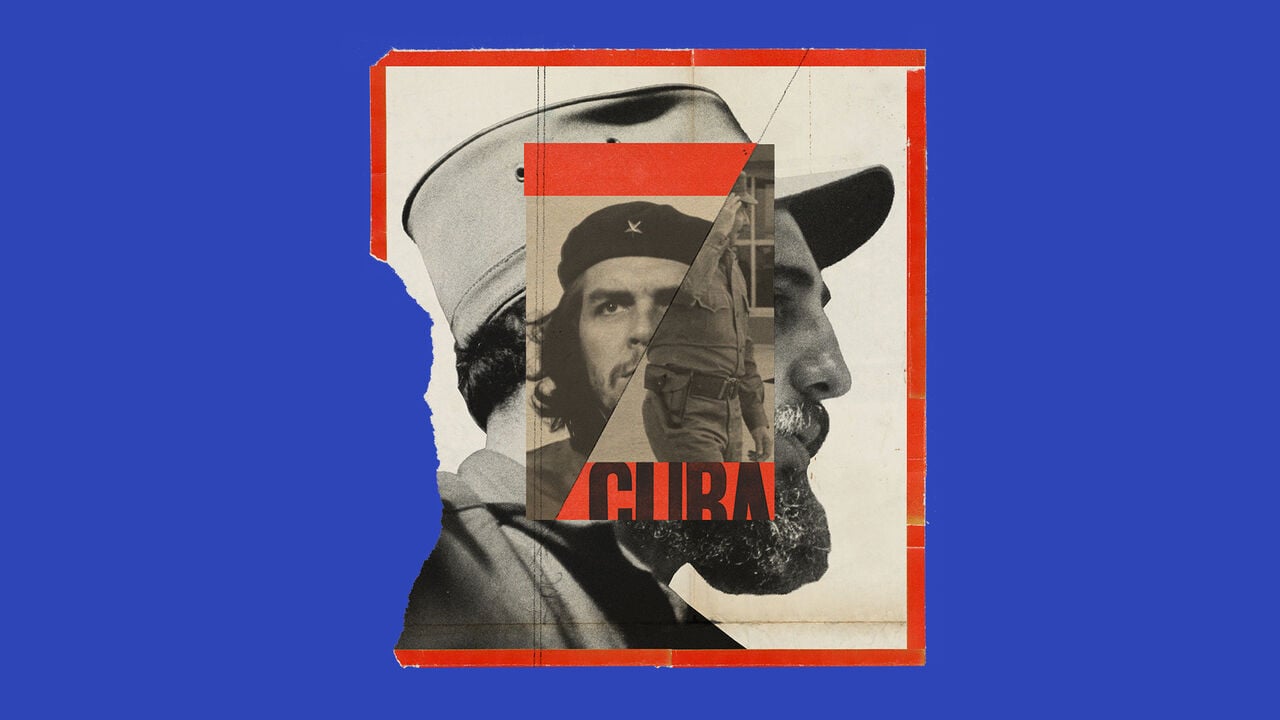
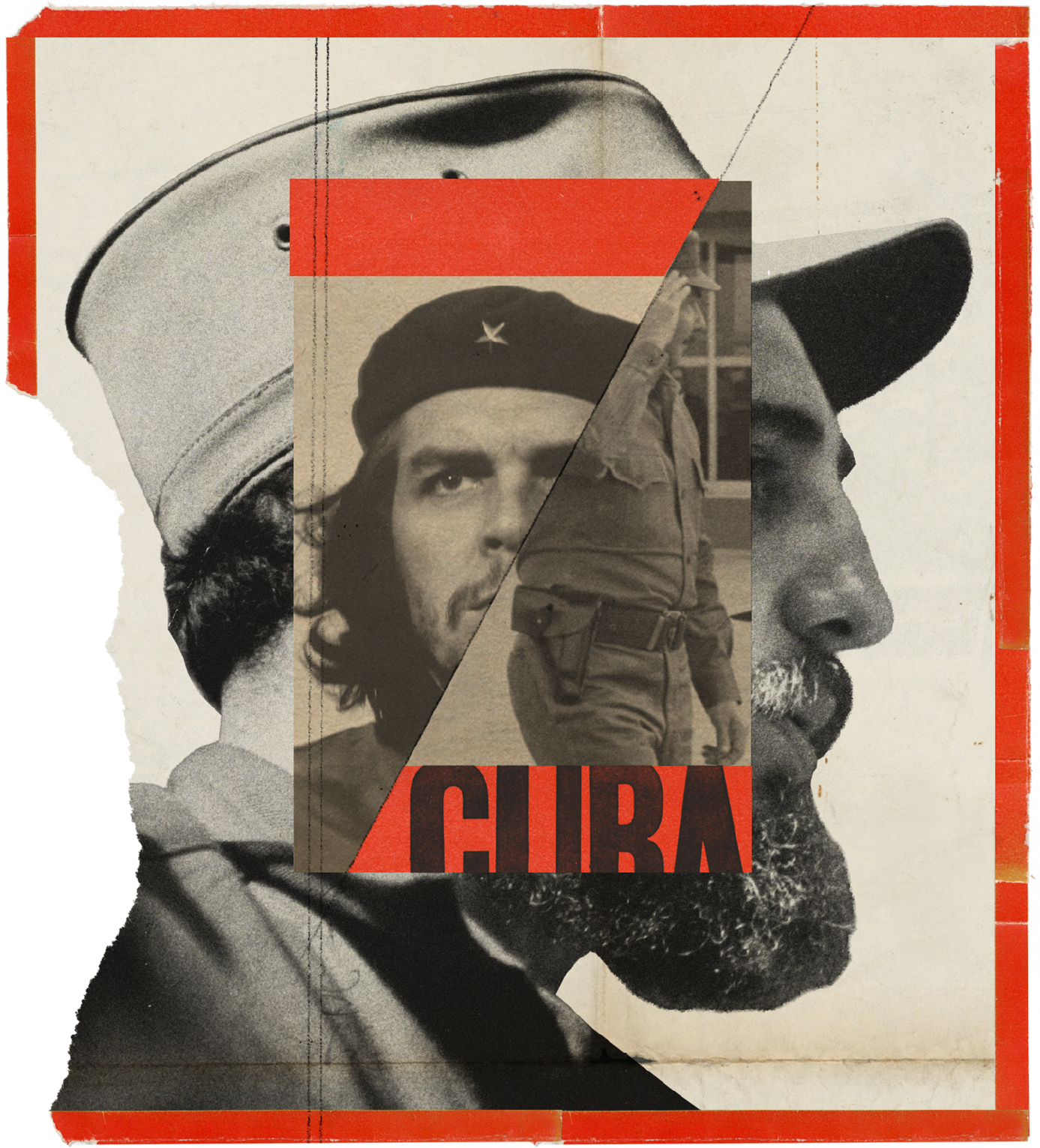
《经济学人》如何报道古巴革命及美国的反应 第二部分:1958-59年卡斯特罗的胜利 第二部分:古巴革命及美国的反应 到1958年,古巴的内战正在加剧。叛乱分子使用游击战术,如爆炸和绑架,以削弱富尔亨西奥·巴蒂斯塔的政权。这位独裁者显然惊慌失措,变得更加专制。腐败阻碍了他多元化经济的尝试,而美国工业仍主导着这个岛屿,在采矿、铁路建设和糖业贸易方面拥有主导权。
How The Economist reported on the Cuban revolution and America’s reaction to it Part 2: 1958-59 Castro’s triumph Part 2: The Cuban revolution—and America’s reaction to it By 1958 Cuba’s civil war was intensifying. The rebels were using guerilla tactics such as bombings and kidnappings to undermine Fulgencio Batista’s regime. The dictator, clearly rattled, became only more oppressive. Corruption had hampered his attempts to diversify the economy, and American industries still dominated the island, holding sway over mining, railway-building and the sugar trade.
与此同时,美国公众对其政府支持暴力独裁政权的愤怒日益增长。三月份,德怀特·艾森豪威尔政府因巴蒂斯塔未能举行选举而暂停向其运送武器。仅仅九个月后,菲德尔·卡斯特罗便进军哈瓦那,宣布叛军胜利和新古巴的黎明。
At the same time, public outrage was growing in the United States over its government’s support of a violent dictatorship. In March, Dwight Eisenhower’s administration suspended shipments of weapons to Batista over his failure to hold elections. Just nine months later Fidel Castro would march into Havana, declaring a rebel victory and the dawn of a new Cuba.
我们档案系列关于古巴革命的第二部分探讨了卡斯特罗如何取得胜利——以及为什么美国难以评估这次起义对其与岛国关系意味着什么。《经济学人》1958-59年的报道展示了推动叛军上台的顽强精神,以及随之而来的不确定性。它还凸显了革命提出的地缘政治问题,这些问题很快就会导致古巴成为冷战中的关键前线。近70年后,古巴仍然是美国在该地区利益的核心,因为唐纳德·特朗普试图松动卡斯特罗留下的共产主义政权的控制。
The second part in our archive series on the Cuban revolution examines how Castro triumphed—and why America struggled to assess what the uprising meant for its relationship with the island nation. The Economist’s reporting from 1958-59 shows the tenacity that propelled the rebels to power, and the uncertainty that followed. It also highlights the geopolitical questions raised by the revolution, which would soon lead Cuba to become a crucial front in the cold war. Nearly 70 years later, Cuba remains central to America’s interests in the region as Donald Trump attempts to loosen the grip of the communist regime Castro left behind.
我们对这一高潮时期的报道始于1958年4月19日的一篇文章。我们不仅审视了战斗的进程,还审视了叛乱分子若夺取政权后计划采取的行动。此时,卡斯特罗尚未成为彻头彻尾的共产主义者;他的意识形态观点仍然模糊不清,他经常似乎在改变自己的政治议程。例如,我们指出,他最近收回了之前关于大规模国有化和自由工会的主张。
Our coverage of this climactic period begins with an article on April 19th 1958. We examined not just the course of the fighting, but also what the rebels planned to do if they won power. At this point Castro was not yet an out-and-out communist; his ideological views were still ambiguous, and he regularly seemed to change his political agenda. We noted, for instance, that he had recently reneged on his previous calls for mass nationalisations and free trade unions.
这种缺乏明确性意味着他“在努力展示他能够提供什么样的替代方案,以取代现有的独裁统治”,我们写道。“一些讽刺的古巴人说,卡斯特罗先生与巴蒂斯塔将军的区别仅在于他的胡子。”到1958年11月,《经济学人》对卡斯特罗的评价基本未变,当时巴蒂斯塔举行了假总统选举,试图缓解国内外日益增长的政治压力。
The lack of clarity meant he was “struggling to show what alternative to the existing dictatorship” he could offer, we wrote. “Some sarcastic Cubans are saying that Señor Castro is only distinguished from General Batista by his beard.”The Economist’s assessment of Castro had not changed much by November 1958, when Batista held sham presidential elections in a bid to stave off growing political pressure at home and abroad.
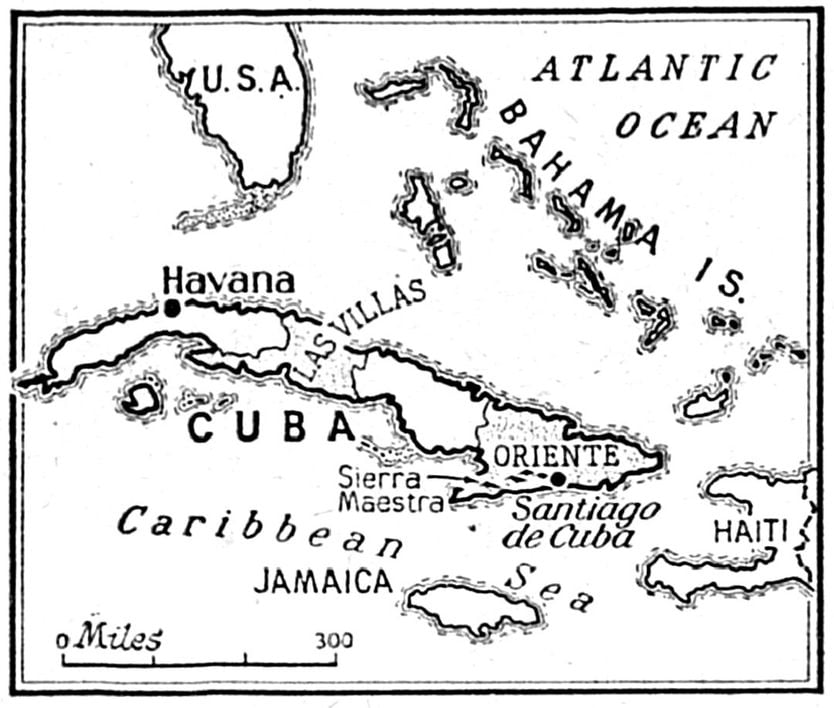
巴蒂斯塔亲自挑选的候选人里韦罗·阿格雷罗被虚假地宣布为胜者。我们观察到,“严格的审查掩盖了选举过程”,“士兵在投票站周围随处可见”。但我们也认为,“古巴的反对派尚未找到其领袖”。虽然卡斯特罗“正将其行动从塞拉马埃斯特拉山脉向西扩展至拉斯维拉斯省”(见图),但他缺乏工会的支持。我们猜测,他是否可能被其弟弟劳尔取代,劳尔不像他那样是个“风向标”,并且正在奥伦特省为叛乱分子取得成功。
Batista’s hand-chosen candidate, Rivero Aguero, was falsely declared the winner. We observed that “strict censorship obscured the proceedings” and “soldiers were much in evidence around the polling booths”. But we also argued that the “opposition in Cuba has not yet found its leader”. Although Castro was “extending his operations from the mountains of Sierra Maestra as far west as Las Villas province” (see map), he lacked the support of the trade unions. We wondered if might be supplanted by his brother, Raúl, who was less of a “weathercock” and was achieving success for the rebels in Oriente province.
《经济学人》对卡斯特罗的顾虑虽然存在,但他的战士们在战场上屡获胜利。突破发生在12月27日,地点是古巴中部城市圣克拉拉。由阿根廷革命者、卡斯特罗最亲密的盟友之一埃内斯托“切”·格瓦拉领导的 rebel 部队成功袭击了一支军队驻守,并夺获了一列关键的补给列车。这一胜利表明,巴蒂斯塔对武装力量的控制——这长期以来一直是他权力的支点——已经削弱;政府军已失去作战意志。
Whatever The Economist’s misgiving about Castro, his fighters were notching up successes on the battlefield. A breakthrough came in Santa Clara, a city in central Cuba, on December 27th. Rebel forces, led by Ernesto “Che” Guevara, an Argentine revolutionary and one of Castro’s closest allies, successfully attacked an army garrison and captured a critical supply train. The victory was a sign that Batista’s hold over the armed forces, so long the fulcrum of his power, had weakened; government troops had lost the will to fight.
1959年1月1日凌晨,巴蒂斯塔逃往多米尼加共和国,随后前往葡萄牙和西班牙,他在1973年流亡期间去世。
In the early hours of January 1st 1959 Batista fled to the Dominican Republic, and later to Portugal and Spain, where he would die in exile in 1973.
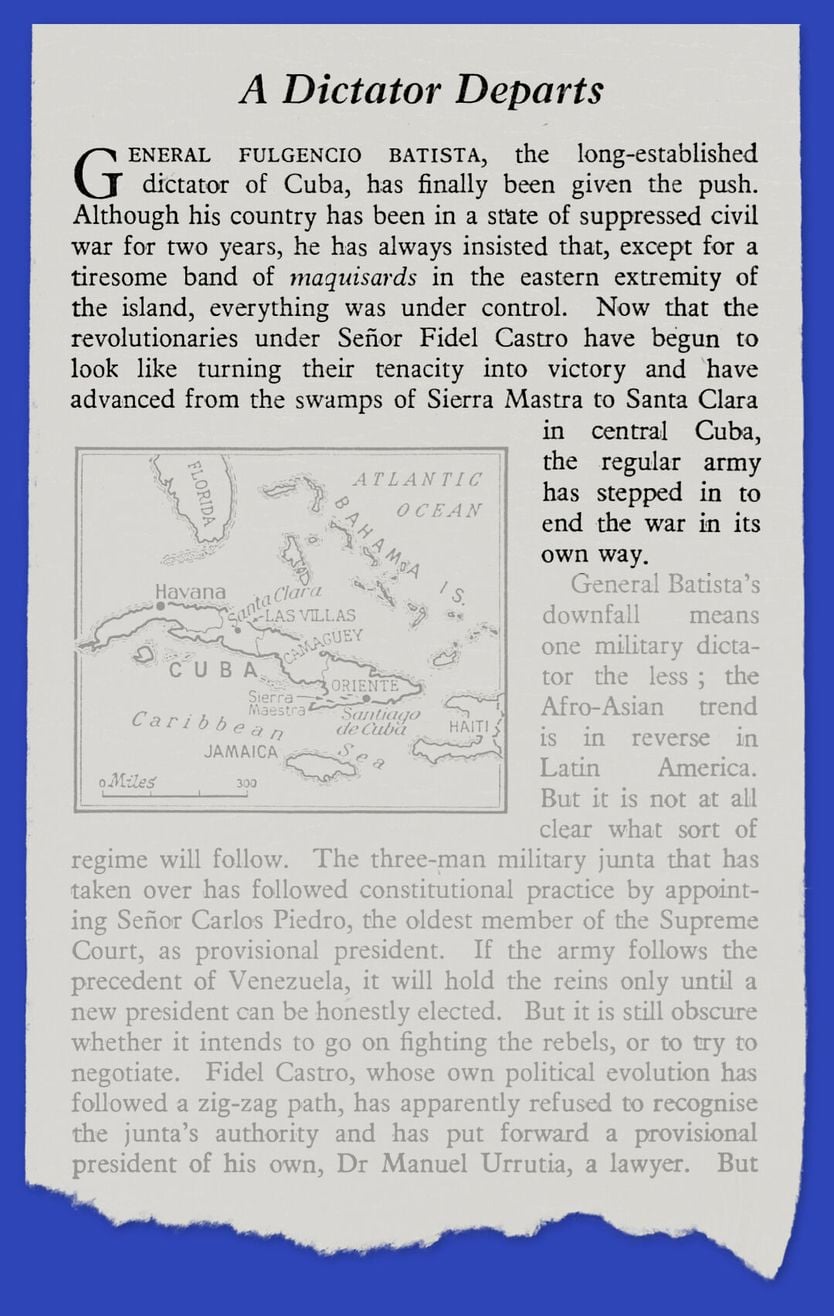
《经济学人》于1959年1月3日报道了巴蒂斯塔的离去。当时卡斯特罗距离首都超过500英里,正在古巴东南部领导他的战士作战。我们报道说,巴蒂斯塔已将权力移交给一个军事 Junta。卡斯特罗拒绝与其合作。他希望任命自由派法官曼努埃尔·乌尔蒂亚为临时总统。但卡斯特罗也需要在反对巴蒂斯塔的各股力量中确立自己的权威。我们曾疑惑,加入卡斯特罗事业的自由派人士是否能说服他“达成和解,使古巴能够以某种程度的团结重新开始”。
The Economist reported on Batista’s departure on January 3rd 1959. Castro was then more than 500 miles away from the capital, leading his fighters in the island’s south-east. Batista, we reported, had handed power to a military junta. Castro refused to work with it. He wanted to put in place Manuel Urrutia, a liberal judge, as provisional president. But Castro also needed to stamp his authority on the disparate forces that had risen up against Batista. We wondered whether liberals who had joined Castro’s cause could persuade him to “come to terms so that Cuba can make a fresh start with a degree of unity”.
可惜的是,胜利的游击队员们心中并没有团结。卡斯特罗于1月8日进入哈瓦那时,他已经完成了为期一周的全国胜利巡游,此时他的部队已经开始对被指控与巴蒂斯塔政权有关联的人进行逮捕和处决。乌尔蒂亚就任总统后,卡斯特罗成为古巴武装力量的首脑,后来还担任了总理,这些职务使他实际上成为了古巴的最高统治者。
Alas, unity was not on the minds of the victorious guerrilleros. By the time Castro entered Havana on January 8th, after a week-long victory tour across the country, his forces had begun a campaign of arrests and executions of those accused of links to the Batista regime. With Urrutia installed as president, Castro became head of Cuba’s armed forces and later also prime minister, roles that made him the country’s de-facto ruler.
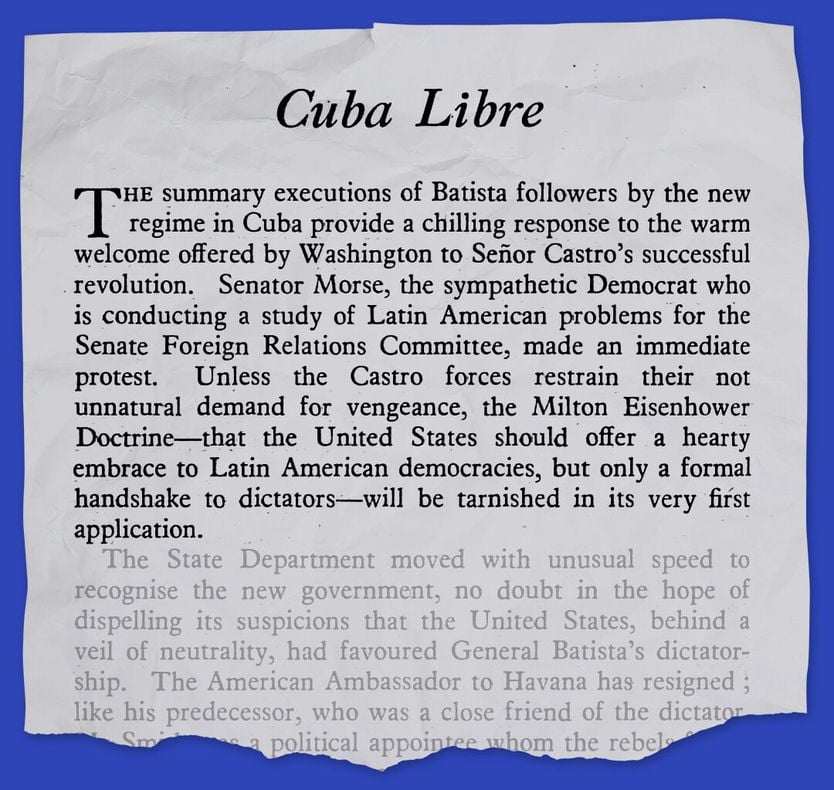
特朗普政府指责古巴政权对美国发动“政治、意识形态和制度战争”。它担忧该政府与中国和俄罗斯等竞争对手的联系。但在1959年初,美国官员认为这场革命的地缘政治后果似乎并不确定。艾森豪威尔政府中的一些人确信卡斯特罗反美且是共产主义者。另一些人则认为,这位革命领袖可能会对美国的压力示弱。据认为,这一观点在中央情报局很普遍(一些历史学家甚至声称,中央情报局在战争期间秘密资助反叛军,以试图赢得他们的支持)。
The Trump administration has accused the Cuban regime of waging “political, ideological and institutional warfare” against America. It frets about the government’s links to rival powers such as China and Russia. But in early 1959 the revolution’s geopolitical consequences seemed less certain to American officials. Some in Eisenhower’s administration were convinced that Castro was anti-American and communist. Others thought the revolutionary leader might prove malleable to American pressure. This view is thought to have been prevalent at the CIA (some historians have even alleged that the CIA secretly funded the rebels during the war to try to gain their favour).
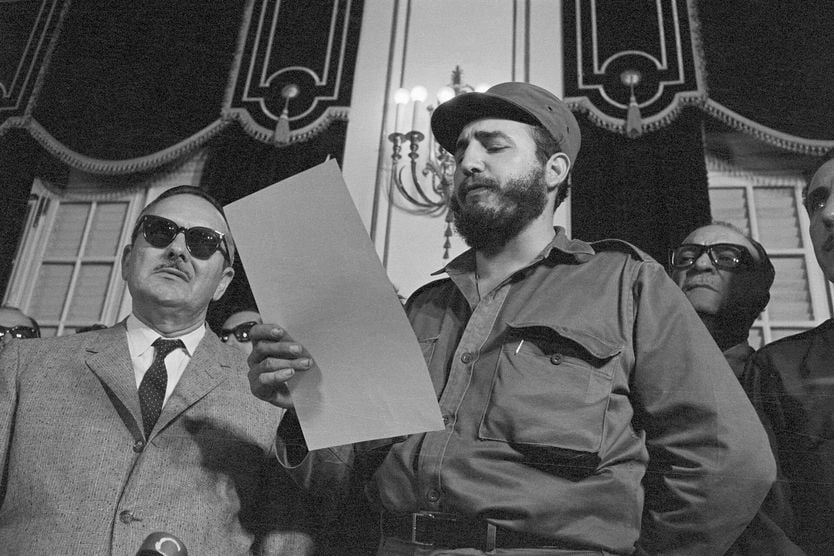
艾森豪威尔决定迅速承认新政府。我们1959年1月17日的文章解释说,这一快速决定可能旨在扼杀任何美国希望巴蒂斯塔继续执政的暗示。我们指出,亲巴蒂斯塔情绪在岛上拥有投资的美国工业家中尤其高涨。相比之下,艾森豪威尔的兄弟兼顾问米尔顿和副总统理查德·尼克松希望在拉丁美洲推行一项新的外交政策,让美国与民主人士而非独裁者建立更紧密的关系。
Eisenhower decided to recognise the new government swiftly. Our article on January 17th 1959 explained that the rapid decision was probably intended to quash any suggestion that America would have preferred Batista to stay in power. Pro-Batista sentiment, we noted, was especially high among American industrialists with investments on the island. In contrast, Eisenhower’s brother and advisor, Milton, and the vice-president, Richard Nixon, wanted to pursue a new foreign policy in Latin America in which America would forge closer relations with democrats rather than dictators.
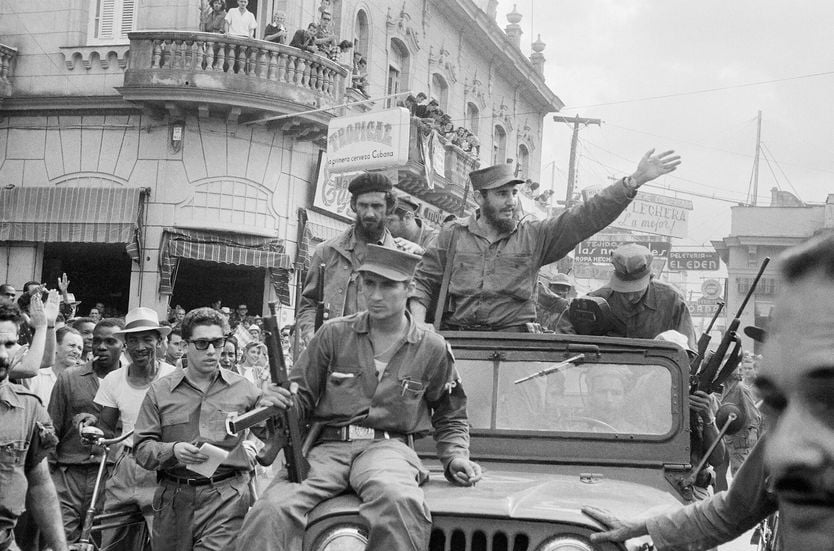
但卡斯特罗执政初期的暴力行为表明,古巴并未走向自由民主。他承诺举行选举的承诺从未实现。5月,他宣布了全面的土地改革,瓜分大庄园,剥夺外国所有者的土地。7月,他将乌鲁蒂亚和其他自由派部长赶出政府,打压任何对共产主义的批评。美国最糟糕的噩梦——一个在其家门口的社会主义飞地——正在成为现实。■
But the violence of Castro’s early days in power suggested that Cuba was not headed for liberal democracy. His promises to hold elections never came to fruition. In May he announced sweeping agrarian reforms which split up large estates and stripped foreign owners of their land. In July he forced out Urrutia and other liberal ministers from the government, clamping down on any criticism of communism. America’s worst nightmare, a socialist enclave on its doorstep, was becoming a reality. ■