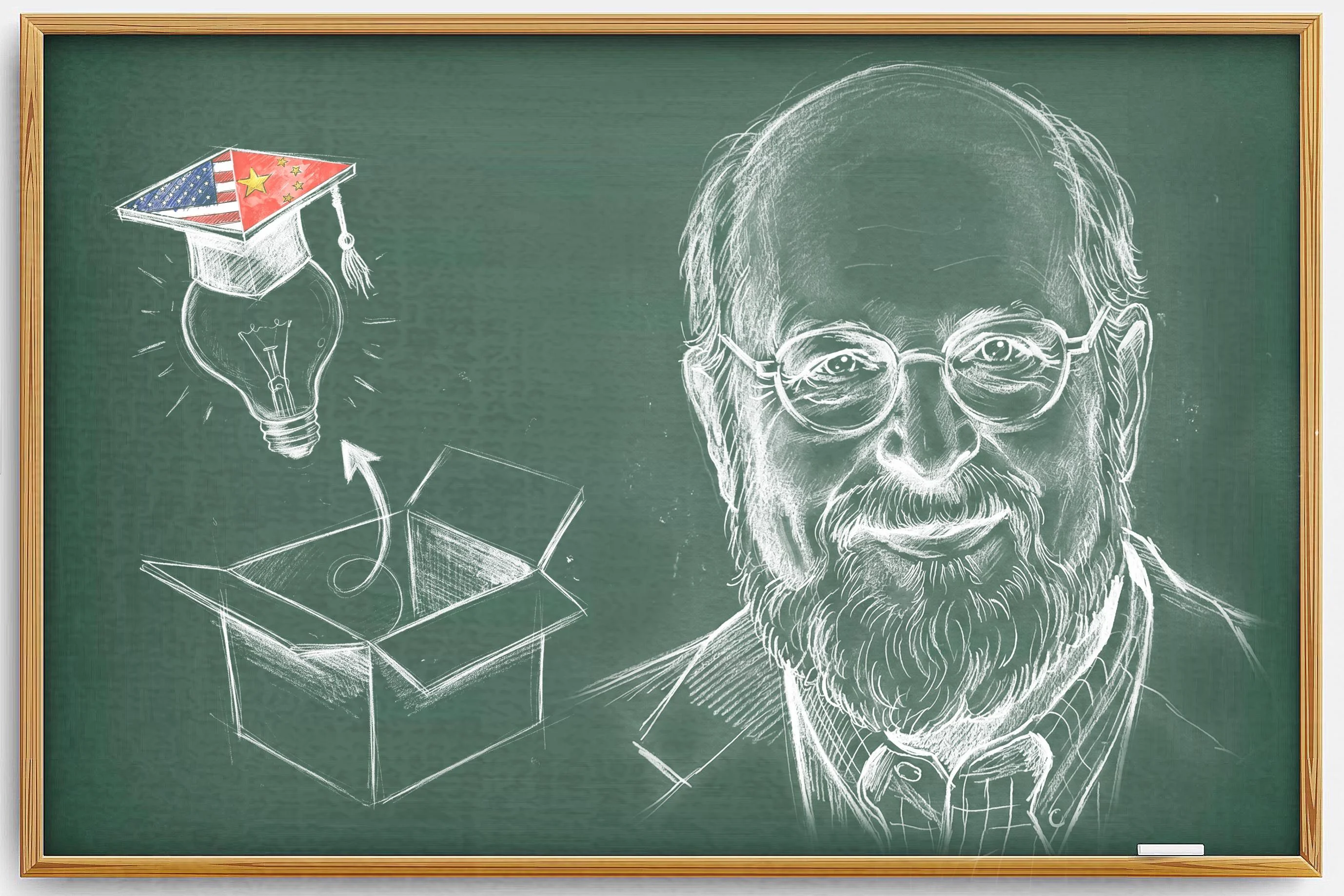
中美两国再次展开对话。双方举行了领导人会晤、进行了电话沟通,并开辟了讨论人工智能的新渠道。官员们正谨慎地努力避免两国关系滑向危机。然而,一些最棘手的问题仍未得到解决。
China and America are talking again. There are leaders’ meetings, phone calls and a new channel for discussing artificial intelligence. Officials are cautiously trying to keep the relationship from veering into crisis. And yet some of the hardest questions remain untouched.
双方在先进芯片问题上都没有做出太多让步,出口管制仍然是交锋的焦点,而华盛顿和北京似乎都无意放慢开发日益强大的人工智能的步伐。
Neither side is giving much ground on advanced chips, export controls remain a battlefield and neither Washington nor Beijing appears ready to slow its race to develop increasingly powerful AI.
那么,当两国仍在围绕将塑造未来十年的技术展开竞争时,“对话”究竟意味着什么?丹尼斯·西蒙正在课堂上思考这个问题。
So what, exactly, does it mean to “talk” when the two countries are still competing over the technologies that will shape the next decade? It is a question Denis Simon is confronting in the classroom.
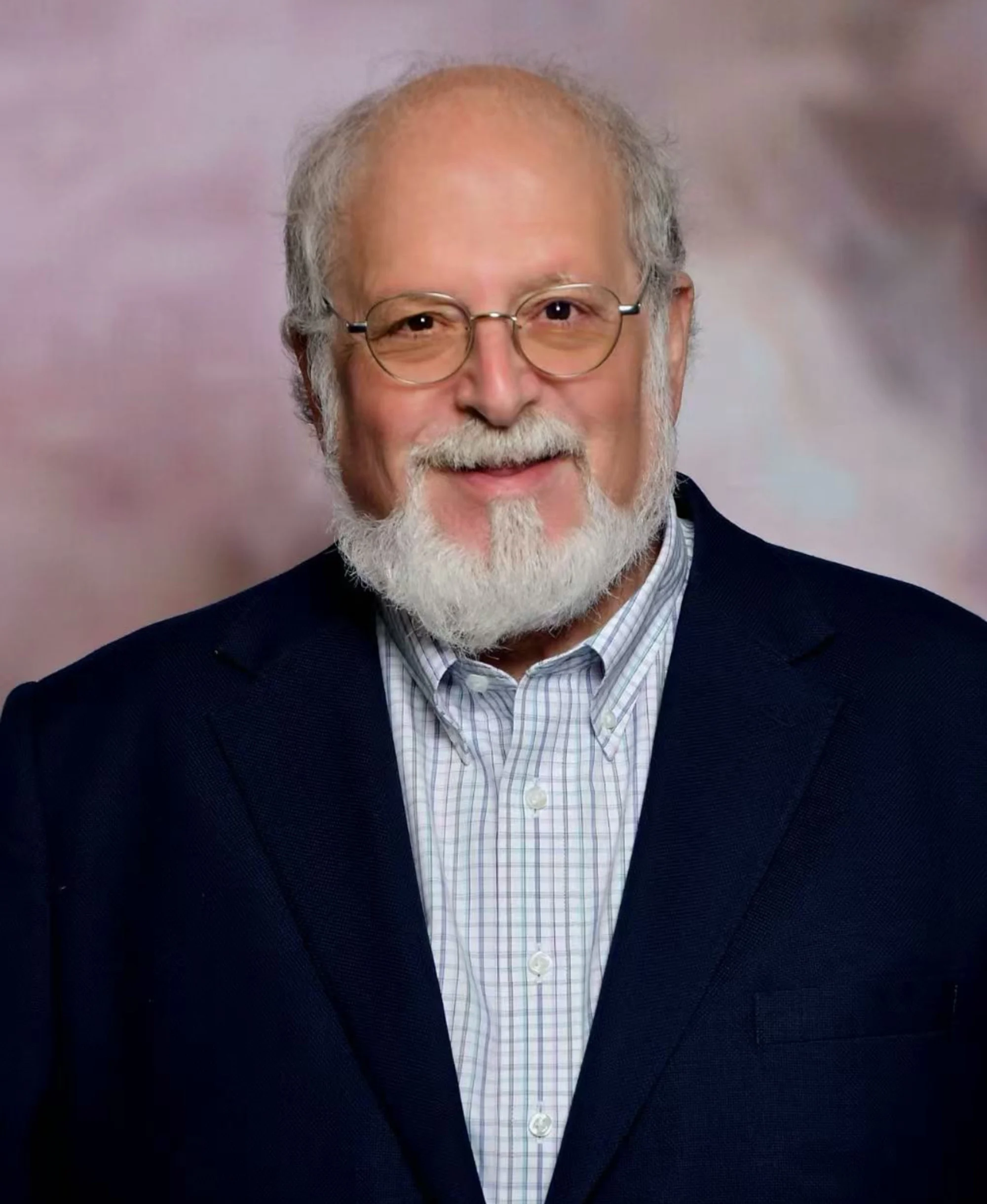
作为一位经验丰富的中美科技与高等教育战略专家,以及杜克昆山大学的前执行副校长,西蒙目前任职于清华大学的施瓦茨曼学院。
A veteran US-China technology and higher-education strategist and former executive vice-chancellor of Duke Kunshan University, Simon is now teaching at Schwarzman College at Tsinghua University.
这所寄宿学院及其“施瓦茨曼学者”项目由黑石集团首席执行官斯蒂芬·施瓦茨曼创立,旨在汇聚来自世界各地的未来领袖。
The residential college and its Schwarzman Scholars programme were founded by Blackstone chief executive Stephen Schwarzman with the aim of bringing together future leaders from around the world.
该项目去年迎来了十周年庆典,一些观察人士将其称为双边关系中的瑰宝之一。
The programme, which celebrated its 10th anniversary last year, is described by some observers as one of the crown jewels in the bilateral relationship.
西蒙的课程聚焦于中国的科技政策与创新战略,但中美关系也不会被边缘化。
Simon’s course focuses on China’s science and technology policy and innovation strategy, but the country’s relationship with the US will not stay in the background.
他在北京教授该课程的第二期研讨会时,正值美国总统唐纳德·特朗普于5月访问中国;而第三期研讨会则是在特朗普的中国同行习近平上个月访问华盛顿期间进行的。
He was teaching the second seminar of the course in Beijing when US President Donald Trump went to China in May, and the third when Trump’s Chinese counterpart, Xi Jinping, went to Washington last month.
“这确实是一个非常有趣的巧合——这样的时机为这门课程带来了新的推动力,”他在北京接受采访时说道。“学生们都知道这两场会议,他们对当前发生的各种事情也有了更清晰的认识。”他的学生们正在研究一种充满矛盾的关系:华盛顿和北京一方面正在努力重建沟通渠道,另一方面却在逐渐削弱彼此在科技和学术领域的合作空间。
“That’s a kind of very interesting coincidence of time that gives the course a booster shot,” he said in an interview from Beijing. “The students are aware of both meetings. They’re much more informed about what’s going on.”His students are studying a relationship that has become deeply contradictory: Washington and Beijing are rebuilding channels of communication even as they narrow the space for technological and scientific links.
虽然这些峰会并没有彻底解决这些矛盾,但它们确实改变了课堂上的氛围。
The summits have not resolved that, but they have changed the atmosphere in the classroom.
“这些高层会晤确实营造了一个更加积极、积极的讨论环境,”西蒙说。
“These leadership meetings really created a much more positive environment,” Simon said.
他补充道,在5月之前,当双方还没有开始对话时,情况简直是一团糟;无论是北京的访问还是华盛顿之行,都并没有引起太大的轰动。但真正值得注意的是:两位领导人竟然在六个月内进行了两次会面。
Before May, when the two sides were not talking, things were “topsy-turvy”, he said, adding that neither the Beijing visit nor the Washington trip was “a resounding big deal”. But what registered was simpler: the fact that the two leaders were talking and had met twice within six months.
然而,西蒙指出,“最大的变化”是一些学生在对自身立场表达时变得更加谨慎了。例如,关于出口控制的讨论可能只是关于美国政策的讨论,但对中国科技政策的批评却可能被解读为政治表态;甚至为学术交流辩护的行为也可能引发关于学生政治立场的质疑。
However, Simon said the “biggest change” was that some students “have become seemingly somewhat more cautious about revealing where they actually stand”. For example, an argument about export controls can sound like an argument about America, while a criticism of Chinese technology policy can become a political declaration. Even defending academic exchanges may raise questions about political loyalties.
“学生们越来越善于区分自己的真实想法与出于政治正确性考虑而应该说的话,”他说,“这种区分在课堂上非常重要。一场成功的研讨会离不开学生们的思想开放与敢于冒险的精神。”在过去三年里,尽管学生的言论变得更加谨慎,但他们的讨论在很多方面都变得更加深入和复杂了。
“They have become much better at distinguishing what they think from what they believe they ought to say in terms of political correctness,” he said. “That distinction matters enormously in a classroom. A good seminar depends upon intellectual risk-taking.”Over the past three years, the discussions have, in several respects, become more sophisticated even as students have become a bit more restrained.
部分原因在于:虽然40%的学生来自美国,20%的学生来自中国,但其余的学生来自世界各地,他们都在思考自己为什么必须在这两个超级大国之间做出选择。
That is partly because while 40 per cent of students are American and 20 per cent Chinese, the others come from all over the world and are asking why they should have to choose between the two superpowers.
“他们不仅仅是裁判员,”西蒙说道,“他们也有自己的利益诉求。”他表示,这些国家既渴望获得美国的技术与资本,又希望进入中国市场,获取中国的制造能力、基础设施以及技术成果。
“They are not merely referees,” Simon said. “They have their own interests.”He said they wanted American technology and capital, and they wanted Chinese markets, manufacturing capacity, infrastructure and technology.
不过,他们未必认为与华盛顿或北京在技术领域保持一致是必然的,甚至未必认为这是理想的选择。
But they did not necessarily see technological alignment with either Washington or Beijing as inevitable, or desirable.
从某种程度上说,那些既非美国人也非中国人的学生才是让课堂真正具备国际性的关键。丹尼斯·西蒙,施瓦茨曼学院。这些学生的存在也促使西蒙对课程内容作出调整,比如用反映领导人会晤后新情况的新资料取代旧教材。
In some ways, the students who are not American or Chinese are the ones who make the classroom genuinely internationalDenis Simon, Schwarzman College Their presence has also pushed Simon to modify the course, including replacing older readings with newer ones that reflect what has happened since the leaders’ meetings.
如今,他不再将中美技术关系简单视为“合作之后便是竞争”的过程。技术、经济、国家安全、产业政策、科学研究以及地缘政治早已紧密交织在一起。
He no longer sees the technology relationship as a straightforward story of engagement followed by competition. Technology, economics, national security, industrial policy, scientific research and geopolitics have become too deeply entangled.
过去那种将经济问题与安全问题截然分开的观念已基本不复存在。但西蒙同样警惕另一种倾向:即把所有涉及中国与技术的事务统统视为安全问题来处理。
The old idea of separating economic and security issues has largely disappeared. But Simon is equally wary of the opposite assumption: that everything involving China and technology should now be treated as a security issue.
他的学生们学习半导体、出口管制、人工智能、数据治理、供应链韧性以及产业补贴等内容,同时还需思考一些根本性问题:两国应在哪些领域展开竞争?又该在哪些领域设置规则加以约束?还有哪些领域应当刻意保持联系?
His students study semiconductors, export controls, AI, data governance, supply-chain resilience and industrial subsidies and are also asked some fundamental questions: where should the two countries compete, where should they put guardrails in place and where should they deliberately remain connected?
西蒙采用红黄绿三色框架来评估安全形势:红色代表涉及国家安全的关键领域,情况相对容易判断;绿色则指风险较低的领域,比如基础科学研究与常规教育交流。不过西蒙指出,黄色才是“真正棘手的类别”,意味着相关事务必须在“具备条件、保持透明、落实保障措施或设定限制”的前提下才能推进。
Simon uses a red-yellow-green framework to assess the security situation, with red – covering areas where national security is at stake – being relatively straightforward. The same applies to low-risk green areas, including basic science and ordinary educational exchanges, but Simon added that yellow was the “really difficult category”, which meant proceeding with “conditions, transparency, safeguards or limits”.
他担心的是,华盛顿正日益倾向于将原本属于黄色的领域也划归为红色。
His concern is that Washington increasingly has a tendency to turn yellow into red.
“一旦这种情况发生,举证的责任就会发生转变,”西蒙说道。“我们不再问‘为什么应该对这种技术进行限制?’,而是开始问‘有人能证明这种技术是完全安全的吗?’”他补充说,这样的思维方式并不符合制定技术政策的合理原则。
“Once that happens, the burden of proof shifts,” Simon said. “Instead of asking, ‘Why should this be restricted?’ we begin asking, ‘Can anyone prove that it is completely safe?’”That, he added, was not a sustainable basis for technology policy.
在华盛顿与北京之间新兴的AI(人工智能)合作领域,也存在着类似的紧张关系。西蒙认为这些新的沟通机制具有一定的价值,但他警告说,“沟通”与“治理”是两个截然不同的概念。
The same tension is visible in the emerging AI channel between Washington and Beijing. Simon argued there was value in the new mechanisms for communication, but warned “communication” and “governance” were not the same thing.
在事故发生或危机期间,热线电话可以作为一种沟通工具;而对话则有助于建立双方之间的定期联系。然而,这两种方式都无法解决诸如“谁应该获得先进技术的使用权?”、“前沿AI技术应该如何发展?”以及“当双方对相关规则存在分歧时该怎么办?”等问题。
A hotline can provide a way to communicate after an accident or during a crisis, while dialogue can make contact habitual, but neither of these things settles questions such as who gets access to advanced chips, how frontier AI should be developed or what happens when the two sides disagree about the rules. He added: “Great-power relationships often advance in very small increments. The existence of a channel may look insignificant until the day you desperately need the channel.”
他进一步指出:“大国之间的关系往往是通过微小的进步逐步发展的。这些沟通渠道在平时可能看起来无关紧要,直到真正需要它们的时候才会显现出其重要性。”问题在于:这些渠道能否成为长期稳定的机制,还是会仅仅依赖于当时的政治氛围或情绪。
The question is whether those channels become durable institutions or remain dependent on the political mood of the moment.
西蒙表示,这种担忧也延伸到了学术领域。由于卷入政治争议可能带来巨大损失,越来越多的大学被迫在教学计划中考虑地缘政治风险。
Simon said that concern extended to the academic sphere, with universities are being increasingly being forced to “price geopolitical risk” into their calculations given the cost of being caught up in a political controversy.
他在美国杜克大学的近期经历进一步加剧了这些担忧——他多年来一直负责教授的一个关于中国科技发展的研究生课程,尽管有资金支持,最终还是被取消了。
His recent experience at Duke University in the US sharpened these concerns where a China science and technology graduate seminar he had taught for several years was dropped even though funding was available.
“这让我意识到,问题已经不再仅仅是‘是否有资金来开展这项教学活动’了,”西蒙说,“学校也在考虑:教授这门课程会带来什么样的声誉和政治风险?”
“What it told me is that the issue is no longer simply whether there is money to teach a course,” Simon said. “The institution is also asking: what is the reputational and political risk of teaching it?
“如果美国大学因为中国议题变得政治化而停止教授中国的创新体系,我们将制造一个惊人的悖论:我们将变得更不具备与一个国家竞争的能力,恰恰因为我们变得更不愿意去研究它。”在施瓦茨曼学院,这个问题有了另一层含义。学生们正在观察中国从“世界工厂”转变为电动汽车、电池、机器人、清洁能源和人工智能领域的创新强国。
“If American universities stop teaching about China’s innovation system because the China issue has become politically difficult, we will create an extraordinary paradox: we will become less capable of competing with a country precisely because we have become less willing to study it.”Inside Schwarzman College, that question takes on another dimension. Students are watching China’s transformation from the “factory of the world” into an innovation power in electric vehicles, batteries, robotics, clean energy and AI.
对许多观察者来说,这一变化似乎来得突然而快,但西蒙,他已经关注中国的发展40年,看到了不同的景象。
To many observers, this change appears sudden, but Simon, who has followed China’s development for 40 years, sees something different.
“这确实是过去30多年一个孕育期的一部分,在这段时间里,中国一直在稳步推进,使自己成为一个以创新驱动的国家。所以当人们似乎感到震惊时,那是因为他们没有像我一样,关注这件事长达40年。”他对中国学生说,这不仅仅是一个关于国家技术成就的故事,更是他们必须在这其中寻找工作的经济体。
“It really is part of a gestation period over time over the last 30-plus years in which China has steadily moved to make itself into an innovation-driven nation. So when people seem to be shocked, it’s that they haven’t been following this for 40 years, like I have.”For Chinese students, he said, this was not simply a story of national technological achievement but the economy where they had to find jobs.
许多人曾以为工厂时代已经过去,而创新是他们接下来要立足的地方,但机器人和人工智能让这一假设变得复杂起来。他们可能正在重返工厂,但不是他们父母离开的那个工厂。
Many had assumed the factory era was behind them and that innovation was the next place to stand, but robotics and AI have complicated that assumption. They may be headed back into the factory, but not the one their parents left.
与此同时,国际学生正面临着另一种现实:中国的技术崛起将塑造他们建立自身职业生涯的竞争环境。
Meanwhile, international students are confronting a different reality: China’s technological rise will shape the competitive environment in which they build their own careers.
西蒙说,问题不再仅仅是中国是否能够创新,而是“中国的创新轨迹将如何改变国际科技事务,包括美国曾经占主导地位的角色”。
The question, Simon said, was no longer simply whether China could innovate, but “how China’s innovation trajectory will alter international S&T [science and technology] affairs, including the once dominant role of the US”.
他说,最终,这就是他希望学生们理解的:他们不应期待中美关系回到1990年代或2000年代的状态,而技术竞争也不可能被简单地愿望消除。
He said that ultimately that was what he wanted his students to understand, saying they should not expect a return to the US-China relationship of the 1990s or 2000s, while technological competition could not be wished away.
目标不是要消除战略竞争,而是要在新关系周围建立足够的“结缔组织”,使竞争仍然是竞争,而不会演变为持续的冲突。
The objective, instead, was to build enough “connective tissue” around the new relationship that competition remained competition without becoming continuous conflict.
正是这一赌注支撑着像施瓦茨曼学院、纽约大学上海分校和杜克昆山这样的机构:它们并不认为自己能够消除战略竞争,而是相信可以继续让可能持不同意见的人坐在同一间屋子里,并教会他们在无法达成一致时如何继续对话。
That is the wager behind institutions like Schwarzman College, NYU Shanghai and Duke Kunshan: not that they can eliminate strategic competition, but that they can continue putting people who might disagree in the same room, and teach them how to keep talking when agreement is no longer possible.
“合作不一定意味着达成一致、技术共享或放缓步伐,”他说。“合作可以仅仅意味着就我们意见不一致时会发生什么达成一致。”
“Cooperation does not have to mean agreement, technological sharing, or slowing down,” he said. “Cooperation can mean simply agreeing on what happens when we disagree.”