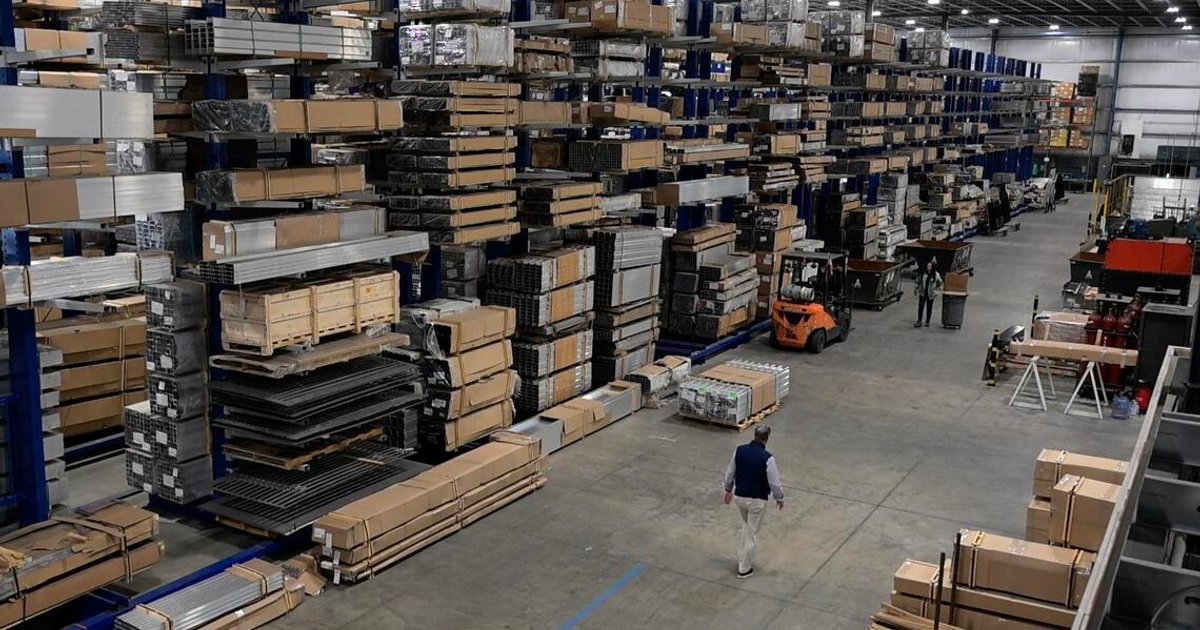
美国工厂产出在9月份增长0.3%,符合预期,但由于中东冲击供应链并推高能源价格,第三季度增长放缓。
US factory output rose 0.3% in September, matching forecasts, but third-quarter growth slowed as the Middle East conflict hit supply chains and pushed up energy prices.
人工智能支出和库存重建支撑了制造业,但燃料成本上升、加拿大贸易战和借贷成本上升带来了风险。柴油价格创下历史新高。
AI spending and inventory rebuilding supported manufacturing, but higher fuel costs, a Canada trade war, and borrowing costs created risks. Diesel prices hit a record high.
耐用品增长0.1%,非耐用品增长0.4%,而汽车下降3%。工业产出增长0.7%,产能利用率有所改善,但仍低于平均水平。
Durable goods rose 0.1% and non-durable goods 0.4%, while motor vehicles fell 3%. Industrial output rose 0.7% and capacity use improved, but stayed below average.
人工智能生成 华盛顿 — 美国工厂产出在9月份有所增加,但受中东冲击的影响,第三季度动能大幅减弱,该冲击导致供应链受阻、能源价格上涨。
AI generated WASHINGTON – US factory production increased in September, but lost considerable momentum in the third quarter amid headwinds from the Middle East conflict, which has snarled supply chains and raised energy prices.
美联储于10月16日表示,制造业产出在8月份下修后下降0.2%的基础上,9月份反弹0.3%。这一增长符合经济学家的预期。此前对8月份工厂产出的估计为下降0.3%。9月份工厂产出同比增长1.1%。在第二季度以5.6%的速度加速增长之后,第三季度工厂产出年化增长率为0.7%。
Manufacturing output rebounded 0.3% last month following a revised 0.2% decline in August, the Federal Reserve said on Oct 16. The rise was in line with economists’ expectations. Factory production was previously estimated to have dropped 0.3% in August. Output advanced 1.1% on a year-on-year basis in September. It grew at a 0.7% annualised rate in the third quarter after accelerating at a 5.6% pace in the second quarter.
制造业约占经济的9.4%。虽然人工智能(AI)基础设施建设以及企业为满足强劲国内需求而重建库存正在支撑工厂活动,但能源价格上涨、与加拿大的贸易战以及借贷成本上升对生产构成下行风险。
Manufacturing accounts for about 9.4% of the economy. While an artificial intelligence (AI) infrastructure build-out and businesses rebuilding inventories to meet robust domestic demand are supporting factory activity, higher energy prices, a trade war with Canada and rising borrowing costs pose downside risks to production.
随着美以伊朗战争持续,柴油价格飙升至历史新高。经济学家表示,经济可能很快会感受到这一影响,表现为商品价格上涨,包括超市商品,这可能会抑制需求。
Diesel prices have surged to a record high as the US-Israeli war with Iran drags on, and economists say the economy could soon feel the effects through higher prices for goods, including at the supermarket, which could weigh on demand.
耐用品制造业产出微增0.1%,主要金属、机械以及电气设备、器具和部件产出增长带动了这一升幅。汽车及零部件产出下降3%。耐用品制造业产出在第三季度以3.8%的速度增长,部分原因是与人工智能支出热潮相关的半导体及相关电子元件产出激增28.4%。
Durable goods manufacturing production edged up 0.1%, lifted by gains in the output of primary metals, machinery, and electrical equipment, appliances and components. Production of motor vehicles and parts fell 3%. Durable goods manufacturing output increased at a 3.8% rate in the third quarter, partly boosted by a 28.4% surge in the production of semiconductors and related electronic components related to the AI spending boom.
非耐用品制造业产出在印刷和化工产出增长的推动下,环比上升0.4%。然而,非耐用品制造业产出在上一季度下降了1.6%。
Non-durable manufacturing production rose 0.4% over the month amid gains in printing and chemicals output. Non-durable manufacturing output, however, fell 1.6% last quarter.
采矿业产出上月增长0.2%,并在7月至9月季度以5%的速度增长。公用事业产出因空调需求而激增3.5%。公用事业产出在第三季度以14.8%的速度增长。
Mining production rose 0.2% last month and grew at a 5% rate in the July-September quarter. Utilities jumped 3.5% amid demand for air-conditioning. Utilities output increased at a 14.8% pace in the third quarter.
总体工业产出在上月增长0.7%,此前在8月增长了0.1%。9月份工业产出同比增长2.2%。在第二季度以4.8%的速度增长后,工业产出在第三季度以2.8%的速度增长。
Overall industrial production rose 0.7% last month after gaining 0.1% in August. Industrial output increased 2.2% year-on-year in September. It advanced at a 2.8% pace in the third quarter after growing at a 4.8% rate in the second quarter.
工业部门产能利用率——衡量企业资源使用程度的指标——上月升至76.9%,而8月为76.4%。但其仍低于1972-2025年平均水平2.5个百分点。制造业部门的开工率从8月的75.8%略升至75.9%。然而,其仍低于长期平均水平2.3个百分点。
Capacity utilisation for the industrial sector, a measure of how fully firms are using their resources, rose to 76.9% last month from 76.4% in August. But it is 2.5 percentage points below its 1972-2025 average. The operating rate for the manufacturing sector edged up to 75.9% from 75.8% in August. However, it is 2.3 percentage points below its long-run average.