华尔街一年来一直在押注人工智能的惊人增长,同时担忧顽固的通胀。本周,投资者再次领略了这两大风险:人工智能板块的深度抛售蔓延至其债务融资领域,而每桶110美元的油价则威胁着让通胀更难控制。
Street has spent the year betting on staggering AI growth while worrying about stubborn inflation. This week, investors got a fresh taste of both risks: a deepening rout in the AI complex that reached into its debt financing, and oil at $110 a barrel threatening to make inflation harder to contain.
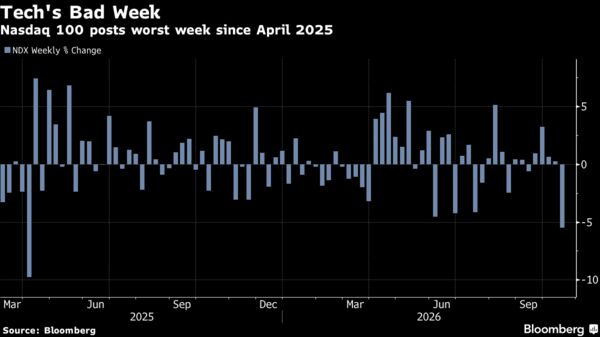
压力在庞大的人工智能板块中不断积聚,从芯片制造商和数据中心供应商,到那些负债累累的基础设施建设公司。新云服务商CoreWeave Inc.的债券跌至显示出困境的水平,投资者质疑人工智能需求和收入是否足以支撑投入到算力建设中的数万亿美元。半导体股票连续八个交易日下跌——这是自2008年以来的最长跌势——使该行业基准指数蒸发了约16%。VIX指数飙升,纳斯达克100指数下跌5.5%,创下自2025年4月关税动荡以来的最差单周表现。
The pressure gathered force across the sprawling AI complex, from chipmakers and data-center suppliers to the heavily indebted companies building the infrastructure. Bonds of neocloud provider CoreWeave Inc. sank to levels signaling distress as investors questioned whether AI demand and revenues could justify the trillions of dollars being poured into computing capacity. An eight-session rout in semiconductor shares — the longest since 2008 — wiped roughly 16% off the sector’s benchmark. The VIX spiked and the Nasdaq 100 lost 5.5% for its worst week since the April 2025 tariff turmoil.
直到周五,意外的赢家是美国国债。两份高于预期的通胀报告也未能阻止投资者在股市暴跌时涌入政府债券。油价周五飙升至自5月以来的最高水平,一度推动收益率再度攀升,暴露出避险需求与新的通胀担忧之间的紧张关系。尽管如此,以TLT交易所交易基金衡量的长期政府债券,本周仍录得今年最强劲的表现之一。
Until Friday, the unlikely winner was Treasuries. Two hotter-than-expected inflation reports couldn’t stop investors rushing into government debt when stocks tumbled. Oil’s surge to its highest level since May briefly sent yields climbing again on Friday, exposing the tension between demand for safety and renewed inflation fears. Still, long-dated government debt, as measured by the TLT ETF, saw one of its strongest weeks of the year.
对历史上最大规模投资热潮之一的忧虑并非新鲜事。本周发生变化的是,主流舆论开始审视背后的万亿美元借款。当前支出与未来回报之间的差距越来越难以忽视。人工智能增长放缓的担忧,正与高昂的能源价格推高借贷成本的趋势相互碰撞。
The angst over one of the biggest investment booms in history is hardly new. What shifted this week is the mainstream scrutiny over the trillion-dollar borrowings behind it. The gap between spending today and returns tomorrow is getting harder to overlook. Fears of slowing AI growth are colliding just as elevated energy prices are fueling borrowing costs higher.
“很多担忧在于超大规模云服务商借了多少钱——他们在需要借款之前已经耗尽了大量现金流,”蒙蒂斯金融公司首席投资官丹尼斯·福尔默表示,该公司管理约14亿美元资产。“我认为这将在未来引发一些麻烦。”福尔默一直在减少对美国大盘股的敞口,并更广泛地分散风险。他的团队通过RSP ETF转向了等权重标普500指数,并增加了对国际和私募市场的配置。他一直在降低久期风险,用灾害债券替换部分传统固定收益持仓。
“A lot of the concern is about how much money the hyperscalers are borrowing — they’ve gone through huge amounts of cash flow before needing to borrow,” said Dennis Follmer, chief investment officer at Montis Financial, which oversees roughly $1.4 billion. “I do think that’s going to cause some trouble down the road.”Follmer has been cutting his exposure to US large-cap stocks and spreading risk more widely. His team has shifted toward the equal-weighted S&P 500 through the RSP ETF and increased allocations to international and private markets. He has been reducing duration risk, replacing some conventional fixed-income holdings with catastrophe bonds.
本周的波动性检验了两种信念:人工智能将继续带来非凡增长,以及顽固的通胀将使国债收益率只朝一个方向移动。在美国银行10月份的基金经理调查中,45%的受访者认为长期全球半导体是最拥挤的交易,较7月份的82%有所下降。做空国债排名第二,占27%,较上月的18%上升。当人工智能驱动的市场出现波动时,这两种头寸都承受了压力。
This week’s volatility tested two convictions: that AI would keep delivering extraordinary growth, and stubborn inflation would keep Treasury yields moving only in one direction. In Bank of America’s October fund-manager survey, 45% of respondents identified long global semiconductors as the most crowded trade, down from 82% in July. Short Treasuries ranked second, at 27%, up from 18% the previous month. Both positions came under pressure when AI-driven markets swung.
然而,风险并未出现无差别的撤离。广泛的投资级信用利差仍处于五年区间的紧张端,而ETF投资者则发现了买入回调的理由。
Still, there’s been no indiscriminate flight from risk. Broad investment-grade credit spreads held near the tight end of their five-year range, while ETF investors found reasons to buy the dip.
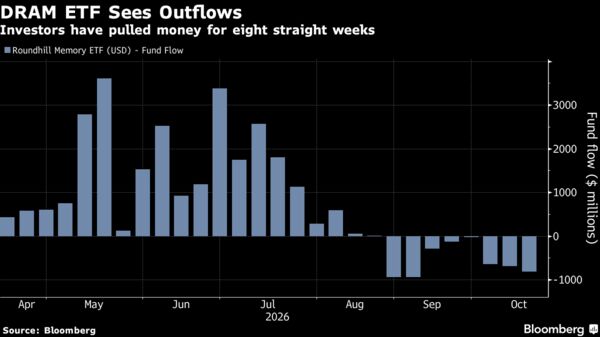
但惩罚尤其严重地落在了对人工智能繁荣进行集中押注的投资策略上。热门的DRAM内存基金——其最大持仓包括三星电子公司和SK海尼克斯公司——下跌19%,这是自4月上市以来的最大单周跌幅,延续了八周连续资金流出的趋势。以韩国为中心的芯片基金、光子学相关产品以及聚焦计算的投资工具也录得双位数跌幅。
But the punishment was especially severe in investment strategies offering concentrated bets on the AI boom. The popular DRAM memory fund, whose biggest holdings include Samsung Electronics Co. and SK hynix Inc., fell 19%, its steepest weekly loss since launching in April, extending a run of eight consecutive weeks of outflows. Korea-centered chip funds, photonics plays and computing-focused vehicles also recorded double-digit declines.
“市场为人工智能公司定价了泡沫估值——这一泡沫开始脱水,”琼斯交易公司首席市场策略师迈克尔·奥罗克表示。
“Markets priced in bubble valuations for AI companies — that bubble is starting to deflate,” said JonesTrading Chief Market Strategist Michael O’Rourke.
接下来的考验将出现在财报季,届时投资者将更清晰地看到AI收入是否能够跟上支出的步伐。与此同时,油价的飙升威胁着维持通胀压力,并使美联储的下一步行动变得更加复杂。临近的美国中期选举为投资者在股票、债券和信贷市场中的布局增添了另一层不确定性。
The next test comes with earnings, when investors will get a clearer look at whether AI revenues are keeping pace with spending. Oil’s surge, meanwhile, threatens to sustain inflation pressures and complicate the Federal Reserve’s next move. The approaching US midterm elections add another element of uncertainty for investors positioning across stocks, bonds and credit.
摩根大通的策略师表示,与7月份抛售期间相比,AI的布局如今看起来不那么有利,原因是散户买盘减弱,可能推动反弹的空头头寸基础变小,以及企业回购的支持力度减弱。
JPMorgan strategists say the setup for AI looks less favorable than it did during July’s selloff, citing weaker retail buying, a smaller base of short positions that could fuel a rebound and less support from corporate buybacks.
其他人则在损失中发现了机遇。凯西·伍德(Cathie Wood)旗下的ARK Investment Management增持了CoreWeave和Cerebras Systems Inc.的股份。伍德曾将人们对CoreWeave借贷成本的担忧比作Coinbase Global Inc.债券在早期困难时期的表现——在那之后,随着加密货币行业的增长,该交易所受益匪浅。
Others are finding opportunities in the damage. Cathie Wood’s ARK Investment Management added shares of CoreWeave and Cerebras Systems Inc. Wood has compared the anxiety over CoreWeave’s borrowing costs with an earlier period of distress in Coinbase Global Inc.’s bonds, before the cryptocurrency exchange benefited from the industry’s growth.
Truist Advisory Services的首席投资官Keith Lerner也继续看好科技板块。他的团队仍然对该行业保持超配,认为大部分坏消息已经反映在股价中,且一些估值正接近其历史区间的低端。
Keith Lerner, chief investment officer at Truist Advisory Services, is also sticking with technology. His team remains overweight the sector, arguing that much of the bad news has already been reflected in share prices and that some valuations are near the low end of their historical range.
Siebert Financial的首席投资官Mark Malek认为,对新兴云融资的压力可能成为更广泛科技行业道路上一个“非常令人不适的颠簸”。他说:“现在我们看到,融资本身将成为那些将影响供应链的稀缺资源之一。”
Mark Malek, chief investment officer of Siebert Financial, sees the pressure on neocloud financing as a potentially “very uncomfortable bump in the road” for the broader technology sector. “Now we see financing itself is going to become one of those scarcities that is going to impact the supply chain,” Malek said.
然而,Malek的团队仍然坚持投资于该行业的长期增长。“这是任何行业成长过程的一部分,”他说。
Yet Malek’s team remains invested in the industry’s longer-term growth. “This is part of a coming-of-age for any industry,” he said.