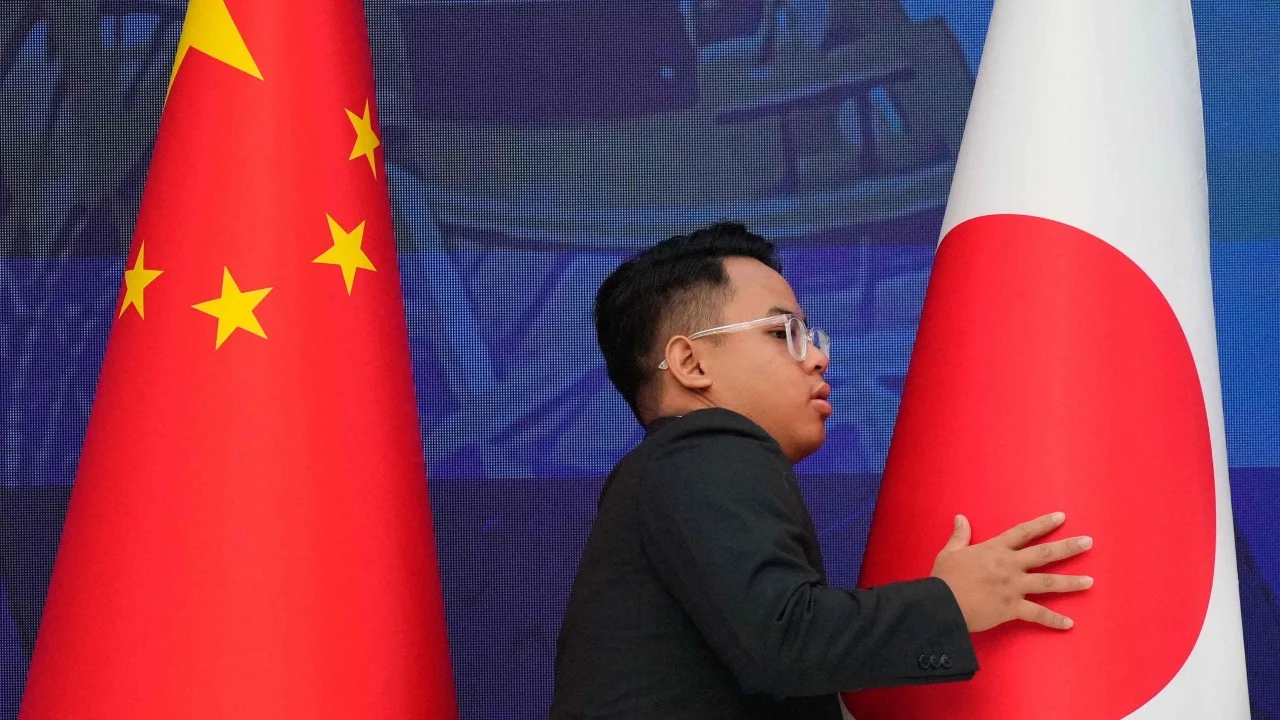
北京决定允许更大规模的日本商务代表团下月访华,可能带来一些乐观情绪,但观察人士表示,“热经济、冷政治”仍将主导两国关系的紧张局面。
Beijing’s decision to allow a bigger Japanese business delegation to go to China next month may be cause for some optimism but “hot economics and cold politics” will continue to dominate the strained relationship between the two countries, observers say.
共同社本周报道称,北京已同意让日本商业联合会——该国最具影响力的商业游说团体,亦称经团联——扩大其下月访华代表团的规模。
Kyodo news agency reported this week that Beijing had agreed to allow the Japanese Business Federation – the country’s most influential business lobby, also known as Keidanren – to expand its delegation coming to China next month.
该代表团将从五人增加至约二十人,此次访问可能与今年11月中旬在深圳举行的亚太经合组织峰会时间重合。
The group will increase from five people to around 20 for a trip that could coincide with this year’s Apec summit in Shenzhen in mid-November.
北京的通知是在前外务大臣岩屋毅率领50人日本贸易代表团访问中国首都之后不久发出的。
The notice from Beijing came soon after former foreign minister Takeshi Iwaya’s trip to the Chinese capital with a 50-member Japanese trade delegation.
岩屋毅会见了中国最高外交官王毅和副总理何立峰。此次会谈是自去年11月日本首相高市早苗建议对台攻击可能构成对日本“生存威胁”的情形以来,中日高层领导人与日本政客首次公开披露的会晤。高市早苗发表言论后,中日两国政府间的所有交流被暂停。此后,多个立法和商业团体访华,试图打破外交僵局。
Iwaya met with China’s top diplomat, Wang Yi, and Vice-Premier He Lifeng. The talks were the first publicly disclosed meeting between senior Chinese leaders and a Japanese politician since bilateral ties were rocked in November last year by Japanese Prime Minister Sanae Takaichi’s suggestion that an attack on Taiwan could constitute a “survival-threatening situation” for Japan. In the aftermath of Takaichi’s comments, all intergovernmental exchanges between Beijing and Tokyo were suspended. Several legislative and business groups have visited China since then to try to break the diplomatic impasse.
但分析人士警告称,北京对扩大经团联访问的绿灯可能更多是出于施压而非和解的考量,暗示北京正利用经济渠道迫使东京做出让步。
But analysts warned that Beijing’s green light for the expanded Keidanren visit may be less about rapprochement and more about applying pressure, suggesting that Beijing was leveraging economic channels to force Tokyo into concessions.
总部位于东京的亚洲集团高级研究员西村润太郎表示,北京对商务代表团的选择性接触旨在通过商业利益施加压力。
Rintaro Nishimura, a Tokyo-based senior associate at The Asia Group, said Beijing’s selective engagement with business delegations was designed to apply pressure through business interests.
“在与企业代表团进行对话的同时,将政府层面的对话降到最低,这是北京希望企业影响东京在华政策决策上的明确信号,”西村表示。
“Engaging in dialogue with business delegations while keeping government dialogue at a minimum is a clear signal that Beijing wants businesses to influence Tokyo’s decision-making on China policy,” Nishimura said.
“日本企业显然更倾向于与日本最大贸易伙伴保持稳定的商业环境,而当前的政治形势并不利于此。”日本媒体报道称,计划中的日本经济团体联合会(Keidanren)访华行动旨在为3月份更大规模的访问积累势头,届时可能涉及日本三大主要商业团体——日本经济团体联合会、日本对华经济协会以及日本商工会议所。
“It’s clear that Japanese businesses would prefer a stable business environment with Japan’s largest trading partner, and the political situation is not ideal for that.”Japanese media have reported that the planned Keidanren trip is aimed at building momentum for an even bigger visit to China in March, which could involve three of Japan’s main business groups – Keidanren, the Japan-China Economic Association and the Japan Chamber of Commerce and Industry.
日本企业显然更倾向于与日本最大贸易伙伴保持稳定的商业环境。日本媒体报道称,来自日本制铁、日本生命保险和三菱的高级高管可能参加3月份的访问。
It’s clear that Japanese businesses would prefer a stable business environment with Japan’s largest trading partnerRintaro Nishimura, The Asia Group Senior executive figures from Nippon Steel, Nippon Life Insurance and Mitsubishi could join the trip in March, Japanese media reported.
自1975年以来,由日本对华经济协会牵头的企业代表团每年都会访问中国,仅在新冠肺炎疫情期间暂停。
Since 1975, business delegations led by the Japan-China Economic Association have visited China annually, pausing only during the Covid-19 pandemic.
即使在2012年东京国有化有争议的钓鱼岛(日本称尖阁诸岛)导致中日关系骤降时,原定的访问也仅被推迟了几个月。
Even when bilateral ties nosedived in 2012 after Tokyo nationalised the disputed Diaoyu Islands, which Japan calls the Senkakus, a scheduled visit was only postponed by a few months.
该协会原计划在今年初组织一次访问,但因难以安排足够多的与中国政府机构和领导人的会晤而被搁置。
The association planned a visit at the start of this year, but it was shelved due to challenges in securing enough meetings with Chinese government agencies and leaders.
专家补充称,经济 pragmatism(务实)与政治对抗的双轨制将继续凸显中日关系,企业正在一个日益交织的商业机遇与国家安全关切的环境中寻求平衡。
The parallel tracks of economic pragmatism and political antagonism would continue to underscore the countries’ relationship, with businesses navigating a relationship of increasingly overlapping commercial opportunities and national security concerns, experts added.
“北京方面长期将经济活动置于政治考量之下,”东京地缘经济研究所访问高级研究员町田穗高表示。
“Economic activity has long remained subordinate to political considerations [for Beijing],” Hotaka Machida, a visiting senior research fellow at the Institute of Geoeconomics in Tokyo, said.
他补充说,经济交流有助于改善氛围,但政治领导人的“信息或行为”变化以及政治层面的沟通是推动两国关系实质性转变的必要条件。
He added that economic exchanges could help to improve the atmosphere, but changes in political leaders’ “messages or behaviours” and communication at the political level were necessary to spur a sea change in bilateral ties.
今年,中国海关当局延长了对日本进口商品的处理和检验时间——特别是日本清酒、食品和一般商品——使得这些产品进入中国变得更加困难。
This year, Chinese customs authorities extended processing and inspection windows for Japanese imports – particularly Japanese sake, foodstuffs and general goods – making it more difficult for the products to enter the country.
北京还在今年早些时候对多种稀土元素实施了出口管制,导致对日本的出口下降。此外,它禁止向日本军方及相关实体出口双用途商品、软件和技术,同时劝阻本国公民前往日本旅行。
Beijing also introduced export controls on several rare earth elements earlier this year, resulting in a drop in exports to Japan. Furthermore, it banned the export of dual-use goods, software and technologies to Japan’s military and related entities, while discouraging its citizens from travelling to Japan.
然而,由企业主导的对外交流持续进行,这反映了北京和东京都无法轻易忽视的经济现实。
Yet the persistence of business-led outreach reflects economic realities that neither Beijing nor Tokyo can easily ignore.
“日本和中国在过去几十年里发展出了相互交织的经济关系,”町田表示。
“Japan and China have developed mutually intertwined economic relations over the previous decades,” Machida said.
“越来越多的中国企业意识到,在走出去和全球化的背景下,与日本企业合作的重要性,他们也不愿受到双边关系的影响。
“More Chinese companies are getting aware of the importance of cooperation with Japanese companies in the context of going abroad and global, and they are not willing to be affected by the bilateral relationship.
“如果没有政治领域的发展,仅靠经济交流很难实现重大成果。”西村补充说,日本企业频繁访华表明中国仍是重要的经济伙伴,此类访问对塑造东京对华认识具有重要意义。
“Without development in the political sphere, it is difficult to foresee substantial results through economic exchange alone.”Nishimura added that a flurry of visits made by Japanese businesses showed that China remained a vital economic partner, and such visits were meaningful in shaping Tokyo’s thinking about China.
“但外交关系已经转变为管理议题和追求互利共赢的关系——随着双方的关切与核心国家安全利益重叠,这正变得越来越具有挑战性。”町田表示,岩谷在北京的高层接待被日本经济团体联合会(Keidanren)的中国方面视为北京愿意推进与日本经济交流的信号。
“But the diplomatic relationship has shifted to one about managing issues and pursuing mutually beneficial outcomes – something that is becoming increasingly challenging as each side’s concerns overlap with core national security interests.”Machida said Iwaya’s high-level reception in Beijing was seen by the Chinese counterparts of Keidanren as an indication that Beijing was willing for economic exchanges with Japan to go ahead.
但这一变化不能被视为中国对日立场的重大转变。在会见岩屋毅时,王毅呼吁对高市早苗的言论进行“纠正”而非“收回”,这在日本部分人士看来被解读为北京释放出微妙的外交信号。
“But this change cannot be regarded as a big change in the Chinese stance on Japan.”When meeting Iwaya, Wang Yi called for a “correction” rather than a “withdrawal” of Takaichi’s remarks, which has been interpreted by some in Japan as representing a subtle diplomatic opening by Beijing.
西村表示,王毅的信息可能是在向东京“轻轻推动”,表明改善双边关系的主动权在于日本方面。
Nishimura said Wang’s message could be a “nudge to signal Tokyo” that the ball was in its court to change bilateral relations for the better.
“鉴于当今地缘政治动态的不确定性,北京和东京维持和平共处的关系,远胜于充满敌意和紧张的关系。”
“Given how uncertain geopolitical dynamics are today, it would be better [for Beijing and Tokyo] to have managed peace than a relationship of animosity and tension.”