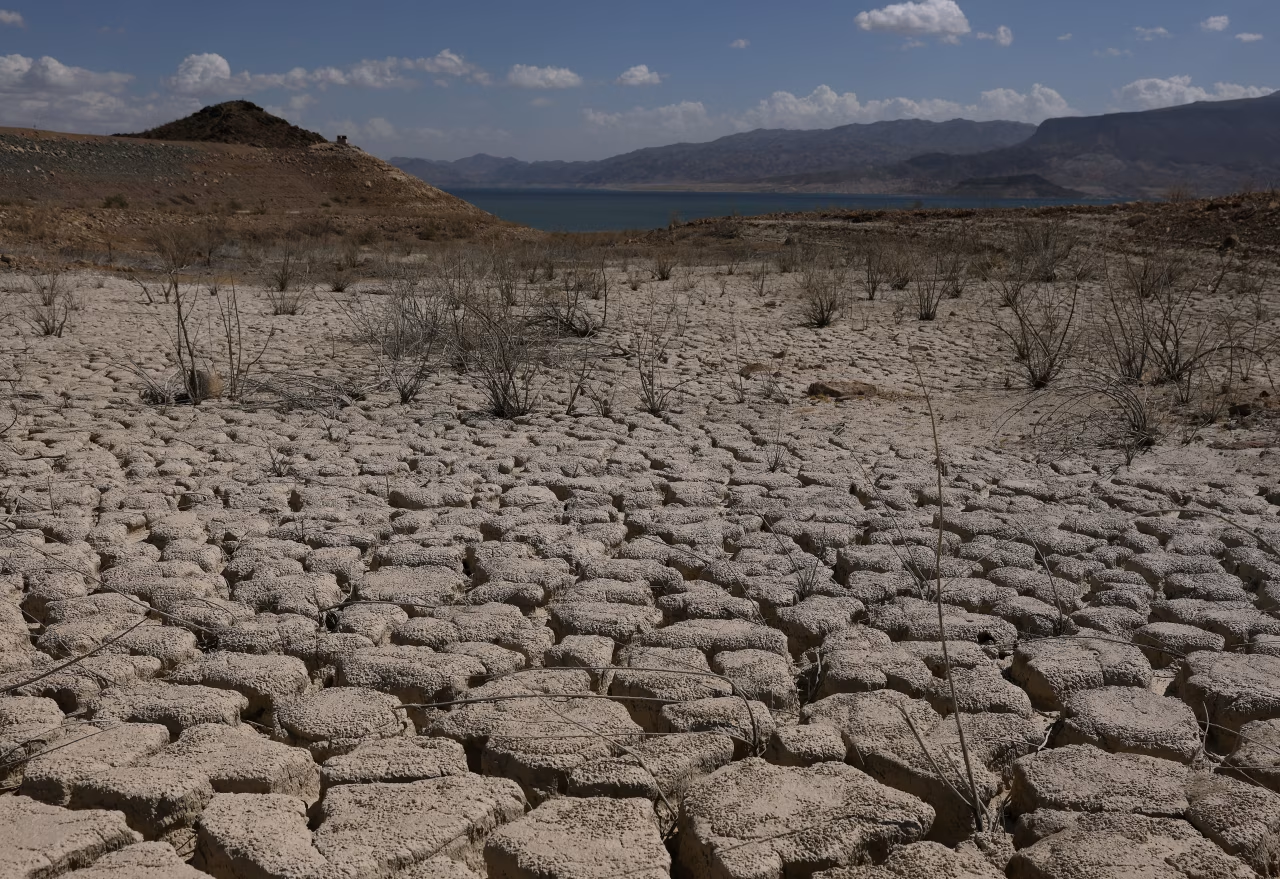
水资源已经不够分配了。多年来,尤其是经历了去年的干燥冬季之后,科罗拉多河一直在萎缩:自2000年以来,其流量下降了约20%。各方都开始受到影响。最大的两个水库——米德湖和鲍威尔湖的蓄水量合计降到了鲍威尔湖开始蓄水以来的最低点。
There isn’t enough water to go around. For years now, but especially after last year’s dry winter, the Colorado River has been shrinking: Its flow is down about 20% since 2000. Everyone is starting to suffer. The largest reservoirs, Lake Mead and Lake Powell, are at their lowest combined levels since Lake Powell began filling in 1963.
随着河流不断枯竭,一场酝酿了几十年的水权争端正走向白热化:到底谁能分到剩下的水?回答这个问题的部分规则是一个世纪前制定的,当时人们假设这条河能提供更多水源。如果各州无法自行决定,最高法院可能不得不介入。
As the river dwindles, a water-rights feud that has simmered for decades is moving toward a shootout: Who actually gets what water remains? Some of the rules for answering that question were written a century ago, for a river that was assumed to have more water to give. If the states can’t decide themselves, the Supreme Court may have to step in.
科罗拉多河是美国西南部的主动脉,为菲尼克斯、亚利桑那州图森、拉斯韦加斯、洛杉矶、圣迭戈以及数百个较小的城市和城镇提供水源。全美约有4000万人和550万英亩农田依赖这条河流,此外还有墨西哥的230万居民和50万英亩土地。这些数字还不包括拥有水权的30个印第安部落。
The Colorado is the lifeblood of the southwestern U.S., supplying water to Phoenix, Tucson, Ariz., Las Vegas, Los Angeles, San Diego and hundreds of smaller cities and towns. Roughly 40 million people and 5.5 million acres of cropland across the U.S. depend on the river—alongside another 2.3 million residents and 500,000 acres in Mexico. These figures don’t include the 30 Indian nations that have rights to the water.
1922年的《科罗拉多河协定》是西部水法的基石,该协定将水资源在上游流域(科罗拉多州、犹他州、怀俄明州和新墨西哥州)和下游流域(亚利桑那州、加利福尼亚州和内华达州)之间进行分配。该文件每年为每个地区预留750万英亩-英尺的供水量。但有一个转折:在亚利桑那州一个名为李斯渡口的河湾处测量,水量很可能很快就会跌破下游流域各州的门槛。一旦发生这种情况,该协定可能会瓦引发州际诉讼和水权大战。
The 1922 Colorado River Compact is the backbone of Western water law, splitting the water between the Upper Basin (Colorado, Utah, Wyoming and New Mexico) and Lower Basin (Arizona, California and Nevada). That document sets aside 7.5 million acre-feet of supply every year for each region. But there’s a twist: The water is likely to fall soon below the threshold for the Lower Basin states, measured at a bend in the river called Lee’s Ferry in Arizona. When it does, the compact could break down into interstate lawsuits and a water-rights war.
紧凑型协议旁边还有一摞交易、短期协议、条约、多州协议、联邦干预以及其他管理饮用水、灌溉、水力发电和娱乐用水的法律安排。“大多数人意识到,该协议目前已经完全过时了。这是一份在截然不同的时代、基于不同知识和不同意图下签署的一百年老文件,”科罗拉多州立大学科罗拉多水资源中心的高级水资源研究员布拉德·乌德尔说。
Alongside the compact are a stack of deals, short-term agreements, treaties, multistate pacts, federal interventions and other legal arrangements governing water used for drinking, irrigation, hydropower and recreation. “Most people realize the compact’s completely outdated at this point. It’s a hundred-year-old document signed in a very different era with different knowledge and different intentions,” says Brad Udall, a senior water researcher at Colorado State University’s Colorado Water Center.
今年,随着2007年低水位分配合同的到期,这场争端迎来了最新的关键时刻。由于各州未能达成新协议,联邦官员在8月中旬介入,制定了将持续至2028年的指导方针。新规要求下游州收紧水闸,将年度用水量减少125万英亩英尺。根据此计划,亚利桑那州受影响最大,削减76万英亩英尺(约占其用水量的27%),而加利福尼亚州减少44万英亩英尺(10%),内华达州在未来两年内削减5万英亩英尺(17%)。
The battle’s latest high-noon moment arrived this year with the expiration of a 2007 low-water allocation contract. When the states couldn’t come to a new agreement, federal officials intervened in mid-August, establishing guidelines to run through 2028. The new rules require Lower Basin states to tighten the spigot, reducing annual use by 1.25 million acre-feet. Under this plan, Arizona takes the biggest hit, at 760,000 acre-feet (about 27% of its usage), while California forfeits 440,000 (10%) and Nevada cuts 50,000 (17%) over the next two years.
即便有了这一临时权宜之计,这条河的水位仍然在朝着李斯渡口的临界点逼近。水流过去曾降到过这一水平以下,随之而来的是各州之间的诉讼——美国宪法赋予了最高法院对此类诉讼的原始管辖权。“大多数人认为最初的最高法院案件《亚利桑那州诉加利福尼亚州案》……判决是错误的,”乌达尔先生说。他补充说,现在,“我认为我们还没笨到让它闹到最高法院的地步,但这也说不准。”
Even with this temporary fix, the river is still trending toward the critical threshold at Lee’s Ferry. The water has fallen below this point before, and interstate lawsuits—over which the Constitution gives the Supreme Court original jurisdiction—have followed. “Most people think the original Supreme Court case, Arizona v. California, . . . was wrongly decided,” Mr. Udall says. Now, he adds, “I think we’re smarter than to have it end up in the Supreme Court, but you never know.” (Arizona v. California was filed in 1952 and took 11 years and two court-appointed special masters to resolve.)
(《亚利桑那州诉加利福尼亚州案》于1952年提起诉讼,历时11年,并经法院指定的两名特别主事审理才得以解决。)内华达州已经提起了法律挑战,在8月下旬对联邦政府的强制性削减水量进行回击,并辩称“此类短缺的规模将对环境、社会经济、健康以及人类安全造成严重影响”。今年早些时候,亚利桑那州聘请了外部法律顾问,并为潜在的诉讼留出了资金。数十个部族国家可能会加入这场诉讼。
Nevada has already submitted a legal challenge, pushing back in late August against the federal government’s mandatory cuts and arguing that “the magnitude of such shortages will cause acute environmental, socioeconomic, and health and human safety impacts.”Earlier in the year Arizona retained outside counsel and set aside money for a potential lawsuit. Dozens of tribal nations may join the litigation.
正如大多数西部故事一样,农民最有可能受到伤害。科罗拉多河一半以上的水被用于灌溉农业,近年来,联邦政府一直在变相补贴农民,让他们不使用这些水。拜登政府监督了一项耗资40亿美元的联邦干旱缓解计划,该计划支持科罗拉多河流域的保护工作,包括通过自愿协议向节约用水的农民、部族和城市提供补偿。特朗普政府将其中18项短期保护协议延长至2026年。
As in most Western tales, farmers are the most likely to be hurt. More than half of the Colorado River’s water is used for irrigated agriculture, and in recent years the federal government has been effectively subsidizing farmers to leave their water unused. The Biden administration oversaw a $4 billion federal drought-mitigation program that supported Colorado River conservation, including voluntary agreements that compensated farmers, tribes and cities for saving water. The Trump administration extended 18 of those short-term conservation agreements through 2026.
这些安排揭示了干旱背后日益诡异的经济学逻辑。农民可以拿钱让土地荒芜,因为把水留在河里比用它来种植农作物更有价值。“我们不能让菲尼克斯、洛杉矶、丹佛和拉斯维加斯断水,只为了让1500名农民能够继续耕种,”乌达尔先生说。
These arrangements reveal the increasingly strange economics of the drought. Farmers can be paid to leave fields fallow because keeping water in the river is more valuable than using it to grow a crop. “We can’t be drying up Phoenix and Los Angeles and Denver and Las Vegas so that 1,500 farmers can continue to farm,” Mr. Udall says.
“加利福尼亚州的农业和亚利桑那州的农业正在为城市供水而干涸,这不是一件好事,”亚利桑那州农场局局长约翰·博尔茨说。尤马县单独种植超过175种作物,生产美国冬季消费的叶菜类蔬菜的80%至90%——相当于2022年直接作物销售额约13亿美元。
“California agriculture and Arizona agriculture are getting dried up in favor of water flowing to cities, and that is not a good thing,” says John Boelts, president of the Arizona Farm Bureau. Yuma County alone grows more than 175 crops and produces 80% to 90% of the leafy greens consumed in the U.S. during the winter—roughly $1.3 billion in direct crop sales in 2022.
对于已经面临燃料、肥料和劳动力价格上涨的农民来说,不得不减少种植或为抽取地下水支付更高费用的前景,为一个依赖提前数月了解是否有足够水量来种植人们期望在杂货架上看到的食物的行业增添了另一层不确定性。
For farmers already facing higher prices for fuel, fertilizer and labor, the prospect of having to plant less—or pay more to pump groundwater—adds another layer of uncertainty to an industry that depends on knowing months in advance whether there will be enough water to grow the food people expect to find on grocery shelves.
可能会有一些解决方案。根据南内华达州水务局发言人的说法,拉斯维加斯采取了积极措施,即使人口翻倍,其都市区用水量自2002年以来已下降40%。国会上个月提出的一项法案将有助于恢复亚利桑那州一个用于脱盐农业径流水的设施。加利福尼亚州、亚利桑那州和内华达州都在研究废水回收利用。
There may be some fixes. Las Vegas has taken an aggressive approach and reduced the metro region’s water use by 40% since 2002, even as its population doubled, according to a spokesman for the Southern Nevada Water Authority. A bill introduced in Congress last month would help restore an Arizona plant for desalting agricultural runoff water. California, Arizona and Nevada are all looking into wastewater recycling.
但所有这些都是长期方案,而科罗拉多河的枯竭正在发生。“正如流域人们常说的,诉讼不会产生任何水,”乌达尔先生说。西部曾走过这条尘土飞扬的道路,经历了常常由此产生的诉讼。然而,不知为何,该地区仍设法适应并发展。
But all this is long term, and the dwindling of the Colorado River is happening now. “As people like to say in the basin, lawsuits aren’t going to generate any water,” Mr. Udall says. The West has been down the dusty trail before, suffering through the litigation that often results. Yet somehow the region has managed to adapt and grow.
如果美国西部各州能够熬过这场危机,未来并不像看起来那么干燥。智慧利用盐水和废水,结合承认低水年不可避免性的分配协议,仍能创造出科罗拉多河实际上可以提供的未来。[视频] 《华尔街日报》观点:最高法院拉开新任期序幕
If America’s Western states can survive this crisis, the future isn’t as dry as it looks. Smart use of salt and wastewater, joined with allocation agreements that recognize the inevitability of low-water years, can still create a future the Colorado River could actually provide. [video] WSJ Opinion: The Supreme Court Kicks Off a New Term