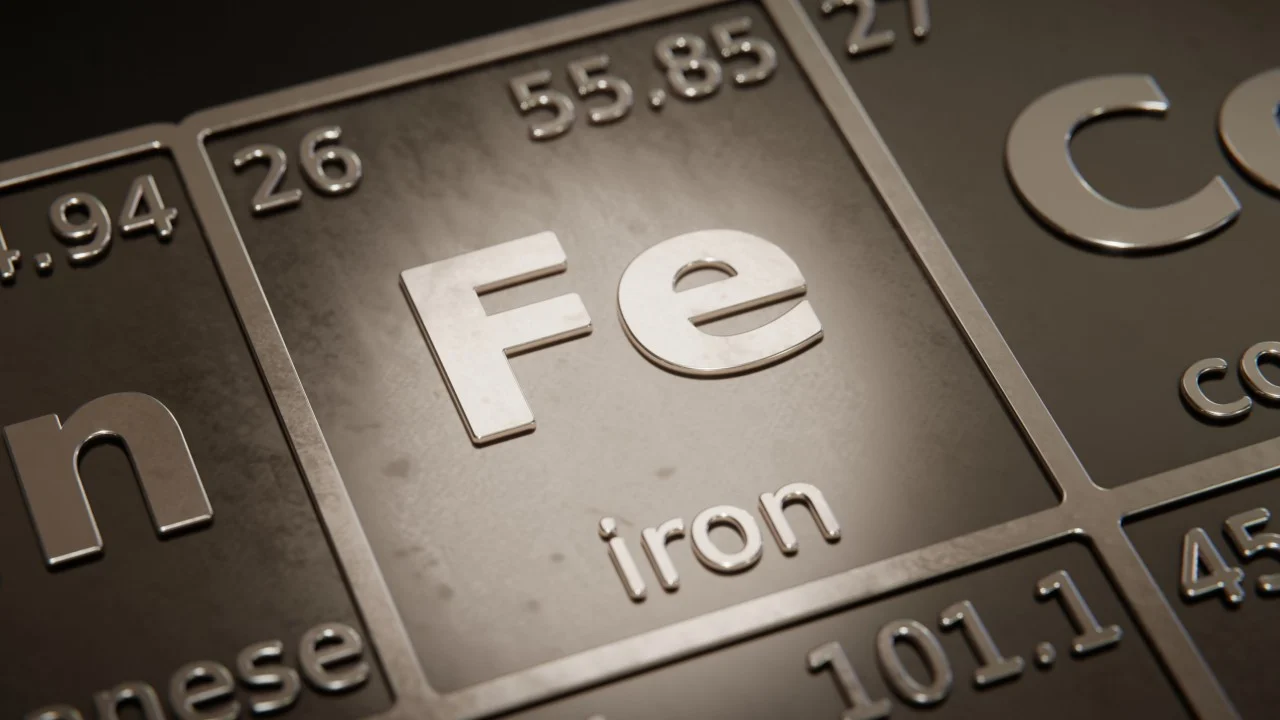
对于经全身治疗后病情仍不断恶化的晚期转移性癌症患者而言,治疗选择依然极为有限。如今,中国科学家指出了一种非传统的治疗药物——铁元素。
For patients with advanced, metastatic cancer that has progressed despite systemic therapy – options remain critically limited. Now, Chinese scientists are pointing to an unconventional therapeutic agent – the element iron.
这一构想源自工业废水处理:铁与过氧化氢反应可以产生羟基自由基,从而降解废水中的各种有机和有毒分子。
This idea originated in industrial waste water treatment: iron can react with hydrogen peroxide to generate hydroxyl radicals, which degrade various organic and toxic molecules in waste water.
中国科学家希望像处理废水那样治疗恶性肿瘤,即将铁与纳米碳注射液结合,形成名为CNSI-Fe的纳米碳铁注射液(其中Fe代表铁,更具体地说是亚铁)。
Chinese scientists wanted to treat malignant tumours the way they treat waste water – by combining iron with a nano-carbon injection to form a nano-carbon iron injection called CNSI-Fe, where Fe stands for iron – more specifically ferrous iron.
在中国各地医院开展的一项同类首创试验中,医生将这种溶液直接注射到19名晚期肿瘤患者的肿瘤部位。
In a first-of-its-kind trial in hospitals across China, physicians injected this solution directly into the tumour sites of 19 patients with advanced tumours.
临床随访显示,16名晚期癌症患者的肿瘤生长停止(占84.2%),其中2名患者的肿瘤出现缩小。
Clinical follow-up showed that tumour growth stopped in 16 patients with advanced cancer (84.2 per cent), with tumour shrinkage observed in two of them.
该研究于10月1日发表在同行评审期刊《信号转导与靶向治疗》(Signal Transduction and Targeted Therapy)上。
This study was published on October 1 in the peer-reviewed journal Signal Transduction and Targeted Therapy.
四川大学华西医院癌症中心执行副主任、华西临床医学院肿瘤科教授王永生写道:“总体而言,CNSI-Fe展现出良好的安全性和令人鼓舞的抗肿瘤活性。”
“Overall, CNSI-Fe demonstrated a favourable safety profile and promising antitumour activity,” wrote Professor Wang Yongsheng, executive deputy director of the Cancer Centre at West China Hospital and the Department of Oncology at West China School of Medicine.
王永生作为主要牵头研究者,在四川、湖北和山东三省的三家医院完成了I期临床试验。
Wang completed the Phase I clinical trial, where he served as the lead principal investigator, at three hospitals in Sichuan, Hubei and Shandong provinces.
目前,一项涵盖中国10家顶级医院的II期临床试验正在进行中,旨在评估该疗法在52名患者中的安全性和有效性。
A Phase II clinical trial is now under way across 10 top Chinese hospitals to evaluate the therapy’s safety and efficacy in 52 patients.
在第一阶段中,科学家使用临床批准的纳米晶碳注射液并将其与硫酸亚铁结合,以制备CNSI-Fe。
For the first phase, scientists used a clinically approved nanocrystalline carbon injection and combined it with ferrous sulphate to prepare the CNSI-Fe.
该注射液在制备后6小时内保持稳定,并在给药后半小时内达到血清铁峰值。
The injection remained stable for six hours after preparation and reached peak serum iron levels within half an hour of administration.
铁能够特异性地消除体内的肿瘤细胞,同时对正常细胞造成的损伤相对较小。这是因为正常细胞拥有谷胱甘肽等抗氧化系统,能够修复其细胞膜受到的损伤。
Iron specifically eliminates tumour cells in the body while causing relatively little damage to normal cells. This is because normal cells possess antioxidant systems such as glutathione, which can repair damage to their cell membranes.
然而,在肿瘤内部,铁产生的自由基会“锈蚀”肿瘤细胞的细胞膜。
However, within tumours, the free radicals produced by iron will “rust” through their cell membranes.
先前的动物实验表明,这种CNSI-Fe注射液能够抑制结直肠癌、乳腺癌和胰腺癌等六种肿瘤模型中的肿瘤生长。
In previous animal experiments, this CNSI-Fe injection was shown to inhibit tumour growth in six tumour models, including colorectal cancer, breast cancer and pancreatic cancer.
参与I期试验的19名患者患有各种肿瘤,包括肉瘤、头颈癌、胰腺癌、非小细胞肺癌、卵巢癌、乳腺癌和外阴癌。
The 19 patients who took part in the Phase I trial had various tumours, including sarcoma, head and neck cancer, pancreatic cancer, non-small-cell lung cancer, ovarian cancer, breast cancer and vulval cancer.
其中,16名受试者患有IV期转移性肿瘤,也被称为终末期晚期肿瘤。
Among them, 16 subjects had stage IV metastatic tumours, also known as end-stage advanced tumours.
所有这些肿瘤患者此前都接受过至少两线全身治疗,包括化疗、放疗和免疫疗法。
All of these tumour patients had previously received at least two lines of systemic therapy, including chemotherapy, radiotherapy and immunotherapy.
他们接受了不同剂量的CNSI-Fe直接肿瘤内注射,并观察了肿瘤及其远处病灶的反应。
They received injections of different doses of CNSI-Fe directly into the tumour site and observed responses in the tumours and their distant lesions.
试验结果显示,在所有患者中,总体客观缓解率或肿瘤缩小率为10.5%,疾病控制率(即肿瘤停止生长)为84.2%。对注射靶病灶的治疗效果优于所有全身病灶。
The trial results showed that across all patients, the overall objective response rate or tumour shrinkage was 10.5 per cent and the disease control rate – where tumours stopped growing – was 84.2 per cent. The therapeutic effect on the injected target lesions was superior to that on all systemic lesions.
在这项临床试验中,最常见的不良反应是注射部位疼痛(89.5%)和高血压(52.6%),有一名患者因超敏反应退出试验。N未发生其他肿瘤疗法中常见的严重血液学毒性、肝肾毒性或其他不良反应。
In this clinical trial, the most common adverse reactions were injection pain (89.5 per cent) and hypertension (52.6 per cent), while one patient withdrew from the trial due to a hypersensitivity reaction. No severe haematological toxicity, hepato-renal toxicity or other adverse effects commonly seen with other tumour therapies occurred.
王永生在论文中总结道:“在本研究中,我们展示了一项同类首创的I期试验,以评估CNSI-Fe(一种诱导铁死亡的药物)用于治疗难治性实体瘤患者的潜力。尽管临床前已探索了20多个类别,但CNSI-Fe是首个实现临床转化的药物。”
“In this study, we present a first-in-class Phase I trial to evaluate the potential of CNSI-Fe, which is a ferroptosis-inducing agent, for treating patients with refractory solid tumours. While more than 20 classes have been explored preclinically, CNSI-Fe is the first to achieve clinical translation,” Wang concluded in the paper.
他补充道:“通过肿瘤内注射给药的CNSI-Fe对铁死亡敏感实体瘤有效,但这项单臂研究存在局限性,需要通过随机II/III期试验进行进一步评估。”
“CNSI-Fe administered by intratumoral injection is effective for treating ferroptosis-sensitive solid tumours, but this single-arm study has limitations and requires further evaluation through randomised Phase II/III trials,” he added.