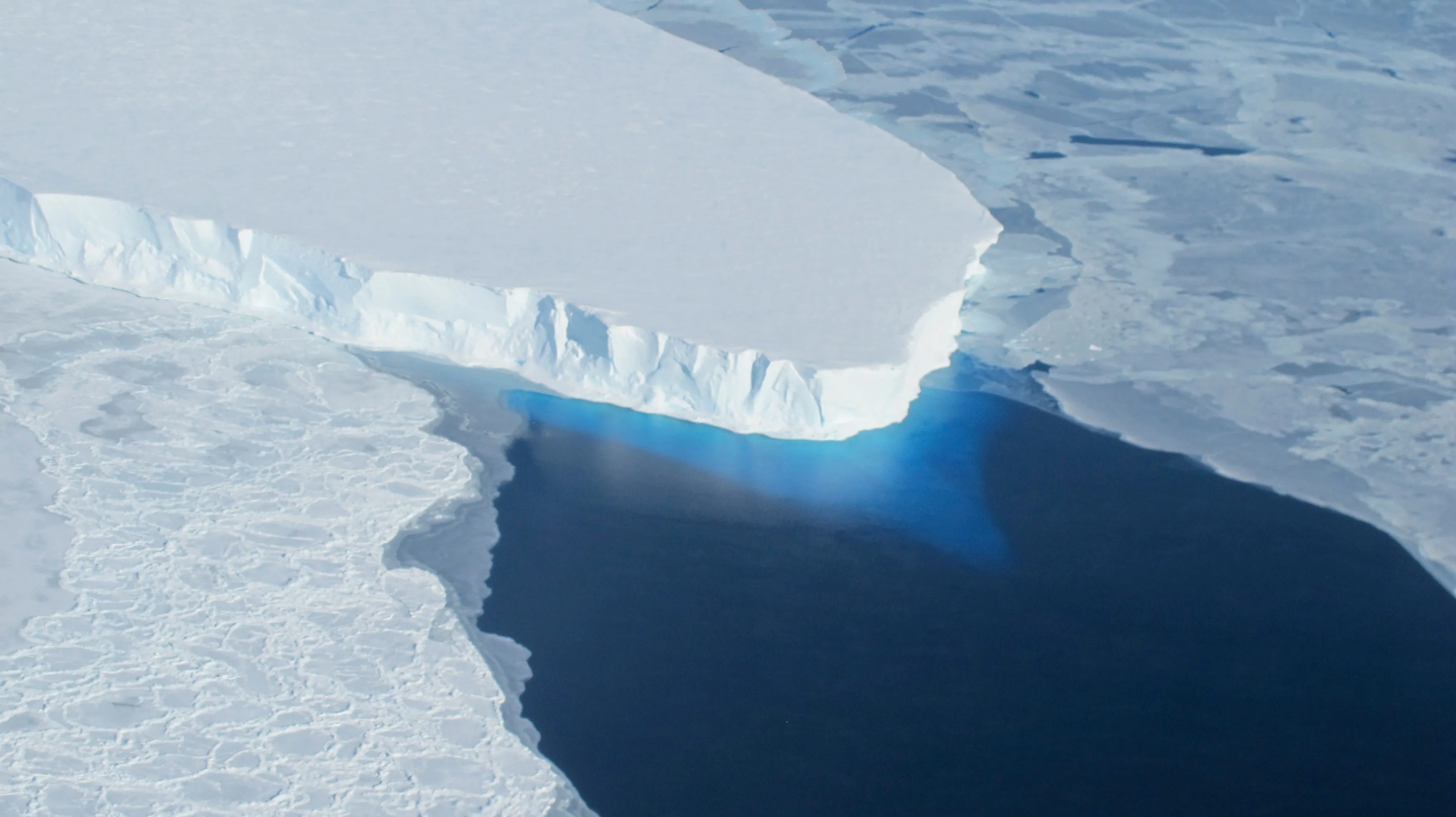
世界最大冰川的融化速度远超此前预期,在未来一个世纪内,其对全球海平面上升的贡献可能是此前预计的两倍。
The world’s largest glacier is melting much faster and could add twice as much to global sea levels as previously expected over the next century.
由一队冰川学家本周发表的一项新研究发现,西南极洲的思韦茨冰川(Thwaites glacier)正在快速失去质量,因为温暖的海水正涌入其底部并融化其核心。即便全球变暖没有按预测的那样加速,这也可能使水位上升1.2英寸(30毫米)。
New research published this week by a team of glaciologists has found that the Thwaites glacier in West Antarctica is losing mass rapidly because warm seawater is pushing underneath it and melting its core. This could add 1.2 inches (30mm) to water levels even if global warming does not accelerate as predicted.
这一研究结果发表在《自然-通讯》(Nature Communications)杂志上,为越来越多的证据添上了新的一笔。这些证据表明,这座已经退缩了数十年的冰川,目前失去质量的速度甚至比科学家此前认为的还要快。
The findings, published in the journal Nature Communications, add to a growing body of evidence that shows that the glacier, which has been receding for decades, is now losing mass even faster than scientists thought.
美国加利福尼亚大学的研究人员与美国国家航空航天局(NASA)喷气推进实验室合作开展了这项研究。以下是我们对这些研究结果的了解:什么是思韦茨冰川,它为什么重要?
Researchers at the University of California in the United States collaborated with NASA’s Jet Propulsion Laboratory for the study. Here’s what we know about the findings: What is Thwaites and why is it important?
思韦茨冰川被称为“末日冰川”,是地球上最大的冰川,面积约为19.2万平方公里(74,130平方英里)——大致相当于塞内加尔的国土面积,且比美国佛罗里达州还要大。
Nicknamed the “Doomsday Glacier”, Thwaites is the largest glacier on Earth, spanning an area of around 192,000sq km (74,130sq miles) or roughly the size of Senegal – and larger than the US state of Florida.
它位于遥远的西南极洲玛丽伯德地(Marie Byrd Land)的沃尔格林海岸(Walgreen Coast),是宏大的西南极冰盖的一部分。西南极冰盖还包括其他冰川,其面积是思韦茨冰川的14倍。
It is located on the Walgreen Coast of Marie Byrd Land in remote western Antarctica and forms part of the great West Antarctic ice sheet, which includes other glaciers and is 14 times the size of Thwaites.
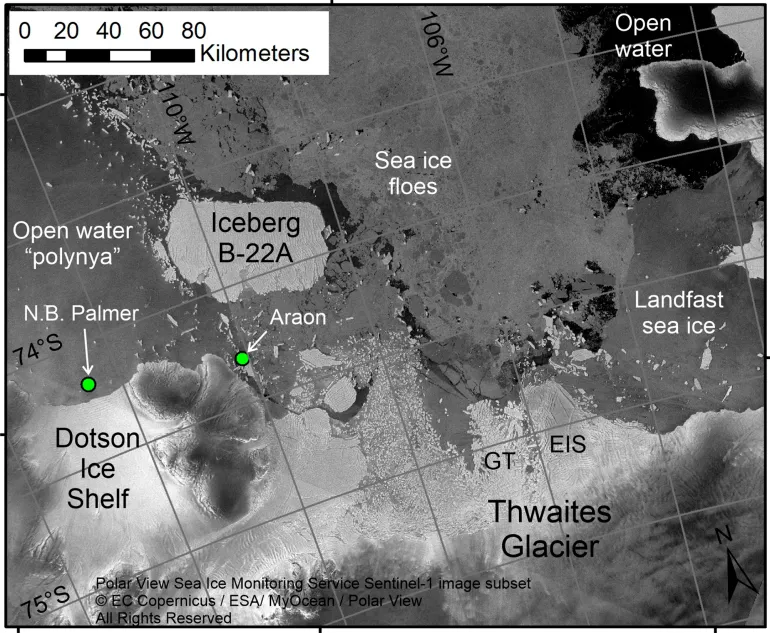
该冰川于1947年首次被绘制成地图,并以已故美国冰川学家弗雷德里克·T·思韦茨(Fredrik T Thwaites)的名字命名,尽管他从未去过那里。
The glacier was first mapped in 1947 and is named after the late American glaciologist Fredrik T Thwaites, although he never visited it.
在20世纪80年代,科学家发现思韦茨冰川正在快速融化,此后随着担忧日益加剧,科学家一直密切监测其融化过程。
In the 1980s, scientists discovered that Thwaites is melting rapidly and have closely monitored its melting process as concerns have grown ever since.
由于体量巨大,该冰川的崩塌将导致全球海平面出现灾难性的巨幅上升——尽管研究人员预计这不会在未来几十年甚至几个世纪内发生。
Because it is so big, the glacier’s collapse would sharply raise global sea levels by a catastrophic amount – although researchers don’t project that will happen for many decades, or even a few centuries.
思韦茨冰川以及松岛冰川(Pine Island glacier——西南极洲的一条冰流,流入阿蒙森海的松岛湾)等其他冰川共同充当了一道屏障,阻挡着庞大且脆弱的西南极冰盖。如果融化,该冰盖可能会导致全球许多沿海城市被淹没。
Together, Thwaites and other glaciers such as the Pine Island glacier – an ice stream in West Antarctica which flows into Pine Island Bay in the Amundsen Sea – act as a barrier that holds back the vast and vulnerable West Antarctic ice sheet. If melted, the ice sheet could cause many coastal cities to be submerged around the world.
目前,思韦茨冰川的冰层流失约占全球海平面上升总额的百分之四。研究计算得出,该冰川自2000年以来已失去超过1万亿吨冰,并且目前仍以每年500亿吨的速度失去冰层。这座冰川为什么在融化?
At present, ice loss from Thwaites contributes around four percent of all global sea-level rise. Studies have calculated that the glacier has lost more than 1,000 billion tonnes of ice since 2000, and continues to lose 50 billion tonnes of ice per year. Why is the glacier melting?
多项研究表明,主要驱动因素是温暖的海水正在从底部积极融化思韦茨冰川。
The main drivers are warm ocean water which is actively melting the Thwaites glacier from underneath it, according to several studies.
海洋变暖是由人类活动引起的海岸气候变化造成的,特别是污染性化石燃料的燃烧。
Ocean warming is caused by human-induced climate change, in particular from the burning of polluting fossil fuels.
在2019年的一项研究中,美国国家航空航天局喷气推进实验室在思韦茨冰川下方发现了一个巨大的海底空腔,其面积相当于曼哈顿面积的三分之二。研究人员称,这可能会加速冰川变薄。
In a 2019 study, the NASA Jet Propulsion Laboratory discovered a giant underwater cavity beneath the Thwaites glacier that spread across an area two-thirds the size of Manhattan, which researchers said was likely speeding up the glacier’s thinning.
欧洲空间局的数据显示,气温上升已导致冰川自2000年以来失去了大约百分之五的冰层。最新研究发现了什么?
Rising temperatures have caused glaciers to lose about five percent of their ice since 2000, according to the European Space Agency. What has the latest research found?
研究发现,到2100年,思韦茨冰川可能会使海平面上升多达1.2英寸(30毫米)——达到当前估计的两倍,且无需考虑任何额外的全球变暖。
Thwaites could add as much as 1.2 inches (30mm) – double the current estimates – to sea levels by 2100, even without any additional global warming, the study found.
研究人员表示,他们使用了新的计算机模型,能够更清晰地描绘出这座受威胁冰川在其接地线(即冰川完全压在基岩上与以冰架形式延伸到海面上之间的过渡边界)下方的融化活动。
The researchers said they used new computer models that paint a clearer picture of melting activity under the threatened glacier at its grounding line – the boundary where it transitions from resting entirely on bedrock to spreading out over the sea in the form of ice shelves.
其他冰层模型认为接地线是固定的,而科学家表示,他们开发了更广泛的“接地带”概念取而代之。加州大学洛杉矶分校的项目科学家、该研究的第一作者马蒂亚·波伊内利(Mattia Poinelli)对媒体表示,在这种情况下,海水在“潮汐泵送”过程中抬升和降低冰层,使温水能够到达“冰盖深处并导致剧烈融化”。
Where other ice sheet models conclude a grounding line is fixed, the scientists said they developed the concept of a broader “grounding zone” instead. In this scenario, seawater lifts and lowers the ice in a “tidal pumping” process that allows warm water to reach “deep underneath the ice sheets and causing vigorous melting,” lead author Mattia Poinelli, a project scientist at UCLA, told media.
这一融化过程正在加速思韦茨冰川从莫日诺海岭(Mouginot Ridge)上的“脱锚”——莫日诺海岭是目前从下方稳定该冰川的重要海底基岩。研究得出结论,到本世纪末,思韦茨冰川从海岭脱锚的几率为百分之六十。
That melting process is accelerating the Thwaites’ “unpinning” from the Mouginot Ridge – an important underwater bedrock currently stabilising the glacier from below. The study concluded that there is a 60 percent chance that Thwaites could unpin from the ridge by the end of the century.
然而,专家表示,需要更多的研究来准确预测思韦茨冰川的冰流失量。
However, experts say more studies are needed to accurately predict the volume of Thwaites’ ice loss.
英国南极调查局(British Antarctic Survey)的科学家得出了不同的研究结果,他们认为,即使在可以想象的最极端的海洋冷却条件下,思韦茨冰川在未来至少150年内也将继续流失冰层。
In separate findings, scientists from the British Antarctic Survey concluded that Thwaites will continue losing ice for at least the next 150 years, even under the most extreme ocean cooling conditions imaginable.
这项研究使用了计算机模拟模型,考察了未来一个半世纪内海洋对融化的影响,已于7月发表在《地球物理研究快报》(Geophysical Research Letters)上。
The study, which used computer simulation models that examined the melting effects of the ocean over the next century and a half, was published in Geophysical Research Letters in July.