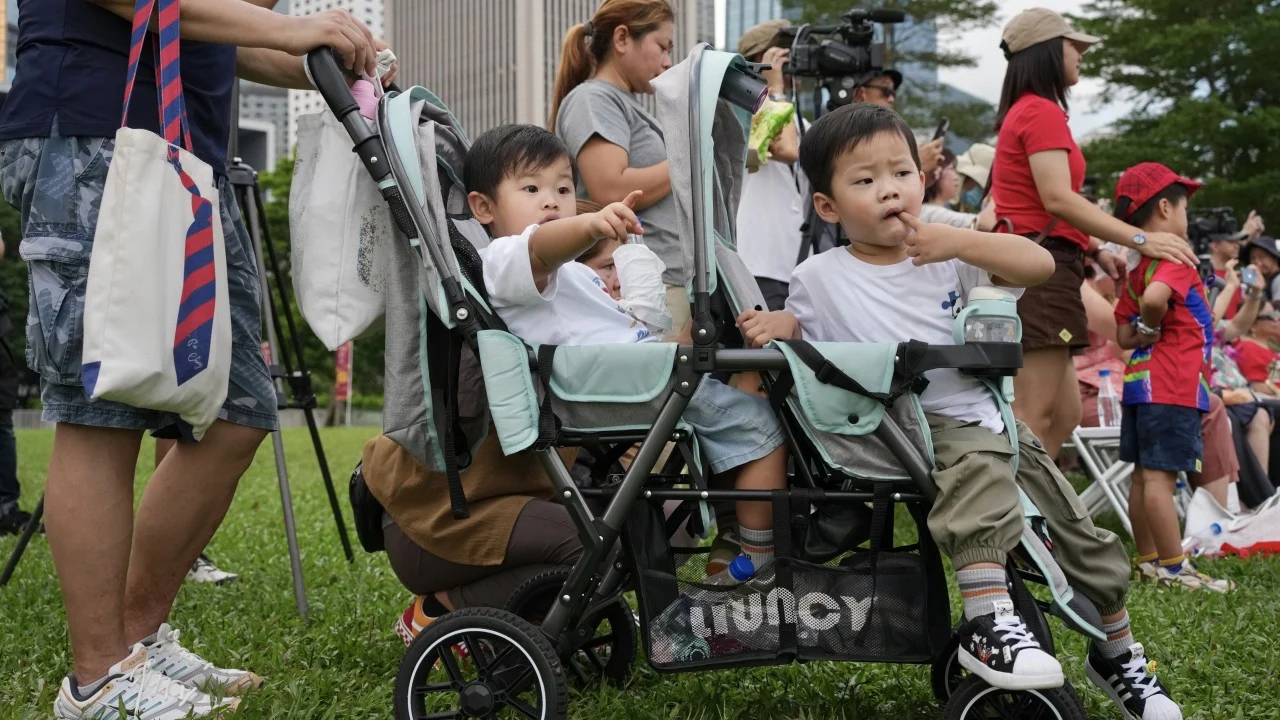
当香港讨论如何提高生育率时,对话通常围绕着金钱展开:更多的育儿补贴、税收优惠、住房支持、更便宜的托儿服务等等。这些经济措施是必要的。降低抚养孩子的成本消除了某些真实且迫切的障碍。
When Hong Kong debates how to raise its birth rate, the conversation usually revolves around money: bigger baby bonuses, tax concessions, housing support, cheaper childcare and so on. These economic measures are necessary. Lowering the cost of raising a child removes some real and immediate barriers.
然而,还有另一个鲜为人知的因素,其作用更为微妙和隐蔽。它不源于经济学,而是源于我们每天所使用的语言或多种语言的结构。
However, there is another, lesser-known factor that works more subtly and implicitly. It comes not from economics but from the structure of the language or languages we speak each day.
考虑一个简单的对比。在英语中,人们会说:“昨天下雨了。现在正在下雨。明天会下雨。”在汉语中,同样的三个句子不需要这种语法标记。动词不会改变。未来在语法上并未与现在分离。
Consider a simple contrast. In English, one says, “Yesterday it rained. Now it is raining. Tomorrow it will rain In Chinese, the same three sentences need no such grammatical marking. The verb does not change. The future is not grammatically separated from the present. This is the distinction around which behavioural economist Keith Chen built his research.
正是围绕这一区别,行为经济学家凯斯·陈构建了他的研究。他根据语言是否强迫说话者在语法上标记未来对语言进行了分类。英语有。汉语没有。凯斯·陈发现,使用弱未来时间标记或无未来时间标记语言的说话者,比使用强未来时间标记语言的说话者往往更倾向于储蓄、规划并在长期健康方面进行更多投资。
He classified languages by whether they oblige speakers to mark the future grammatically. English does. Chinese does not. Chen found that speakers of languages with weak or no future-time marking tend to save more, plan more and invest more in long-term health than speakers of languages with strong future-time marking.
其中的逻辑很简单。如果未来在语法上并不遥远,它就会让人感觉就在眼前。如果它让人感觉在眼前,其负担也同样会让人感觉就在眼前。这就是为什么使用弱未来时间标记语言的人往往会储蓄更多、规划更多——他们已经在与未来共存了。
The logic is simple. If the future is not grammatically distant, it feels present. If it feels present, its burdens feel present, too. That is why speakers of weak future-time languages tend to save more and plan more – they are already living with the future.
然而,带来储蓄的这种亲近感也可能带来焦虑和犹豫。一个感觉到未来犹如眼前的年轻夫妇,也可能会将孩子未来的分量感同身受地觉得就在眼前,从而对承担一项延续数十年的承诺犹豫不决。
However, the same closeness that drives saving can also drive anxiety and hesitation. A young couple who feel the future as present might also feel the weight of a child’s future as present and hesitate to take on a commitment that stretches decades ahead.
英语的工作方式则不同。“明天会下雨”将未来置于一定距离之外。负担可能是真实的,但它属于一个尚未到来的时间。说英语的夫妇可能会感受到同样的义务,但感受没有那么迫切,因此会发现迈出第一步更容易。
English works differently. “Tomorrow it will rain” places the future at a distance. The burden might be real, but it belongs to a time that has not yet arrived. A couple speaking English might feel the same obligations but feel them less immediately, therefore finding it easier to take the first step.
凯斯·陈并不是直接撰文探讨生育率,但他的发现允许进行一种符合逻辑的推演。如果弱未来时间标记让未来在心理上更近,那么未来的义务也可能会让人感觉更加迫切。正是出于这个原因,抚养孩子漫长的承诺可能会让人感觉更沉重、更迫在眉睫。
Chen was not writing about fertility directly, but his finding allows a logical projection. If weak future-time marking brings the future closer in the mind, then future obligations could also feel more imminent. The long commitment of raising a child can feel heavier and more immediate for precisely that reason.
凯斯·陈的数据甚至触及了避孕药具的使用,尽管他将其归类为一种健康行为,而不是生育决定。换一种角度解读,它可能指向一个相似的方向:更经常地使用安全套可能意味着更少的孩子。
Chen’s data even touches on contraceptive use, though he classifies it as a health behaviour rather than a fertility decision. Read differently, it could point in a similar direction: using condoms more often can mean fewer children.
这并不是说语言直接决定或导致了生育率。它只是说,我们说话的方式可能会塑造我们对未来的想象有多生动,以及这种想象中的未来在做出重大生活决策时承载了多大的分量。
This is not to claim that language determines or causes fertility directly. It only says that the way we speak might shape how vividly we imagine the future and how much weight that imagined future carries in making significant life decisions.
香港完全有条件审视这一推演。根据最近的人口普查,粤语仍然是约百分之八十八的人口常用语言,而英语是约百分之四点六的人口常用语言。V复杂之处在于,许多居民并非只会说一种语言。在熟练程度较高的工人中,约百分之八十五至九十一的人能够读写中文和英文。大约百分之五十七至六十的人具备涵盖粤语、英语和普通话的“两文三语”能力。
Hong Kong is well placed to examine this projection. According to the most recent census, Cantonese remains the usual language of about 88 per cent of the population while English is the usual language of about 4.6 per cent. The complication is that many residents are not monolingual. Among higher-skilled workers, about 85 to 91 per cent can read and write both Chinese and English. Roughly 57 to 60 per cent possess “biliterate and trilingual” abilities covering Cantonese, English and Mandarin.
这意味着许多香港夫妇不只是说一种类型的语言。他们在语言之间切换,通常在同一场对话中就会如此。如果凯斯·陈的发现站得住脚,他们在任何特定时刻使用的语言的语法结构,都可以微妙地塑造未来感觉有多近或多远,以及它承载了多大的分量。
This means many Hong Kong couples do not simply speak one type of language. They move between them, often within the same conversation. If Chen’s findings hold, the grammatical structure of the language they are using at any given moment can subtly shape how close or distant the future feels and how much weight it carries.
这并不是在反对经济措施。育儿补贴、住房支持和托儿服务补贴解决了现实障碍,它们应该仍然是生育政策的核心。我的论点是增加另一个可能被忽视的维度。
This is not an argument against economic measures. Baby bonuses, housing support and childcare subsidies address real barriers, and they should remain central to fertility policy. My argument is for adding another dimension that might have been overlooked.
如果语言结构塑造了人们对未来的感知,那么影响语言使用的政策可能会产生现有政策评估尚未捕捉到的影响。单靠经济措施并不能完全解决这个问题。追求其他替代方案是有价值的。
If language structure shapes how people perceive the future, then policies that affect language use can have effects that current policy evaluation does not yet capture. Economic measures alone will not solve this issue completely. There is value in pursuing alternatives.
探索这一点的一个方法是,检验夫妇讨论计划生育时所使用的语言,是否会对他们描述自己的计划、期望和犹豫的方式产生影响。像未来家庭画像这样简单的练习,可以帮助夫妇规划他们能够想象的未来几代人,以及与每一代人相关的语言、地方和希望。这不会立即解决生育问题,但它可能有助于夫妇明确表达他们的需求,并帮助政策制定者了解他们如何想象未来。
One way to explore this would be to examine whether the language in which couples discuss family planning makes a difference to how they describe their plans, hopes and hesitations. A simple exercise like a future family portrait can help couples map the future generations they can imagine and the languages, places and hopes associated with each. This would not solve the fertility problem instantly, but it might help couples articulate what they want and help policymakers see how they imagine the future.
简而言之,香港的生育挑战可能不仅仅是一个负担能力问题。它可能部分也是关于我们说的是什么语言,以及这如何塑造了对未来的感知方式。
In short, Hong Kong’s fertility challenge might not be only an affordability problem. It might also partly be a problem of which language we speak and how that shapes the way the future is perceived.
没有任何政策能强迫某人渴望拥有一个孩子。不过,政策可以塑造这种渴望形成的条件,而语言可以成为这些条件之一。问题不仅在于“如今家庭是否养得起一个孩子?”,还在于“他们是否能看到自己的孩子将生活在其中的未来?”他们如何看待未来,可能取决于他们看待未来时所使用的语言。
No policy can make someone want a child. Policy can shape the conditions in which that desire is formed, though, and language can be one of those conditions. The question is not only “Can families afford a child these days?” but also “Can they see the future their children will live in?”. How they see it might depend on the language in which they see it.