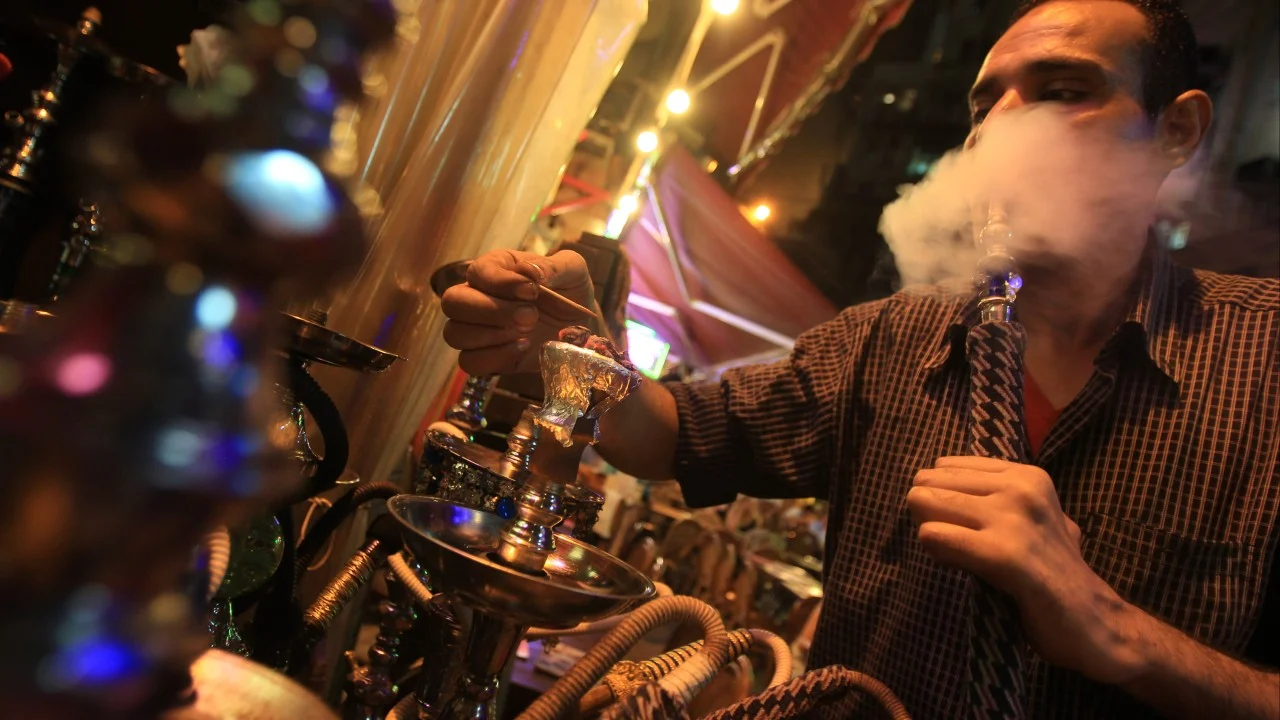
根据世界卫生组织(WHO)一个研究机构主导并于最近在香港提交的一项研究,到2050年,吸水烟将在全球导致约100万例新发肺癌病例,其中西太平洋地区承受的负担最重。
Water pipe smoking will contribute to about 1 million new lung cancer cases globally by 2050, with the Western Pacific region bearing the brunt, according to a study led by a World Health Organization (WHO) research agency that was recently presented in Hong Kong.
这项尚未发表的研究由国际癌症研究机构(IARC)早期检测、预防和感染分部科学家迈赫迪·谢赫(Mahdi Sheikh)博士领导。研究估计,2025年至2050年间,全球将新增8200万例肺癌病例,其中944,700例(即1.1%)由吸水烟引起。
The study, which is yet to be published, was headed by Dr Mahdi Sheikh, a scientist of the early detection, prevention and infections branch at the International Agency for Research on Cancer (IARC). It estimated that there would be 82 million new lung cancer cases around the world between 2025 and 2050, with 944,700 or 1.1 per cent of them caused by water pipe smoking.
“1%似乎不多,但当把它转化为具体数字时,这就是100万个病例——当我们想要拯救生命时,每一个生命都至关重要,”谢赫在9月下旬首次于香港举行的世界抗癌大会闭幕间隙对《南华早报》表示。
“One per cent does not seem a lot, but when you translate it into numbers, it’s 1 million cases – when we want to save lives, every life matters,” Sheikh told the South China Morning Post on the sidelines of the World Cancer Congress, which was held in Hong Kong for the first time in late September.
“这些国家大多属于低或中等人类发展指数……这意味着负担将集中在资源最少、最无力承担癌症负担的国家。”他说,传统香烟仍然是肺癌的主导病因,占病例的60%至70%,此外还有空气污染和职业暴露等其他风险因素。
“Most of these countries have a low or medium human development index … it means that the burden is going to cluster in the countries with the least resources, which could bear the least burden of cancer.”Traditional cigarettes remained the primary cause of lung cancer, accounting for 60 to 70 per cent of cases, alongside other risk factors such as air pollution and occupational exposure, he said.
研究团队结合了78个国家的水烟流行率、癌症风险和世卫组织预测数据,估计在这一为期25年的时间里,西太平洋地区将出现350,400例与水烟相关的肺癌新发病例。欧洲地区紧随其后,为265,700例。
Combining data on water pipe prevalence, cancer risk and WHO projections across 78 countries, the research team estimated that the Western Pacific region would see 350,400 new cases of water pipe-related lung cancer over the 25-year period. This was followed by 265,700 cases in the European region.
就病例数占人口的比例而言,主要涵盖中东等国家的东地中海地区以5.1%高居榜首,非洲地区以2.6%紧随其后。
In terms of proportion of cases relative to population, the Eastern Mediterranean region, largely covering countries such as the Middle East, topped the chart with 5.1 per cent, followed by the African region with 2.6 per cent.
值得注意的是,根据低人类发展指数所表明的那样,属于最不发达国家的地区将承受最沉重的比例代价,水烟导致了其3.3%的肺癌病例,中等指数国家则为1.8%。
Notably, countries which were among the least developed, as indicated by their low Human Development Index, would suffer the heaviest proportional toll, with water pipes causing 3.3 per cent of their lung cancer cases, followed by countries of the medium index at 1.8 per cent.
谢赫表示,西太平洋地区在病例总数上位居榜首,是因为该地区包含水烟吸食暴露率高或人口庞大的国家。
Sheikh said the Western Pacific region topped the total case count because it contained countries with either high exposure to water pipe smoking or massive populations.
与此同时,东地中海地区由于深厚的历史根源以及在年轻一代中日益流行,拥有全球最高的水烟吸食率。
The Eastern Mediterranean region, meanwhile, held the highest water pipe smoking rates globally due to deep historical roots and rising popularity among younger generations.
谢赫说:“烟草行业正在想方设法增加(当地)青年对这些产品的使用。”
“The tobacco industry is coming up with strategies to increase the use of these products among the youth [there],” Sheikh said.
“如果年轻人今天使用这些产品,其影响将在二十年后面显现。我们需要在这发生之前提高意识。”谢赫指出,制造商添加了口味,并将水烟使用包装成一种社交活动来吸引年轻人,同时散布水烟能过滤有毒物质的虚假信息。
“If young people use these products today, the impact will be obvious two decades from now. We need to raise awareness before this happens.”Sheikh noted that manufacturers added flavours and framed water pipe use as a social activity to entice youth while spreading disinformation that water filtered out toxic substances.
不过,他补充说,尽管世卫组织在二十多年前就发布了第一批指南,但与传统香烟相比,水烟吸食受到的监管审查要少得多。
However, unlike traditional cigarettes, water pipe smoking received far less regulatory scrutiny despite the WHO issuing its first guidelines more than two decades ago, he added.
根据《世界卫生组织烟草控制框架公约》,79%的缔约方报告称其2023年国内市场上有水烟烟草,但只有57%实施了具体监管。
According to the WHO Framework Convention on Tobacco Control, 79 per cent of parties to the treaty reported water pipe tobacco on their national markets in 2023, but only 57 per cent had implemented specific regulations.
谢赫说:“指南就在那里。一些国家开展了工作;许多国家仍然滞后,在(针对)可燃烟草制品的监管方面远远落后。”
“The guideline is there. Some countries have worked; a lot of countries still lag behind and are way behind [on regulations for] combustible tobacco products,” Sheikh said.
一个主要缺陷是缺乏监测,因为研究团队只能获得78个国家的数据,非洲和西太平洋地区的严重数据缺失。
A major shortcoming was the lack of monitoring, as the research team could only obtain data from 78 countries, with severe data gaps in Africa and the Western Pacific.
他说:“负担比我们想象的要大得多、得多……我相信存在很多低估。”
“The burden is much, much bigger than what we think … I believe there is a lot of underestimation,” he said.
“我们在世卫组织要求的基本政策之一就是监测。”在进一步研究正在进行的同时,谢赫敦促各国落实全球卫生监督机构的指南,并防范烟草行业的干预。
“One of the basic policies that we require at WHO is monitoring.”While further studies are under way, Sheikh urged countries to implement the guidelines of the global health watchdog and guard against tobacco industry interference.
在此过程中,他认为香港可以作为一个成功范例,并指出其个位数的吸烟率。香港的吸烟率为8.5%,而水烟吸食率则低于1%。
In this process, he believed Hong Kong could serve as a successful example, pointing to its single-digit smoking prevalence rate. Hong Kong’s smoking rate is 8.5 per cent, while the rate of water pipe smoking is less than 1 per cent.
他说:“指南就在那里,政策就在那里,我们看到一些国家在这方面取得了极大成功。”
“The guidelines are there, the policies are there, and we see some countries are extremely successful with that,” he said.
“我们必须共同努力,防止(烟草行业的)干预。他们不应该在谈判桌上占有一席之地。他们是造成这一问题的人,他们应该为此承担责任。”
“We have to work together to prevent the interference [of the tobacco industry]. They should not have a seat at the table. They are the ones that cause this problem, and they should be accountable for that.”