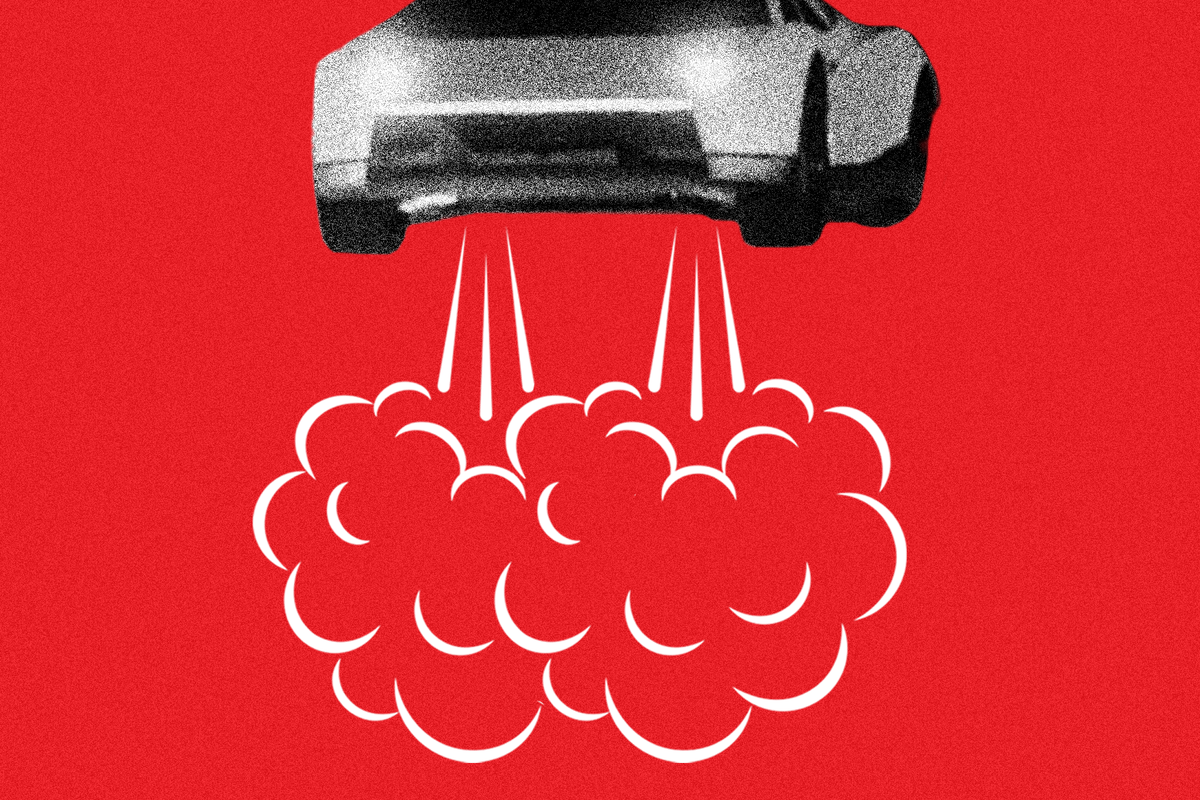
马斯克周四晚间在得克萨斯州沃科附近SpaceX火箭测试设施进行了一场戏剧化演示,展示了一款新的“飞行”特斯拉Roadster原型。汽车倒挂在弯曲轨道上,随后利用与SpaceX合作设计的空气动力推进器完成了空中特技——包括以伊维尔·克尼维尔风格跳过一辆特斯拉半挂车。尽管马斯克的举止略显笨拙,但在所谓的情境下,这反而显得像是书呆子的魅力,演示仍然令人印象深刻。
Musk revealed, in a dramatic demonstration on Thursday night at SpaceX’s rocket-testing facility near Waco, Texas, a new “flying” Tesla Roadster prototype. The car hung upside down on a curved track, then performed aerial stunts—including jumping over a Tesla semi, Evel Knievel–style—using air-powered thrusters designed in collaboration with SpaceX. The demo was impressive despite Musk’s awkward manner, which in the context of a supposed came off as nerdy charm.
展示汽车后,马斯克引用了他前PayPal合作伙伴彼得·蒂尔的一句话:“我们想要飞行汽车,结果却只得到了140个字符。”这句话出自蒂尔创办的风险投资公司Founders Fund在2011年发表的《宣言》,旨在指责科技行业缺乏雄心壮志。与其解决重大而重要的挑战,世界的智慧和金钱反而被投入到诸如One(注:此处原文疑似有误,可能指某社交网络初创公司)这样的小打小闹的社交互联网初创企业。
After revealing the car, Musk paraphrased a quote from Peter Thiel, his former PayPal partner: “We wanted flying cars, instead we got 140 characters.”The line, which was part of a 2011 “manifesto” published by Thiel’s venture-capital firm Founders Fund, was intended to indict the feeble ambition of the technology industry. Instead of solving big, important challenges, the world’s smarts—and money—had been devoted to small-potatoes social-internet start-ups such as One obvious oddity of the line—which has since been removed from the manifesto—is that Founders Fund’s most important investment at the time was Facebook, a social-network platform.
该句子的一个明显矛盾之处——该句后来已从宣言中删除——在于,当时Founders Fund最重要的投资正是Facebook,一个社交网络平台。另一个问题是,是否真的有人真正想要一辆飞行汽车。这种雄心或许从未代表过真实的梦想。就像喷气背包一样,飞行汽车不仅代表未来,更代表通过技术征服实现个人自由的理念。
But another is the idea that anyone actually wanted a flying car for real. That ambition may never have represented an actual dream. Like a jet pack, a flying car represents not just the future but the idea of individual freedom delivered through technological conquest.
按字面意思理解,飞行汽车并不是一个令人印象深刻的梦想——或者说,自从莱特兄弟或多或少实现它以来,它就不再是这样了。汽车一直依靠马达在地面上滚动行驶。最早的实用飞机也是先滑行再起飞(希望能平安着陆)。从某种意义上说,飞机只不过是装上了翅膀的汽车。
Taken at face value, a flying car is not an impressive dream—or at least it hasn’t been since the Wright brothers more or less attained it. Automobiles have always moved on the ground by rolling via motor. The earliest practical airplanes also rolled until they flew (and hopefully landed again). An airplane is, in a way, merely a car with wings.
1917年,格伦·柯蒂斯(Glenn Curtiss)制造出了一款名为“Curtiss Autoplane”的奇特交通工具:这其实是一辆装有可拆卸机翼和螺旋桨的汽车。尽管这款车从未真正实现过有效的飞行,但这个概念却一直被人们保留了下来。沃尔多·沃特曼(Waldo Waterman)在1937年设计的“Arrowbile”在飞行性能上更为出色,不过它并未实现商业化生产。
In 1917, Glenn Curtiss built literally that: His Curtiss Autoplane was an automobile with detachable wings and a propeller. It never really flew effectively, but the idea persisted. Waldo Waterman’s 1937 Arrowbile was more successful at flying, though it wasn’t commercially viable.
在接下来的几十年里,越来越多真正意义上的“飞行汽车”概念被付诸实践。其中最著名的当属“Taylor Aerocar”——这款汽车在1956年获得了联邦政府的认证,但最终并未投入大规模生产。
Many more actual realizations of the supposed dream of flying cars appeared in the ensuing decades. The most famous might be the Taylor Aerocar, which was certified by the federal government in 1956 but was never mass-produced.
大约在同一时期,一些面向未来的科普杂志经常描绘人们对于个人飞行交通工具的幻想。那时,汽车已经在美国成为主流交通工具,彻底取代了火车和有轨电车等公共交通方式。汽车象征着个人自主性的延伸——人们可以轻松、独立地前往任何地方。
Around that time, future-oriented science-factual magazines such as frequently rehearsed the vision of the personal aircraft. By then, cars were ordinary and mainstream in America, having displaced collective transportation such as trains and streetcars. The automobile had become a more abstract kind of vehicle, one that embraced and extended personal autonomy through the power to move, without effort, anywhere else—and to do it alone.
然而,有一个因素始终限制着汽车实现这种自由的能力:那就是道路。汽车离不开道路的支撑;尽管美国拥有广阔的国土,但似乎永远都不够用。解决这个问题的最佳途径就是通过空中飞行。正如埃米特·布朗(Emmett Brown)在电影《回到未来》中对马蒂·麦克弗莱(Marty McFly)所说:“我们前往的地方,根本不需要道路。”
But one thing still cramped the automobile’s capacity to deliver that freedom in full: roads. Cars needed them. The open road, of which America had a seemingly endless frontier, somehow was never enough. The best way around those roads was through the air above them; as Emmett Brown told Marty McFly inside one of fiction’s most memorable flying cars, “Roads? Where we’re going, we don’t need roads.”
无论以多快的速度行驶,地面带来的束缚始终令人感到压抑。1923年,雨果·格恩斯巴克(Hugo Gernsback)——这位被誉为科幻小说之父的人——设想了一种利用陀螺原理驱动的飞行汽车,旨在帮助人们摆脱纽约市日益拥堵的道路带来的困扰。几年后的1927年,弗里茨·朗(Fritz Lang)的电影中出现了大量小型飞行器,它们开始在城市上空“占领”天空。
The stifling oppression of the ground, traversed at any speed, was also an old vexation. In 1923, Hugo Gernsback—sometimes called the father of science fiction thanks to his founding , an early magazine devoted to the genre—imagined a gyroscopic Helicar that would release travelers from the tyranny of New York City’s newly car-congested streets. A few years later, in 1927, Fritz Lang’s film colonized the city’s airspace with small flying vehicles.
到了1962年,儿童动画将这些早期概念与当时的流行文化相结合,将飞行汽车描绘成一种无处不在的通勤工具。
By 1962, the children’s cartoon had fused those precursors with mid-century populism, making the flying car a ubiquitous commuter vehicle.
数十年来,人们曾多次尝试设计、制造和推广飞行汽车,但均未成功。1973年,亨利·斯莫林斯基将塞斯纳机翼安装在福特Pinto上,制造出AVE Mizar;在一次失败的试飞中,斯莫林斯基因此丧生。从20世纪60年代起,直到公司在2010年代中期陷入休眠,保罗·莫勒一直在尝试开发“天空汽车”(Skycar),这是一种能够垂直起降的个人飞机。
Over the decades, many attempts to engineer, manufacture, and market a flying car have been undertaken, though none has succeeded. In 1973, Henry Smolinski created the AVE Mizar by attaching Cessna wings to a Ford Pinto; it killed Smolinski during a failed test flight. From the 1960s until the company went dormant in the mid-2010s, Paul Moller made numerous attempts to develop the Skycar, a personal airplane that took off and landed vertically.
大约在那个时期,Terrafugia开始承诺推出一款名为“过渡”(Transition)的飞行汽车,这款车一直被宣传为“只差几年就能问世”——直到公司于2021年关闭。特斯拉Roadster并非与其真实或虚构的前辈同类的飞行汽车。该车的空气风扇系统看来首要且主要的设计目的,是为了让车轮在地面上获得更好的抓地力,这也是它能够如此之快的原因之一——在发布会上,它从零加速到每小时60英里用时不到一秒。
Around that time, Terrafugia began promising a flying car called the Transition, which remained only a few years away for years—until the company shut down in 2021. “We enter production in 2028,” Musk said of the Tesla Roadster in this week’s Texas demo, before adding, “Actually.”By all appearances, the Roadster is not a flying car of the same sort as its real and fictional precursors.
(安装在车尾的火箭推进器也起到了一定作用。)这辆车实际上并不是在飞行,而是在进行诸如滚翻和垂直跳跃之类的空中特技动作。
The vehicle’s air-fan system seems first and principally designed to give the car’s wheels better traction on the ground, which is part of why it can go so fast—it went from zero to 60 miles per hour in less than a second during the unveiling. (Rocket thrusters attached to the back of the thing also help.) The car does not fly so much as it performs aerial acrobatics such as barrel rolls and standing jumps.
这些表现确实令人惊叹。该车确实看起来像是在飞行,哪怕只是一瞬间,就像一个特技演员那样。它是否能够或被设计用来像旅行者或通勤者那样飞行,目前尚不清楚。看着Roadster在表演——无人驾驶,以确保演示不会“杀死任何人”,正如马斯克所说——我脑中浮现出富有的汽车爱好者们在郊区街区因失败的跳跃和旋转而制造混乱的场景,而不是上班族靠它往返通勤。
Those deeds were impressive as heck. The car certainly appeared to fly, if only for a moment, in the manner of a daredevil. Whether or not it can or is intended to fly in the manner of a traveler or commuter is not yet clear. Watching the Roadster do its thing—unpiloted, to make sure the demonstration didn’t “kill anyone,” as Musk put it—I imagined wealthy gearheads wreaking havoc via ill-fated jumps and spins on suburban blocks instead of salarymen conveying themselves to work and back.
数十年来屡次失败的汽车-飞机混合体让人感到沮丧,或许还因马斯克的可疑意图而疲惫不堪,一些对特斯拉演示的报道恰当地指出,任何离开道路进入空域的车辆都将面临重大的监管障碍。但官僚主义的繁文缛节并不是飞车梦想未能实现的主要原因。
Subdued by decades of failed automobile-airplane hybrids, and perhaps exhausted by Musk’s dubious intentions, some coverage of the Tesla demo has observed, rightly, that substantial regulatory hurdles await any vehicle that leaves the road and enters airspace. But bureaucratic red tape isn’t the main reason the flying-car dream hasn’t come to pass.
相反,这是因为这个梦想作为幻想比作为现实更合适。当城市现代主义开始让人感到压抑时,其上空的天空提供了新自由的可能。大陆被定居之后,穿越其上的道路变成了新的牢笼,而空域可能提供逃脱的出路。一旦汽车带来的个人自由变得普遍,道路被成千上万在鼠赛中奔忙的害虫堵塞,头顶的蓝天看起来就像自由。
Rather, it’s because the dream works better as fantasy than reality. When urban modernism began to feel cramped, the skies rising above it offered the possibility of new freedom. After the continent was settled, the roads that traversed it became new prisons from which airspace might allow escape. Once the individual freedom of the automobile became universal, and the roads clogged with thousands of varmints in the rat race, the blue sky above looked like liberty.
乔治·杰特森是一颗隐喻机器中的齿轮,他通过飞往工作而不受干扰地升华,摆脱微不足道的境地,在那里他沉醉于按下按钮制造实际机器齿轮的工作毫无意义。即便是蒂尔对飞车的提及也具有象征意义,它是一种值得做梦的梦想的范例,而非值得醒来去实现的实际梦想。
George Jetson is a cog in the proverbial machine who rises above insignificance by flying to work unfazed, where he revels in the meaninglessness of his job pressing a button to make actual machine cogs. Even Thiel’s mention of the flying car was symbolic, a paradigmatic example of the kind of dream worth dreaming, not an actual one worth waking up to.
尽管特斯拉Roadster确实具备令人惊叹的能力——至少作为一次性演示而言——它在技术层面上实现了一个世纪以来的飞车梦想:作为一种供特技驾驶员使用的车辆,而非供飞行汽车驾驶员使用的车辆。也许这辆车真正实现的梦想不是你的或我的,而是埃隆·马斯克的:宣称自己交付了他前辈们一个世纪都未能做到的东西。
Despite the Tesla Roadster’s truly spectacular capabilities, at least as a one-off demo, it fulfills the century-old flying-car ambition on a technicality—as a vehicle for a trick driver rather than a motorist aviator. Perhaps the dream this car truly realizes is not yours or mine, but Elon Musk’s: to claim to have delivered what a century of his forebears could not.