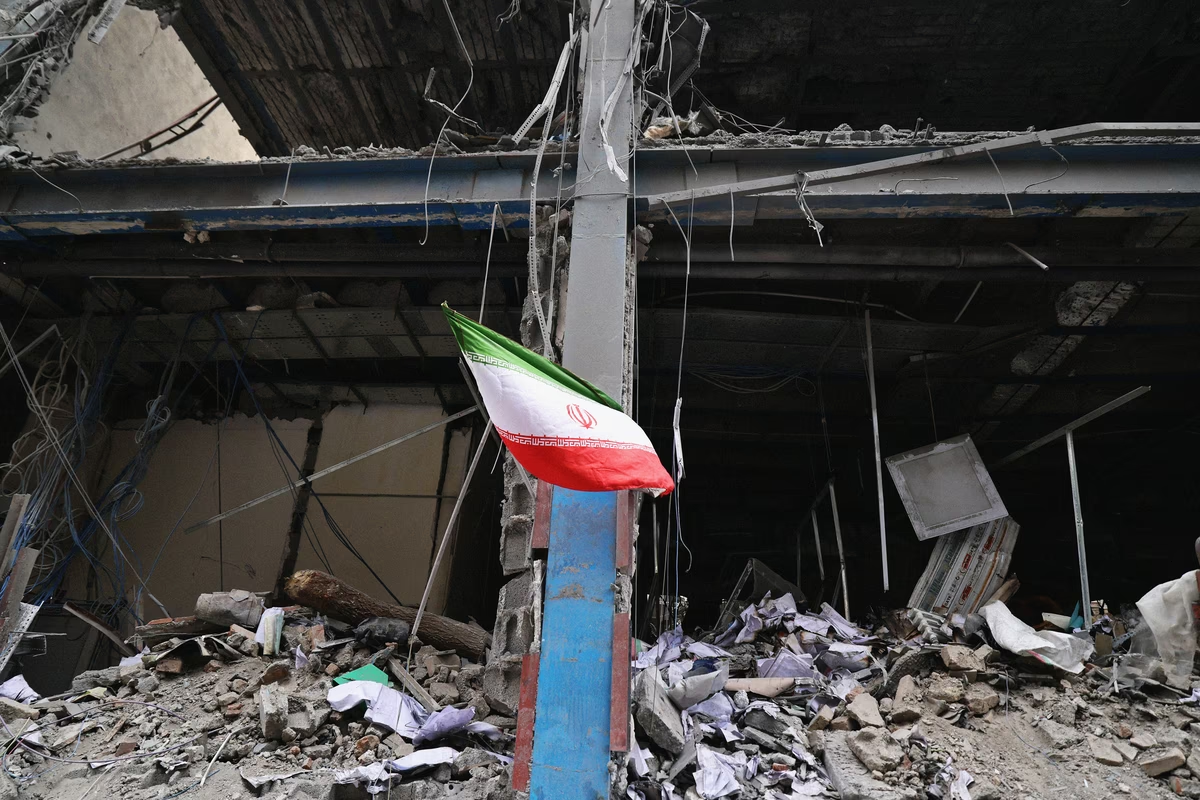
伊斯兰共和国为伊朗人做了什么?在其统治下,公民经历了数十年的经济衰退、社会政治压迫和国际孤立。如今,该国正陷入一场无止境的战争。几乎在所有方面,伊朗人的生活状况都比20年前更糟。
What has the Islamic Republic done for Iranians? Under its rule, citizens have suffered decades of economic decline, sociopolitical repression, and international isolation. Now the country is engaged in an open-ended war. In almost every way, Iranians are doing much worse than they were 20 years ago.
甚至连该政权的宣传者都无法否认这些事实。因此,他们中的许多人坚持认为,伊斯兰共和国的失败之所以可以被证明是合理的,是因为其对美国帝国主义的坚定抵抗。伊朗几乎所有的经济苦难,其支持者们说,都可以解释为这种英雄姿态的代价,而西方则以制裁作出回应,这些制裁已经摧毁了伊朗的生活水平。
Not even the regime’s propagandists can deny these realities. Many of them therefore insist that the Islamic Republic’s failures are justified by its unbending resistance to American imperialism. Nearly all of Iran’s economic suffering, defenders say, can be explained as the price of this heroic stance, to which the West has responded with sanctions that have crushed Iran’s standard of living.
但伊斯兰共和国与美国权力之间的关系,以及这种关系如何既有助于也未能促进伊朗主权事业的故事,其实更为复杂。
But the story of the Islamic Republic’s relationship to American power, and of how that relationship has and has not served the cause of Iranian sovereignty, is more complicated.
伊朗的前革命统治者、穆罕默德·礼萨·巴列维国王是一位反共的独裁者,他重视与美国的关系。他的继任者们谴责他是美国的傀儡,并声称已经使伊朗摆脱了对“大撒旦”的奴性依赖。伊斯兰共和国早期以“不东不西”的口号表明其独立于苏联和美国的立场,这一口号至今仍装饰着德黑兰外交部总部大楼的立面。新政权的根本反帝国主义也承诺伊朗将为“世界被压迫者”而战,并号召抵抗西方的文化同化——一位革命知识分子将这种命运谴责为“西化毒害”。
Iran’s prerevolutionary ruler, Shah Mohammad Reza Pahlavi, was an anti-communist autocrat who prized ties with the United States. His successors condemned him as an American stooge and claimed to have freed Iran from its slavish dependence on the “Great Satan.”In its early days, the Islamic Republic signaled independence from both the Soviet Union and the United States with the slogan “Neither East nor West,” which still adorns the facade of the Ministry of Foreign Affairs headquarters in Tehran. The foundational anti-imperialism of the new regime was also a promise that Iran would fight for the “oppressed of the world,” as well as a call to resist cultural absorption by the West—a fate one revolutionary intellectual decried as “Westoxification.”
伊斯兰共和国在这些方面的反帝国主义都以失败告终,尤其是与君主制相比。巴列维是美国的盟友,他的王位部分归功于1953年在中央情报局的协助下发动的政变,该政变使他得以取代当时深受民众欢迎的首相。但他通过在伊朗利益所需时巧妙地在美国及其对手——苏联和东欧集团之间周旋,维持了伊朗的独立。苏联曾帮助伊朗建设钢铁厂,并欢迎这位罕见前往共产主义莫斯科进行国事访问的君主。
The Islamic Republic has failed in its anti-imperialism by all of these measures, especially as compared with the monarchy. Pahlavi was an American ally who owed his throne in part to a CIA-abetted coup that elevated him over a popular prime minister in 1953. But he sustained Iran’s independence by skillfully playing the United States and its rivals, the Soviet Union and the Eastern Bloc, off of each other when doing so suited Iranian interests. The Soviets helped build Iran’s ironworks and welcomed the shah as a rare royal to pay a state visit to Communist Moscow.
巴列维的口号本来完全可以是“东西皆取”。巴列维在某些冷战斗争中支持美国,但当他希望从华盛顿获得更好条件时,也曾威胁要与莫斯科签署安全协议,并且他提出调解中东和越南的冲突。在大多数方面,巴列维的外交政策更接近不结盟运动国家的立场,而非冷战两大阵营中的任何一方。
Pahlavi’s slogan could well have been “Both East and West.”The shah backed the United States in some Cold War battles, but he also threatened to sign security deals with Moscow when he wanted better terms from Washington, and he offered to mediate the conflicts in the Middle East and in Vietnam. In most ways, Pahlavi’s foreign policy was closer to that of the Non-Aligned Movement countries than to that of either Cold War bloc.
在20世纪70年代,研究伊朗外交政策的学者们将德黑兰描述为奉行“事实上的不结盟”。到巴列维王朝统治结束时,伊朗拥有相当大的国际影响力,并受到两个超级大国的尊重,不仅作为一个主权国家,而且作为一个地区大国。甚至可以说,巴列维是一位成功的反帝国主义者——不是指他在大国眼中插了一根刺,而是指他有效地捍卫了伊朗的主权利益,而不是被迫向其合作对象屈服。
In the ’70s, scholars of Iranian foreign policy described Tehran as following “defacto non-alignment.”By the end of the shah’s rule, Iran had considerable international influence and was respected by both superpowers, not only as a sovereign country, but also as a regional power. You might even say that Pahlavi was a successful anti-imperialist—not in the sense of having stuck a finger in the eye of the great powers, but in the sense of having effectively secured Iran’s sovereign interests rather than being forced to capitulate to those he cooperated with.
推翻巴列维的革命者指责他对华盛顿卑躬屈膝。他们指出,1953年巩固他权力的政变阻止了伊朗石油资源的国有化。但事实上,君主制在1973年已经恢复了伊朗对其石油工业的主权。他们还指出,1964年伊朗与美国达成的、经伊朗议会批准的协议,赋予了美国军事人员免受当地起诉的豁免权。但此类协议在世界各地很常见,几乎不能代表伊朗的“屈服”,正如其批评者所声称的那样。无论如何,巴列维在与华盛顿的关系中绝非被动,他一直在努力改善自己的处境。
The revolutionaries who toppled the shah accused him of servility to Washington. They pointed to the coup that had cemented his power in 1953 and halted the nationalization of Iran’s oil resources. But in fact the monarchy had restored Iran’s sovereignty over its oil industry in 1973. They pointed to a 1964 agreement with the United States, ratified by the Iranian Parliament, that gave U.S. military personnel immunity from local prosecution. But such agreements were common around the world and hardly represented Iran’s “capitulation,” as its critics claimed. The shah was in any case far from passive in his relationship with Washington and worked to improve his position.
君主制的外交政策属于延伸伊朗独立性的悠久传统。早在1979年之前,伊朗就已经花费数个世纪抵御英俄帝国的野心。维护国家主权是伊朗历代政治家的工作,就像全球南方其他国家的同行一样。但并非每届伊朗政府在这方面都同样成功。1979年上台的政府——伊斯兰共和国——在这方面表现得显然很糟糕。
The monarchy’s foreign policy belonged to a long tradition of efforts to extend Iran’s independence. Well before 1979, Iran had spent centuries fending off the designs of the British and Russian empires. Standing up for the country’s sovereignty was the work of generations of Iranian statesmen, just as it was for their counterparts in other countries of the global South. But not every Iranian government has been equally successful at it. The one that came to power in 1979—the Islamic Republic—has been manifestly terrible.
伊斯兰共和国并未将经典的反帝国主义目标置于优先位置。其中之一是提升后殖民国家的经济地位,正如联合国大会于1974年通过的《新国际经济秩序》所规定的(伊朗当时也投了赞成票)。自1979年以来,伊朗政府很少将此类目标置于优先位置。据报道,前最高领袖阿里·哈梅内伊曾自夸他并不关心人民的福祉,只关心他们有多虔诚。
The Islamic Republic has not prioritized classic anti-imperialist goals. Among these is improving the economic position of postcolonial states, as set forth in the New International Economic Order that the United Nations General Assembly adopted in 1974 (and that Iran voted for). The Iranian government since 1979 has rarely prioritized such goals. The former supreme leader, Ayatollah Ali Khamenei, reportedly boasted that he didn’t care about his people’s welfare, just about how religious they were. (His office has denied this.)
(他的办公室否认了这一说法。)因此,他更倾向于与西方对抗,而非关注人民的需求——即便是最基本的需求。例如,2021年,他拒绝从美国进口新冠疫苗,这一决定很可能导致数千名伊朗人死亡。
He thus preferred to fight the West rather than attend to his people’s needs—even basic ones, as, for example, in 2021, when he refused to import COVID-19 vaccines from the United States, a decision that likely cost thousands of Iranian lives.
伊斯兰共和国一直在针对美国及其他西方国家开展意识形态斗争,原因不仅在于它们是帝国主义国家,还在于,根据伊朗伊斯兰主义标准,它们是放荡且道德堕落的。伊朗的统治者将这些反对意见框定为对文化帝国主义的抵制,但在实践中,这已成为国内镇压的借口。该政权严苛、残酷的伊斯兰版本更多是对伊朗传统创造力的压制,而非对伊朗本土文化的庆祝。
The Islamic Republic has pursued an ideological campaign against the United States and other Western countries, not just for being imperialist, but also for being, according to Iran’s Islamist standards, licentious and morally depraved. Iran’s rulers frame these objections as opposition to cultural imperialism, but in practice they have become a pretext for domestic repression. The regime’s austere, draconian version of Islam is less a celebration of Iran’s endogenous culture than a suppression of its traditional creativity.
以反帝国主义之名,伊朗在没有使其自身或他人处境更公平的情况下,不切实际地攻击了国际秩序。事实上,伊朗的行动使该国沦为外国势力的任人宰割。伊斯兰共和国以此能够巩固其主权、展示其独立于帝国命令为由,承诺追求核计划。然而,其核不妥协招致了美国、欧洲以及得到俄罗斯和中国支持的联合国安理会的制裁。
In the name of anti-imperialism, Iran has quixotically attacked the international order without making it any fairer for itself or others. In fact, Iran’s actions have put the country at the mercy of foreign powers. The Islamic Republic committed itself to the pursuit of a nuclear program, on the grounds that this would buttress its sovereignty and demonstrate its independence from imperial diktats. Instead, its nuclear intransigence incurred sanctions from the United States and Europe as well as the UN Security Council, with support from Russia and China.
伊朗在恐怖主义和国际犯罪(包括走私毒品和制造假币)方面的参与,使其成为仅有的三个国家之一——另外两个是缅甸和朝鲜——进入总部位于巴黎的反洗钱组织金融行动特别工作组(Financial Action Task Force)的黑名单。这些措施干扰了伊朗收取能源出口付款的能力,即使来自友好国家,如邻国伊拉克。制裁已严重削弱伊朗在贸易中的地位,以至于它不得不以折扣价向中国出售石油。
Iran’s involvement in terrorism and international crime (including drug running and counterfeiting) has made it one of only three countries, alongside Myanmar and North Korea, on the blacklist of the Paris-based anti-money-laundering outfit Financial Action Task Force. These measures have interfered with Iran’s ability to collect payments for its energy exports, even from friendly countries, such as neighboring Iraq. Sanctions have so weakened Iran’s position in trade that it is selling its oil at a discount to China.
该政权的支持者将会辩称该国是外国施加的制裁的受害者。但制裁是德黑兰的选择所致,这些选择更看重拒绝和挑衅,而非实际提升伊朗在国际秩序中的地位,以应对可能试图主导它的大国。世界上充斥着更好策略的例子。许多策略涉及在竞争的超级大国之间保持关系,以此作为对任何单一超级大国统治的对冲。像印度这样的不结盟国家,作为反对殖民统治的光荣传统的继承人,一直在走这条道路。
The regime’s proponents will argue that the country is a victim of foreign-imposed sanctions. But the sanctions are the result of Tehran’s choices, which have prized refusal and defiance over actually improving Iran’s stake in the international order vis-à-vis the great powers that might seek to dominate it. The world abounds in examples of better strategies. Many of those involve sustaining ties with competing superpowers as a hedge against domination by any one of them. Nonaligned countries such as India, heir to a proud tradition of opposing colonial dominance, have pursued this course.
土耳其仍然是北约的关键盟友,但它设法在保持与俄罗斯和美国关系的同时,在乌克兰问题上发挥独立作用。沙特阿拉伯和阿拉伯联合酋长国在许多问题上与西方保持一致,同时培育了与中国的重要贸易联系。即使是阿根廷的右翼总统也出于经济原因淡化了其反华言论。
Turkey remains a key NATO ally, but it has managed to play an independent role in Ukraine while maintaining relations with Russia and the United States. Saudi Arabia and the United Arab Emirates have aligned with the West on many issues while nurturing significant trade ties with China. Even Argentina’s right-wing president has toned down his anti-China rhetoric for economic reasons.
相比之下,伊朗的外交政策仍然意识形态化定义,该国正遭受政治学家莫希丁·梅萨比所称的“战略孤独”。起初,革命政权既拒绝东方也拒绝西方。但近年来,它试图接近北京,却发现中国将沙特阿拉伯、阿拉伯联合酋长国乃至以色列等西方盟友视为更好的投资前景。直至今年,伊朗最近的伙伴一直是委内瑞拉的社会主义政府——但那是一种出于绝望的联盟,源于两国政权的孤立。随后,委内瑞拉强人尼古拉斯·马杜罗被美国推翻。
In contrast, Iran’s foreign policy remains ideologically defined, and the country suffers from what the political scientist Mohiaddin Mesbahi has called “strategic loneliness.”At the outset, the revolutionary regime rejected both East and West. But in recent years, it has tried to draw closer to Beijing, only to discover that China sees Western allies, such as Saudi Arabia, the United Arab Emirates, and even Israel, as better investment prospects. Until this year, Iran’s closest partner was the socialist government of Venezuela—but that was an alliance of desperation, born of both regimes’ isolation. Then the Venezuelan strongman Nicolás Maduro was overthrown by the United States.
伊朗未能为自己争取到有效的主权,也未能兑现其在全球减少帝国主义统治的承诺。它没有帮助“被压迫者”,反而成为其他国家主权的祸害。伊朗抛弃了其在外国冲突中传统的中立政策,哈梅内伊坚定支持俄罗斯入侵乌克兰,并向莫斯科提供伊朗制造的无人机。伊朗还通过资助和武装伊拉克、黎巴嫩、也门、加沙和叙利亚的民兵组织,并在多场阿拉伯内战中进行干预,在其自身地区扮演了帝国主义的角色。
Iran has failed to secure effective sovereignty for itself and to deliver on its promise of reducing imperial dominance globally. Instead of helping the “oppressed,” it has become a scourge to the sovereignty of other countries. Throwing away Iran’s traditional policy of neutrality in foreign conflicts, Khamenei robustly backed Russia’s invasion of Ukraine and equipped Moscow with Iranian drones. Iran has also played an imperialist role in its own region by funding and arming militias in Iraq, Lebanon, Yemen, Gaza, and Syria, and by intervening in several Arab civil wars.
伊斯兰共和国仍声称在原则上反对帝国主义,现在的理由是它经受住了美国和以色列的进攻而未屈服。但这一说法对伊朗人来说站不住脚,因为他们从这场伟大的抵抗中未获得任何红利,如今还必须忍受一场看不到尽头的毁灭性战争。这 hardly 能算是伊朗主权的胜利。
The Islamic Republic still claims to stand in principled opposition to imperialism, now on the grounds that it has withstood an American and Israeli assault without capitulating. But the claim rings hollow for Iranians, who have reaped no dividends from this great resistance and now must endure a devastating war with no end in sight. That’s hardly a win for Iranian sovereignty.