48岁的哈萨纳特·阿尔-拉希德(Hasanat al-Rashid)患糖尿病已有15年,苏丹军队与快速支援部队准军事组织之间持续三年半的内战恶化了她的处境。寻找她所需的治疗已成为每日的挣扎。
Hasanat al-Rashid, 48, has lived with diabetes for 15 years, and the three-and-a-half-year civil war between Sudan’s military and the Rapid Support Forces paramilitary group has worsened her situation. Finding the treatment she needs has become a daily struggle.
2023年4月战争爆发时,她被迫向南逃离,离开她在喀土穆北部哈吉尤西夫(Haj Yousif)的家,前往喀土穆州的乌姆多万(Umm Daw Ban)。
When the war broke out in April 2023, she was forced to flee south from her home in Haj Yousif in Khartoum North to Umm Daw Ban in Khartoum State.
在她流离失所期间,她曾连续数日无药可用,并被迫食用不适合她病情的食物,例如传统苏丹粥阿西达(asida)。
During her displacement, she went for days without medication and was forced to eat foods unsuitable for her condition, such as asida a traditional Sudanese porridge.
由于出现糖尿病并发症(包括严重感染),她的脚接受过两次手术。
She underwent operations on her foot twice when she developed complications of diabetes, including a severe infection.
她辗转于喀土穆以南杰济拉州的各大医院,在鲁法阿(Rufaa)、瓦德麦达尼(Wad Madani)和哈萨希萨(Al-Hasahisa)寻求治疗。当战斗于2023年12月蔓延至这些地区时,她再次逃亡,抵达了受战争影响较小的红海城市苏丹港。
She moved between hospitals in Gezira State south of Khartoum, seeking treatment in Rufaa, Wad Madani and Al-Hasahisa. When fighting spread to these areas in December 2023, she fled again, arriving in Port Sudan, a city on the Red Sea that was less affected by the war.
她的病情恶化到如今不得不每天使用胰岛素的地步,随之而来的是增加的开销,这迫使苏丹的糖尿病患者在药物与食物等其他必需品之间做出抉择。
Her condition has worsened to the point that she now has to use insulin every day and with this comes added costs, something that forces diabetes sufferers in Sudan to choose between medicine and other essentials, such as food.
她对半岛电视台表示:“剂量会根据我的血糖是高还是低而有所不同。”
“The doses vary depending on whether my blood sugar is high or low,” she told Al Jazeera.
根据联合国开发计划署的数据,这场战争已将苏丹的收入水平拉回到20世纪90年代的水平。这意味着哈萨纳特和其他糖尿病患者正艰难负担治疗该病所需的药物。
The war has pushed income levels in Sudan back to those last seen in the 1990s, according to the United Nations Development Programme. This means Hasanat and other diabetes sufferers are struggling to afford the medicine they need to treat the condition.
哈萨纳特的医生建议她使用胰岛素笔——一种用于在皮下注射胰岛素的装置。她一个月需要一到两支这种装置,但7万苏丹镑(合8美元)的费用超出了她能够一次性支付的能力,因此她选择购买一瓶胰岛素。
Hasanat’s doctor recommended she use an insulin pen, a device used to inject insulin under the skin. She would need one or two of the devices a month, but the cost at 70,000 Sudanese pounds ($8) is more than she can afford up front, so she opts for a vial of insulin.
这比17,000苏丹镑(1.80美元)更便宜,但每天购买冰块以保持胰岛素低温会产生额外费用。她每月在冰块上的花费为180,000苏丹镑(20美元),用于保存药物。但她能够将这些费用分摊到整个月,因此即使总体成本高于胰岛素笔,这些胰岛素瓶仍是她唯一可行的选择。
This is cheaper at 17,000 Sudanese pounds ($1.80), but there is the additional cost of buying ice every day to keep the insulin cool. She spends 180,000 pounds ($20) a month on ice to preserve the medicine. But she is able to spread these costs out through the month, making the vials her only viable option even if the overall costs are higher than an insulin pen.
“它可能能用一个月或更短时间,但挑战在于我没有冰箱,所以我很难正确储存胰岛素,”她说。她还需要定期服用止痛药和维生素,以管理糖尿病引起的并发症。
“It may last a month or less, but the challenge is that I don’t have a refrigerator, so I struggle to store the insulin properly,” she said. She also needs painkillers and vitamins on a regular basis to manage complications caused by the diabetes.
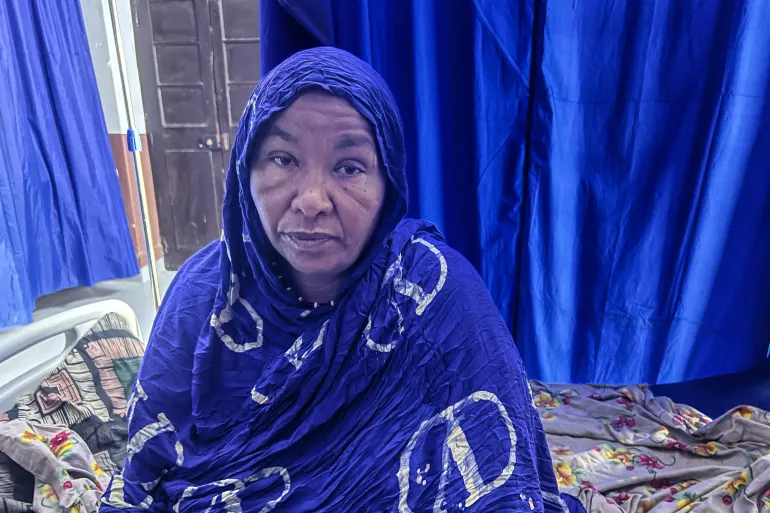
哈萨纳特·阿尔-拉希德在苏丹内战期间一直难以找到治疗糖尿病的药物[法蒂玛·埃达姆/半岛电视台] 治疗费用上涨 75岁的法蒂玛·亚当是苏丹港口医院众多患者之一,她正努力负担管理高血压和甲状腺疾病所需的药物。
Hasanat al-Rashid has struggled to find the medicine to treat her diabetes during Sudan’s civil war [Fatima Edam/Al Jazeera] The rising cost of treatment Fatima Adam, 75, is among the patients at Port Sudan Hospital struggling to afford the medicines she needs to manage her hypertension and a thyroid condition.
她因高血压引起的并发症被送入医院,高血压已经开始影响她的心脏。她身体状况太差,无法亲自接受半岛电视台的采访,她的女儿艾莎描述了治疗费用上涨如何影响了她整个家庭。
She was admitted to the hospital with complications caused by high blood pressure, which has started to impact her heart. Too unwell to speak to Al Jazeera herself, her daughter, Aisha, described how the rising cost of treatment has affected her whole family.
战争爆发前,法蒂玛通过国家健康保险基金获得药物。她只需承担费用的四分之一,其余由基金承担。但战争爆发后经济崩溃,她所需的药物不再被该计划覆盖。
Before the war, Fatima received medicine through the National Health Insurance Fund. She paid a quarter of the cost while the fund covered the rest. But when the war started and the economy collapsed the medicines she needed were no longer covered by the scheme.
“我的母亲需要服用六种不同的药物,因为高血压已经影响了她的心脏,除了她的甲状腺药物。战争让情况变得更糟,因为这些药物的价格上涨了,”艾莎对半岛电视台说。
“My mother takes six different medicines because hypertension has affected her heart in addition to her thyroid medication. The war has made things harder because the prices of these medicines have gone up,” Aisha told Al Jazeera.
为法蒂玛的治疗买单、支持她和她女儿的责任落在了她儿子身上,他靠做零工为生。由于没有固定收入,他每天都去市场找工作,但有时一无所获地回家。
The responsibility for paying for Fatima’s treatment and supporting her and her daughter falls on her son, who works as a casual worker. With no fixed income, he goes to the market every day in search of work but sometimes returns home empty without any luck.
“有时,当我哥哥找到工作时,我们会买足一个月的药。其他时候,我们不得不买少量药物,断断续续地服用,”艾莎(Aisha)说。
“Sometimes, when my brother finds work, we buy enough medicine to last a month. Other times, we have to buy smaller quantities and take the medicines intermittently,” Aisha said.
几天前,她花了16万苏丹镑(约合17.80美元)为母亲买了一个月的药。对于一个收入依靠日薪的家庭来说,这是一笔不小的开销,但对治疗法蒂玛(Fatima)的病情至关重要。
She bought a month’s supply of her mother’s medication a few days ago for 160,000 Sudanese pounds ($17.80), a substantial expense for a family whose income depends on day labour but essential to treating Fatima’s condition. War damage The war has caused an estimated $500m in losses to medicine stocks, infrastructure and transport fleets, dealing a major blow to Sudan’s pharmaceutical supply system, the National Medical Supplies Fund told Al Jazeera.
战争破坏 国家医疗物资基金会(National Medical Supplies Fund)向半岛电视台表示,这场战争已给药品库存、基础设施和运输车队造成约5亿美元的损失,对苏丹的药品供应系统造成了沉重打击。
The National Medicines and Poisons Board estimated that only eight of the 30 pharmaceutical factories in Khartoum that shut down during the conflict have resumed operations despite the security situation in the capital recently improving.
国家医药和毒药委员会(National Medicines and Poisons Board)估计,尽管首都最近的安全局势有所改善,但喀土穆在冲突期间关闭的30家制药厂中,目前仅有8家恢复了运营。
This has increased Sudan’s reliance on imported medicines, but the subsequent depreciation of the Sudanese pound has driven up the costs of pharmaceutical procurement and production.
这增加了苏丹对进口药品的依赖,但随后苏丹镑的贬值推高了药品采购和生产成本。
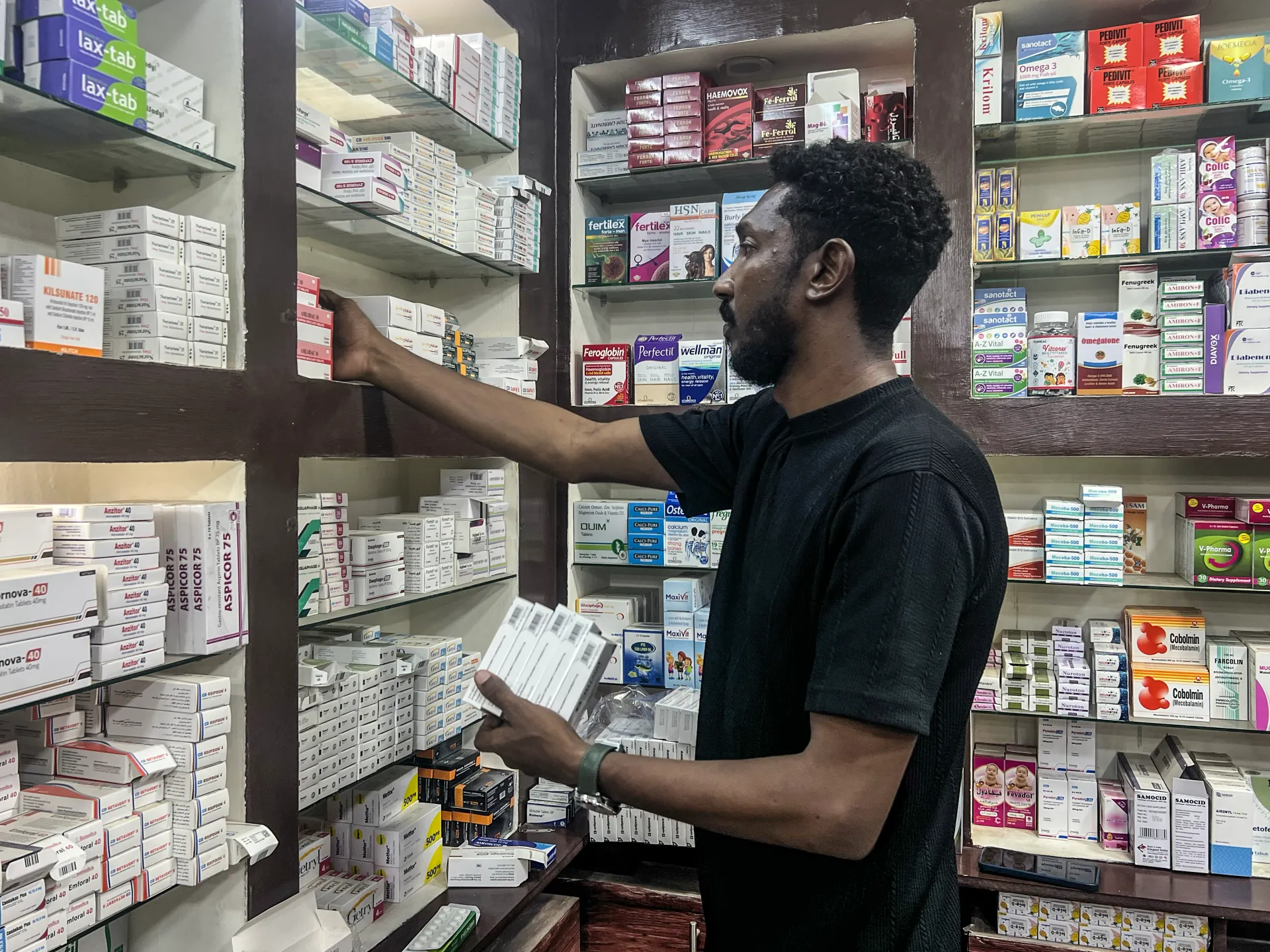
Hossam al-Naeem struggles to stock some medicines in his pharmacy due to the collapse of the Sudanese pound [Fatima Edam/Al Jazeera] Hossam al-Naeem, who works as a pharmacist in Port Sudan, said customers with diabetes and hypertension require regular painkillers and vitamins to help their overall condition.
由于苏丹镑崩溃,在苏丹港担任药剂师的萨萨姆·纳伊姆(Hossam al-Naeem)在药店里囤积某些药物时举步维艰(法蒂玛·埃达姆/半岛电视台)在苏丹港担任药剂师的萨萨姆·纳伊姆(Hossam al-Naeem)表示,患有糖尿病和高血压的顾客需要定期服用止痛药和维生素来维持整体健康状况。
“I feel deeply saddened when I see the expressions on some patients’ faces as they ask about the prices of medicines and discover how much they have increased because of the depreciation of the Sudanese pound,” Hossam told Al Jazeera.
“当我看到一些病人在询问药价、并发现由于苏丹镑贬值药价上涨了多少时,他们脸上的表情让我感到深深的难过,”萨萨姆告诉半岛电视台。
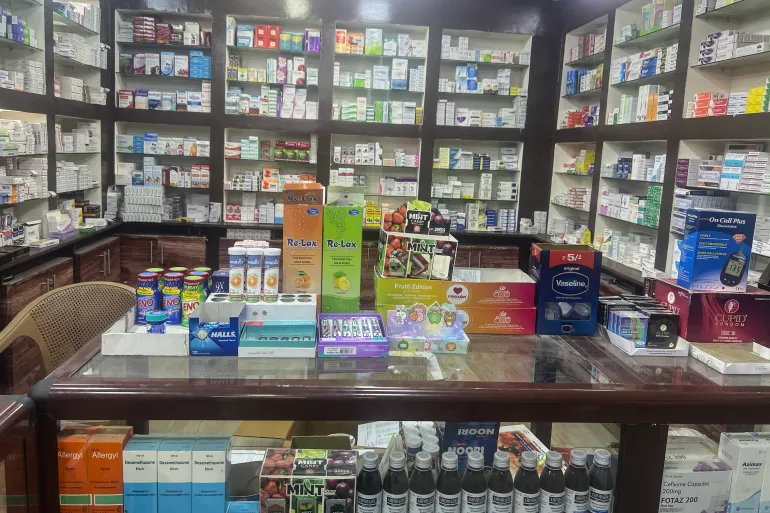
The currency’s collapse has created added challenges for pharmacists.
该国货币的崩溃给药剂师带来了更多挑战。战前,一美元大约兑换600苏丹镑。现在,黑市货币交易商的报价是一美元兑换9300苏丹镑,这意味着苏丹大多数商品的成本更高。
Before the war, a dollar traded for roughly 600 Sudanese pounds. Now black-market currency traders are quoting rates of 9,300 pounds to the dollar, meaning higher costs for most goods in Sudan. Sometimes Hossam incurs losses himself when he finds that the prices of drugs have risen sharply, and keeping essential medicines stocked is becoming difficult.
有时,当霍萨姆发现药品价格大幅上涨,维持基本药品库存变得困难时,他自己也会蒙受损失。
“I used to sell a strip of cold and flu tablets for 6,000 Sudanese pounds [70 cents]. But when I went to buy new stock, I found that the supplier’s price was also 6,000 pounds per strip. That means I made no profit, not even enough to cover the pharmacy’s operating costs,” he said.
“我以前卖一盒感冒药片要6000苏丹镑[70美分]。但当我去进货时,发现供应商的价格也是每盒6000苏丹镑。这意味着我没有赚到钱,甚至连药店的运营成本都覆盖不上,”他说。
The struggle to afford heart medication Huda Mahmoud, 58, lives in el-Obeid, the capital of North Kordofan state in south-central Sudan, where drone attacks and other violence remain a problem while the military is making advances towards the city.
负担不起心脏药物的困境胡达·马哈茂德,58岁,居住在苏丹中南部北科尔多凡州首府厄勒比德,那里无人机袭击和其他暴力仍然是一个问题,而军队正朝该城市推进。
Huda has lived with heart problems for more than 12 years and described the impacts of the war as being physical, financial and emotional.
胡达患有心脏病已超过12年,她描述战争的影响是身体上的、财务上的和情感上的。
“I take five different medicines. There was a time when they weren’t available, and I suffered a lot. Sometimes, I had to ask people in Wad Madani, Sennar or Port Sudan to send them to me,” she told Al Jazeera.
“我要吃五种不同的药。曾有一段时间,这些药买不到,我受了很多苦。有时候,我得让瓦德·迈达尼、塞纳尔或港口苏丹的人把药寄给我,”她告诉半岛电视台。“这些药非常贵,每月花费我30万苏丹镑[33.30美元]。服药已经成为一种精心管理的日常,每颗药丸都与一天中的特定时间挂钩。”
“The medicines were extremely expensive, costing me 300,000 Sudanese pounds [$33.30] a month.”Taking medication has become a carefully managed routine with each pill tied to a specific time of day.
“我已经离不开药了:这颗饭前吃,那颗饭后吃。如果我漏吃了一颗,我的心跳就会变得非常快,”她补充道。
“I’ve become tied to my pills: this one before eating, that one afterwards. If I forget one, my heart starts beating very fast,” she added.
三月份,胡达被迫从厄勒比德前往奥姆杜尔曼。在反复动荡的时期里,坚持她的严格治疗方案变得越来越困难。
In March, Huda was forced to travel from el-Obeid to Omdurman. Following her strict treatment regimen has become increasingly difficult during repeated periods of upheaval.
她现在已经返回厄勒比德家中,在那里她的常规药物每月售价为15.1万苏丹镑[16.80美元],她几乎负担得起。
She has now returned home to el-Obeid, where her regular medicine is priced at 151,000 Sudanese pounds ($16.80) a month, something she can barely afford.
她最大的恐惧是用完药或买不起下一批药,这会使她面临血栓的风险。
Her greatest fear is running out of medicine or being unable to afford her next supply, which would put her at risk of a blood clot.
“我害怕失去自理能力。我过去负责整个家庭,但现在我需要帮助。我觉得自己成了家里的负担,”她说。
“I’m afraid of becoming incapacitated. I used to be responsible for the whole household, but now I need help. I feel like I’ve become a burden on my family,” she said.