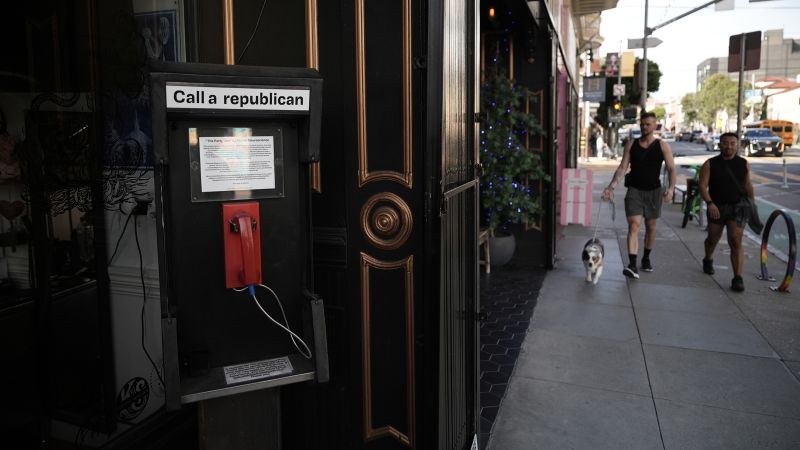
“喂?”旧金山的那头男声说道,语气中带着一丝不确定。“嗨,我是普里西拉!”普里西拉热情地回应道。“我从得克萨斯州阿比林打来电话,这是全国最保守的城镇!”
“Hello?” says the male voice from San Francisco, a hint of uncertainty in its tone. “Hi, I’m Priscilla!” responds Priscilla, with gusto. “Calling from Abilene, Texas, the most conservative town in the country!”
普里西拉和她的加利福尼亚对话伙伴尼克似乎并非天生的知己。他们相距1500英里,在政治立场上更是来自不同的世界。
Priscilla and Nick, her Californian conversation partner, wouldn’t appear to be natural confidants. They live 1,500 miles away, and politically, they’re from different universes.
但他们参加了一项社会实验,该实验有一个大胆而简单的前提。在一个记事以来从未感觉如此分裂的国家里,如果民主党人和共和党人只是……交谈,会发生什么?
But they have entered into a social experiment with a bold but simple premise. In a country that hasn’t felt more divided in living memory, what would happen if Democrats and Republicans just … talk?
在2026年的大部分时间里,两部免费公用电话——被战略性地放置在美国深蓝和深红的腹地——将这个国家极度两极分化的社区连接了起来。这项名为“党派热线”(Party Line)的项目由一家心理健康初创公司Matter Neuroscience运营,它为自由派和保守派提供了一条直接了解彼此生活的专线。
For much of 2026, two free payphones – strategically placed in deep blue and red pockets of America – have connected the country’s most polarized communities. Called the Party Line project and run by a mental health startup, Matter Neuroscience , the experiment has given liberals and conservatives a direct line into each other’s lives.
该项目的起因是该公司购买了两部便宜的公用电话,进行了修复,将它们互相连接,并放置在两个极化城市:旧金山,那里有五分之四的人在2024年总统大选中投票给了卡玛拉·哈里斯;以及深红的阿比林,周边泰勒县74%的选民支持唐纳德·特朗普。
The project began when the company bought two cheap payphones, restored them, connected them to each other and placed them in two polarized cities: San Francisco, where four in five people voted for Kamala Harris in the 2024 presidential election; and deep-red Abilene, where 74% of voters in surrounding Taylor County supported Donald Trump.
当有人拿起其中一部电话时,另一部电话就会自动响起——在短短几分钟的时间里,两个完全的陌生人停下来倾听对方的心声。
When someone picked up one of the phones, it automatically rang the other — and for a few minutes at a time, two perfect strangers stopped to listen to the other side.
来电者们谈论他们的家庭,分享他们的抱负,并私语倾诉秘密,将他们生活的私密片段传递给一个他们可能永远不会见面的人。这数百段对话共同揭示了关于美国的一个令人惊讶的事实:这个国家比许多人想象的更加团结。
The callers talked about their families, shared their ambitions and whispered secrets, sending private snippets of their lives to a person they’ll likely never meet. Together, the hundreds of conversations reveal something surprising about America: The country is more united than many think.
每一场聊天都有两位幸福科学专家在倾听。他们与美国有线电视新闻网(CNN)分享了其中几段对话的音频——你可以在这篇报道中收听这些音频——他们希望自己的项目能够为建设一个更好的国家绘制蓝图。
And listening to every chat were two experts in the science of happiness. They shared audio of several of those conversations with CNN – you can listen to them throughout this story – and they hope their project can create a blueprint for a better country.
该项目的组织者在得克萨斯州阿比林设置了这部免费公用电话,旨在将致电者与旧金山的人们连接起来。 。
The project's organizers set up this free payphone in Abilene, Texas, to connect callers with people in San Francisco. Courtesy Matter Neuroscience
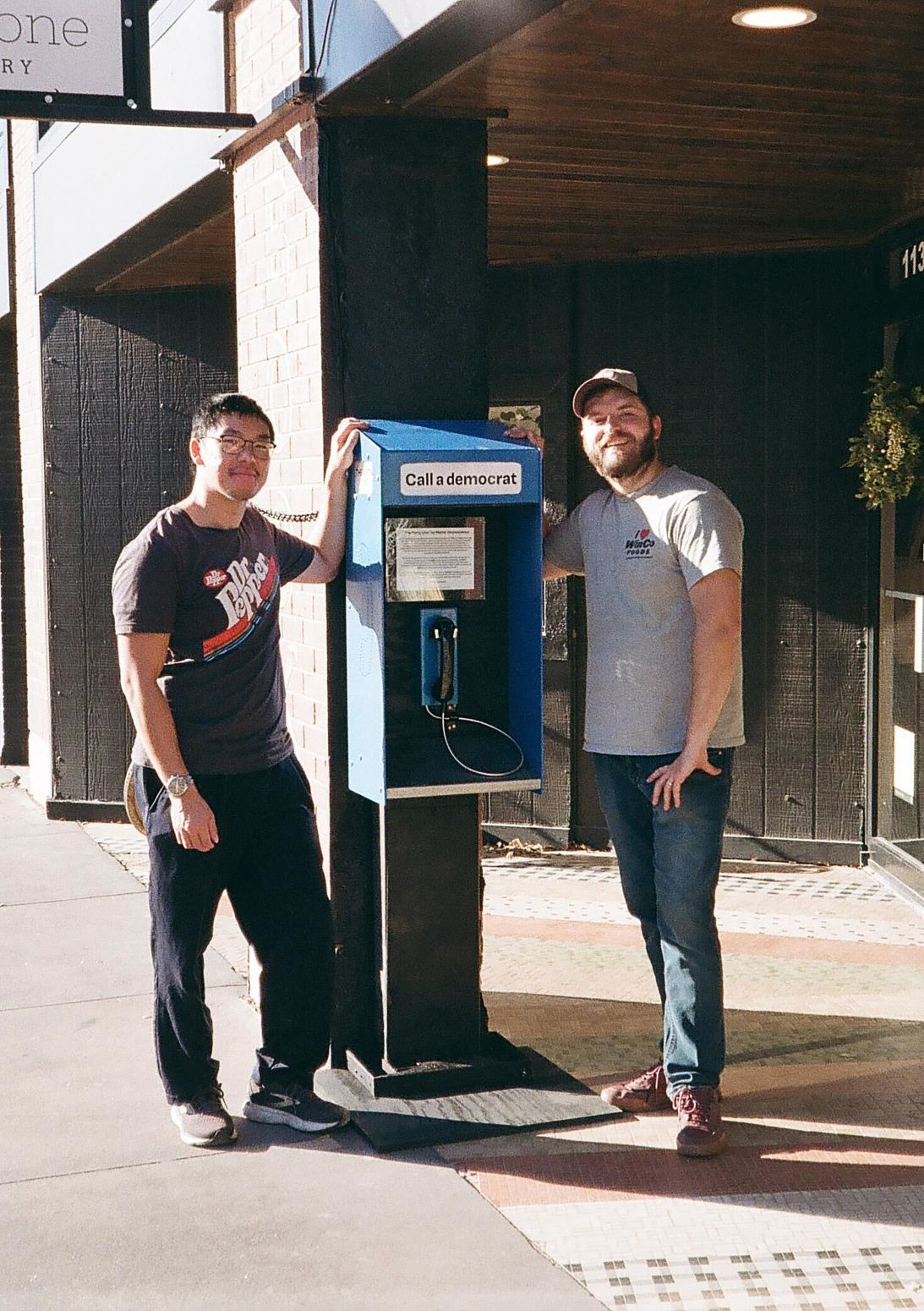
“我完全反对,”神经科学家阿克塞尔·布雄(Axel Bouchon)说,他在遭受抑郁症折磨后,将幸福研究变成了自己的专长,“我说:‘你们疯了。这有点像是对侵略性和暴乱的煽动。’”布雄表示,他认为“民主党人”和“共和党人”这两个触发词已经根深蒂固,以至于任何让这些交战派别走到一起的努力都会彻底失败。在一个充满争议的中期选举年,他做好了迎接愤怒的心理准备。“所以,我认为对结果感到最惊讶的人是我。”
But even the project’s architects weren’t sure it would work. “I was completely against it,” said Axel Bouchon, a neuroscientist who made happiness his specialty after suffering from depression. “I said, ‘You’re crazy.’ This will be kind of an amplification of aggression and riot.”Bouchon said he believed those two trigger words – Democrat and Republican – had become so entrenched that any effort to bring the warring tribes together would fall flat. And in a contentious midterm election year, he braced himself for anger. “So, I think the person most surprised about the results was me.”
杰雷德(Jared)和本(Ben)以许多人习惯的方式开始了他们的对话:他们聊起了天气。这一天,阿比林比旧金山更冷。他们谈论了各自的周遭环境:得克萨斯州一条主要街道上的一家书店,以及熙熙攘攘的米慎区(Mission District)的中心地带。他们谈到了这两部不知为何突然出现在他们社区的奇怪公用电话。接着,有趣的事情发生了:他们进行了深入的交流。
Jared and Ben begin their conversation the way many people do: They talk about the weather. On this day, it’s colder in Abilene than in San Francisco. They talk about their surroundings: a bookstore on a Texas main street, and the heart of the bustling Mission District. They talk about these two strange payphones, which appeared in their neighborhoods out of nowhere. And then something interesting happens: They go deep.
“那么你在寻找什么,本?”来自得克萨斯州的杰雷德问道,语气就像是在进行第一次约会。这似乎让本一时间有些措手不及。但随后他回击道:“你现在做什么会感到快乐?”他问杰雷德,“你生活中缺少什么能让你快乐的东西?”
“So what are you looking for, Ben?” asks Jared from Texas, as though this is a first date. It seems to catch Ben off guard for a moment. But then he returns serve: “What would make you happy right now?” he asks Jared. “What do you not have in life that would make you happy?”
杰雷德向本讲述了他的读书俱乐部,以及他们小组刚刚读过的一本关于两位老年女性结伴探索世界的小说。
Jared tells Ben about his book club, and the novel the group just read about two elderly women who explore the world together.
“我很想去更多地方旅行,”杰雷德说,“我极其渴望离开我所在的地方,哪怕只是一小会儿……我总是想看到比现在更多的风景。”
“I would like to travel more,” Jared says. “I desperately want to get away from where I am, even just for a little bit … I always want to see more than I see now.”
“你知道,你这么说让我意识到了一些事情,”本说,“我有点生活在这里的一个气泡里……这是一个非常舒适的气泡……但我不知道2026年的美国其他地方是什么样子的。”
“You know, you saying that makes me kind of realize something,” Ben says. “I kind of live in a bubble here … It’s a really comfy bubble … but I don’t know what 2026 is like in the rest of America.”
这两个人交谈了七分钟,但他们的对话涉及到了与同事、朋友和家人交谈时罕有涉足的领域。这正是布雄和他的商业伙伴、美国企业家本·戈德希尔什在Facebook Marketplace上购买了两部破旧的老式公用电话并构思他们的项目时所期望发生的——尽管布雄当时并不相信这一点。
The two men speak for seven minutes, but their conversation goes to places that discussions with co-workers, friends and families rarely do. It’s exactly what Bouchon and his business partner, the American entrepreneur Ben Goldhirsh, hoped would happen when they purchased two battered old payphones on Facebook Marketplace and formulated their project – even if Bouchon didn’t believe it.
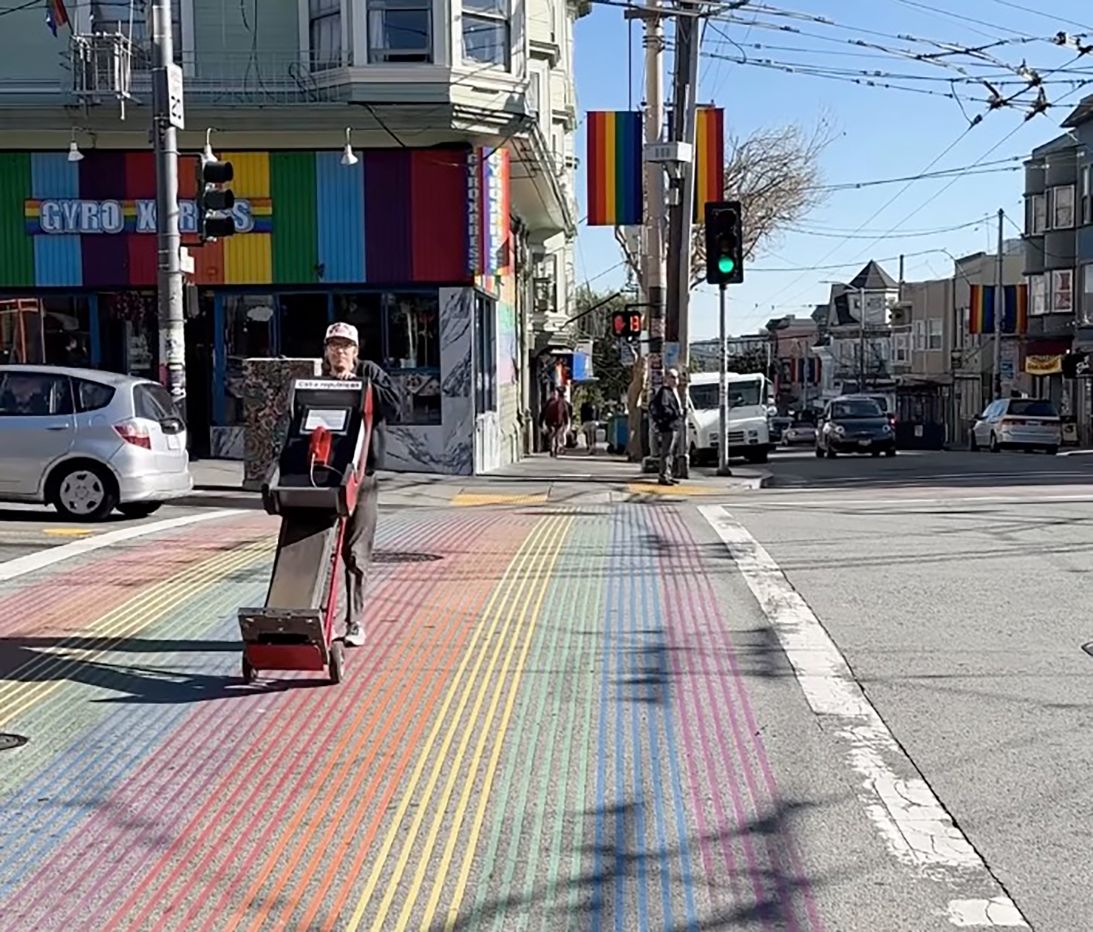
组织者在网上购买了这些公用电话,对其进行了翻新,并对其进行了编程以使它们能够互相拨号。这部电话正在旧金山安装。 年成立,其使命是更好地理解人类幸福感的来源。“我们必须破译幸福密码,”布雄说。
Organizers bought the payphones online, refurbished them and programmed them to call each other. This one is being set up in San Francisco. Courtesy Matter Neuroscience Their start-up, Matter Neuroscience, was founded in 2019 with the mission of better understanding what makes humans feel good. “We have to decrypt the code of happiness,” Bouchon says.
就像那些拿起电话的陌生人一样,这两个合伙人看上去是一对不太可能走到一起的组合。戈德希尔什说话时带着科技界人士那种圆滑的自如,而出生于德国的布雄则带着疯狂科学家般的古怪狂热地谈论着大脑。当美国有线电视新闻网与他们交谈时,布雄在慕尼黑,而戈德希尔什则在九个时区之外的加利福尼亚州圣巴巴拉他女儿的卧室里。
As with the strangers who picked up their phones, the two partners seem an unlikely pair. Goldhirsh speaks with the smooth ease of a tech bro, while the German-born Bouchon rhapsodizes about the brain with the eccentricities of a mad scientist. When CNN spoke with them, Bouchon was in Munich and Goldhirsh was nine time zones away, in his daughter’s bedroom in Santa Barbara, California.
但他们二人共同目睹了美国进一步分裂为两个激烈对立的派别。皮尤研究中心去年的一项调查发现,五分之四的美国人不仅在政策上,而且在“基本事实”上与另一方存在分歧。在另一项2025年的研究中,这家研究类非营利组织发现,半数民主党人和共和党人表示对方政党让他们感到愤怒。盖洛普去年的一项民意调查显示,多数美国人认为两党在批评对手时使用煽动性言论都有些过火。
But together they have watched as the United States drifted further apart into two bitterly divided factions. A survey by Pew last year found that four in five Americans disagree with the other side not just on policy, but on “basic facts.”In another 2025 study, the research nonprofit found that half of Democrats and Republicans say the other party makes them feel angry . And a Gallup poll last year revealed a majority of Americans feel that both parties have gone too far in their use of inflammatory rhetoric to criticize their opponents.
布雄和戈德希尔什表示,他们意识到美国人在谈论政治的方式上出了很大的问题。
Bouchon and Goldhirsh said they realized something had gone very wrong in the way people in the US talk about politics.
布雄从科学角度进行了解释:他表示,政治争论会导致大脑的主要压力分子皮质醇激增,这实际上会让大脑进入战斗模式。一旦处于这种状态,我们就再也听不进彼此的观点了,因为大脑正在过滤掉与我们的生存无关的信息。
Bouchon explains it scientifically: Political arguments lead to spikes in cortisol, the brain’s primary stress molecule, he says, essentially putting the brain into fight mode. Once there, we’re no longer hearing each other’s viewpoints because the brain is filtering out information that isn’t relevant to our survival.
“在政治争端中,已经没有人愿意倾听了,”布雄说,“因为从神经学上讲,他们已经无法倾听了。”但戈德希尔什觉得,应该有更好的方式来进行这些对话。
“In a political fight, nobody’s listening anymore,” Bouchon says. “Because they cannot listen anymore, neurologically.”But Goldhirsh felt there was a better way to have these conversations.
“我有身为民主党人的朋友,也有身为共和党人的朋友。我们其实并不恨对方,”他说,“我认为,当你真正与某人建立联系时,你表现得像个混蛋的可能性就会大大降低。”
“I have friends who are Democrats (and) I have friends who are Republicans. We don’t actually hate each other,” he says. “I think you’re far less likely to be an a**hole when you’re actually connected with someone.”
布雄和戈德希尔什表示,很快就很明显地看出,有些意想不到的事情正在发生。
It quickly became clear that something unexpected was happening, Bouchon and Goldhirsh said.
大多数对话都遵循了一种典型的模式。两个陌生人通常会从安全、轻松的话题开始:天气、他们的工作、他们那天在做什么。
Most conversations followed a typical pattern. The two strangers would usually begin with safe, easy topics: the weather, their jobs, what they were doing that day.
然后,许多人会转向政治——但没有陷入愤怒。布雄对其中的原因进行了理论推测:在轻松进入讨论之后,大麻素——一种调节情绪、睡眠和快乐等功能的化学物质——阻断了皮质醇的“战斗或逃跑”效应。
Then, many would switch to politics – but without devolving into anger. Bouchon theorized about why: After easing into the discussions, cannabinoids – chemicals that regulate functions like mood, sleep and pleasure – blocked the fight-or-flight effects of cortisol.
研究人员表示,很快,许多陌生人就会意识到,双方并不完全符合“民主党人”或“共和党人”的标签。
Soon, the researchers say, many strangers would realize that neither fit entirely into the labels “Democrat” or “Republican.”
接着他们开始分享。阿比林的的一位母亲告诉她来自加利福尼亚州的对话伙伴,她有一个跨性别孩子。“但我得小声说。我真的得小声说,”她带着紧张的咯咯笑声说道。
And then they’d start sharing. A mother in Abilene tells her California conversation partner that she has a trans child. “But I have to say it quietly. I have to say it really quietly,” she says through nervous giggles.
在另一场对话中,来自旧金山的马特向奥布里讲述了他对摩托车的喜爱。“你太酷了!”奥布里热情地回应道,“我希望你知道这一点。”
In another conversation, Matt in San Francisco tells Aubrey about his love of motorbikes. “You are so cool!”Aubrey says effusively in response. “I hope that you know that.”
“现在满满的爱正从旧金山传递到得克萨斯州阿比林,”马特回答说。
“Hella love going from San Francisco to Abilene, Texas right now,” Matt replies.
并非每一通电话都意味深长。但即使是那些平淡的对话,也因其平凡而显得非同寻常。人们没有争吵,也没有重重地放下听筒。他们在交谈。
Not every call was profound. But even the mundane conversations were remarkable in their unremarkableness. People weren’t arguing. They weren’t slamming down the handset. They were talking.
正当加利福尼亚州人和得克萨斯州人互相交谈之际,布雄和戈尔德希什正在收集他们对话的数据。
As Californians and Texans spoke to each other, Bouchon and Goldhirsh were gathering data on their conversations.
布雄表示,在大约400场聊天中,80%是积极的,而负面情绪仅占5%。略超一半的对话包含笑声;大约70%涉及某种形式的赞同或肯定。词语“爱”被提及398次;“特朗普”被提及64次。布雄还说,脏话甚至一次也没有听到。
Out of roughly 400 chats, 80% were positive, Bouchon says, while just 5% were negative. Just over half included laughter; around 70% involved some kind of agreement or affirmation. The word “love” was mentioned 398 times; “Trump” was said 64 times. And the f-word, says Bouchdon, wasn’t even heard once.
这些数据由Matter Neuroscience公司收集,尚未得到美国有线电视新闻网(CNN)的核实。但布雄和戈尔德希什表示,他们的公司已将这组对话交给了位于加利福尼亚州马里布的佩珀代因大学。他们说,当地的研究人员研究其影响后,每份文字记录都将被公之于众。
Those figures were gathered by Matter Neuroscience and have not been verified by CNN. But Bouchon and Goldhirsh say their company has handed over the set of conversations to Pepperdine University, in Malibu, California. After researchers there study its impact, every transcript will be made public, they say.
布雄原本以为这项实验会导致人们愤怒地“砸碎电话”,但这让他得出了一个不同的结论:“我们可以不通过争吵来表达分歧。”
Bouchon thought the experiment would lead to people “smashing the phones” in anger, but it led him to a different conclusion: “We can disagree without fighting.”
因此,Matter Neuroscience又进行了两项实验。其中一个项目在春季开展,将波士顿大学校园里的“Z世代”学生与内华达州里诺市一家老年公寓的“婴儿潮一代”连接了起来。
So, Matter Neuroscience ran two more experiments. One project, carried out over the spring, connected “Zoomers” – students on the campus of Boston University – with “Boomers” at a senior living facility in Reno, Nevada.
波士顿大学校园里的这部免费公用电话将“Z世代”(即Z世代成员)与内华达州一家老年公寓的“婴儿潮一代”连接起来。 。对话经常触及失去、悲伤和生活的不确定性。
This free payphone on the campus of Boston University connects "Zoomers," or members of Gen Z, with "Boomers" at a senior living facility in Nevada. Courtesy Matter Neuroscience Again, the phones connected disparate worlds.
在向CNN分享的一段对话中,西尔维问66岁的瓦莱里:“对于二十出头的年轻人,你有什么建议?”瓦莱里回答说:“天哪,趁还能动的时候好好玩吧。突然之间,砰的一声,(我)醒来就到这里了。”
The conversations often touched on loss, grief and the unpredictability of life. “What advice do you have for a young 20-year-old?”Sylvie asks the 66-year-old Valerie in one conversation shared with CNN. “Oh man, have fun while you can,” replies Valerie.
瓦莱丽(Valerie)在一段15分钟的对话中讲述道,她相伴十年的伴侣因过量吸食芬太尼而离世。“我听到有人敲门,然后你的整个世界就变了,”她说道。
“All of a sudden, bam, (I) woke up and here I am.”Valerie’s partner of a decade died after overdosing on fentanyl, she says over the course of the 15-minute conversation. “I got a knock on the door, and your whole world changes,” she says.
瓦莱丽补充道:“你最好找个人在你老了的时候照顾你。因为你知道吗,当你不得不独自面对这一切时,生活真的很艰难。”
“You better find somebody to take care of you when you get older,” Valerie adds. “Because you know what, it’s tough when you’ve got to do it by yourself.”
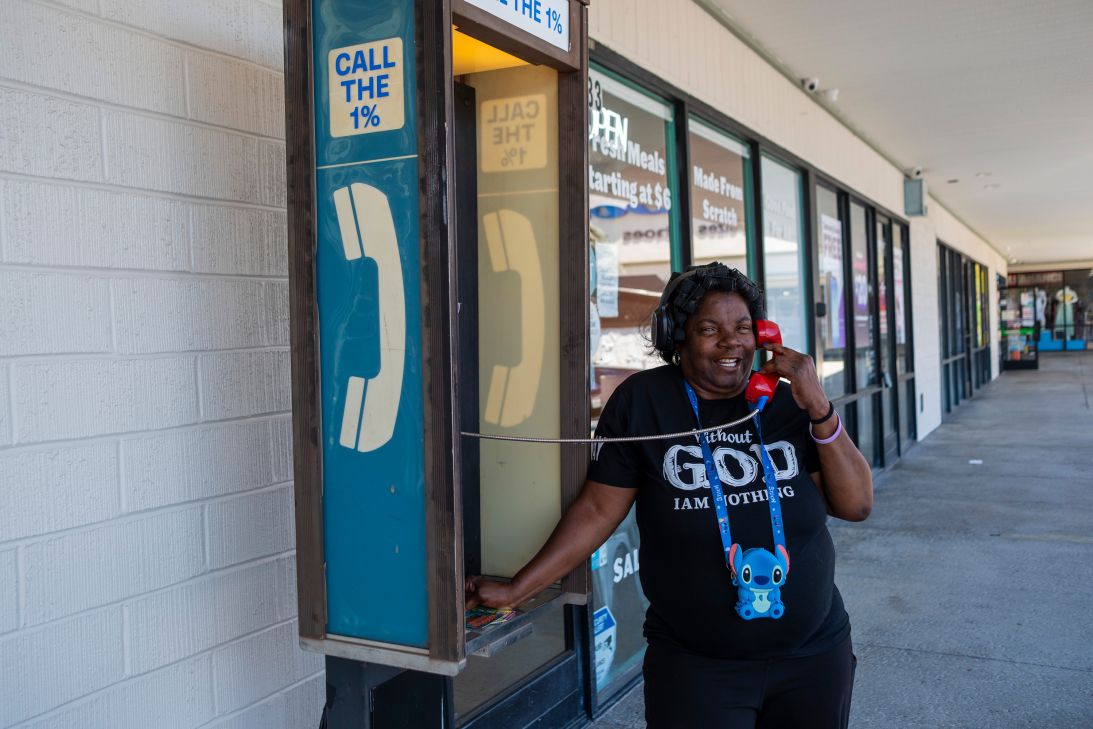
最近,Matter启动了第三个项目,旨在将“99%”的人与“1%”的人联系起来。他们在洛杉矶威尼斯(Venice)社区时尚的阿博特金尼(Abbot Kinney)购物区放置了一部公用电话,并将其与洛杉矶市中心以南的低收入社区瓦茨(Watts)的另一部电话连接起来。
More recently, Matter launched a third project, aiming to link the “99%” with the “1%” by placing a payphone in the trendy Abbot Kinney shopping district of Los Angeles’ Venice neighborhood and pairing it with another in Watts, a lower-income neighborhood south of downtown.
在其中一段对话中,瓦茨的一名社区资源协调员在她上班的第一天说道:“我们就身处其中。我看到的周围环境可能跟你的不一样……这里的人们只是在勉强维生。”
“We’re right here in the heart of it,” a community resource coordinator in Watts says on her first day of work, in one of the conversations.
一名女子在洛杉矶瓦茨社区安装的一部免费公用电话前通话。这部电话与洛杉矶另一个位于海滩边的时尚社区威尼斯的另一部电话相连。卡拉·凯斯勒(Calla Kessler)/Matter Neuroscience另一通电话开门见山。瓦茨的一名男子说道:“嘿,我需要钱。”迎面而来的是一阵尴尬的笑声。威尼斯的女子说道:“我也需要。”
“The surroundings that I see is probably different from yours, she says … Just people trying to get by.”A woman talks on a free payphone installed in the Watts neighborhood of Los Angeles. The phone is connected to another in trendy Venice, another L.A. neighborhood by the beach. Calla Kessler/Matter Neuroscience Another call begins bluntly. “Hey, I need some money,” a man in Watts says. He’s met with an awkward laugh.
戈尔德希尔(Goldhirsh)和布雄(Bouchon)表示,在这个感觉至关重要的时刻,公用电话项目恢复了他们对这个国家的信心。戈尔德希尔表示,在听完这些对话后,他“睡得更香了”。
“So do I,” says the woman in Venice. Goldhirsh and Bouchon say the payphones project has restored their faith in the country at what feels like a pivotal time. Goldhirsh says he “slept better” after hearing the conversations.
他说道:“相当一部分美国人都在说:‘太棒了,我们是美国人,我们是很酷的人,我们希望作为人类进行交流。’我们不想被塑造成那些互相掐架的恶毒部落。”
“A meaningful slice of America was like, ‘f**k yeah, we’re Americans, and we’re dope humans, and we want to connect as humans,” he says. “We don’t want to be framed as this malicious group of tribes that are at each other’s necks.”
随着激烈的期中选举季进入最后几周,布雄和戈尔德希尔深知其中的利害关系。
And as a bitter midterm campaign season enters its final weeks, Bouchon and Goldhirsh understand the stakes.
戈尔德希尔希望政治人物们能听一听。他表示,在过去的一年里,他一直在向州长和其他政治领袖展示其项目的调查结果,并鼓励他们在传达信息时降低火药味。
Goldhirsh hopes that politicians are listening. Over the course of the year, he says he has presented his project’s findings to state governors and other political leaders and encouraged them to lower the temperature in their messaging.
“我是个乐观主义者,”他说,“所以,我认为我们会看到领导人们朝着能够找到共同点的那些领域迈进。”但他认为,向一个更快乐的美国转变可以从我们所有人开始。
“I’m an optimist,” he says. “So, I think we’re going to see leaders move towards those areas where we can find common ground.”But he believes the shift towards a happier America can start with all of us.
“我们必须积极主动地降低皮质醇,”他说,“你不能以火攻火……你必须用幽默来对抗它。你必须用关爱来对抗它。你必须用友谊来对抗它。”而公用电话的通话者们似乎也表示赞同。
“We have to be proactive at reducing cortisol,” he says. “You can’t fight it with fire … You have to fight it with humor. You have to fight it with affection. You have to fight it with friendship.”And the payphone callers seem to agree.
“我认为这是一个好主意……我认为对话和社区是拯救我们的重中之重,”来自阿比林的普里西拉在与尼克的交谈中说道,“我很高兴你能在外面,也很高兴我能跟你说话。”
“I think it’s a great idea … I think conversation and community is the tops of what’s going to save us,” Priscilla in Abilene tells Nick during their chat. “I’m glad you’re out there, and I’m glad I got to talk to you.”