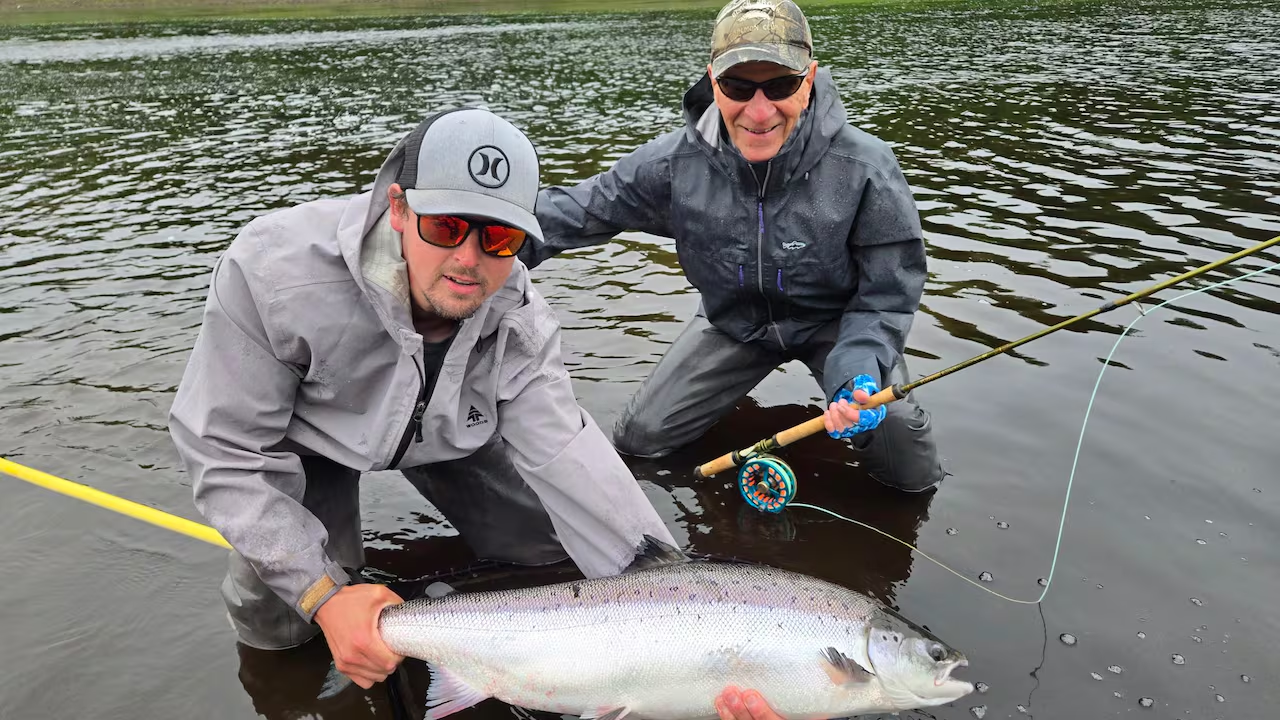
米拉米希(Miramichi)流域的每一位资深三文鱼钓鱼者、向导和户外活动经营者,都记得他们第一次遇到条纹鲈鱼的情景。
Every veteran salmon angler, guide and outfitter in the Miramichi watershed remembers their first encounter with a striped bass.
对于传奇的黑溪三文鱼俱乐部(Black Brook Salmon Club)成员里普·坎宁安(Rip Cunningham)来说,那次相遇发生在西南米拉米希河干流与凯恩斯河的交汇处。
For Rip Cunningham, a member of the storied Black Brook Salmon Club, it happened at the junction of the Main Southwest Miramichi River and the Cains River.
“我钓到了一条自以为是三文鱼的鱼,当时我在想:‘这鱼怎么不跳。这太奇怪了。’”他说。他把它卷了上来。
“I caught what I thought was a salmon, and I was going, ‘This fish isn’t jumping. This is odd,’” he said. He reeled it in.
“那些住在河边、在河里钓了多年鱼的向导说:‘那是什么?’他们完全不知道。”那是一条条纹鲈鱼,坎宁安认为这种鱼现在对米拉米希最具标志性的物种——他挚爱的野生大西洋三文鱼——构成了生存威胁。
“The guides who live on the river, who’d been fishing on the river for years, said ‘What’s that?’ They had no idea whatsoever.”It was a striped bass, a fish Cunningham believes now represents an existential threat to the Miramichi’s most iconic species: his beloved wild Atlantic salmon.
拜伦·科f兰(Byron Coughlan)在布莱克维尔(Blackville)附近经营着“避难县”钓鱼旅馆(County Haven fishing lodge)。大约15年前,他正带着两名来自新英格兰的三文鱼钓鱼者时,他们钓到了两条鲈鱼。
Byron Coughlan, who runs the County Haven fishing lodge near Blackville, was guiding two salmon anglers from New England about 15 years ago when they caught two bass.
“他们说:‘你们的这条河完蛋了,’”他回忆道。“‘鲈鱼会吃掉一切。’他们说:‘最终你们将一条三文鱼也没有。’”《大西洋之声》(Atlantic Voice)26:10米拉米希河上的双鱼记:米拉米希流域的钓鱼者、向导和户外活动经营者担心,这种预言现在正处于变成现实的边缘。
“They said, ‘Your river's done,’” he recalled. “‘The bass is going to eat everything.’ They said, ‘Eventually you won’t have any salmon.’”Atlantic Voice26:10A tale of two fish on the Miramichi The community of anglers, guides and outfitters in the Miramichi watershed fear that prediction is now on the verge of coming true.

他们表示,幼年三文鱼在前往海洋的迁徙途中,正被不断增长的条纹鲈鱼种群狼吞虎咽地吃掉。
Juvenile salmon, they say, are being gobbled up on their migratory trek to the ocean by a growing striped bass population.
“我们正面临着大西洋三文鱼以及米拉米希河上其他物种的危机,”钓鱼者亚历克斯·米尔斯(Alex Mills)本月在众议院渔业和海洋常设委员会上表示,他是针对联邦政府提起诉讼的成员之一。
“We have a crisis facing Atlantic salmon and other species on the Miramichi,” Alex Mills, an angler who is part of lawsuit against the federal government, told the House of Commons standing committee on fisheribes and oceans this month.
1996年,联邦渔业和海洋部(Department of Fisheries and Oceans)关闭了商业条纹鲈鱼渔业,以遏制过度捕捞导致的鱼群崩溃。
In 1996, the federal Department of Fisheries and Oceans closed the commercial striped bass fishery to halt a collapse in stocks caused by overfishing.
三文鱼钓鱼者表示,这次关闭使鲈鱼种群增长到了不可持续的水平,它们从传统栖息的潮汐水域逆流而上,打破了米拉米希河微妙的平衡。渔业和海洋部被指责制造了“一个大烂摊子”钓鱼者表示,条纹鲈的增长正在毁掉曾经是沿河小社区经济命脉的传奇休闲三文鱼渔业。
The salmon anglers say the closure allowed the bass population to grow to an unsustainable level, moving upriver from its traditional home in tidal waters and throwing off the Miramichi’s delicate balance. DFO blamed for ‘a big mess’The anglers say the growth of the striped bass is killing the fabled recreational salmon fishery, once an economic lifeline for small communities along the river.
渔业及海洋部官员“实际上什么也没做”来遏制条纹鲈数量激增,“并制造了这个大乱子,”缅因州商人布拉德福德·伯恩斯说,他在西南米拉米奇拥有一个三文鱼营地。
DFO officials “have done essentially nothing” to curb the bass boom “and created this big mess,” said Bradford Burns, a Maine business owner with a salmon camp on the Southwest Miramichi.
渔业及海洋部的数据显示,条纹鲈数量如今已超过50万——一些估计甚至更高——而2025年三文鱼回归数量低于5000条。
The bass population is now north of 500,000 — some estimates are much higher — while salmon returns were below 5,000 in 2025, DFO numbers indicate.
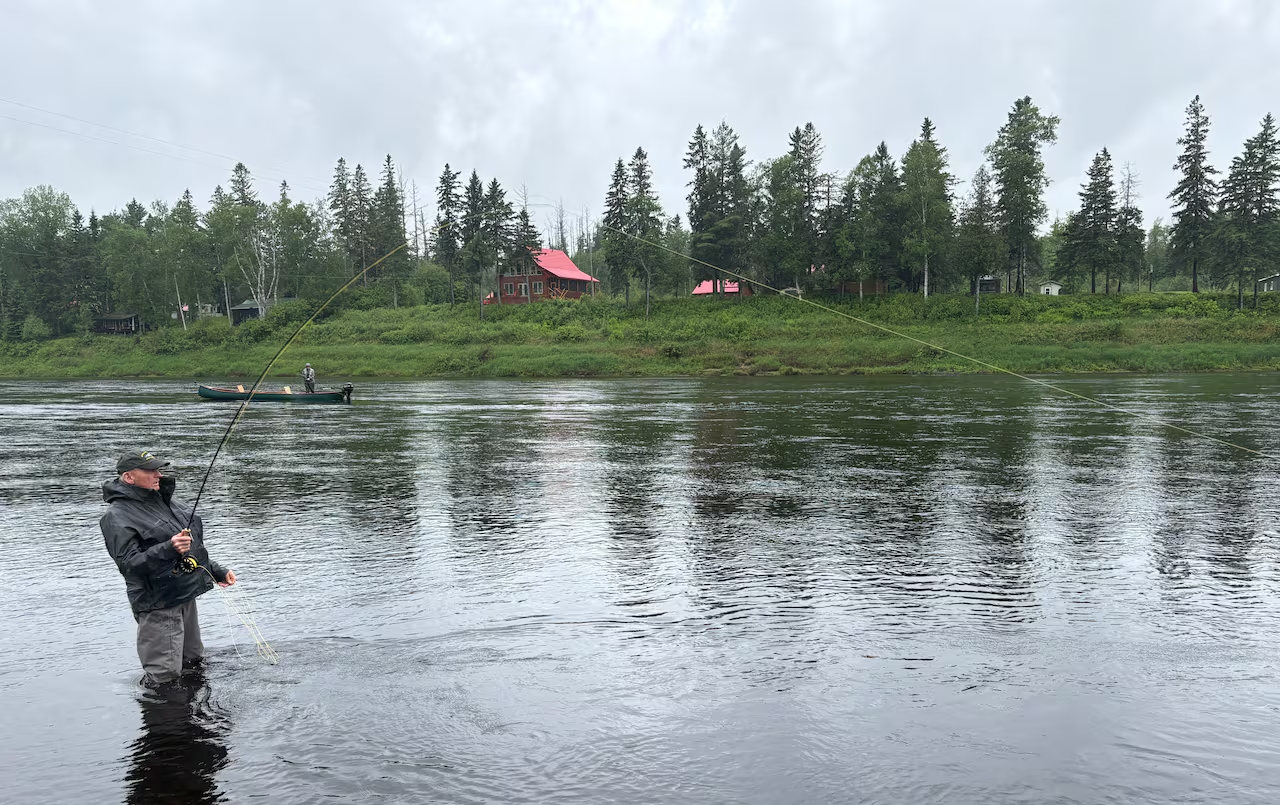
伯恩斯、坎宁安、米尔斯以及另外两名钓鱼者已在联邦法院提起诉讼,希望迫使渔业及海洋部恢复商业条纹鲈捕捞,以减少种群数量,让更多鲑鱼苗有机会到达海洋。
Burns, Cunningham, Mills and two other anglers have filed a lawsuit in federal court hoping to force DFO to resume a commercial bass fishery to reduce the population and give more smolts a chance to reach the ocean.
“这种前所未有的捕食程度完全不可持续,正濒临将大西洋三文鱼从长期被视为北美最伟大的三文鱼河流中根除,”该团队在2024年写给联邦渔业部长的信中写道。
“This extraordinary level of predation is completely unsustainable and is on the verge of extirpating Atlantic salmon from what has long been considered the greatest salmon river in North America,” the group wrote in a letter to the federal fisheries minister in 2024.
在其网站上,渔业及海洋部表示,条纹鲈每年会吃掉“不定数量”的鲑鱼苗,“目前尚不清楚这种自然的捕食者-猎物关系是否在限制返回米拉米奇河的成年三文鱼数量。” “存在直接关联,”渔具经营者说布罗克·柯蒂斯,他在布莱克维尔经营一家渔具店,是钓鱼者和向导的必去之地,他说因果关系很明确。
On its website, DFO says bass eat “variable numbers” of smolts every year, and “it is not clear whether this natural predator-prey dynamic is limiting the number of returning adult salmon to the Miramichi river.” ‘A direct correlation,’ outfitter says Brock Curtis, who operates an outfitter store in Blackville that is an essential destination for anglers and guides, says the cause and effect are clear.
“随着条纹鲈数量增加,我们的数量在下降,而且它们之间存在直接关联,”他说。
“Our numbers are dropping as the bass numbers are increasing, and there's a direct correlation there,” he said.
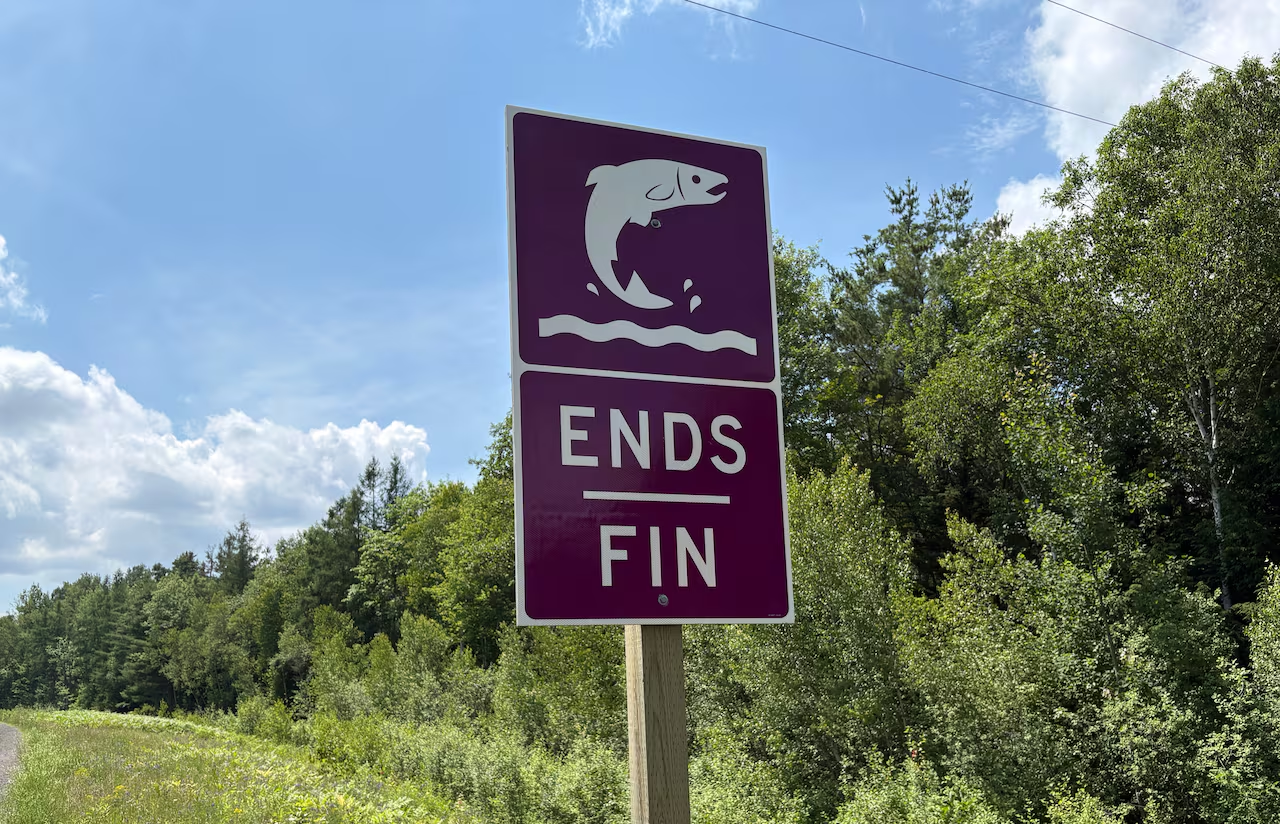
大西洋三文鱼与这条河流的身份紧密相连,其形象被用于省级道路标识,以标注米拉米奇河路线。柯蒂斯说,面临风险的是一种独特的渔业,它强调耐心、练习和平静的心态。“我们生活在一个很多人习惯于即时满足的世界里,”他说。
The Atlantic salmon is so tied to the river’s identity that its image is used on provincial road signs identifying the Miramichi river route. Curtis says what’s at risk is a unique fishery that puts a premium on patience, practice and a calm state of mind. “We live in a world where a lot of people are used to immediate gratification,” he said.
“这项运动不是那样的。这是一项技能,你付出时间,最终就会得到回报。”条纹鲈的成功 与此形成鲜明对比的是,数量繁多的条纹鲈每年五月都会在下游引发一场为期两天的即时满足狂潮。
“This sport isn't like that. It's a skill, and you put your time in and you will be rewarded in the end.”Striper success By contrast, the abundant striped bass has spawned a two-day frenzy of immediate gratification that unfolds downriver every May.
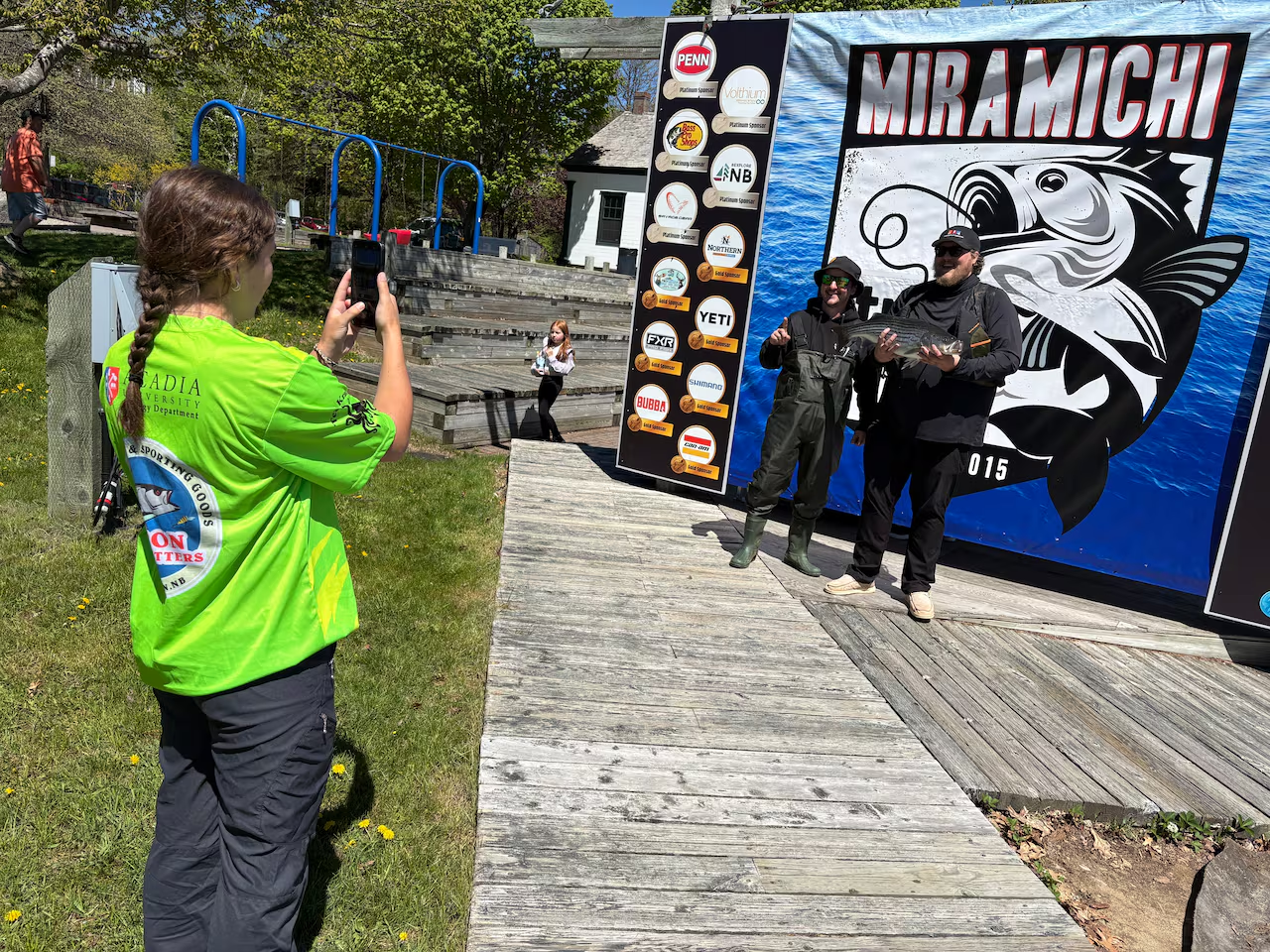
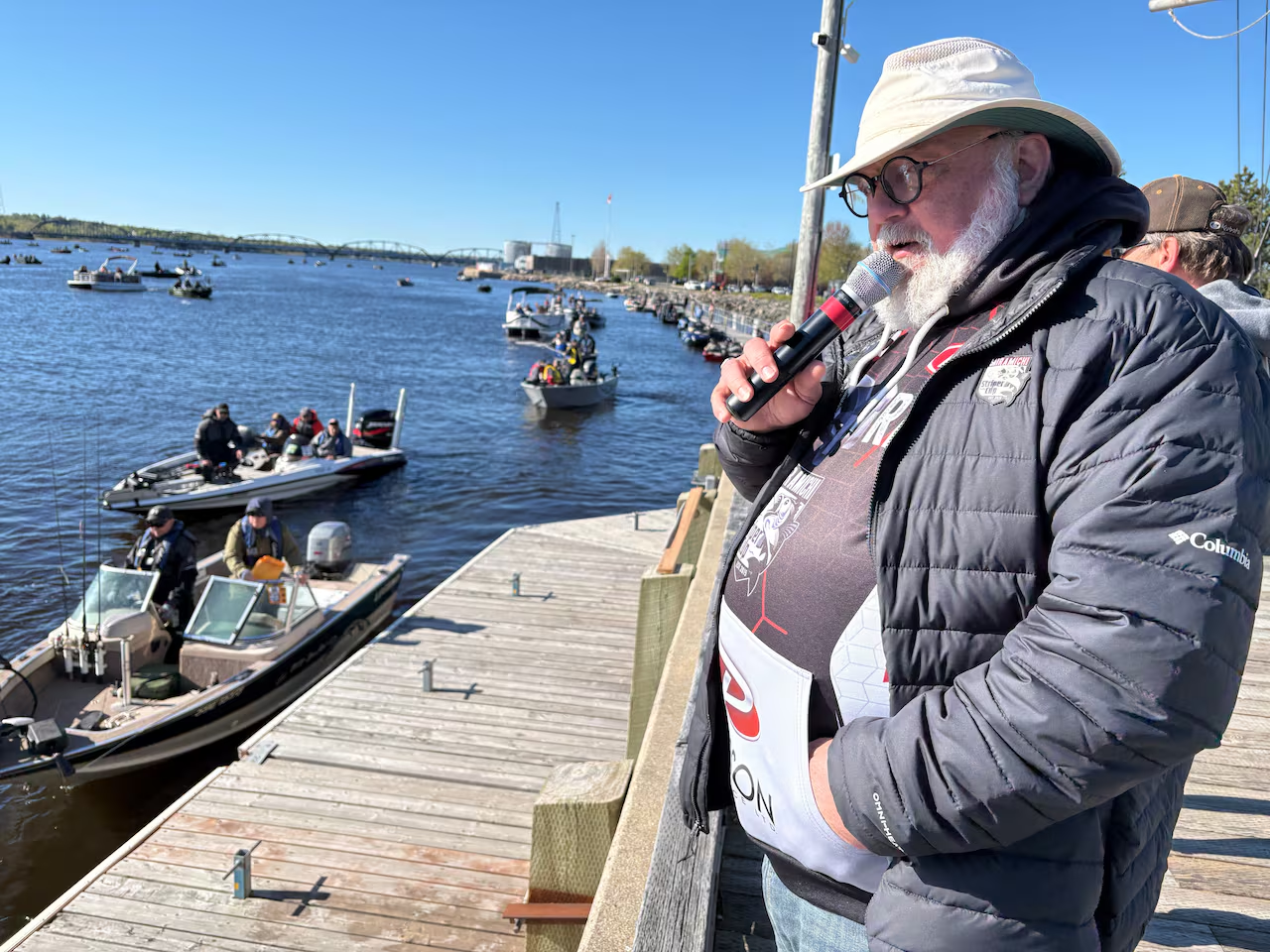
数百名垂钓者涌入米拉米奇市参加条纹鲈杯赛,这是一场奖品和赠品名单似乎无穷无尽的鲈鱼锦标赛。
Hundreds of anglers crowd into the city of Miramichi for the Striper Cup, a bass tournament with a seemingly bottomless list of prizes and giveaways.
参赛者巴里·海伊在今年比赛期间接受采访时,靠在船舷上说道:“我们一直都有鱼。我们从来没赢过,但我们一直都有鱼,一天两条。”来自索尔兹伯里的德韦恩·奥吉尔维表示,他喜欢鲈鱼的“好斗性”。
"We’ve always had fish,” participant Barry Hay said in an interview over the side of his boat during this year’s tournament. "We’ve never won, but we’ve always had fish, two a day." Dwayne Ogilvie of Salisbury said he loves the “aggressiveness” of the bass.

条纹鲈杯赛于2015年在米拉米奇创办,现已成为该市最大的旅游吸引力项目之一。该市经济发展官员保罗·麦格劳表示,这项赛事的成功“百分之百”要归功于蓬勃发展的鲈鱼种群。
The Striper Cup launched in Miramichi in 2015 and has turned into one of the city’s biggest tourism draws. Paul McGraw, the city’s economic development officer, said the success of the event is “one hundred per cent” attributable to the booming bass population.
他说:“我们从来、从来没有想象过它能以我们现在这么快的速度增长,并发展出我们凭借米拉米奇条纹鲈杯赛所拥有的品牌。”麦格劳拒绝就涉及鲑鱼的争论发表评论。
“We never, ever imagined that it would grow and develop the brand that we have with the Miramichi Striper Cup as quickly as we have done it,” he said. McGraw would not comment on the debate involving salmon.
他说:“如果我们认为不存在争议,那就太天真了,但这并不是我们所涉足的领域。”在五月份的杯赛开幕式上,作为赛事创始人之一的职业钓手杰夫·威尔逊敦促参赛者游说政治家反对重新开放商业条纹鲈渔业。
“We'd be naive to think there wasn't a controversy,” he said, “but that's not what we're into.”At the cup's opening ceremony in May, pro angler Jeff Wilson, a co-founder of the tournament, urged participants to lobby politicians against a reopened commercial striped bass fishery.
他说:“你们这些人与政治家对话并为我们的孩子保护这一资源,这真的非常重要。”
“It’s really important that you folks talk to your politicians and protect this resource for our kids,” he said.
“它在这里已经存在了几千年。它们并不坏。它们很好。鲈鱼很好。” 幼年鲑鱼的坦途 将加拿大渔业及海洋部告上法庭的垂钓者估计,一个拥有30万至40万条鲈鱼的商业渔业将把种群数量减少至约10万条——他们称,这个数量足以给鲑鱼一线生机。
“It’s been here for millennia. They’re not bad. They’re good. Bass are good.”A detour for juvenile salmon The anglers taking DFO to court estimate a commercial fishery of 300,000 to 400,000 bass would reduce the population to about 100,000 — enough, they say, to give the salmon a chance.
渥太华在2018年批准了原住民捕捞5万条条纹鲈的渔业配额,并在六年后将允许捕捞量增加到17.5万条。
Ottawa approved a First Nations striped bass fishery of 50,000 in 2018 and increased the allowable catch to 175,000 six years later.
最大值尚未达到,钓鱼者表示,让非原住民钓鱼者捕捞该配额将是一个良好的开端。
That maximum has not been reached, and anglers say letting non-Indigenous anglers catch that quota would be a good start.
与此同时,大西洋鲑联盟、米拉米奇鲑协会以及米克马威保护机构Anqotum资源管理正在尽其所能。
In the meantime, the Atlantic Salmon Federation, the Miramichi Salmon Association and Anqotum Resource Management, a Mi’kmaw conservation agency, are doing what they can.
春天时,他们的团队来到韦尔顿米拉米奇西北支流,收集并给鲑鱼幼鱼打标签,然后用卡车将大量幼鱼运送到下游,绕过并穿过饥饿的鲈鱼群,以便它们能够到达海洋。
In the spring, their teams descended on the northwest branch of the Miramichi at Wayerton to collect and tag salmon smolts and truck large numbers of them downriver, around and past the hungry bass population, so they could make it to the ocean.
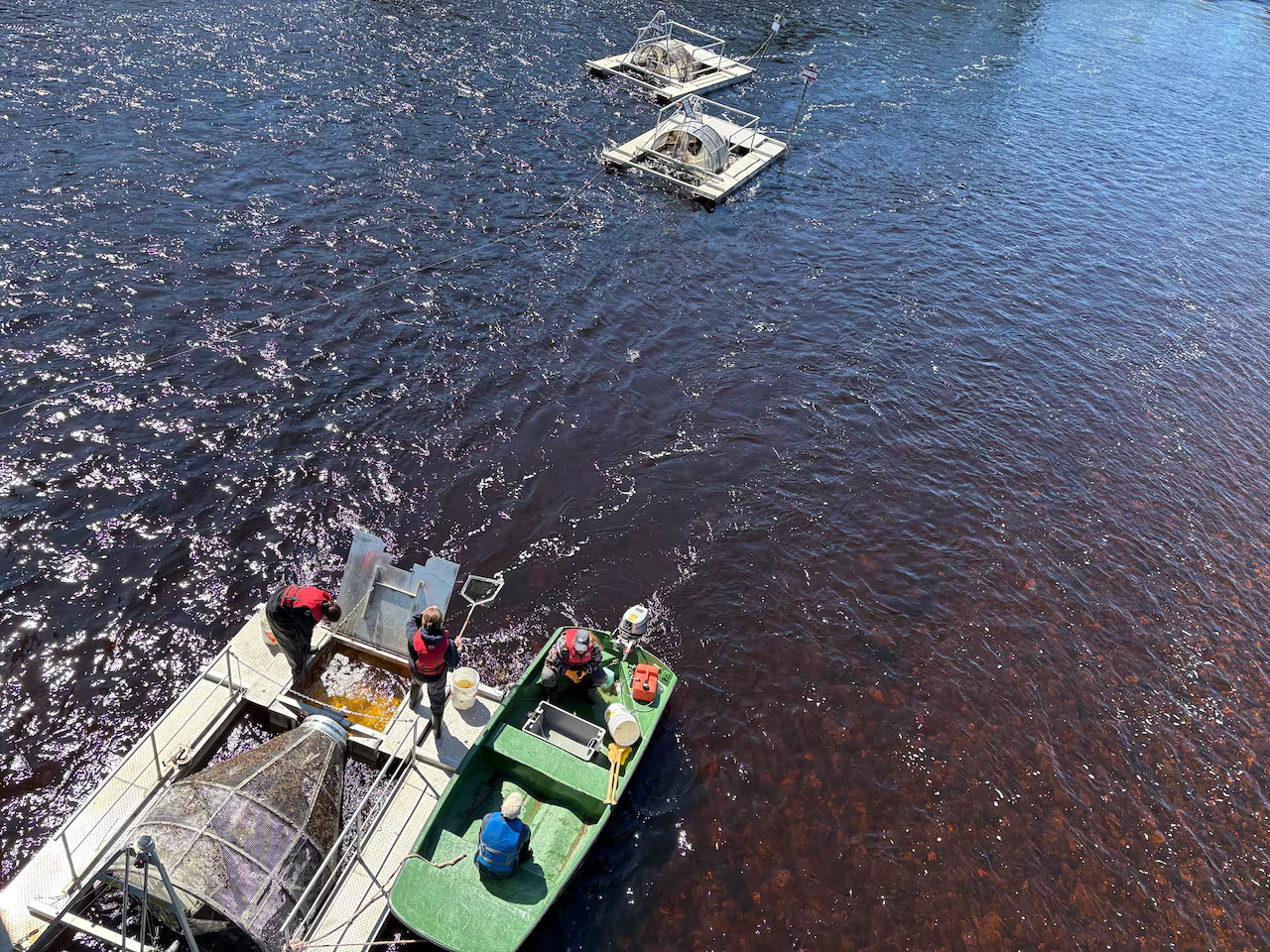
“从概念上讲,这是可行的,”大西洋鲑联盟生物学家大卫·罗思说,他称该行动为紧急措施。“这实际上只是关于你总共能捕获多少数量的问题。”
“Concept-wise, it works,” said David Roth, an Atlantic Salmon Federation biologist who called the operation an emergency measure. "It's really just about the numbers that you can catch in total.
“这并不是说我们想要为未来几十年一直运输鱼类。目前种群的状况是,任何帮助都有用。”鲑鱼钓鱼者里普·坎宁安称其为“一个良好的实验”,但不太可能对问题产生实质性影响。
“It's not like we want to transport fish for decades to come. Where the population currently is, everything helps.”Salmon angler Rip Cunningham calls it “a good experiment” but unlikely to make a dent in the problem.
“你无法通过在水箱中饲养足够数量的鱼并四处移动它们,来对这条河流产生任何合理的影响,”他说。
“You cannot get enough of them in tanks and move them around to make any reasonable difference to this river,” he said.
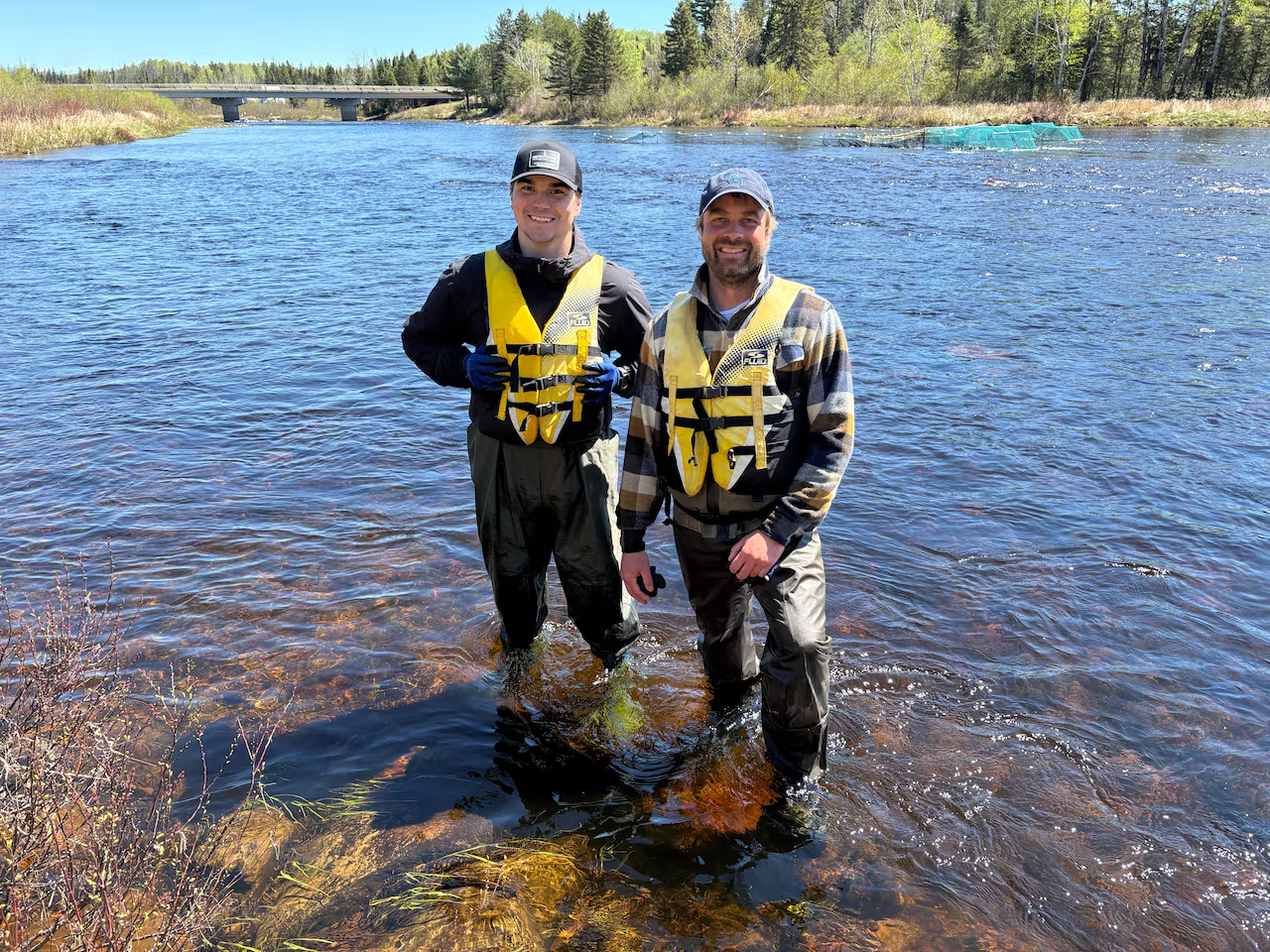
DFO生物学家寻找“更大的机制”罗思和来自梅特佩纳吉亚克第一民族的生物学家乔·奥古斯丁表示,毫无疑问,条纹鲈的激增是鲑鱼数量下降的主要原因。
DFO biologist looks for ‘larger mechanisms’ Roth and Joe Augustine, a biologist from Metepenagiag First Nation, said there’s no doubt the bass boom is the biggest cause of the salmon’s decline.
罗思表示,米拉米奇河洄游的鲑鱼幼鱼中,不到10%能够到达海洋,而在其他附近河流,这一比例达到80%。
Roth said fewer than 10 per cent of migrating smolts in the Miramichi reach the ocean, compared to 80 per cent in other nearby rivers. The difference?
“区别在于,”奥古斯丁说,“米拉米奇河确实存在大量条纹鲈种群。”
“It's definitely the massive population of striped bass that we do have in the Miramichi,” Augustine said.
联邦科学家表示,其他因素也不容忽视,因为鲑鱼数量下降也在其他条纹鲈较少或没有的河流中发生,包括欧洲的一些河流。
Federal scientists say other factors can’t be discounted, because the decline is also happening in other rivers with fewer or no bass, including in Europe.
“我们并不是说条纹鲈不吃幼鲑鱼,”蒙克顿的DFO生物学家辛迪·布雷奥说。
“We don't say that striped bass do not eat juvenile salmon,” said Cindy Breau, a DFO biologist based in Moncton.
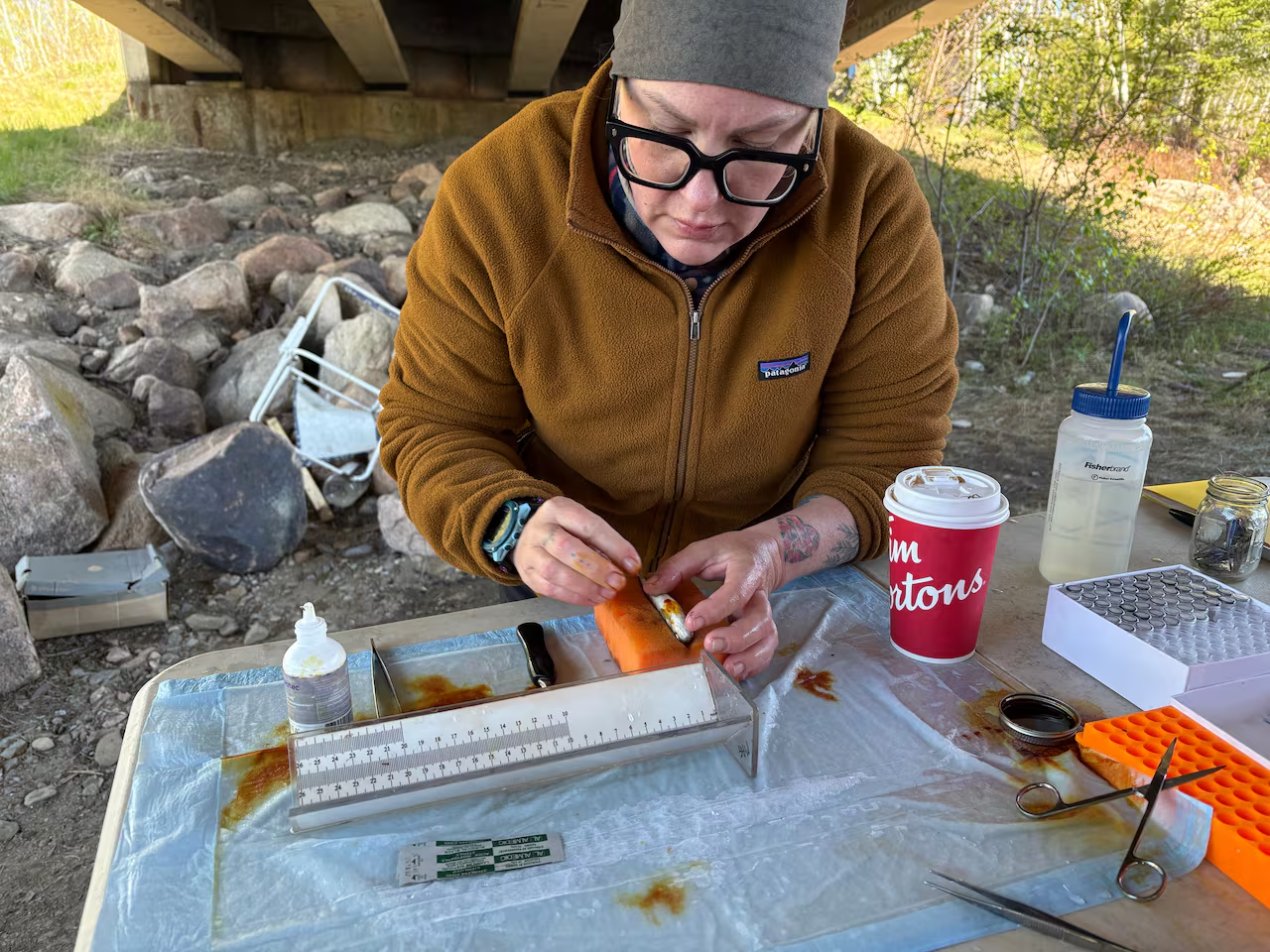
“我们的意思是,如果我们想回答为什么大马哈鱼没有返回我们的河流这个问题,我们就需要审视更大的机制,并试图解开其中涉及的机制。”布罗(Breau)表示,米拉米奇(Miramichi)大马哈鱼回游数量减少的一个原因可能是,环保人士植入幼鱼体内的微型追踪标签——在它们试图逃离饥饿的鲈鱼时,这些标签加重了它们的负担。
“What we are saying is that if we want to answer the question about why salmon are not returning to our rivers, we need to look at larger mechanisms and try to unravel the mechanisms involved with that.”Breau suggested one reason Miramichi returns are lower may be the little tracking tags the conservationists insert in the smolts — weighing them down as they try to outrun hungry bass.
布罗说,气候变化也使河流变暖,超出了喜冷水的大马哈鱼所能承受的范围,并可能扰乱它们迁徙到海洋时所依赖的食物链。
Climate change is also warming rivers beyond what cold-water salmon can tolerate and may be disrupting the food chains they rely on when they migrate to the ocean, Breau said.
但米尔斯(Mills)表示,加拿大渔业海洋部(DFO)的科学“公然违背”了环保组织的研究,为该部门提供了“什么都不做的半生不熟的借口”。他对众议院渔业委员会表示:“这与气候无关。这与栖息地无关。这与条纹鲈有关,如果渔业海洋部看不到这一点,他们就是瞎了眼。”
But Mills said DFO’s science “flies in the face” of research done by conservation groups, providing the department a “half-baked justification for doing nothing.”“It’s not climate-related. It’s not habitat-related. It’s striped bass-related, and if DFO does not see that, they are blind,” he told the House of Commons fisheries committee.
议员称扩大鲈鱼捕捞是容易解决的办法 一些垂钓者还指出,工业伐木活动可能会增加流入河流的径流,并减少阻挡太阳热量的树荫。
MP says larger bass fishery an easy fix Some anglers also point to industrial logging practices that may increase runoff into the rivers and reduce shade that blocked the sun’s heat.
阿卡迪-巴瑟斯特(Acadie-Bathurst)选区众议员瑟日·科尔米耶(Serge Cormier)表示,一些非法的网捕行为可能也起到了一定作用。但身为狂热垂钓者的科尔米耶表示,条纹鲈显然产生了“巨大的影响”。科尔米耶是众议院渔业委员会的成员,他说服同僚们今年就大西洋大马哈鱼举行听证会。他说:“我们需要解决方案。少说废话。”
Acadie-Bathurst MP Serge Cormier says some illegal net fishing may also play a role. But Cormier, an avid angler, said the striped bass clearly have “a big impact.”Cormier is a member of the House of Commons fisheries committee, and he persuaded his colleagues to hold hearings this year on the Atlantic salmon. “We need solutions. Enough talk,” he said.
这位议员表示,虽然渔业海洋部确定的其他因素处理起来很复杂,但通过恢复商业捕捞来减少条纹鲈种群“目前是最容易做到的部分”。渥太华正斥资8,170万加元实施一项为期12年的大西洋大马哈鱼战略,其中包括气候适应力措施、原住民伙伴关系以及对鱼类种群更透明的监测。
While other factors DFO has identified are complicated to address, the MP said reducing the striped bass population with a revived commercial fishery “is the easiest piece to do right now.”Ottawa is spending $81.7 million on a 12-year Atlantic salmon strategy that includes climate-resilience measures, Indigenous partnerships and more transparent monitoring of stocks.
联邦渔业部长琼恩·汤普森(Joanne Thompson)于8月访问了新不伦瑞克省,并会见了美国大西洋大马哈鱼联合会(Atlantic Salmon Federation)和米拉米奇大马哈鱼协会(Miramichi Salmon Association)。
Federal Fisheries Minister Joanne Thompson visited New Brunswick in August and met with the the Atlantic Salmon Federation and Miramichi Salmon Association.
“我们要明白,科学是我们工作的基石,但同时我们也要关注那些与资源联系最为紧密的人们,”汤普森在采访中说道。
"Let's understand that science is the backbone of what we do, but we also pay attention to the people who are closest to the resource,” Thompson said in an interview.
“如果出现了脱节现象——就像这次的情况一样——我们又该做些什么才能找到并实现平衡呢?”“我们是否有责任进行干预呢?”“条纹鲈杯”赛事本身便有专门的科学团队为其提供支持。
“And then if there's a disconnect, as there is in this instance, what is it that we need to do to find and strike that balance?" 'Is it our job to intervene?' The Striper Cup has its own science championing the striped bass.
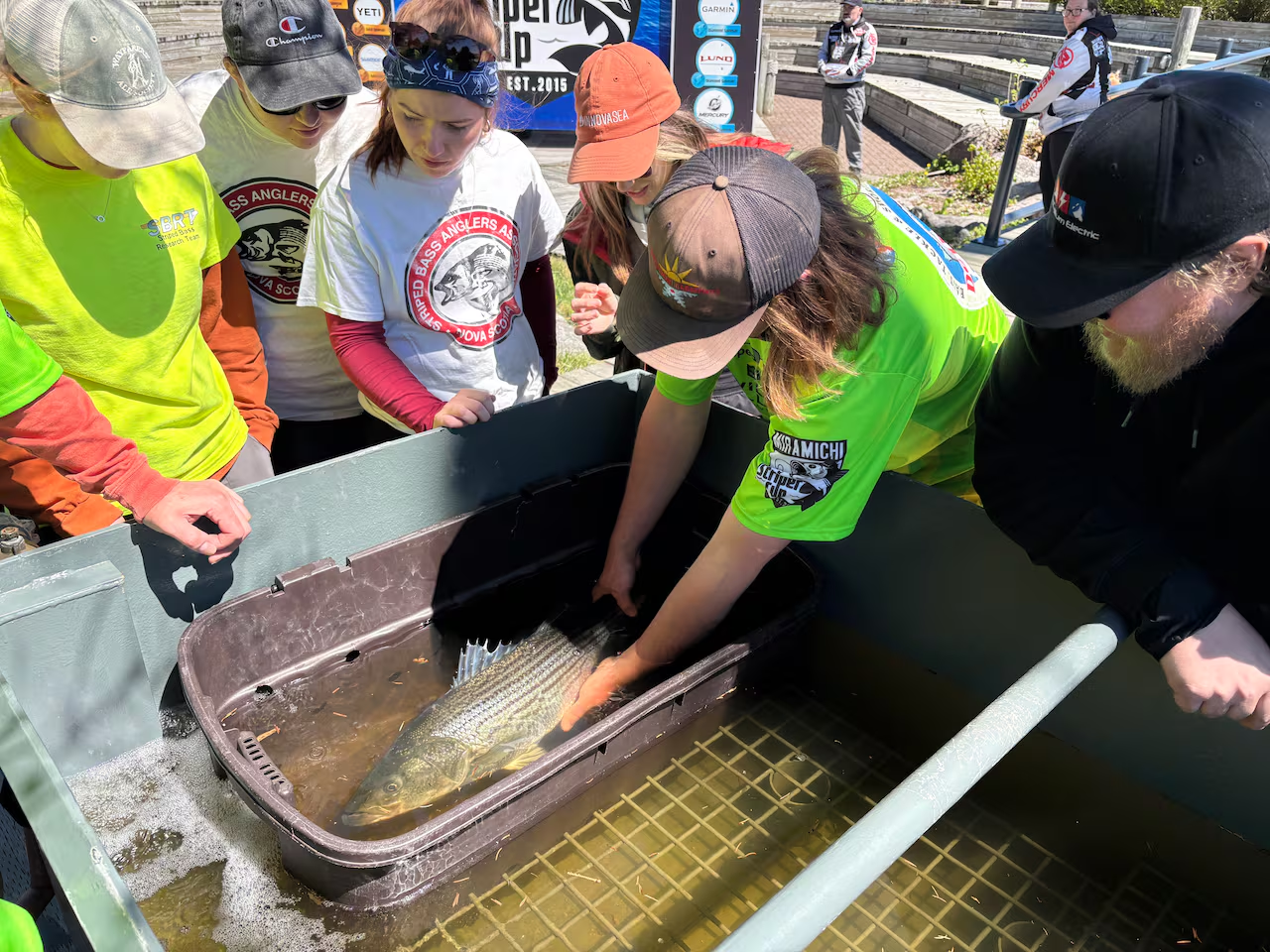
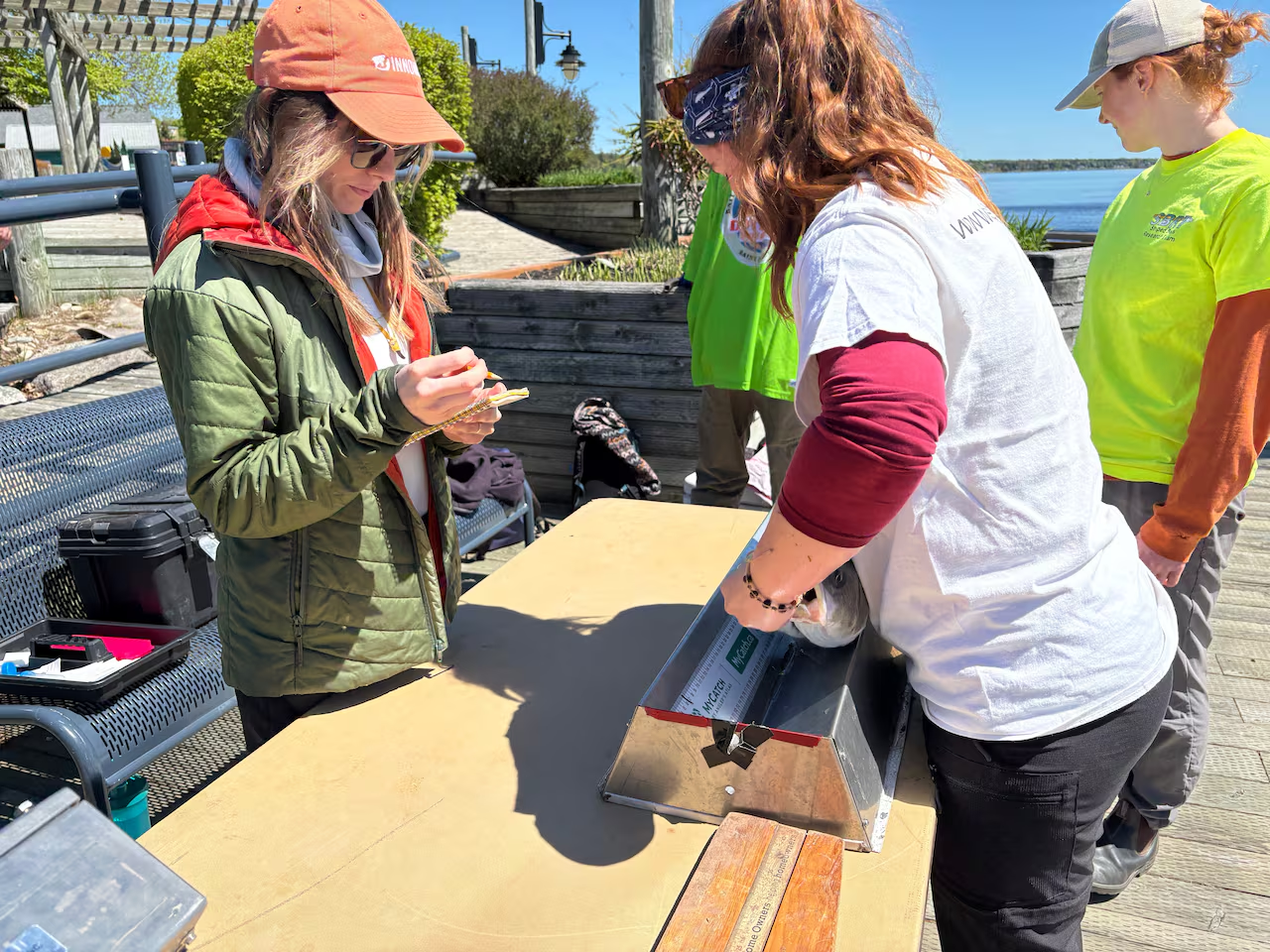
今年5月,在“条纹鲈杯”赛事现场,来自阿卡迪亚大学的一组生物学家负责赛事的称重环节。
Dockside at the Striper Cup in May, a team of biologists from Acadia University ran the weigh station for the tournament.
参赛者们回到里奇码头后,看到这群研究人员迅速将捕获的鲈鱼搬到桌旁,随后将其浸入水槽中称重。
Competitors returning to Ritchie’s Wharf watched the team rush their fish up to a table and submerge them in a tank before weighing them.
今年夺冠的那条鲈鱼重达9.4公斤,约合21磅,是近700条被捕获后又放生的鲈鱼中体型最大的一条。
This year’s winning bass was 9.4 kilograms, or almost 21 pounds, the largest of almost 700 bass caught and released.
钓鲑鱼的爱好者们认为,这种数量上的繁荣表明条纹鲈鱼种群完全能够承受有管控的商业捕捞活动。“我们并非主张彻底消灭整个条纹鲈鱼种群,”奥古斯丁说道。
Salmon anglers say that abundance shows the species could withstand a regulated commercial bass fishery. “We are not saying that we want to eradicate an entire striper population,” Augustine said.
“它们是本地原生物种,维持其种群数量在合理水平同样至关重要,毕竟它们本就属于这片水域。”不过阿卡迪亚大学的研究团队指出,在条纹鲈鱼种群刚刚从近乎灭绝的境地恢复之际,现在就贸然行动实在为时过早。
“They're a native species, and it's important that they stay at decent levels as well, because they're meant to be here as well.”But the Acadia team said it’s too soon after the bass’s near-collapse to take a chance.
“在做出重大决策之前,我们理应开展长期的监测工作,”米克马克族生物学家、阿卡迪亚大学研究员莉亚·克里瑟说道。
“We should be able to long-term monitor before making big decisions,” said Leah Creaser, a Mi’kmaw biologist and Acadia researcher.
“这样才能判断‘哪种物种状况良好,哪种则不然’,而诸多社会因素也让我们不得不有所取舍。”带领该团队的阿卡迪亚大学教授兼生物统计学家特雷弗·艾弗里指出,当生态系统远比简单的“单一因果关系”模型复杂得多时,想要让一种物种与另一种物种相互对立实在是难上加难。
“Like, ‘that species is doing great, that one is not doing great,’ so there’s a game of picking and choosing because of a lot of social pressures.”Trevor Avery, the Acadia professor and biostatistician who leads the team, said it’s “really hard to pit one species against another” when the ecosystem is more dynamic than a simple “smoking gun” scenario.
克里瑟认为,米拉米奇河地区条纹鲈鱼种群的复苏与增长,或许正是进化历程正在实时上演的一个例证。
Creaser said the rebound and growth of the striped bass on the Miramichi may be an example of evolutionary history unfolding in real time.
“这是我们的干涉职责吗?我不确定。”在一条不断变化的河流上不断变化的营地随着争论的持续,一些三文鱼向导营地已经无奈地接受了一条不一样的米拉米奇河。
“Is it our job to intervene? I’m not sure.”A changing camp on a changing river As the debate continues, some salmon outfitters have resigned themselves to a different Miramichi.
威尔逊体育营地是一家始建于1855年的垂钓小屋,业务已拓展至皮划艇、漂流、公司团建、婚礼,甚至还有条纹鲈钓鱼。
Wilson’s Sporting Camps, a lodge that dates back to 1855, has branched out into canoeing, tubing, corporate retreats, weddings, and, yes, even striped bass fishing.
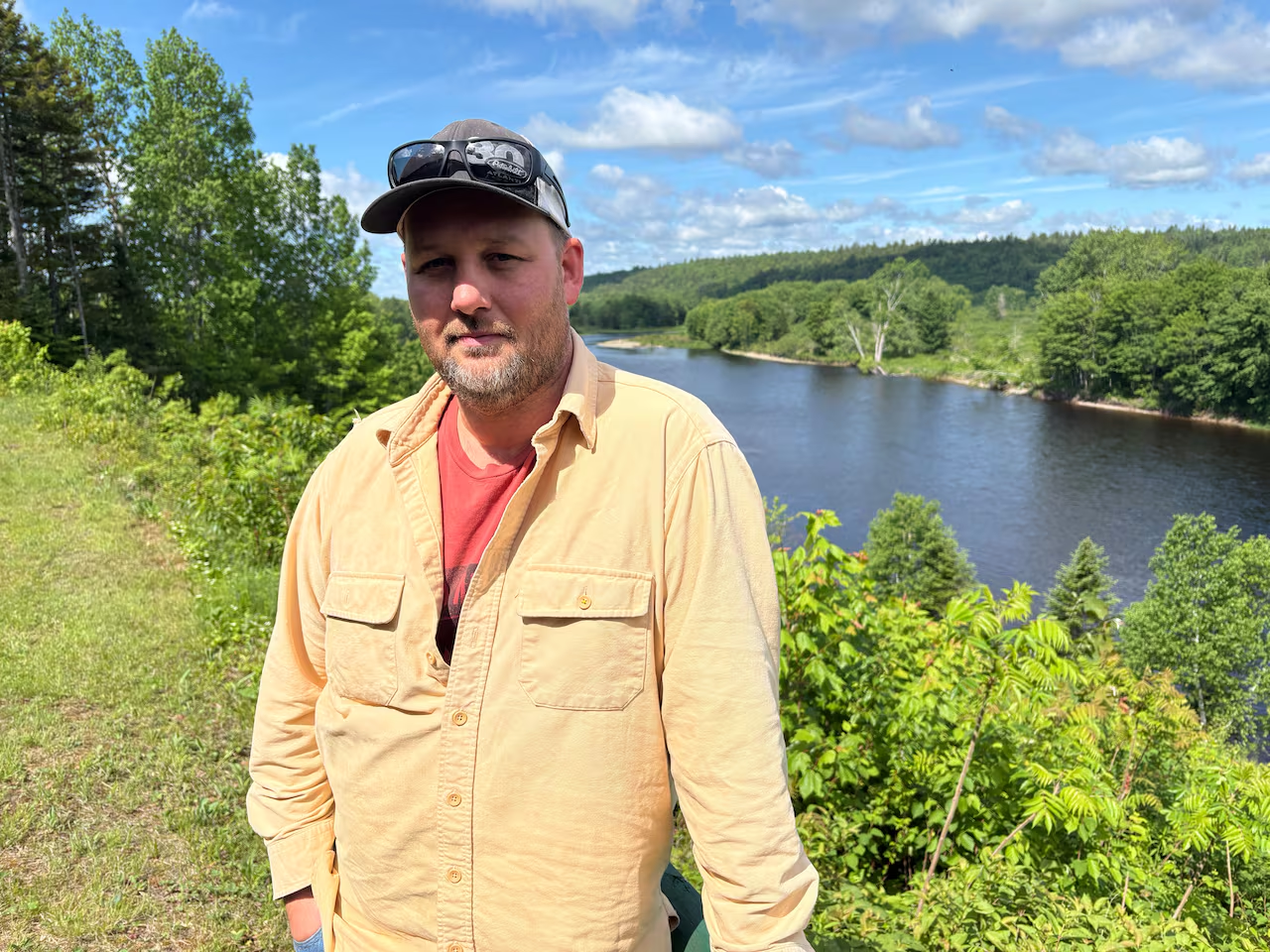
联合所有人卡尔·威尔逊说:“现在的情况是,我们的河流几乎要死了。”
“It's to the point now where our river is almost dead,” co-owner Karl Wilson said.
威尔逊说,河里的鱼非常少……而且似乎没有人真正采取任何行动。每个人都在“互相指责”,同时等待渥太华采取行动。
“There’s very few fish out there … and it doesn't seem like anybody's really doing anything about it.”Everyone is “pointing the finger at one another” while waiting for Ottawa to act, Wilson said.
“在我看来,情况几乎已经无法挽回了。”不过,乔·奥古斯丁依然保持乐观。
“In my opinion, it's almost too far gone.”Joe Augustine, though, remains optimistic.
他的社群与大西洋三文鱼的悠长历史可以追溯到他的曾祖父,他的曾祖父在一天之内就能捕到足够全家人吃一个夏天的三文鱼。
His community’s long history with the Atlantic salmon runs through his great-grandfather, who could catch enough salmon in a day to feed his entire family for a summer.
奥古斯丁说,他的父亲小时候“能听到三文鱼群逆流而上进行产卵的声音。这让他夜不能寐。”他说,除了保持乐观,别无选择。
Augustine said his father, as a child, “could hear the salmon run coming up the river to spawn. It would keep him up at night.”There’s no choice but to be optimistic, he said.
他说:“你必须相信三文鱼的数量会恢复,否则我们做这些工作是为了什么?”
“You have to believe that the salmon numbers are going to come back," he said. "Or then what are we doing this work for?”
他说:“它们的数量已经达到了临界水平,但我们在20至25年前就见过条纹鲈达到临界水平,现在看看它们又回到了我们的河流中。数量太惊人了——也许,绝对是有点太多了。”
“They’ve hit critical levels, but we've seen striped bass hit critical levels 20 to 25 years ago, and now look at them back in our river. It’s crazy, the amount — maybe, definitely, a little too much.
“但如果条纹鲈能做到这一点,为什么大西洋三文鱼就做不到呢?”
“But if it can be done with striped bass, why can't it be done with Atlantic salmon?”