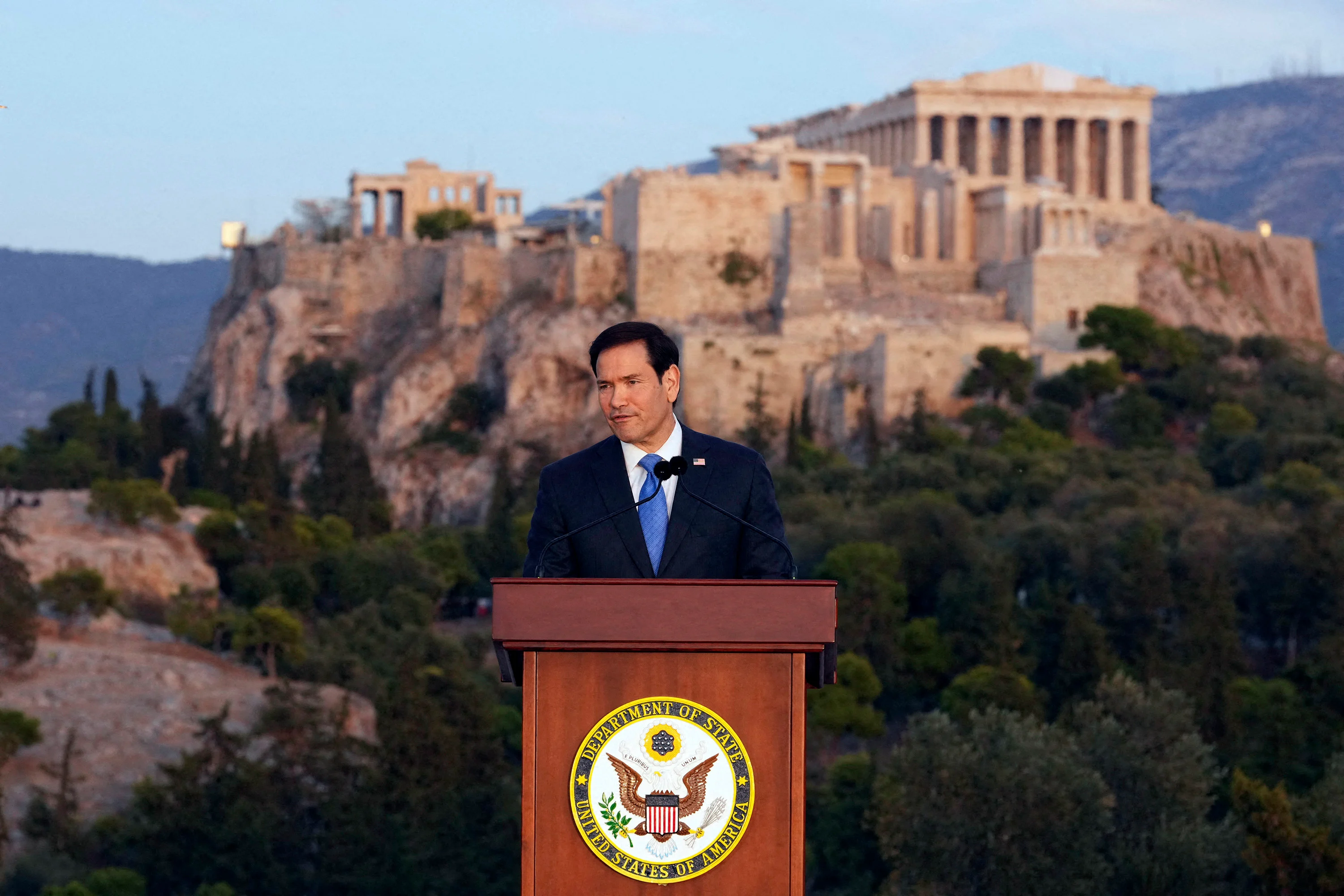
本月早些时候,美国国务卿马尔科·卢比奥站在雅典卫城前称西方的故事是“人类所知道的最伟大的故事”。但好莱坞不是告诉我们,人类有史以来最伟大的故事是拿撒勒人耶稣的故事吗?
Standing before the Acropolis in Athens earlier this month, US Secretary of State Marco Rubio called the West’s story “the greatest story ever known to man”. But didn’t Hollywood tell us the greatest story ever told was that of Jesus of Nazareth?
卢比奥说,未来十年的决定“将决定西方是否能够保持其在世界之首的地位,还是甘于沉沦于萎缩、奴役和衰落的未来”。在特朗普总统领导下,“我们选择毫不道歉地追求国家权力”。古典背景下浮现的是一个被唤醒的旧思想:从柏拉图到北约的西方是一个连绵不断的整体。它掩盖了华盛顿真正想要的东西,而只是对其进行解释。
The decisions of the coming decade, Rubio said, “will determine whether the West maintains its place at the head of the world or resigns itself to a future of atrophy and servitude and decline”. Under US President Donald Trump, “we choose the unapologetic pursuit of national power”. Behind the classical backdrop is an old idea brought back to life: a single West running unbroken from Plato to Nato. It hides more than it explains what Washington wants.
在这个被更新的“西方文明宏大叙事”中——考虑到他对欧洲和北约的厌恶,这个叙事更准确地说应当被称为“从柏拉图到特朗普”——西方必须由一个优于其他地区的华盛顿来领导。
In this updated “grand narrative” of Western civilisation – which might more accurately be renamed “from Plato to Trump”, considering how much he despises Europe and Nato – the West must be led by a Washington that is superior to the rest.
卡内基国际和平基金会的伦纳德·A·舒埃特在《外交事务》杂志上撰文解释了为何极右翼正在复兴一个被驳斥的思想。副总统J.D.·万斯在2025年慕尼黑安全会议上警告称,存在来自“内部”的威胁,针对的是“我们共同的文明”。美国国家安全战略提到“文明的抹除”。特朗普在达沃斯论坛上强调“我们作为一个文明与欧洲共享的纽带”,而卢比奥则敦促盟友“重建人类历史上最伟大的文明”。
Writing in Foreign Affairs, Leonard A. Schuette of the Carnegie Endowment for International Peace explains why the far-right is resurrecting a discredited idea. Vice-President J.D. Vance warned at the 2025 Munich Security Conference of a “threat from within” to “our shared civilisation”. The US National Security Strategy speaks of “civilisational erasure”. Trump stressed at Davos “the bonds we share with Europe as a civilisation”, and Rubio urged allies to “renew the greatest civilisation in human history”.
舒埃特称这一正在成形的学说为“文明主义”。根据这一学说,西方的定义不再在于人人皆可采纳的原则——如宪政民主、自由和平等——而更多地取决于领土、血统和基督教。
Schuette calls the doctrine taking shape “civilisationism”. Under this doctrine, the West is defined less by principles that anyone can adopt – constitutional democracy, liberty and equality – than by territory, ancestry and Christianity.
更大的问题是教条背后的神话。正如学者阿米塔夫·阿查亚所说:“所有文明国家的主张——美国、中国、印度、俄罗斯——在分析意义上都是神话。”柏林到北约的叙事认为,西方文明是一条从古希腊延伸至现代西方民主制度的未中断、线性的脉络。诸如克瓦梅·安东尼·阿皮亚和大卫·格雷斯之类的学者已经将这一故事拆解。
The bigger problem is the myth underneath the doctrine. As the scholar Amitav Acharya puts it, “all civilisation-state claims – US, Chinese, Indian, Russian – are myths in the analytical sense”. The Plato-to-Nato narrative holds that Western civilisation is one unbroken, linear thread running from ancient Greece to modern Western democratic institutions. Scholars such as Kwame Anthony Appiah and David Gress have taken that story apart.
格雷斯实际上是西方文明的捍卫者,他曾撰写过一本书,为那些从未读过它的人提供了实际使用的短语,以便作为意识形态口号。格雷斯认为西方的真实历史更为悲剧和复杂。他将柏林到北约的叙事拆解为20世纪的政治神话,这一神话主要是为冷战地缘政治目的而制造的。
Gress was actually a defender of Western civilisation, having written the book that provided the actual phrase for people who never read it to use as an ideological slogan. Gress believed the West’s real history was more tragic and complicated. He dismantled the Plato-to-Nato narrative as a 20th-century political myth, manufactured largely for Cold War geopolitical ends.
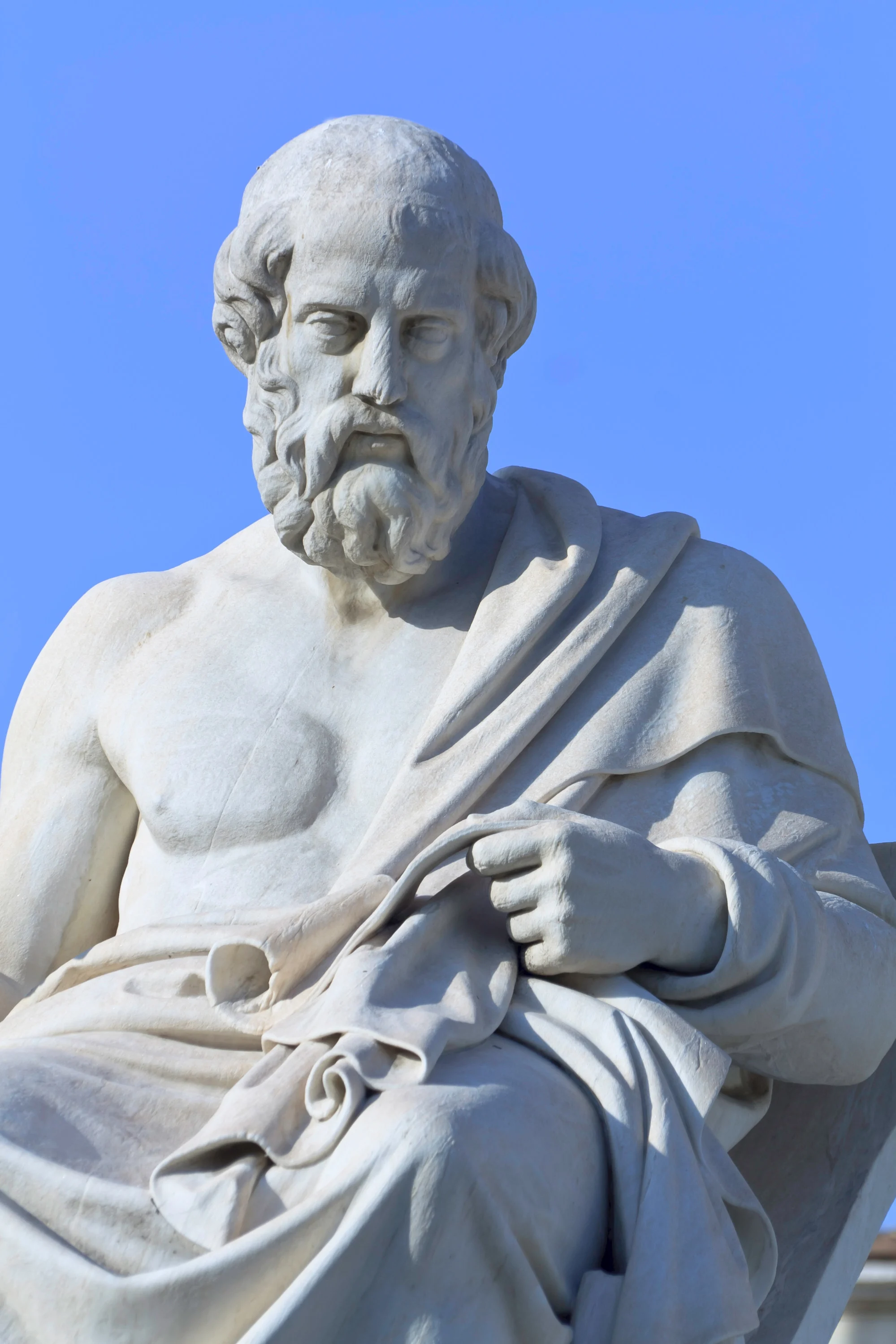
这一叙事通过“西方文明”课程和西方世界的“伟大书籍”在20世纪中期的美国大学中流行开来。如今,你可以看到保守或新保守主义评论员哀叹这些课程在一些大学中已经消失。
That narrative caught on in mid-20th-century American universities through “Western Civ” curricula and the “great books” of the Western world. Today, you have conservative or neoconservative commentators bemoaning their disappearance from some universities.
我在美国大学四年的教育过程中就是通过这些书籍接受教育的。这些课程为跨大西洋联盟提供了反共产主义的意识形态蓝图,使北约能够把自己呈现为2500年自由传统的捍卫者。谁不希望柏拉图和亚里士多德站在自己这边?除了他们几乎肯定会对今天的西方民主制度感到厌恶。
I was educated on those books through four years of university in the United States. Those courses gave the transatlantic alliance an ideological blueprint against communism, allowing Nato to present itself as the defender of a 2,500-year-old tradition of liberty. Who wouldn’t want Plato and Aristotle on their side? Except that they would almost certainly be disgusted by today’s Western democracies.
在其历史的很长时期里,欧洲一直被绝对君主制、宗教不容忍、封建主义和帝国主义所主导。自由民主既是偶然的产物,也是目的地。该叙事还跳过了大约一千年的中世纪历史。现代制度是从罗马法、基督教神学和日耳曼制度的混杂综合中锻造出来的,后来又在三十年战争之后与现代欧洲的发展相结合。
For much of its history, Europe was dominated by absolute monarchies, religious intolerance, feudalism and imperialism. Liberal democracy was as much accident as destination. The narrative also skips about a thousand years of medieval history. Modern institutions were forged from a messy synthesis of Roman law, Christian theology and Germanic institutions, later combined with modern European developments after the Thirty Years’ War.
“西方”也不是一个封闭的思想共同体。欧洲曾是更广泛的欧亚和地中海网络的一部分。罗马陷落后,希腊文本在西欧失传,随后被巴格达、科尔多瓦和开罗的伊斯兰学者所保存。从柏拉图到北约的思想血脉,正是通过伊斯兰世界传承下来的。
Neither is “the West” a sealed intellectual community. Europe was part of a broader Eurasian and Mediterranean network. Greek texts were lost to western Europe after the fall of Rome, then preserved by Islamic scholars in Baghdad, Cordoba and Cairo. The bloodline from Plato to Nato ran through the Islamic world.
卢比奥自己的话暴露了他对西方思想根源的无知。今年二月在慕尼黑安全会议上,他哀叹自1945年以来西方已经收缩,而这种衰落被“无神论的共产主义革命”和“反殖民起义”所加速。他接着宣称,美国“对礼貌有序地照料西方的受管理衰退毫无兴趣”。
Rubio’s own words betray his ignorance about the West’s intellectual roots. At the Munich Security Conference this February, he lamented that after 1945 the West had contracted, a decline hastened by “godless communist revolutions” and “anti-colonial uprisings”. He went on to declare that the US had “no interest in being polite and orderly caretakers of the West’s managed decline”.
在雅典,他赞扬了西班牙征服者埃尔南·科尔特斯,并将前殖民时期的美洲描述为“一片开放而荒凉的土地”,方便地忽略了那里早已存在的土著社会。卢比奥真的会对印加、阿兹特克、玛雅和卡拉尔文明一无所知吗?这些文明即便是北美受教育的高中生也早有了解。
In Athens, he praised the Spanish conquistador Hernan Cortes and described the pre-colonial Americas as “an open and wild land”, conveniently omitting the indigenous societies that had long lived there. Could Rubio really be so pathetically ignorant of the Inca, Aztec, Maya and Caral civilisations about which well-informed high-schoolers in North America would know?
即便是作者塞缪尔·亨廷顿也曾承认:“西方之所以能够统治世界,并非因为其思想、价值观或宗教的优越性(其他文明的少数成员几乎未被这些所转化),而是因为其在组织暴力应用上的优越性。西方人常常忘记这一点;非西方人则从未忘记。”学者如伊恩·莫里斯和贾雷德·戴蒙德曾认为,真正的驱动力是物质的:资源、土地、市场以及对军事化技术的控制。但“西方是最好的”这一说法是一个有用的神话,如今正被用于美式帝国主义2.0的包装。
Even author Samuel Huntington conceded that, “The West won the world not by the superiority of its ideas or values or religion (to which few members of other civilisations were converted) but rather by its superiority in applying organised violence. Westerners often forget this fact; non-Westerners never do.”Scholars such as Ian Morris and Jared Diamond have argued that the real drivers were material: resources, land, markets and control of militarised technology. But “the West is the best” is a useful myth, and it is being recycled for American imperialism 2.0.
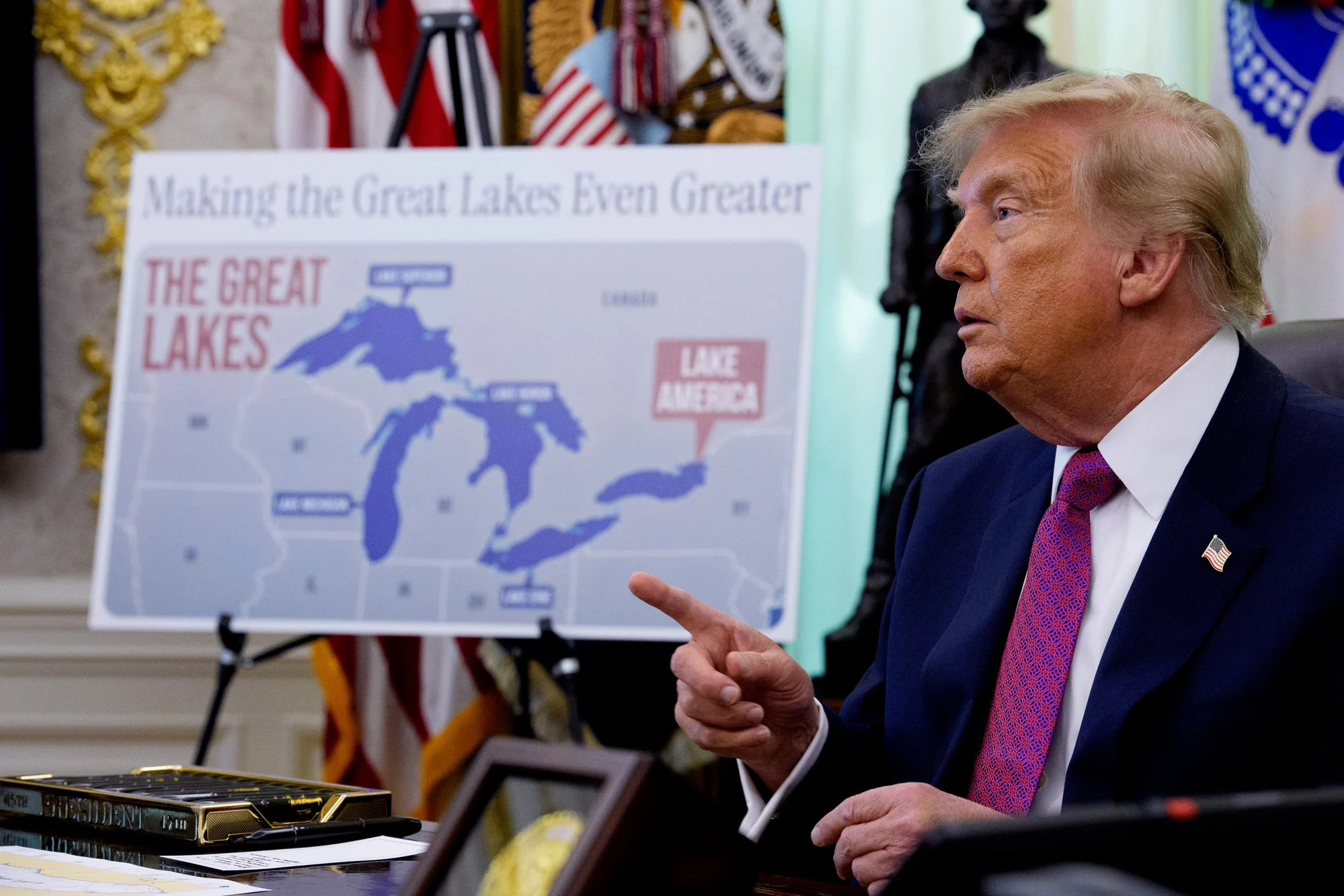
其实不必远看。只需看看特朗普喜欢声称加拿大、格陵兰、委内瑞拉和古巴为美国领土,以及西半球处于美国统治之下的地图。再考虑一下国防部长皮特·赫格塞斯2020年出版的那本书,其中将中国、社会主义和伊斯兰教描绘为“圣战”中的敌人。
You don’t have to look far. Just look at the maps on which Trump likes to claim Canada, Greenland, Venezuela and Cuba as US territory and the western hemisphere as being under US dominance. Consider Defence Secretary Pete Hegseth’s 2020 book , which casts China, socialism and Islam as enemies in a “holy war”.
无论是用来为十字军东征辩护,还是为势力范围的划分辩护,这种框架都把主权国家视为他人秩序中的从属。欧洲和亚洲的政府应当根据华盛顿的行动来评判它,并决定:谁才是他们最大的威胁?
Whether used to justify a crusade or a carve-up into spheres of influence, the frame treats sovereign nations as subordinates in someone else’s order. The governments of Europe and Asia should judge Washington by its actions and decide: who is their biggest threat?