发射于千禧年左右的美国国家航空航天局(NASA)Terra和Aqua卫星,数十年来一直是气候观测的主力军。
Launched around the turn of the millennium, NASA’s Terra and Aqua satellites have served as workhorses of climate observation for decades.
从地球上方700公里(435英里)的高度,它们追踪云层、藻类、森林、烟羽和火灾,拍摄出一些有史以来从轨道上捕捉到的最具标志性的图像:飓风卡特里娜冲向新奥尔良,撒哈拉沙尘暴遮蔽大西洋,以及我们熟悉的“蓝色星球”图像——早期iPhone屏幕上常见的那张地球照。然而,印度的农民却用几乎自石器时代就未改变的技术,挫败了这些高科技的“天眼”。
From 700 kilometers (435 miles) above Earth, they track clouds, algae, forests, smoke plumes and fires, producing some of the most iconic images ever captured from orbit: Hurricane Katrina barreling toward New Orleans, Saharan sandstorms blotting out the Atlantic Ocean, and the “ blue marble” image of our planet familiar from early iPhone screens. Yet farmers in India have been thwarting these sophisticated eyes in the sky with techniques that have barely changed since the Stone Age.
这有助于解释为何技术官僚式的应对德里慢性空气污染的努力屡屡失效。
That helps explain why technocratic efforts to tackle Delhi’s chronic air pollution keep falling short.
人们总觉得,只要监管更好且得到落实,就能驱散笼罩德里每年冬天的末日般霾雾。但更残酷的事实是,除非污染背后的政治和经济激励发生改变,否则窒息性的雾霾将继续成为年度祸害。
It would be comforting to think that better regulation and its implementation could clear the apocalyptic haze that descends on Delhi every winter. The harder truth is that until the political and economic incentives behind the pollution change, choking smog will remain an annual blight.
卫星曾被视为解决方案的一部分。德里季节性污染的一个重要来源是农民在季风收获后焚烧秸秆,以清理田地为冬季小麦作物做准备。围绕首都的哈里亚纳邦、旁遮普邦和北方邦三州,产出了印度约四分之一的稻谷。自2021年以来,政府当局一直试图利用卫星提醒地方官员注意非法火点热点,并派出执法队伍。
Satellites once seemed to offer part of the solution. One significant source of Delhi’s seasonal pollution is farmers burning rice straw after the monsoon harvest to clear their fields for the winter wheat crop. Haryana, Punjab and Uttar Pradesh, the states surrounding the capital, produce about a quarter of India’s rice . Since 2021, government authorities have been trying to use satellites to tip off local officials to illegal fire hotspots and send out enforcement crews.
但该计划却正面撞上了一个被称为古德哈特定律的格言:一旦一个指标成为目标,人们就会学会如何钻空子。
But the initiative ran headlong into an adage known as Goodhart’s law: Once a measure becomes a target, people learn how to game it.
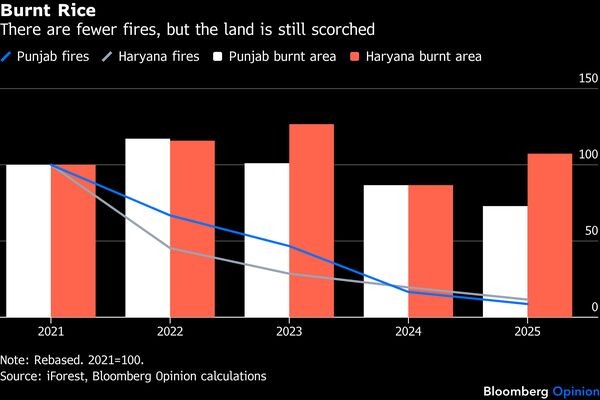
这些卫星每天仅在上午10点至下午2点之间的短暂时段飞越印度北部。2024年《印度今日》的一项调查发现,旁遮普邦的政府官员在向农民泄露卫星过境时间表,使他们能够将秸秆焚烧推迟到当天较晚的时候。结果令人震惊。该邦下午3点以后发生的大型农田火灾数量,从2021年的约3%激增至2024年和2025年的90%以上。人类有史以来开发的最先进监测技术之一,正被农民使用一种存在了数千年的古老方法所击败。
The satellites only pass over northern India in a brief window of the day, between 10 a.m. and 2 p.m. A 2024 India Today investigation found that government officials in Punjab were tipping farmers off about the schedule, allowing them to shift their burning later in the day. The result was revealing. The number of large farm fires occurring after 3 p.m. in the state went from about 3% in 2021 to more than 90% in 2024 and 2025. Some of the most sophisticated monitoring technology humanity has ever devised is being outwitted by farmers using a technique that has existed for thousands of years.
我们曾见过这一幕。卫星监控的“棒子”之所以被研发,部分原因在于此前的“胡萝卜”策略失败了。2010年代末,官员们曾寄望于机械化设备能够取消秸秆焚烧的必要性。像Happy Seeder和Super Seeder这样的拖拉机牵引机械,能让农民在不先焚烧水稻残茬的情况下直接将小麦播种到田地里,被宣传为遏制雾霾、提高产量和现代化印度农业的手段。
We’ve seen this movie before. The stick of satellite surveillance was developed in part because an earlier technocratic carrot had failed. In the late 2010s, officials hoped that mechanized equipment could eliminate the need for stubble burning. Tractor-drawn machines such as the Happy Seeder and Super Seeder, which allow farmers to sow wheat directly into fields without first burning the rice residue, were touted as a way to curb smog, boost yields and modernize Indian agriculture.
但事实并非如此。转而使用播种机的农民不仅要为机械买单,还要为其运行支付柴油费用。依赖社区共享设备的贫困小农可能只能在种植窗口期内等待轮到自己使用——每错过一天都意味着经济损失。相比之下,点燃一根火柴既快速又简单,机械难以与之竞争。自2018年以来在旁遮普邦分发的秸秆处理机械中,大约有四分之一目前已无法使用。即便是在使用这些机械的农民中,大约有一半仍然选择焚烧秸秆。
That didn’t work. Farmers who switched to seeders had to pay for the machinery, as well as diesel to power it. Poorer smallholders relying on community-owned equipment might have to wait their turn during a narrow planting window when every lost day costs money. Against the speed and simplicity of dropping a match, machinery struggled to compete. Roughly a quarter of the crop-residue machines distributed in Punjab since 2018 are out of action. Even among farmers who use them, about half still burn stubble.
问题的根源在于印度农业的政治经济学。政府在印度北部让水稻种植变得极具吸引力,提供保证的最低收购价、近乎无限的收购量,以及抽水和化肥的补贴。这些激励措施鼓励农民生产大量水稻,而水稻种植后留下同样巨量的秸秆,需要农民匆忙清理。面对如此强大的经济利益,Happy Seeder和卫星监控几乎毫无胜算。
The root of the problem lies in the political economy of Indian agriculture. The government has made growing rice extraordinarily attractive in northern India, with guaranteed floor prices, near-unlimited procurement, and subsidies for water pumping and fertilizer. Those incentives encourage farmers to produce vast quantities of a crop that leaves them with equally large amount of residue to clear in a hurry. Against such powerful economics, Happy Seeders and satellite surveillance never stood much of a chance.
改革的前景就像迪瓦利节期间德里的天空一样黯淡,那时居民燃放烟花爆竹,加剧季节性雾霾。数十年来,为将印度的水稻和小麦产地从旁遮普和哈里亚纳转向东部各州所做的努力,几乎未能削弱首都附近的水稻种植。说服农民转向对环境破坏较小的作物,如玉米和豆类的尝试也收效甚微。结果是一个惊人的悖论:印度仍在鼓励农民种植水稻,其产量甚至超过了其14亿人口的需求。政府库存今年已飙升至历史最高水平:超过所需缓冲量的10倍。
The prospects for change are about as gloomy as Delhi’s skies during Diwali, when residents burn firecrackers that deepen the seasonal smog. Decades of efforts to shift India’s rice and wheat bowl away from Punjab and Haryana and toward eastern states have barely dented paddy cultivation near the capital. Attempts to persuade farmers to switch to less environmentally damaging crops such as corn and lentils have fared little better. The result is a remarkable paradox: India keeps encouraging farmers to grow rice beyond even the needs of its 1.4 billion people. Government inventories have swelled to record levels this year: 10 times above the required buffer.
德里走向空气清洁的最明确标志,将是附近种植的水稻面积减少,因而每年需要焚烧的秸秆面积也随之减少。然而,数据却朝着相反的方向发展。而且,改变这一局面的政治障碍十分严峻。2020年最后一次认真尝试改革印度农业体系的举措,导致北部各州的农民在首都周边街道上抗议了一整年,直至政府最终让步。
The clearest sign that Delhi is on a path to cleaner air would be a decline in the amount of paddy grown nearby, and therefore the acreage liable to be burned each year. Instead, the numbers are moving in the opposite direction. And the political obstacles to changing that are formidable. The last serious attempt to overhaul India’s agricultural system, in 2020, brought farmers from the northern states onto the streets around the capital for a year, until the government eventually backed down.
这就是陷阱。官员们不断寻求技术解决方案,因为根本的政治问题如此难以面对。但重要的指标不是卫星探测到多少火灾,也不是政府分发了多少台播种机,而是水稻农民种植了多少亩地。在种植面积开始缩小之前,任何技术都无法让德里的天空重见天日。
That’s the trap. Officials keep reaching for technological fixes because the underlying political problem is so difficult to confront. But the metric that matters isn’t how many fires satellites detect or how many seeders governments distribute. It’s how much paddy farmers plant. Until that acreage starts shrinking, no amount of technology will clear Delhi’s skies.