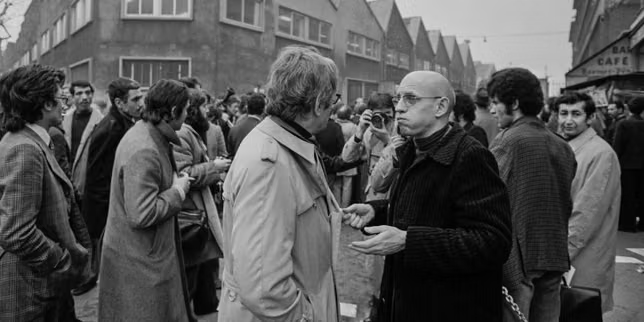
米歇尔·福柯(右)与哲学家兼记者莫里斯·克拉维尔(1920-1979)在西郊巴黎郊区布洛涅-比扬古的雷诺工厂前的示威活动中交谈。
, Michel Foucault (right) spoke with philosopher and journalist Maurice Clavel (1920-1979), during a demonstration in front of a Renault factory, in the western Paris suburb of Boulogne-Billancourt.
米歇尔·福柯关于伊朗伊斯兰革命的著作如今以书籍形式出版。该卷的四位编辑汇编了福柯在1978年9月至1979年2月期间就该主题所制作的所有“思想报导”相关文本。他们还补充了当时这些著作引发的辩论中的若干其他文件、文章和回应,以及这些分析背后的“工作坊”,包括碎片、信件和访谈笔记。通过公开哲学家的档案,编辑们使我们能够重新评估他们认为被忽视或误解的文本和政治立场。
Michel Foucault's writings on the Islamic Revolution in Iran now appear in book form. The volume's four editors have compiled all of the texts related to the "reportages of ideas" that Foucault produced on the subject, from September 1978 to February 1979. They have supplemented them with several other documents, articles and responses drawn from the debates these writings sparked at the time, as well as with the "workshop" behind these analyses, including fragments, letters and interview notebooks. By bringing the philosopher's archives to light, the editors allow us to reassess texts and political positions that they believe have been overlooked or misunderstood.
事实的确如此:福柯于1978年9月和11月两次访问伊朗,以及他在1979年5月在《世界报》上发表的题为《无用的起义?》的文章中的结论,仅仅关注导致沙阿下台的起义,而未提及其后发生的事情:新政权的迅速建立以及伊朗伊斯兰共和国的首批机构。事实的确如此:福柯仅关注“起义的策略”,并逻辑上拒绝回应那些对其后果表示担忧的批评者。福柯将伊朗实验作为他自己智力实验的实验室:对古典革命传统及其与国家重建联系的活生生的反驳。
It is true that Foucault's two trips to Iran, in September and November 1978, and his conclusions on the subject, which he published in Le Monde in an article entitled "Useless to Revolt?" in May 1979, focused solely on the uprising that led to the shah's ouster and said nothing about what followed: the rapid establishment of the new regime and the Islamic Republic of Iran's first institutions. It is true that Foucault was only interested in "the strategy of the uprising" and logically refused to respond to critics who raised concerns about its consequences. Foucault used the Iranian experiment as a laboratory for his own intellectual experiment: a living refutation of the classical revolutionary tradition and of the link between revolution and the refounding of the state.