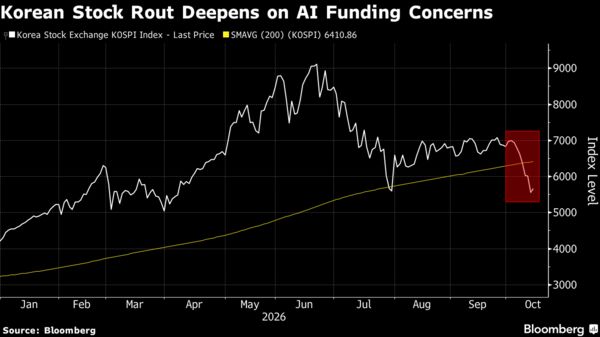
韩国股市周一延续跌势,因DeepSeek最新模型引发对内存芯片需求的担忧,叠加市场对AI融资的忧虑。
Korean stocks resumed declines Monday, as DeepSeek’s latest model sparked concerns over demand for memory chips, compounding market worries over AI financing.
基准Kospi指数一度下跌3.2%,芯片制造商三星电子和SK海力士跌幅均超过4%,随后略有回升。日本科技股占比高的日经225指数下跌约2%,芯片设备制造商Advantest Corp.为跌幅最大的股票之一。
The benchmark Kospi dropped as much as 3.2%, with chipmakers Samsung Electronics Co. and SK Hynix Inc. dropping more than 4% each before paring losses. Japan’s tech-heavy Nikkei 225 slid about 2%, with chip-equipment maker Advantest Corp. among the biggest decliners.
美国芯片股周五延续第八个交易日的跌势,投资者对AI建设成本飙升的担忧加剧。与此同时,中国DeepSeek公司周末发布了其AI模型的更新版本,称其更快速且更轻量,引发人们对内存需求减少的担忧。
US chipmakers extended losses to an eighth-straight session Friday, with investor nervousness increasing over the soaring costs of the AI buildout. Meanwhile, China’s DeepSeek over the weekend released an update of its AI model that it says is faster and leaner, fueling worries that less memory will be required.
“韩国股市目前存在太多不确定性,难以判断底部”,Life Asset Management首席执行官康大权表示,他指出,美国公司AI项目的融资不确定性是市场紧张的主要来源。“除非美国公司继续加大支出,否则韩国公司难以盈利。”Kospi指数正在摆脱自2008年10月以来的最差周表现。尽管如此,受AI支出狂热推动内存价格创历史新高的影响,韩国基准指数今年仍上涨超过30%。
“There are too many uncertainties to call a bottom” for Korean stocks, said Kang DaeKwun, chief executive officer at Life Asset Management, citing uncertainties surrounding funding for US companies’ AI projects as the key source of market jitters. “Korean companies cannot make money unless the US firms continue to spend.”The Kospi is coming off its worst weekly performance since October 2008. The Korean benchmark is still up more than 30% this year, after ravenous AI spending drove memory prices to record highs.