
企业正在拥抱人工智能(AI),但许多企业仍在努力将这种势头转化为有意义的业务成果。根据埃森哲的报告,尽管大多数企业计划增加投资,但只有13%的组织报告称从AI中获得了显著的全企业范围价值。
Businesses are embracing artificial intelligence (AI), but many are still struggling to translate that momentum into meaningful business outcomes. Only 13 per cent of organisations have reported significant enterprise-wide value from AI, even as most plan to increase investments, according to Accenture.
埃森哲的研究发现,许多在扩大AI应用方面遇到困难的组织倾向于在各个职能部门广泛部署AI代理,而不是专注于高影响力的决策点——他们在技术上的支出多于人力,并将早期试点误认为是真正的转型。
Accenture’s research found that many organisations that struggle to scale AI tend to deploy AI agents broadly across functions rather than focusing on high-impact decision points – spending more on technology than people and mistaking early pilots for genuine transformation.
东南亚扩大AI应用的挑战 根据埃森哲亚太及东南亚地区高级董事总经理、AI和数据负责人维韦克·卢特拉(Mr Vivek Luthra)的说法,那些成功通过AI实现转型的组织共享五个特征:安全的数字核心、高质量数据、负责任的AI治理、强有力的CEO支持以及具备技能的团队。
SOUTHEAST ASIA’S CHALLENGES TO SCALING AI According to Mr Vivek Luthra, senior managing director, and AI and data lead ( Asia Pacific and Southeast Asia ) at Accenture, organisations that have successfully transformed with AI share five characteristics: a secure digital core, quality data, responsible AI governance, strong CEO backing and skilled teams.
然而,在东南亚,构建这些基础条件面临着独特的挑战,起点在于人才。“缺乏足够的专业AI工程师,且对他们的竞争非常激烈,”卢特拉先生说。“与此同时,存在大量数字素养较高但从未与AI协同工作过的劳动力。”他补充道,解决这两个差距需要组织重新思考培训和岗位设计。
In Southeast Asia, however, building those foundations comes with distinct challenges, starting with talent. “There are not enough specialist AI engineers to go around, and competition for them is intense,” said Mr Luthra. “At the same time, there is a large workforce that is digitally literate but has never worked alongside AI.”Addressing both gaps will require organisations to rethink training and job design, he added.
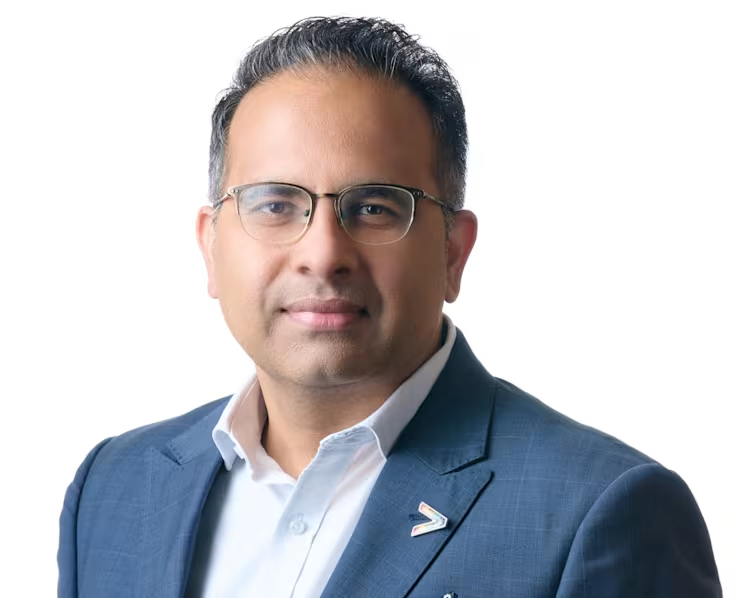
东南亚的人工智能人才短缺和大量具备数字素养的劳动力呼吁采用新的培训和岗位设计方法,埃森哲亚太及东南亚地区高级董事总经理、AI和数据负责人维韦克·卢特拉如是说。
Southeast Asia’s AI talent shortage and large digitally literate workforce call for new approaches to training and job design, says Mr Vivek Luthra, senior managing director, and AI and data lead (Asia Pacific and Southeast Asia) at Accenture.
该地区的碎片化格局是另一个障碍,不同的法规、数据法律、语言以及数字发展水平各不相同。卢特拉先生表示:“在一个国家的数据上训练的模型在另一个国家可能表现不佳。”“这不是一个可以规避的问题,而必须从第一天起就融入架构之中。”数据主权又增加了一层复杂性。大约64%的东南亚组织计划增加对主权AI的投资,将数据和AI系统置于本地控制之下,并与国家优先事项保持一致。
The region’s fragmented landscape is another hurdle, with different regulations, data laws, languages and levels of digital development. “A model trained on data from one country may perform poorly in another,” said Mr Luthra. “This is not a problem to work around; it has to be built into the architecture from day one.”Data sovereignty adds another layer of complexity. Some 64 per cent of Southeast Asian organisations plan to increase investment in sovereign AI, keeping data and AI systems under local control and aligned with national priorities.
对于在该地区跨国运营的组织而言,这意味着在构建能够跨业务运作的AI时,需要平衡不同的监管和数据要求。
For organisations operating across the region, this means balancing different regulatory and data requirements while building AI that can work across the business.
这些差异也可能影响组织部署的AI类型。“在某些情况下,较小的、专业化的模型可能更适合特定的业务需求,并能够实现预期的成果,”卢特拉先生表示。
Those differences can also influence the type of AI organisations deploy. “In some cases, smaller, specialised models may be a better fit for specific business requirements and could deliver the right outcomes,” said Mr Luthra.
遗留技术是另一个主要限制,许多组织依赖的系统本来就不是为了支持AI而设计的。
Legacy technology is another major constraint, with many organisations relying on systems that were never designed to support AI.
构建正确的基础:埃森哲《智能数字大脑》报告指出,扩展AI的四个要求:统一的数据访问、结构化的制度知识、针对特定需求定制的AI模型,以及从一开始就内置治理。
BUILDING THE RIGHT FOUNDATION Accenture’s Intelligent Digital Brain report identifies four requirements for scaling AI: unified data access, structured institutional knowledge, AI models tailored to specific needs and governance built in from the outset.
对于东南亚组织而言,建立这些基础始于构建一个数字骨干,使数据、智能和决策能够在业务内部流动,同时符合各市场的法规要求。这可能意味着现代化或淘汰遗留基础设施,并转向基于云的架构。对于在多个市场运营的组织而言,这种架构还必须能够容纳不同的监管要求。
For Southeast Asian organisations, putting these foundations in place starts with building a digital backbone that allows data, intelligence and decision-making to flow across the business while complying with regulations in each market. This may mean modernising or retiring legacy infrastructure and moving towards cloud-based architecture. For organisations operating across multiple markets, that architecture must also accommodate different regulatory requirements.
技术只是方程式的一部分。组织还需要让机构知识——从内部文件和流程到员工专业知识——对人工智能可访问,以便能够一致地使用。
Technology is only part of the equation. Organisations also need to make institutional knowledge – from internal documents and processes to employee expertise – accessible to AI so it can be used consistently.
构建坚实的数字基础涉及在日常业务运营中连接技术、数据和知识。
Building a strong digital foundation involves connecting technology, data and knowledge across everyday business operations.

围绕这一原则设计。其人工智能代理利用三种功能——语言、记忆和推理——来理解组织的术语、检索相关知识,并利用这些情境来支持决策。
is designed around this principle. Its AI agents draw on three functions – language, memory and reasoning – to understand an organisation's terminology, retrieve relevant knowledge and use that context to support decision-making.
雅诗阁集团提供了一个例子,说明这一原则如何在多个客户接触点上发挥作用。埃森哲正在与总部位于新加坡的全球酒店集团雅诗阁合作,为其下一代人工智能赋能的旅行生态系统奠定基础,在客户接口处连接核心系统,同时融入负责任的人工智能和数据隐私保障。
The Ascott Limited offers one example of how this could work across multiple customer touchpoints. Accenture is working with the Singapore-headquartered global hospitality group to lay the foundation for its next-generation AI-enabled travel ecosystem, connecting core systems across guest interfaces while incorporating responsible AI and data privacy safeguards.
作为这项工作的一部分,两家公司正在试点模型上下文协议框架和早期阶段的统一商业概念,这些概念将使人工智能代理能够通过大型语言模型聊天界面、消息应用程序和直接预订平台与雅诗阁进行互动。下一步是将雅诗阁的人工智能旅行伴侣Cubby演变为个人旅行代理,能够代表客人比较选项、规划行程并完成预订。
As part of this work, the two companies are piloting model context protocol frameworks and early-stage unified commerce concepts that would allow AI agents to interact with Ascott through large language model chat interfaces, messaging apps and direct booking platforms. The next step is to evolve Cubby, Ascott’s AI travel companion, into a personal travel agent that can compare options, plan itineraries and complete bookings on a guest’s behalf.
人工智能扩张中的领导作用 人工智能转型的成功在很大程度上取决于人,就像取决于技术一样。
THE ROLE OF LEADERSHIP IN SCALING AI Successful AI transformation depends as much on people as it does on technology.
“在太多的人工智能项目中,变革管理被视为最后一步,但它需要成为第一步,”卢特拉先生说。“采用的速度不会由技术有多复杂来决定,而是由人们使用它时感到自信和有能力的速度来决定。”为员工配备人工智能技能只是挑战的一部分。在整个组织中维持变革还需要来自高层的领导。埃森哲的一项调查发现,首席执行官赞助的重塑所创造的价值是组织内部较低层级主导的倡议的2.5倍。
“In too many AI programmes, change management is treated as the last step, but it needs to be the first,” said Mr Luthra. “The speed of adoption will not be determined by how sophisticated the technology is, but by how quickly people feel confident and capable using it.”Equipping employees with AI skills is only part of the challenge. Sustaining change across an organisation also requires leadership from the top. An Accenture survey found that CEO-sponsored reinvention delivered 2.5 times more value than initiatives led at lower levels of the organisation.
“首席执行官的赞助能够解锁仅靠技术投资无法实现的东西,”卢特拉先生说。“这些包括挑战组织运作方式的许可、投资于短期内看不到回报的基础设施的承诺,以及向整个组织传达一个信号:这不是一个试点项目——这是新的方向。”了解如何帮助组织为大规模人工智能奠定基础。
“CEO sponsorship unlocks things that technology investment alone cannot,” said Mr Luthra. “These include the permission to challenge how the organisation works, the commitment to invest in foundations that will not show returns in the short term and the signal to the whole organisation that this is not a pilot programme – it is the new direction.”Learn how helps organisations build the foundations for AI at scale.