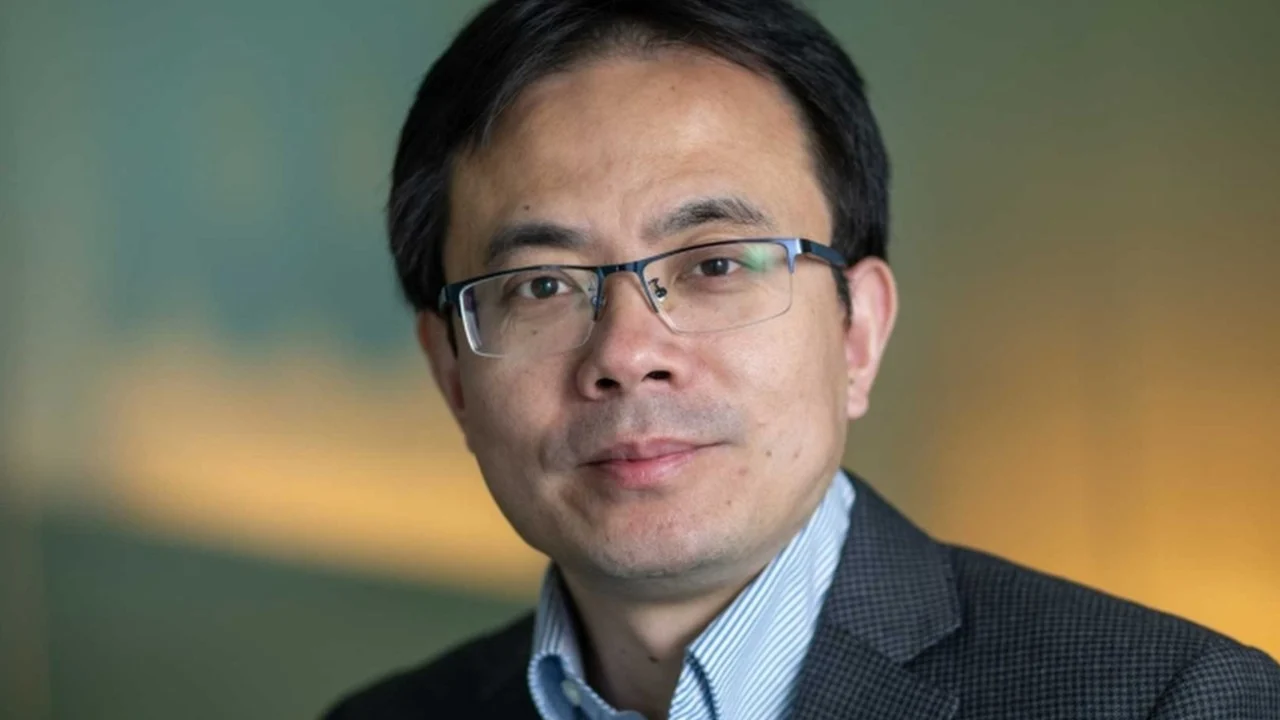
一位来自约翰霍普金斯大学的科学家因他的研究而获奖;他的研究表明,短暂的肠道感染可能会增加患结肠癌的风险。如今,这位科学家已全职移居中国。
据这所美国大学官网上的最新信息,约翰霍普金斯大学彭博公共卫生学院的教授万丰义(Wan Fengyi)已加入位于杭州的浙江大学。
A Johns Hopkins University scientist whose award-winning work suggests that a brief stomach bug could raise the risk of colon cancer has moved to China full time. Wan Fengyi, a professor at the Johns Hopkins Bloomberg School of Public Health, has joined Zhejiang University in Hangzhou, according to his new profile on the Chinese university’s website.
万丰义本月回到了中国,并在浙江大学担任教授职位。他目前在该大学第二附属医院的国家级实验室工作,该实验室致力于研发可植入血管内的医疗设备。
Wan returned to China this month and now holds a chair professorship at Zhejiang University. He is based at a national laboratory at its Second Affiliated Hospital, which develops devices placed inside blood vessels.
据浙江大学方面介绍,他是今年至少五位来自美国顶尖机构的资深科学家之一,选择全职加入该校。其他几位科学家包括:来自约翰霍普金斯大学的眼科专家钱江(Qian Jiang,其加入浙江大学的消息于本月公布);纽约大学的数学家、美国国家科学院院士林芳华(Lin Fanghua,她于9月份加入浙江大学);以及普渡大学前化学系主任梅建国(Mei Jianguo,他也于9月份加入浙江大学)。
He is one of at least five senior scientists from leading US institutions to take up full-time positions at Zhejiang University this year, according to the university. They include Qian Jiang, a Johns Hopkins eye expert whose arrival was announced this month, and Lin Fanghua, a New York University mathematician and a member of the US National Academy of Sciences, who joined in September. Mei Jianguo, a former head of chemistry at Purdue University, also joined in September.
此外,美国国立卫生研究院的资深科学家葛凯(Ge Kai)也在5月份加入了浙江大学的一家附属医院。《南华早报》已联系万丰义,请他就此事发表评论。
In May, Ge Kai, a senior scientist at the US National Institutes of Health, took up a post at one of the university’s hospitals. The South China Morning Post has contacted Wan for comment.
在约翰霍普金斯大学期间,万丰义专注于研究细菌、免疫系统以及肠道中的数万亿微生物之间的相互作用——这种相互作用既可能维持肠道健康,也可能引发炎症和癌症。2022年,他的团队在《Cancer Discovery》期刊上发表研究报告称,即使是短暂的肠道感染也会增加小鼠患结肠癌的风险;这些细菌会释放毒素,损害肠道内壁细胞的DNA。
At Johns Hopkins, Wan studied how germs, the immune system and the trillions of microbes in the gut interact – and how that interplay can keep the gut healthy or lead to inflammation and cancer. In 2022, his team reported in the journal Cancer Discovery that even a short-lived gut infection made mice more likely to develop colon cancer. The bacteria released a toxin that damaged the DNA of cells lining the gut.
目前尚不清楚这种情况是否也适用于人类,但他的这项研究为他赢得了彭博公共卫生学院颁发的“Shikani/El-Hibri 发现与创新奖”。
It is not yet clear whether the same happens in people, but the work won him the Bloomberg School’s Shikani/El-Hibri Prize for Discovery and Innovation the following year.
2024年,万博士的团队在《Cell》期刊上发表论文称,母乳中的蛋白质有助于塑造新生儿肠道内的菌群结构,从而保护小鼠免受致命感染的侵袭。实验室测试还证实,人类母乳中也含有这类蛋白质。
In 2024, Wan’s team reported in the journal Cell that proteins in breast milk help shape the bacteria that settle in a newborn’s gut, protecting baby mice from a dangerous infection. In lab tests, the team found the same proteins in human breast milk.
“这一发现显著加深了我们对母乳保护机制的认识,”万博士当时在一份校方声明中说道。
“This represents an important expansion of our understanding of breast milk’s protective mechanisms,” Wan said in a university statement at the time.
据其领英资料显示,万博士于1999年毕业于武汉大学,2003年在中国科学院获得生物物理学博士学位。此后他在美国国立过敏症与传染病研究所担任了六年研究员,随后在约翰斯·霍普金斯大学创建了自己的实验室,并从助理教授逐步晋升为正教授。
Wan graduated from Wuhan University in 1999 and earned his PhD in biophysics at the Chinese Academy of Sciences in 2003, according to his LinkedIn profile. He then spent six years as a researcher at the National Institute of Allergy and Infectious Diseases before setting up his own lab at Johns Hopkins, where he rose from assistant professor to full professor.
根据美国国立卫生研究院的资助记录,2011年至2025年间,他在彭博公共卫生学院领导的实验室共获得超过470万美元的科研经费。最近一笔资助来自美国国家癌症研究所,旨在研发副作用更小的抗癌药物。
His lab at the Bloomberg School won more than US$4.7 million in National Institutes of Health grants between 2011 and 2025, according to the agency’s grant database. The most recent, from the US National Cancer Institute, aimed to find drugs that could treat cancer with fewer side effects.