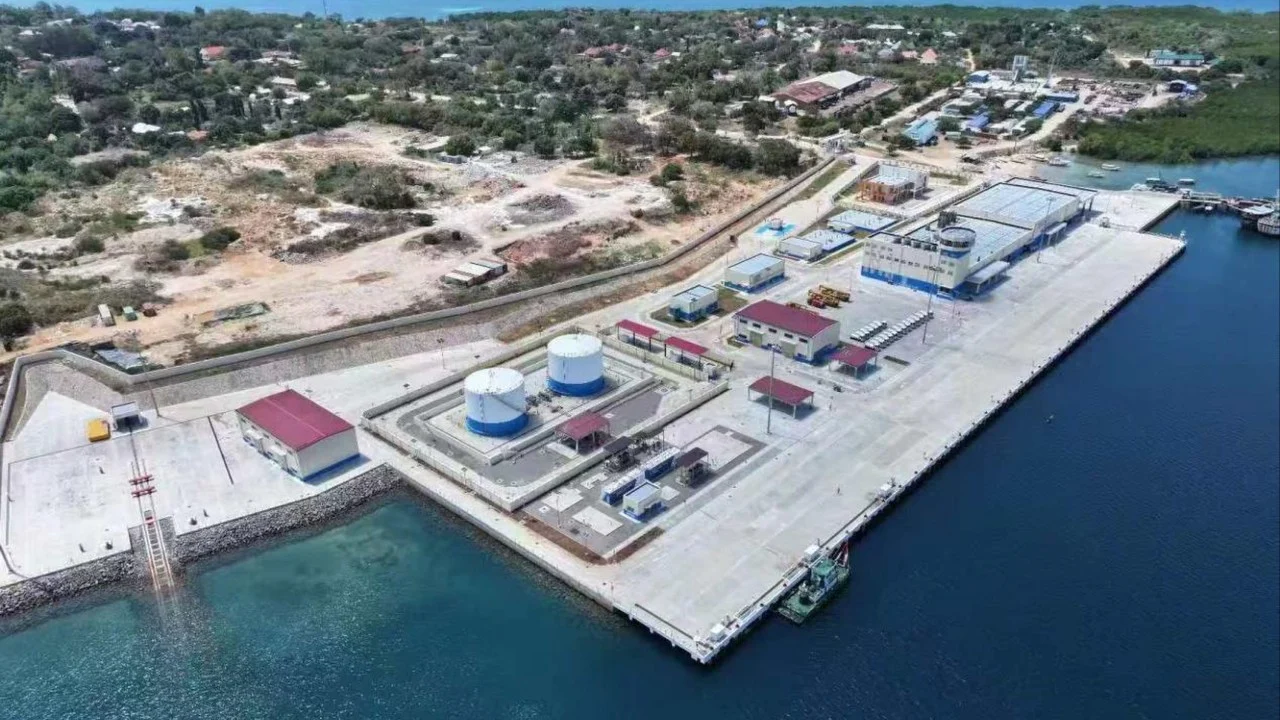
距达累斯萨拉姆约300公里(186英里)以南,靠近基尔瓦基西瓦尼遗址的渔业小镇基尔瓦马索科,拥有一座新港口,旨在容纳远比长期在坦桑尼亚这段海岸作业的渔船更大的渔船。
About 300km (186 miles) south of Dar es Salaam and near the ruins of Kilwa Kisiwani, the fishing town of Kilwa Masoko has a new port designed to accommodate fishing vessels far larger than the boats that have long worked this stretch of Tanzania’s coast.
该渔港已通过竣工验收,中国驻坦桑尼亚大使陈明健上周表示,并称其为坦桑尼亚第一座大型现代化渔港。
The fishing port had passed its completion inspection, China’s ambassador to Tanzania Chen Mingjian said last week, while hailing it Tanzania’s first large-scale modern fishing harbour.
该港口设计年卸鱼量为6万吨,旨在提振坦桑尼亚鱼类市场、减少损耗并创造就业——坦桑尼亚劳工部长德乌斯·桑古预计将创造约3万个直接和间接就业岗位。
Designed to land 60,000 tonnes of fish a year, it aims to boost Tanzanian fish markets, cut spoilage and create jobs – Tanzania’s labour minister Deus Sangu expects about 30,000 direct and indirect jobs.
部分渔获可能进入中国买家手中,因为中国对海鲜的需求不断增长。近年来,北京已与更多非洲国家签署协议,允许其向中国市场出口鱼类及其他水产品。
Some of the catch could reach Chinese buyers as China’s appetite for seafood grows. In recent years, Beijing has signed agreements allowing more African countries to export fish and other aquatic products to its market.
中国从纳米比亚和科摩罗进口活龙虾,从肯尼亚进口螃蟹和干凤尾鱼。中国同意坦桑尼亚野生水产品的进口要求,而另一项议定书则规定索马里金枪鱼、龙虾及其他野生海鲜可进入中国市场。
China imports live lobster from Namibia and Comoros, and crab and dried anchovies from Kenya. It agreed to import requirements for Tanzanian wild aquatic products, while a separate protocol provides for Somali tuna, lobster and other wild seafood to enter the Chinese market.
这座耗资2800亿坦桑尼亚先令(1.1亿美元)的港口由中国港湾工程有限公司建造,是北京“一带一路”倡议的一部分,并包含鱼类加工厂、制冰厂、冷库和渔船修理车间。
The 280 billion Tanzanian shilling (US$110 million) port was built by the state-owned China Harbour Engineering Company as part of Beijing’s Belt and Road Initiative and incorporates fish-processing and ice-making plants, cold storage and a workshop for repairing fishing boats.
基尔瓦马索科是非洲各国推动渔业基础设施建设的更广泛举措的一部分,旨在实现互利共赢,非洲各国政府可获得更多本地卸鱼、减少海鲜浪费以及更多加工业就业岗位。
Kilwa Masoko is part of a wider push to build fishing infrastructure across Africa with mutual benefits, with African governments offered more locally landed fish, less seafood wastage and more jobs in processing.
与此同时,西班牙德乌斯托大学传播学首席研究员、总部位于伦敦的ODI Global智库研究员米伦·古铁雷斯表示,对中国而言,此类港口有助于保障海鲜供应,并支持远离本土作业的渔船。
Meanwhile, for China such ports can help secure seafood supplies and support fishing vessels operating far from home, according to Miren Gutierrez, a principal investigator in communication studies at Spain’s University of Deusto and a research associate at the London-based ODI Global think tank.
“中国在非洲的背靠和建设海外渔港并不是一系列孤立的商业项目,”她说。
“China’s backing and construction of overseas fishing ports in Africa is not a series of isolated commercial projects,” she said.
“相反,它代表了数十年战略轨迹的 culmination,该轨迹将粮食安全、工业扩张、外交杠杆和地缘战略海上存在融为一体。”古铁雷斯表示,中国的远洋渔业始于1985年,当时国有的中国国家渔业公司派出首支船队进入西非。
“Rather, it represents the culmination of a decades-long strategic trajectory that integrates food security, industrial expansion, diplomatic leverage and geostrategic maritime presence.”China’s distant-water fishing industry began operating in West Africa in 1985 when the state-owned China National Fisheries Corporation sent its first fleet there, Gutierrez said.
北京于2000年推出的“走出去”政策鼓励企业向海外扩张,并通过燃油、船舶和加工设施的补贴予以支持。
Beijing’s “Go Global” policy, which was introduced in 2000, encouraged companies to expand overseas, supported by subsidies for fuel, vessels and processing facilities.
更近期地,海上丝绸之路将渔业和海外基地纳入更广泛的战略,以建设海上实力并将中国与全球供应链相连,古铁雷斯说。
More recently, the Maritime Silk Road had placed fishing and overseas bases within a broader strategy to build maritime power and link China to global supply chains, Gutierrez said.
在早前的一项协议使索马里授权31艘中国延绳钓船在其水域捕捞金枪鱼及相关物种之后,中国船只在索马里水域进行捕鱼作业。
Chinese vessels fish in Somali waters after an earlier agreement saw Somalia license 31 Chinese longline vessels to catch tuna and related species.
中国正在非洲各地资助和建设渔港。在加纳,位于阿克拉詹姆斯敦的中国建设渔港于2024年正式投入使用,获赠6000万美元。同样,在几内亚比绍,中国为比绍阿尔托·杜·班迪姆港第二阶段提供了约2500万美元,该港口于2023年5月移交。
And China is funding and building fishing ports across Africa. In Ghana, a Chinese-built port at Jamestown in Accra was commissioned in 2024 with a US$60 million grant. Similarly, in Guinea-Bissau, China provided about US$25 million for the second phase of Alto do Bandim port in Bissau, handed over in May 2023.
在莫桑比克,中国港湾工程公司凭借中国进出口银行提供的1.2亿美元贷款,对贝拉渔港进行了重建和扩建,工程于2019年完成。与此同时,在塞拉利昂,一笔5500万美元的赠款正在用于弗里敦附近黑约翰逊村港口的建设,此前该项目曾因多年延误和当地反对而搁浅。
In Mozambique, China Harbour Engineering Company rebuilt and expanded Beira’s fishing port with a US$120 million loan from China Eximbank, completed in 2019. Meanwhile, in Sierra Leone, a US$55 million grant is funding the construction of a port at Black Johnson village near Freetown, following years of delays and local opposition.
中国在非洲的渔业存在日益扩大,引起了关注。在西非部分地区,中国渔船队被指责耗尽鱼类资源并进行非法捕捞。
China’s expanding fishing presence in Africa has drawn scrutiny. In parts of West Africa, Chinese fleets have faced accusations of depleting fish stocks and fishing illegally.
对于距离中国数千英里作业的渔船队而言,海外基地或港口可以提供加油、补给、维修船舶和卸货的场所。
For fleets operating thousands of miles from China, overseas bases or ports can provide places to refuel, resupply, repair vessels and offload catches.
“专用渔港提供了将原始渔获转化为中国城市或再出口市场稳定供应链所需的登陆、冷藏和加工基础设施,”古铁雷斯说。
“Dedicated fishing ports provide the landing, cold storage and processing infrastructure needed to turn raw catch into stable supply chains for Chinese cities or re-export markets,” Gutierrez said.
她认为,当中国公司同时控制船舶和岸上设施时,他们可以在降低成本的同时,对登陆作业拥有更大的控制权。
Where Chinese companies controlled both vessels and facilities ashore, they could reduce costs while gaining greater control over landings, she argued.
“通过同时控制船舶和岸上设施,中国公司能够减少延误,并使卸下的渔获免受密切监督。”
“By controlling both the vessels and the shore facilities, Chinese companies reduce delays and shield offloaded catches from close oversight.”