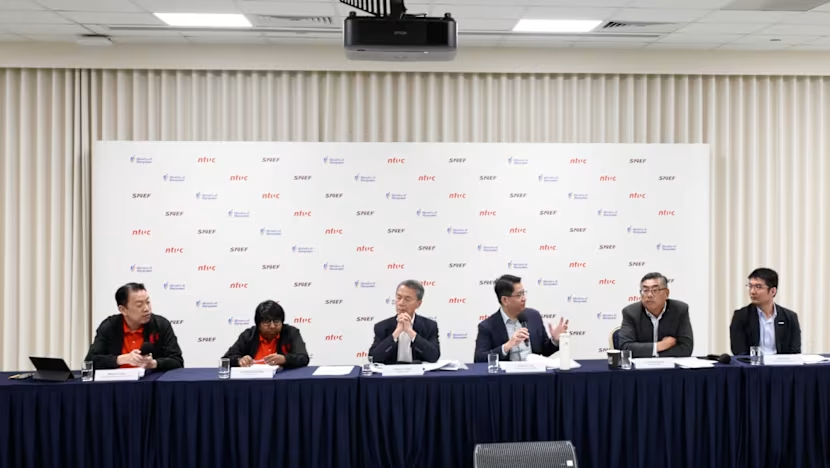
新加坡:鉴于新加坡经济表现强劲,全国薪金理事会(NWC)于周一(10月19日)表示,雇主应采取“积极倾斜”的方式提高工资,并与员工分享生产力收益。
SINGAPORE: Employers should take a "positive-leaning" approach to wage increases and share productivity gains with their workers, given Singapore's strong economic performance, the National Wages Council (NWC) said on Monday (Oct 19).
在2026年12月至2027年11月的指南中,该理事会表示,表现良好的企业应通过内置工资增长和可变付款来奖励员工。
In its guidelines for December 2026 to November 2027, the council said firms that have performed well should reward employees through built-in wage increases and variable payments.
表现不佳的企业“可实行工资克制”,并由管理层以身作则,理事会在新闻稿中如此表示。
Those that have not done well “may exercise wage restraint”, with management leading by example, it said in a press release.
该理事会称,各行业的生产力和业务增长不均衡,因此雇主应具备灵活性,根据自身表现和前景调整工资增长,在员工奖励与竞争力之间取得平衡。
Productivity and business growth have been uneven across sectors, the council said, so employers should have the flexibility to calibrate wage increases based on their own performance and prospects, balancing rewards for employees against competitiveness.
“为确保工资保持公平和竞争力,雇主应定期审视市场工资基准,并在可能的情况下相应调整工资范围,”该理事会表示。
“To ensure wages remain fair and competitive, employers should regularly review market wage benchmarks and adjust wage ranges accordingly where possible,” the council said.
NWC呼吁所有雇主全面实施灵活工资制度,包括其年度和月度可变部分。该制度使企业在不利条件下能够削减成本而非裁员,并在经济复苏时快速调整工资以留住人才,理事会如是说。
NWC called on all employers to implement the flexible wage system in full, with both its annual and monthly variable components. The system lets firms cut costs rather than jobs in adverse conditions, and adjust wages quickly in an upturn to retain talent, it said.
低收入工人NWC表示,提升低收入工人水平的全国性努力必须继续,以确保每位工人都能从新加坡的增长中受益。为在本十年内缩小与中位数工资工人之间的差距,其工资必须始终高于中位数工资的增长速度,理事会如此表示。
LOWER-WAGE WORKERS NWC said the national effort to uplift lower-wage workers must continue so that every worker benefits from Singapore’s growth. To narrow the gap with the median wage worker over this decade, their wages must consistently grow faster than the median wage, it said.
表现良好的雇主拥有更大空间分享其收益,理事会建议采用更高的涨幅百分比区间和更高的最低美元金额。
Employers that have done well have greater scope to share their gains, the council said, recommending a higher percentage range of increases and higher minimum dollar amounts.
对于月总收入不超过2800新元的工人,表现良好且业务前景积极的雇主应给予内置工资增长,幅度为月总收入的6%至8%的较高端,或至少为135至170新元,以较高者为准。
For workers earning a gross monthly wage up to S$2,800, employers that have done well and have positive business prospects should give a built-in wage increase at the higher end of 6 to 8 per cent of gross monthly wage, or at least S$135 to S$170, whichever is higher.
表现良好但前景不确定的雇主,应在该范围中间位置给予加薪,或至少新币135元至170元,以较高者为准。
Employers that have done well but face uncertain prospects should give an increase around the middle of that range, or at least S$135 to S$170, whichever is higher.
表现不佳但仍盈利的雇主,应在该范围低位给予加薪,或至少新币120元,以较高者为准。
Employers that have not done well but remain profitable should give an increase at the lower end of the range, or at least S$120, whichever is higher.
指南首次也涵盖了表现不佳且亏损的企业。理事会表示,它们应给予至少新币120元的内置加薪。
For the first time, the guidelines also cover firms that did not do well and are unprofitable. They should give a built-in increase of at least S$120, the council said.
“如果业务前景随后改善,雇主应审查工资,并考虑为低薪员工进一步加薪,”它补充道。政府已接受理事会的建议。
“If business prospects subsequently improve, employers should review wages and consider further wage increases for their lower-wage workers,” it added. The government has accepted the council’s recommendations.
“人力部(MOM)在一份新闻稿中表示,‘全国工资委员会(NWC)关于低薪员工的建议,为低薪员工提供了有意义的工资提升,同时允许雇主根据经济和业务状况保持灵活性。’”在周一的新闻发布会上,人力部常务秘书斯坦利·洛表示,去年指南的采纳率略高于25%,因为企业正在适应扩大的覆盖范围和更高的建议。他说,采纳率在高峰期超过70%。
“The NWC’s recommendations for lower-wage workers provide meaningful wage uplift for lower-wage workers, while allowing for flexibility for employers based on economic and business conditions,” the Ministry of Manpower (MOM) said in a press release. At a press conference on Monday, the ministry's permanent secretary Stanley Loh said adoption of the guidelines last year was a little over 25 per cent as companies adjusted to expanded coverage and higher recommendations. The adoption rate surpassed 70 per cent at its peak, he said.
全国工资委员会主席谢辉华强调,这一数字并不意味着剩余75%的雇主对低薪员工毫不作为。他说,他们未能按照建议提供加薪,这就是为什么引入新类别,希望提高采纳率。
NWC chairman Hsieh Fu Hua emphasised that the figure did not mean the remaining 75 per cent of employers did not bother to do anything for lower-wage workers. They failed to provide wage increments in line with the recommendation, he said, which is why the new category was introduced in the hope of raising adoption.
人工智能采用与培训 全国工资委员会呼吁雇主和员工建立能力,在人工智能驱动的经济中蓬勃发展,人工智能可以提高生产力、创造新的价值来源并增强新加坡的竞争力。
AI ADOPTION AND TRAINING NWC called on employers and workers to build capabilities to thrive in an economy driven by artificial intelligence, which can raise productivity, create new sources of value and strengthen Singapore’s competitiveness.
它表示,员工应建立与人工智能相关的技能以获取新机会,并与人类技能和判断力一起发展人工智能素养。
It said workers should build AI-relevant skills to access new opportunities, and develop their AI literacy alongside human skills and judgment.
雇主应为员工准备应对职能变化,并支持其培训,同时通过现有支持重新设计岗位并投资于员工队伍。他们还应预留足够预算,以在职业生涯的所有阶段开展持续教育和培训,并加强人力资源能力,以支持工作场所转型,理事会补充道。
Employers should prepare their employees for changing job functions and support their training, while redesigning jobs and investing in their workforce through available support. They should also set aside an adequate budget for continuous education and training across all career stages, and strengthen their human resource capabilities to support workplace transformation, the council added.
为员工提供结构化培训的雇主比例从2024年的66.4%下降至去年的64%,而接受结构化培训的员工比例也随之下降,从52.6%降至48.1%,降幅相同。
The proportion of employers providing structured training to employees fell from 66.4 per cent in 2024 to 64 per cent last year, while the proportion of employees receiving structured training also declined, from 52.6 per cent to 48.1 per cent over the same period.
“全国工会理事会还认识到,一些工人面临更大的就业障碍和挑战,这可能进而影响其职业发展和相应的工资增长,”它表示,强调了包容性就业实践的必要性。
“The NWC also recognises that some workers face greater employment barriers and challenges, which may in turn impact their career progression and corresponding wage growth,” it said, emphasising the need for inclusive employment practices.
“雇主和员工还应进行结构化的职业对话,以使职业抱负与业务需求保持一致,并识别再培训或提升技能的机会。”全国职工总会主席K·塔纳莱奇米表示,劳工运动支持这些建议,但呼吁雇主提供“受保护的培训时间”,使员工能够在学习与工作职责之间不必做出选择,从而开展培训。
“Employers and employees should also engage in structured career conversations to align career aspirations with business needs and identify reskilling or upskilling opportunities." National Trades Union Congress president K Thanaletchimi said the labour movement supported the recommendations, but called on employers to provide "protected training time" so that workers can pursue training without having to choose between learning and their work responsibilities.
通胀担忧 在新闻发布会上,罗先生表示,理事会在制定指南时考虑了经济增长、行业增长和通胀等因素。
INFLATION CONCERNS At the press conference, Mr Loh said the council weighed factors including economic growth, sector growth and inflation in crafting the guidelines.
他说通胀“有点高但可控”,不需要额外措施,如一次性年度付款。他补充说,政府也推出了其他支持措施,以帮助公民应对生活成本。
He said inflation is “a bit higher but manageable”, and additional measures such as one-off annual payments are not needed. The government has also rolled out other support to help citizens with the cost of living, he added.
谢先生表示,由于经济和企业表现不均,工人必然会得到不均等的报酬。
Mr Hsieh said that since economic and business performance is uneven, workers are bound to be unevenly compensated.
“不过从长远来看,最终目标自然是让所有人都能受益,正因如此我们会密切观察并努力解决经济领域的各类问题,”他说道。
“But in the longer term, the longer goal is, of course, for all to be lifted, which is why we will observe and we try and address every part of the economy,” he said.
他还表示,委员会也会着手处理老年人就业问题,不过不会在今年实施。
He said the council will also address senior employment, though not this year.
新加坡全国雇主联合会执行长郝硕指出,今年上半年实际月收入有所增长。
Singapore National Employers Federation chief executive Hao Shuo said real gross monthly income rose in the first half of this year.
“过去十年间,实际工资水平持续上升。虽然人们对通货膨胀存在担忧,但结果已经说明了一切,”他说道。
“Over 10 years, you are seeing real wage growth. So although there are concerns over inflation, I think the outcome speaks for itself,” he said.