古巴再次成为美国的靶子。华盛顿今年初在委内瑞拉的行动在很大程度上被视为为在这座加勒比岛屿采取类似行动铺平了道路。近期的媒体报道披露了该岛附近的美国军事活动,而美国官员则一再表示希望“古巴获得自由”。
Cuba is once again in the United States’s crosshairs. Washington’s operation in Venezuela at the start of the year is largely seen to have paved the way for a similar undertaking on the Caribbean island. Recent media reports have revealed US military activity nearby while US officials have repeatedly said they want “Cuba to be free”.
美国何时以及如何发动打击尚不清楚。但种种迹象表明,古巴革命可能已接近尾声。这足以让人停下脚步,反思这个拥有1000万人口的国家在世界舞台上所发挥的超乎寻常的作用。
When and how the US may strike is still unclear. But indications are that the Cuban Revolution may be nearing its end. That is reason enough to pause and reflect on the outsized role this nation of 10 million has played on the world stage.
当人们想到古巴在全球地缘政治舞台上的存在时,就会想起厄舒(Eshu)这一古巴桑特里亚宗教中最强大的神灵。厄舒源自约鲁巴人的信仰,是一位神圣的信使、十字路口的守护者以及过去与未来的调解人。
When thinking of the Cuban presence on the global geopolitical scene, the figure of Eshu, the most powerful spirit in Cuban Santeria comes to mind. Derived from the beliefs of the Yoruba people, Eshu is a divine messenger, the guardian of the crossroads and mediator between the past and the future.
在故事中,厄舒通常被描绘成一个爱恶作剧的长者,其滑稽行径被用来传授谦逊和道德。作为一个角色,厄舒是一个经典的偷天换日者(trickster),这是许多传统中常见的一种原型,其作用是挑战既定规范、颠覆权力结构并揭示隐藏的真相。
In stories, Eshu is often portrayed as a mischievous elder, one whose antics are used to teach humility and morality. As a character, Eshu is a classic trickster, an archetype commonplace to many traditions that functions to challenge established norms, subvert power structures and reveal hidden truths.
很难想象有什么比厄舒——这个作为美国霸权陪衬的恶作剧者——更贴切的比喻来形容古巴了。在最好的情况下,扮演恶作剧者的古巴迫使各方就我们可能渴望什么样的世界展开公开辩论,并让帝国承担责任,有时甚至不情愿地推动美国展现其善良的一面。在最坏的情况下,它为美国权力照出了一面令人不安的镜子。
It’s hard to imagine a more apt analogy for Cuba than Eshu, the trickster, foil to US hegemony. At its best, trickster Cuba forced an open debate on what kind of world we might aspire to and held the empire to account, at times even pushing the US towards its better angels, however begrudgingly. At its worst, it held up an uncomfortable mirror to US power.
这是一个强有力的策略,在革命的最早期就已经成型。1960年9月,在攻占哈瓦那仅仅一年后,古巴领导人菲德尔·卡斯特罗前往纽约出席联合国大会。由于对他的反帝国主义言论心存戒备,深陷冷战痴迷之中的美国政府向几家知名酒店施压,拒绝为卡斯特罗及其随行人员提供服务。但古巴人并未气馁。相反,他们前往上城区的哈莱姆区,并在特蕾莎酒店找到了落脚之处。
It is a potent formula, one struck upon from the very earliest days of the revolution. In September 1960, just a year after taking Havana, Cuban leader Fidel Castro found himself visiting New York to address the United Nations General Assembly. Wary of his anti-imperialist rhetoric, a Cold War-obsessed US government put pressure on several prominent hotels to refuse service to Castro and his entourage. But the Cubans were not to be deterred. Instead, they went uptown to Harlem and found a place at the Hotel Theresa Photographers and TV camera people flocked there.
摄影师和电视摄像人员蜂拥而至。一场媒体轰动随之产生。卡斯特罗借此机会,将古巴代表团的困境与在实行种族隔离的南方遭到拒绝服务的美国黑人的遭遇进行了对比。
A media sensation ensued. And Castro used the opportunity to draw comparisons between the plight of the Cuban delegation and that of Black Americans being refused service in the segregated South.
这在蓬勃发展的民权运动中间犹如投下一颗炸弹。这是一个尴尬的对比,不仅因为表象,还因为其地点——不在吉姆·克劳法的核心地带,而是在一个奉行自由主义的北方城市、美国文明的摇篮纽约。这是古巴这个“造反者”的第一次出击,但绝不是最后一次。
This landed like a bomb in the middle of the burgeoning civil rights movement. It was an awkward contrast, not just because of the optics but because of the location, not in the heart of Jim Crow, but in a liberal northern city, New York, the cradle of American civilisation. This was the first, but not the last time that Cuba, the trickster, would strike.
在随后的几年里,这个革命政府制定了古巴国际主义计划,这不可避免地构成了对美国通过和平队和美国国际开发署等组织在发展中国家开展的软实力努力的抗衡。
In the following years, the revolutionary government developed its programme of Cuban Internationalism, which inevitably stood as a counter to US soft power efforts in the developing world through organisations like the Peace Corps and USAID.
古巴曾向全球164个国家派遣了多达40万名医生,更不用说工程师、农业技术人员和其他专业人员了。这种实质性的声援在广大全球南方国家为古巴赢得了极大的喜爱,这些国家各不相同,其中包括委内瑞拉、南非和越南,在这些地方,卡斯特罗和切·格瓦拉等人物的知名度不亚于西蒙·玻利瓦尔、纳尔逊·曼德拉和胡志明等民族英雄。在这些同样国家里,美国领导人也被人们所铭记,但他们的形象往往远没有那么光彩。
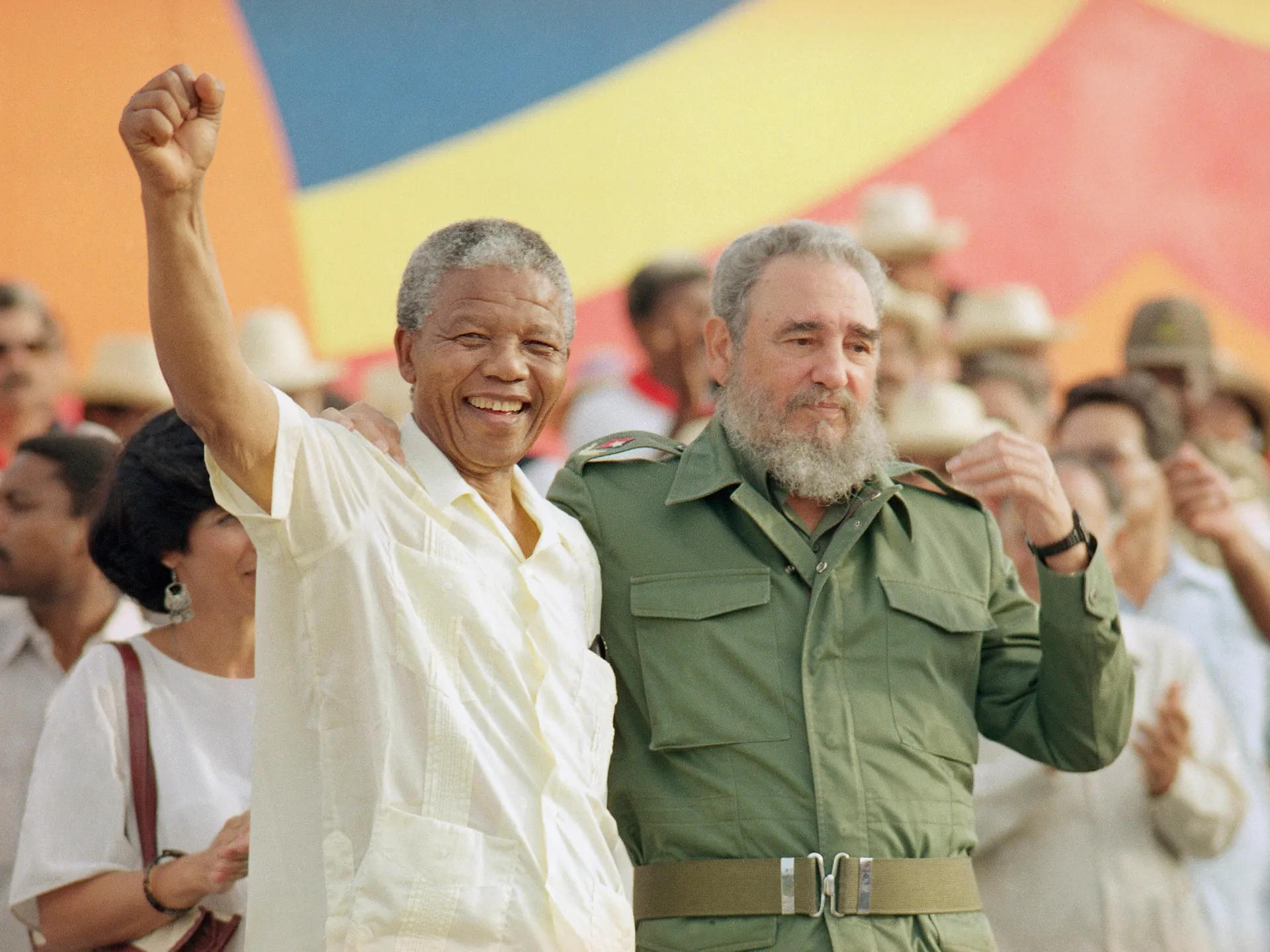
Cuba would send as many as 400,000 doctors, not to mention engineers, agricultural technicians and other professionals, to 164 countries across the world. This material solidarity garnered great affection for Cuba among many countries in the Global South, countries as disparate as Venezuela, South Africa and Vietnam, where characters like Castro and Che Guevara are as recognisable as national heroes like Simon Bolivar, Nelson Mandela and Ho Chi Minh. In these same countries, American leaders are remembered too, often in far less flattering terms.
古巴的“反传统”或“出人意料”的行为还有很多例子。其中最著名的或许是古巴武装部队对“猪湾入侵”的成功反击:这次入侵虽然是由古巴流亡者发起的,但实际上得到了中央情报局(CIA)的直接支持和资金援助。
Other examples of Cuba’s trickster antics abound. Perhaps most notable is the Cuban armed forces’ sound military defeat of the Bay of Pigs invasion, which, while carried out by Cuban exiles, was supported and funded directly by the CIA.
此外,古巴还一直支持巴勒斯坦解放运动和反种族隔离斗争,而与此同时,美国却为以色列及南非的种族隔离政权提供了外交庇护和军事援助。
There is also the revolution’s support for the Palestinian liberation movement and the antiapartheid struggle even as the US provided diplomatic cover and military aid to Israel and the apartheid regime in South Africa.
从1975年到1991年,超过30万名古巴士兵与安哥拉的武装力量并肩作战,并最终在这场代理战争中取得了胜利。这场被称为“卡洛塔行动”(Operation Carlota)的军事行动不仅解放了安哥拉和邻国纳米比亚,还加速了南非种族隔离制度的崩溃。南非前总统纳尔逊·曼德拉曾表示,古巴对安哥拉的干预“打破了白人压迫者‘不可战胜’的神话”。卡斯特罗本人曾多次幸免于暗杀企图,最终在90岁时因自然原因去世。
From 1975 to 1991, more than 300,000 Cuban soldiers fought alongside forces in Angola, eventually emerging victorious in a proxy conflict with the US. Operation Carlota, as it was called, would not only liberate Angola and neighbouring Namibia, but it would precipitate the downfall of South African apartheid as well. According to former South African President Nelson Mandela, Cuba’s intervention in Angola“destroyed the myth of the invincibility of the white oppressor” Castro himself has carried the spirit of Eshu. The Cuban leader reportedly survived more than 600 assassination attempts and died of natural causes at the age of 90.
古巴还在多个方面打破了外界对其“第三世界国家”标签的刻板印象——在识字率、婴儿死亡率和人均预期寿命等方面,古巴的表现都优于许多其他国家。
And there are the many ways that Cuba has defied the “third world” label so often foisted upon it by beating the US in literacy rates, infant mortality and life expectancy at various points in its revolutionary history.
但最重要的是:这场革命本身始终顽强地存活了下来。60多年来,美国一直对古巴实施严厉的经济封锁(这是世界上持续时间最长的经济封锁)。尤其是在苏联解体后,随着古巴陷入严重的经济危机,美国的封锁措施变得更加严厉。
But beyond all of this, there is the sheer fact of the revolution’s survival. For more than 60 years, the US has imposed a severe economic embargo against the island. The embargo – the world’s longest – has been intensified at various points, specifically after the fall of the Soviet Union as Cuba reeled from a profound economic crisis.
尽管面临来自世界上最大超级大国的最大压力,但革命仍然通过经济多元化和自由化,并依托其在全球南方建立已久的国际主义计划,在1990年代的危机中得以坚持。不仅如此,它还在过程中实现了全国范围内的可持续农业革命——这对任何国家来说都是一项壮举,但对古巴而言或许并不令人意外,鉴于其“捣蛋鬼”般的本性。
Despite this regime of maximum pressure from the world’s largest superpower, the revolution nevertheless persevered through the crisis of the 1990s by diversifying and liberalising the economy and by drawing upon its well-established programme of internationalism in the Global South. Not only that, but it managed a nationwide sustainable agricultural revolution in the process, a feat for any nation, but perhaps unsurprising for Cuba, given its trickster nature.
但捣蛋鬼也会以意外甚至矛盾的方式发挥作用。尽管取得了这些成就,但政治权利的被剥夺以及表达和集会自由的镇压,一直是古巴革命的最大失败。
But tricksters also work in unexpected, even contradictory ways. Despite these accomplishments, the denial of political rights and the repression of the freedoms of expression and assembly have been the Cuban Revolution’s greatest failings.
在古巴,言论不自由。获取信息和互联网的途径受到严格限制,近期的民众抗议活动也被暴力镇压。这种动态长期被批评者视为古巴固有专制本质的证据。但在这方面,古巴并不是美国的对立面,而是其同类。
Speech is not free in Cuba. Access to information and the internet is heavily restricted, and recent popular protests have been violently extinguished Such dynamics have long been pointed to by detractors as evidence of Cuba’s inherent authoritarian nature. But in this regard, Cuba is not the US’s opposite, but rather its peer.
2026年的美国正面临自身的一系列不自由现象:荒唐程度的腐败;民主制度的侵蚀;拥抱人工智能及其所启用的全景监控;对言论自由、投票权和媒体的持续攻击;由国家戴面具特工实施的对美国公民的司法外杀戮;以及日益君主化的总统制。更不用说臭名昭著的关塔那摩湾拘留设施的幽灵——该设施仍关押着15名来自“全球反恐战争”的被拘留者,这一议题再次因总统唐纳德·特朗普的残酷移民打压而被提起。
人们不禁会注意到,特朗普政府似乎在效仿它在言辞上所诋毁的国家,如古巴、俄罗斯或伊朗。
The US in 2026 is a country facing its own rash of unfreedoms: comical levels of corruption; the erosion of democratic institutions; the embrace of AI and the panopticon surveillance it enables; continual attacks on free speech, voting rights and the media; extrajudicial killings of US citizens by masked agents of the state; and an increasingly monarchical presidency. All of which is to say nothing about the spectre of the infamous detention facility at Guantanamo Bay, still home to 15 detainees from the “global war on terror” raised once more in relation to President Donald Trump’s brutal immigration crackdown One cannot help but be struck by the ways that the Trump administration appears to emulate countries like Cuba or Russia or Iran that it rhetorically maligns.
但通过这种方式,古巴继续扮演着美国权力的陪衬角色。在其镇压中,它反映了美国政府所具有的不断蔓延的威权主义倾向。毕竟,恶作剧者本身在道德上就是模棱两可的。如果美国最大的缺陷一直在于它始终未能兑现其最值得称道的理想,那么在这个意义上,它与古巴及其革命没有什么不同。
But in this way, Cuba carries on in its role as the foil to American power. In its repression, it reflects the creeping authoritarian inclinations that characterise the Trump administration. Tricksters, after all, are themselves morally ambiguous. And if the greatest flaw of the US has always been that it fails consistently to live up to its most laudable ideals, then in this sense, it is no different to Cuba and its revolution.
随着美国蓄势待发、准备就绪,加之古巴的局势急剧恶化,我们或许正在见证这场革命的最后日子。这就引出一个问题:当艾舒不再守护十字路口的那一天到来时,又会怎样?当除了毫无疑问的帝国和技术封建霸主之外别无他物时,世界将会变成什么样?如果没有恶作剧者来混淆他们的权力,我们会倒退回奉行领土收复主义的过去,还是会跌入某种反乌托邦的未来?
With the US poised and ready and with the conditions in Cuba deteriorating rapidly, we may be witnessing the final days of the revolution. That begs the question: When the day comes that Eshu no longer guards the crossroads, what then? What becomes of the world when there is nothing but unquestioned empires and techno-feudal overlords? Without tricksters to confound their power, will we revert to the revanchist past or tumble into some kind of dystopian future?
如果这场革命最终垮台,迈阿密街头无疑会一片欢呼。但在其他地方将会洒下泪水——这些泪水不仅是为革命而流,也是为它所代表的替代方案而流,尽管这个方案并不完美。或许,如果美国曾更多地倾听或以不同的方式倾听,他们就会听到艾舒试图传授的教训。
If and when the revolution finally falls, there will no doubt be cheering on the streets of Miami. But there will be tears elsewhere – tears not just for the revolution, but for the alternative that it represented, however flawed. Perhaps if the US had listened more or differently, they would have heard the lesson that Eshu was trying to teach.