立法者正面临压力,需要通过立法来应对先进人工智能带来的威胁,但许多人对他们是否有能力监管这项技术的爆炸性增长抱有严重怀疑。
Lawmakers are under pressure to pass legislation to address the threats from advanced artificial intelligence, but many have serious doubts they have the capacity to regulate the technology’s explosive growth.
几乎没有人指望立法者本人——其中一些人仍自豪地使用翻盖手机——能够在一夜之间成为人工智能专家。但即便是国会的技术落后者也承认,国会山迫切需要快速扩大在技术政策方面的专业知识,以帮助立法、监管和进行有效监督,只是目前尚未就如何实现达成共识。
Few are expecting lawmakers themselves — some of whom still proudly use flip phones — to become AI experts overnight. But while even congressional Luddites acknowledge there is urgency for Capitol Hill to quickly expand its expertise in tech policy to help with legislating, regulating and conducting effective oversight, there’s no consensus yet on how to achieve it.
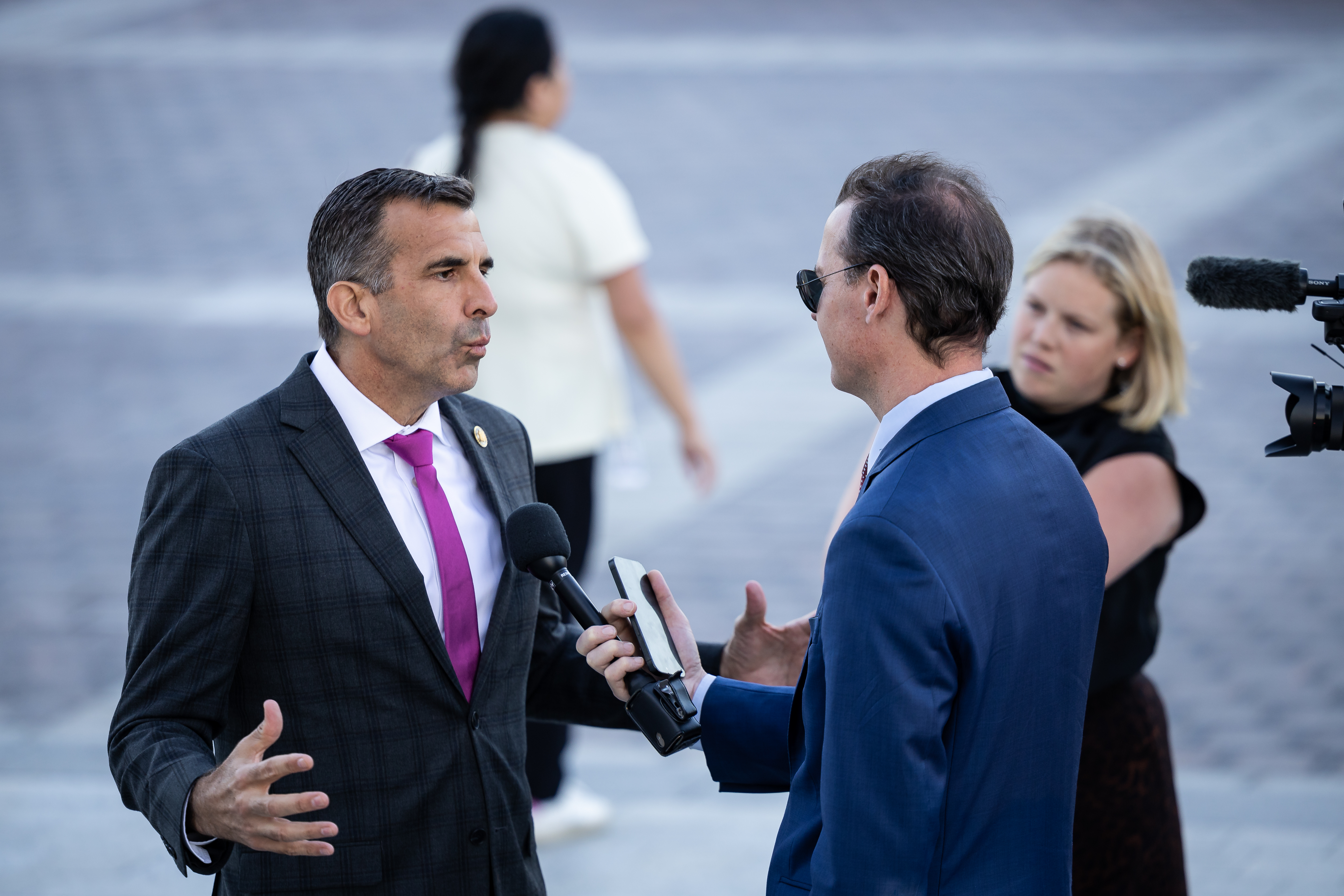
“如果我们要进行有意义的立法,就必须大幅提升国会的基础知识,”加州民主党议员萨姆·利卡多(Sam Liccardo)在最近一次采访中表示。
“We need to dramatically increase the base knowledge of Congress if we're going to legislate meaningfully,” Rep. Sam Liccardo (D-Calif.) said in a recent interview.
国会在技术创新改变华盛顿以外世界的过程中,一直存在落后的悠久记录:过去40年里,互联网融入日常生活时,国会基本采取了放手的监管方式,而是依赖于现有的、用于监管其他行业的法律,并进行零星的、碎片化的干预。
Congress already has a long track record of lagging behind as technological innovations transform the world beyond Washington: It has adopted a largely hands-off approach to regulating the Internet as it integrated into everyday life in the past 40 years, relying instead on existing laws that govern other industries and taking smaller piecemeal bites.
当前的政治环境也不利于加快进程:民主党在是对人工智能行业设置防护措施还是彻底禁止“超级智能”上出现分歧,而许多共和党人——包括唐纳德·特朗普总统——警告称,任何监管都将抑制创新并让中国占据优势。
The challenging political environment won’t help speed things along now: Democrats are split over whether the answer is to put guardrails on the AI industry or ban “superintelligence” entirely, while many Republicans — including President Donald Trump — warn that any regulation would stifle innovation and cede ground to China.
一些议员自认为精通人工智能政策,其中包括几位已加入人工智能政策工作组的成员。加州共和党议员杰伊·奥伯诺特(Jay Obernolte)和弗吉尼亚州民主党议员唐·贝耶(Don Beyer)已攻读人工智能和机器学习的硕士学位,此外还有许多自学成才的议员。
Some members consider themselves fluent in AI policy, including several who have joined working groups on AI policy. Reps. Jay Obernolte (R-Calif.) and Don Beyer (D-Va.) have pursued masters degrees in AI and machine learning, in addition to many others who are self-taught.
众议院民主党人工智能政策委员会联合主席、众议员瓦莱里·福希(民主党-北卡罗来纳州)在最近的一次采访中表示,绝大多数议员对人工智能是什么及其能力有一定了解。但她补充说:“我们没有一个人敢说自己了解它的发展方向。”更大的担忧在于工作人员层面——即在那些没有时间和精力或兴趣去了解该行业前沿动态的普通议员身边,配备真正具备专业知识的人才。那些真正专攻科技政策的幕僚,往往会被高得难以抗拒的丰厚薪酬吸引至业界。
The “overwhelming number” of lawmakers have some idea of what AI is and what it is capable of, Rep. Valerie Foushee (D-N.C.), co-chair of a House Democratic commission on AI policy, said in a recent interview. But, she added, “None of us can say that we understand where it's going.”The larger concern is at the staff level — putting people with real expertise around the rank-and-file members who don’t have the bandwidth or interest in educating themselves on the frontier of the industry. Aides who do specialize in tech policy often get lured to the industry with huge salaries that can be hard to resist.
前国会幕僚特拉维斯·穆尔花了十多年时间试图在此方面提供帮助。
That’s where Travis Moore, a former congressional staffer, has spent more than a decade trying to help.
2015年,穆尔卸任众议员亨利·韦克斯曼(民主党-加利福尼亚州)的立法主任一职,并创立了“国会科技”(TechCongress)——一个旨在向议员及委员会办公室输送科技专家的非营利组织。人们希望这些办公室能够被说服全职雇用这些学者,或者至少认识到确保内部拥有科技政策专业知识的必要性。
In 2015, Moore left his post as legislative director for Rep. Henry Waxman (D-Calif.) and founded TechCongress, a nonprofit that places technology experts in member and committee offices. The hope is that those offices will be convinced to hire those fellows full-time — or at least recognize the need to secure in-house tech policy expertise.
穆尔表示:“无论议员们自己对技术的了解程度如何,你的身边都应该有一位技术专家,以便至少能够减轻那些未知的未知风险。”
“You should have a technologist at the table to at least mitigate the unknown unknowns,” Moore said, regardless of what members themselves know about technology.
随着人工智能的蓬勃发展,“国会科技”学者的需求量也随之飙升:在过去两年里,该项目总共收到了超过1200份申请,以争取大约36个学者名额,且该项目不接受来自企业或科技公司的资金支持。
As AI has boomed, so has demand for TechCongress’ fellows: In the last two years, Moore has fielded more than 1,200 applications for about 36 fellowship slots through the program, which does not accept funding from corporations or tech companies.
穆尔表示,在该项目自成立以来选出的近130名学者中,有32人后来被全职雇用。所有学者中有三分之二的人在国会山或其他政府岗位上继续从事着公共服务的事业。
Of nearly 130 fellows selected through the program since its founding, Moore said 32 were later hired full-time. Two-thirds of all the fellows have pursued careers in public service, either on Capitol Hill or other government roles.
国会山人工智能政策的领导者之一、众议员洛里·特拉汉(民主党-马萨诸塞州)所在的办公室就是目前雇用“国会科技”学者的办公室之一。众议院司法委员会、众议院外交委员会以及参议员布赖恩·沙茨(民主党-夏威夷州)也接待了此类学者。
Rep. Lori Trahan (D-Mass.), one of the leaders on AI policy on Capitol Hill, is among the offices that currently employs a TechCongress fellow. The House Judiciary Committee, the House Foreign Affairs Committee and Sen. Brian Schatz (D-Hawaii) also host fellows.
摩尔表示,他的倡议已经表明,有很多人愿意在国会山工作,以帮助解决当下一些最紧迫的问题 — — 即使私营部门提供更高的薪资也在吸引人才。
Moore says his initiative has shown there are plenty of people who want to work on Capitol Hill to help inform some of the most pressing issues of the moment — even when more lucrative salaries in the private sector beckon.
“限制不是人才供给,”摩尔在接受采访时说。相反,他说,问题在于“国会吸纳这些人才的意愿和能力”。国会山上的一些人正在倡导设立一个内部中心 — — 类似于早已停办的技术评估办公室(Office of Technology Assessment),该办公室曾在1972年至1995年期间帮助国会了解新兴技术及其社会和政策影响,直至被废除。
“The constraint is not talent supply,” Moore said in an interview. Rather, he said, it’s a matter of “Congress's will and capacity to absorb that talent.”Some on Capitol Hill are advocating for an in-house hub — something like the long-defunct Office of Technology Assessment, which helped Congress understand emerging technology and its social and policy implications from 1972 until it was scrapped in 1995.
加利福尼亚州民主党众议员马克·塔卡诺(Rep. Mark Takano (D-Calif.))多年来一直倡导复兴技术评估办公室的努力,其发言人奥斯汀·克拉克(Austin Clark)表示,他预计将在未来几周内,在两党支持下重新提出恢复该办公室的立法。
Rep. Mark Takano (D-Calif.) has long championed efforts to revive the OTA for years and expects to reintroduce his legislation restoring the office in the coming weeks with bipartisan backing, spokesperson Austin Clark said.
并非所有人都相信增加人员能够解决问题。特别是一些保守派,他们利用议员缺乏专业知识的事实,主张对监管采取放手的态度。
Not everybody buys into the theory that staffing will solve the problem. Some conservatives, in particular, have seized on the lack of member expertise to argue for a hands-off approach to regulation.
“我们对它的理解还不够充分,”怀俄明州共和党参议员辛西娅·卢米斯(Sen. Cynthia Lummis (R-Wyo.))本月对记者说,她曾多次通过TechCongress学者计划引进技术专家。“你不能仅凭政策制定者对它的一知半解,就采用一刀切的普遍方式来应对……我们缺乏处理它的专业知识。”“你真的相信那些对AI几乎一无所知的国会议员,能够为其制定相关法规吗?”
“We don't understand it well enough,” Sen. Cynthia Lummis (R-Wyo.), who has repeatedly brought in technology experts through the TechCongress fellowship, told reporters this month. “You can't address it based on what policymakers know about it on a one-size-fits-all universal basis. … We don't have the expertise to do it.”“Do you really trust the members of Congress, who barely understand AI, to write the regulations around something?” added Rep. Eric Burlison (R-Mo.) in an interview last month.
密苏里州共和党众议员埃里克·伯利森(Rep. Eric Burlison (R-Mo.))在上个月的一次采访中补充道。但也有人认为这并非无望的局面,而是一个方便的借口。
Others don’t see a hopeless cause, but a convenient excuse.
“我理解这很困难,但我们在这里做的很多事情都很困难,”康涅狄格州民主党参议员克里斯·墨菲(Sen. Chris Murphy (D-Conn.))在接受采访时表示,他指出,立法者曾不得不快速掌握从核能政策到复杂武器系统,以及医疗保健领域的进展,如生物制药等众多复杂议题。
“I understand it's hard, but lots of things we do here are hard,” Sen. Chris Murphy (D-Conn.) said in an interview, noting that lawmakers have had to bone up quickly on everything from nuclear energy policy to complex weapons systems and advances in health care, like biologic drugs.
“我只是觉得,这个行业想让我们相信,只有七个人懂这个,而事实并非如此,”墨菲(Murphy)说。他指责他的一些同事“只是在胡乱敷衍,试图找出如何为无所作为进行辩解。”两党都有少数议员开始亲自教育同僚。奥伯诺尔特(Obernotle)表示,在上届国会中,他通过自己担任主席的双党人工智能工作组,帮助辅导了二十多名众议员。
“I just think the industry wants us to believe that there's seven people who understand this, and that's just not true,” Murphy said, accusing some of his colleagues of “just throwing shit up against the wall to try to figure out how to justify doing nothing.”A few members on both sides of the aisle have taken educating their colleagues into their own hands. Obernotle says he helped tutor more than two dozen House members through the bipartisan AI working group he chaired in the previous Congress.
代表部分硅谷地区的利卡尔多(Liccardo)回忆说,他曾请来专家向议员们进行简报——其中包括OpenAI的萨姆·奥尔特曼(Sam Altman)、Anthropic的达里奥·阿莫代(Dario Amodei)和英伟达的黄仁勋(Jensen Huang)等人工智能行业的重量级人物——但却难以说服议员们出席。
Liccardo, who represents parts of Silicon Valley, recounted how he has brought in experts to brief lawmakers — including huge AI industry figures like Sam Altman of OpenAI, Dario Amodei of Anthropic and Jensen Huang of Nvidia — only to struggle to convince members to attend.
“过去我们在设法引起大家对这些问题的关注时遇到过挑战,”他说。“我只想说,我们要让所有人都了解最新情况,还有很多工作要做。”
“We have had challenges in the past trying to get folks' attention to the issues,” he said. “We have a lot of work to do, I'll just say, to get everybody up to speed.”