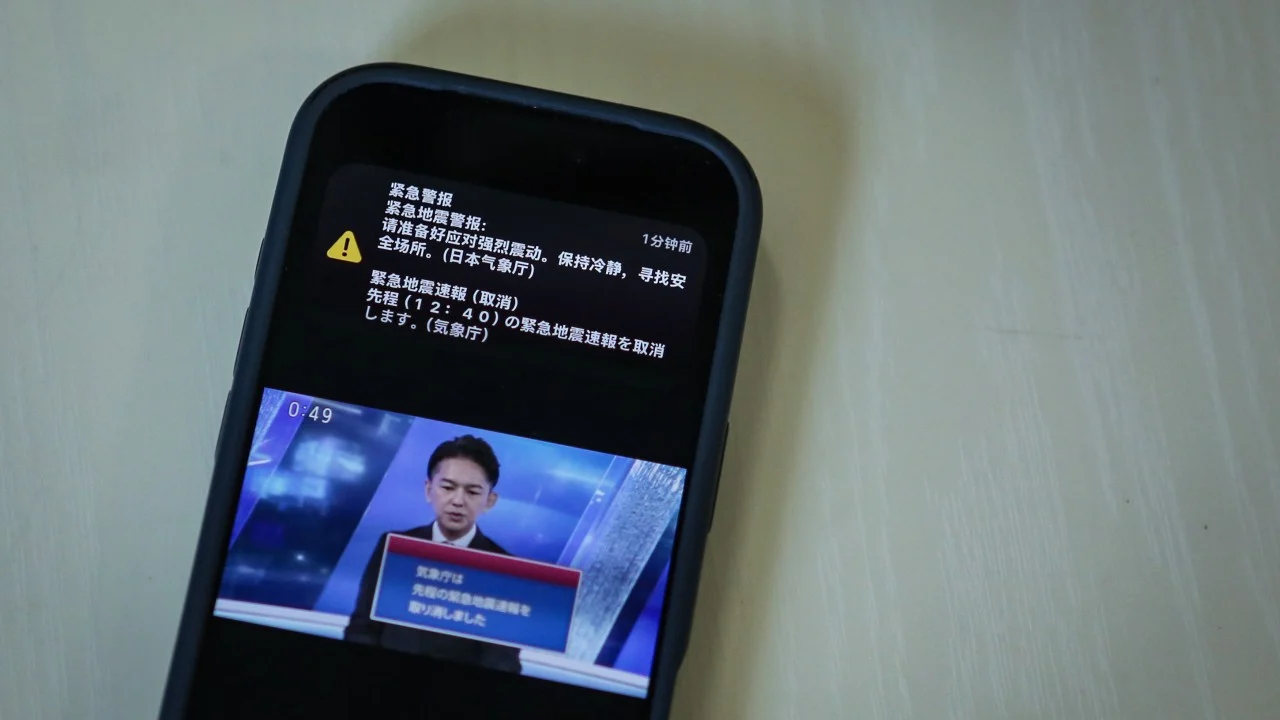
细谷佳奈子在横滨一家服装店工作时,手机收到警报,称一场里氏9.9级地震即将来袭。
Kanako Hosomura was working in a clothing store in Yokohama when an alert on her phone warned of an imminent magnitude 9.9 earthquake.
“我们都冲到了外面,”细谷回忆道,当时人们从附近的商店和办公室涌出,观察高楼和电线是否有摇晃的迹象。
“We all rushed outside,” Hosomura said, recalling how people poured out of nearby shops and offices to watch tall buildings and power lines for signs of shaking.
但地震并未发生。日本气象厅(JMA)在周五发出警报八分钟后将其取消,让居民纳闷出了什么问题。
But no earthquake came. Eight minutes after issuing the warning on Friday, the Japan Meteorological Agency (JMA) cancelled the alert, leaving residents to wonder what had gone wrong.
“这些警报并不经常响起——一年也许只响一两次——所以一旦响起,大家都担心地震会非常严重,”细谷说。
“These alarms do not go off very often – only maybe a couple of times a year – so when they do sound, everyone is worried that the quake is going to be really big,” Hosomura said.
“通常警报和地震之间大约间隔20秒,所以什么都没发生时,大家都面面相觑。我正要回店里时,第二个警报响了,但一位朋友告诉我,那只是取消第一个警报。”这一事件引发专家担忧,重复的误报可能削弱公众对日本紧急地震预警系统的信任,从而让人们在真正的灾难发生时犹豫不决。
“Usually it takes maybe 20 seconds between the alarm and the earthquake, so when nothing happened we all just looked at each other. I was just about to go back inside when the second alert went [off], but a friend told me that it was just to cancel the first warning.”The incident has raised concerns among experts that repeated false alarms could erode public confidence in Japan’s Emergency Earthquake Early Warning system, potentially making people hesitate when a genuine disaster strikes.
地震预警旨在让人们在强烈震动到来前,抢得宝贵的几秒钟掩护。专家警告,如果人们开始怀疑该系统,即使采取行动稍有延迟,也可能付出生命代价。
Earthquake warnings are designed to give people precious seconds to take cover before strong shaking arrives. If people begin to doubt the system, experts warn, even a brief delay in taking action could cost lives.
最初的警报于周五中午12点40分通过手机、电视、广播和公共扩音系统发出。它预测日本北海道和东北地区将发生里氏9.9级地震,东京和日本中部部分地区也预计会有震动。
The initial alert was issued at 12.40pm on Friday via mobile phones, television, radio and public loudspeaker systems. It predicted a magnitude 9.9 earthquake in Hokkaido and the Tohoku region of northeastern Japan, with shaking also expected in Tokyo and parts of central Japan.
该系统警告称,震动将达到七级——日本震度等级的最高级——意味着剧烈震动,可能造成严重的结构损坏、建筑物倒塌,并将人们掀倒在地。
The system warned of shaking at level seven – the maximum on Japan’s seismic intensity scale – indicating violent tremors capable of causing severe structural damage, collapsing buildings and throwing people to the ground.
一次9.9级地震将超过历史记录中的任何一次地震,其震级将超过1960年5月摧毁智利南部的9.5级地震以及2011年3月发生的日本东北部9.1级地震。2011年的灾难引发了日本东北海岸的巨大海啸,造成超过2万人死亡,并导致自切尔诺贝利以来最严重的核灾难。
A magnitude 9.9 earthquake would be larger than any recorded in history, surpassing the magnitude 9.5 quake that devastated southern Chile in May 1960 and the magnitude 9.1 Tohoku earthquake in March 2011. The 2011 disaster triggered a huge tsunami along Japan’s northeastern coast, killing more than 20,000 people and causing the worst nuclear disaster since Chernobyl.
周五,该机构使用相同的警报发布了取消通知,相隔仅八分钟,导致一些居民担心第二次警报是新的警告而非撤销。
Causing further confusion on Friday, the agency used the same alarm to issue the cancellation eight minutes later, leading some residents to fear the second alert was a new warning rather than a recall.
日本气象厅在周五的新闻发布会上公开道歉,并在发给《本周亚洲》的声明中重申了歉意,将此次失误归因于软件错误。
The JMA publicly apologised for the error during a press conference on Friday and reiterated its apology in a statement sent to This Week in Asia, attributing the blunder to a software error.
根据该声明,该系统的传感器最初估计,北海道附近有争议的北方领土附近发生了一次9.9级地震。但实际地震的震级为6.9级,震中位于堪察加半岛附近,距离约680公里(423英里)。该机构表示,其最近的观测点距震中1200公里,导致难以准确判断震动的真实规模。
According to the statement, the system’s sensors initially estimated a magnitude 9.9 earthquake off the disputed Northern Territories near Hokkaido. But the actual quake measured magnitude 6.9 and struck off the Kamchatka Peninsula, about 680km (423 miles) further north. The agency said its nearest observation point was 1,200km from the epicentre, making it difficult to gauge the tremor’s true size.
2020年7月,东京以南的伊豆岛链附近发生海底震颤后,该机构也曾发布过类似的误报。作为应对措施,该机构决定停止使用距估计震中超过700公里的传感器数据,以提高准确性,但该规定在周五并未被遵循。
A similar false alarm was issued in July 2020 following an undersea tremor near the Izu island chain south of Tokyo. In response, the agency decided to stop using data from sensors located more than 700km from an estimated epicentre to improve accuracy, but that protocol was not followed on Friday.
日本气象厅表示,此次失误可能是由人工输入错误造成的,此后已进行软件修改,应能防止类似事件再次发生。该机构地震与海啸观测部门主管虾名文隆在新闻发布会上表示,此次失误并非网络攻击所致。
The JMA said the error was likely caused by a manual input mistake and that software changes had since been made that should prevent a recurrence. Ayataka Ebita, director of the agency’s Earthquake and Tsunami Observation Division, said at the press conference that the error was not the result of a cyberattack.
“我们对本次因误发紧急地震早期警报而给公众造成的严重不便和困扰表示歉意,”该机构在其声明中表示,并补充称调查仍在进行中。
“We apologise for the considerable inconvenience and distress caused to the public by the erroneous issuance of the Emergency Earthquake Early Warning on this occasion,” the agency said in its statement, adding that an investigation was ongoing.
舆论出现了分歧。一些社交媒体用户批评该机构引发了广泛恐慌,而另一些人则认为,发出不必要的警报总比没有警报好。
Public opinion has been split. Some social media users have criticised the agency for triggering widespread panic, while others said an unnecessary warning was better than no warning at all.
《读卖新闻》在周日发表的一篇社论中呼吁进行“及时调查”,并采取措施防止类似事件再次发生。
In an editorial published on Sunday, the Yomiuri newspaper called for a “prompt investigation” and measures to prevent a recurrence.
“误报对人们的生活有重大影响,”该报表示,并引用了包括东海道新干线列车服务临时暂停在内的干扰。地方政府也表达了担忧,认为反复出现的误报可能导致人们对预警系统失去信任,并在未来紧急情况下未能及时疏散。
“False alerts have a significant impact on people’s lives,” the newspaper said, citing disruptions including the temporary suspension of the Tokaido Shinkansen bullet train service. Local governments also expressed concern that repeated false alerts could cause people to lose trust in the system and fail to evacuate in future emergencies.
东京明星大学灾害社会学副教授菊地昭义表示,早期预警系统是日本灾害防治基础设施的重要组成部分,但此次错误可能削弱公众信心。
Akiyoshi Kikuchi, an associate professor of disaster sociology at Meisei University in Tokyo, said the early warning system was an important part of Japan’s disaster prevention infrastructure, but that the mistake risked weakening public confidence.
“我担心此类反复出现的错误可能会削弱公众信任,”他说。“地震预警要求公众立即作出反应,因此即使短暂的犹豫——比如怀疑警报是否准确——也可能延误防护行动,使人们面临更大的风险。”
“I am concerned that repeated errors like this could undermine public trust,” he said. “Earthquake warnings require the public to respond immediately, so hesitation – even briefly, such as wondering whether the alert is accurate – could delay protective action and put people at greater risk.”