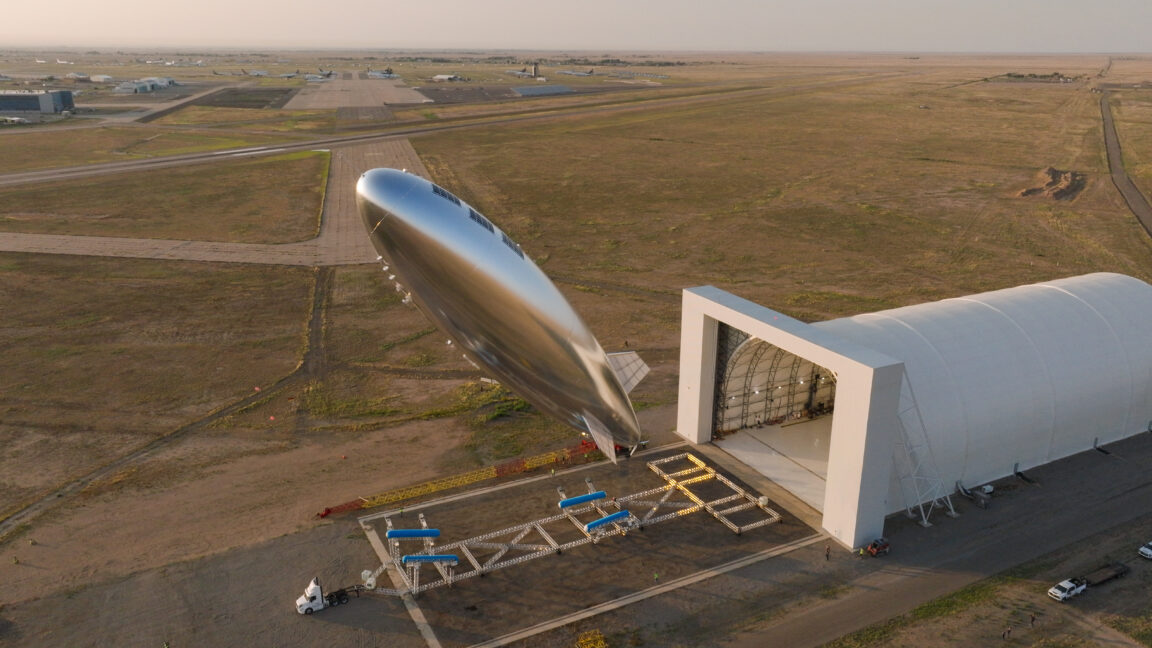
在飞艇首次完成跨太平洋非停航行近100年后,另一艘飞艇成功完成了从新墨西哥州到日本再返回的往返飞行。但这次现代壮举的意义更多不在于航程长度,而在于其目的:展示轻于空气的平台如何能够作为空中基站发挥作用。
Nearly 100 years after the dirigible made the first nonstop airship journey across the Pacific Ocean, another airship has successfully completed a round-trip flight from New Mexico to Japan and back. But the significance of this modern feat was less about the journey's length and more about its purpose: demonstrating how a lighter-than-air platform can act as a cell phone tower in the sky.
此次跨太平洋飞行发生在2026年8月至9月之间的一个多月时间里,这是美国航天公司Sceye迄今为止取得的最显著里程碑。该公司总部位于新墨西哥州阿尔伯克基附近。Sceye研发了一种充满氦气以提供浮力、并配备电动螺旋桨实现主动推进的无人平台,使其能够抵御大多数强风并在同一地点长时间悬停。该平台还使用顶部安装的太阳能板和机载电池,以支持平流层全天候运行。
The trans-Pacific flight that took place over a month between August and September 2026 was the most notable milestone yet for Sceye, a US aerospace company based near Albuquerque, New Mexico. Sceye has developed an uncrewed platform filled with helium for buoyancy and equipped with an electric-powered propeller for active propulsion, allowing it to resist most strong winds and keep hovering over the same location for long periods. The platform also uses top-mounted solar panels and onboard batteries to stay powered for stratospheric operations around the clock.
“我们可以在作业区域上空持续停留,并且我们就在平流层大约60,000英尺的高度,也就是说我们的高度是民航客机的两倍,位于喷射气流之上,但又比低地球轨道卫星近30倍,”Sceye公司创始人兼首席执行官米克尔·弗兰森对《Ars》表示。“我们可以昼夜飞行,直至次日清晨阳光升起为电池充电,届时我们仍将保持同样的高度并停留在同一作业区域上空。”}
“We can stay over an area of operation, and we do that in the stratosphere right around 60,000 feet, so we're twice as high as air traffic and we're above the jet stream, and yet 30 times closer than low-Earth orbit satellites,” Mikkel Frandsen, founder and CEO of Sceye, told Ars. “We can fly through day and night until the sun comes up the next morning and recharges the batteries, at which point we're still at the same altitude and still over the same area of operation.”