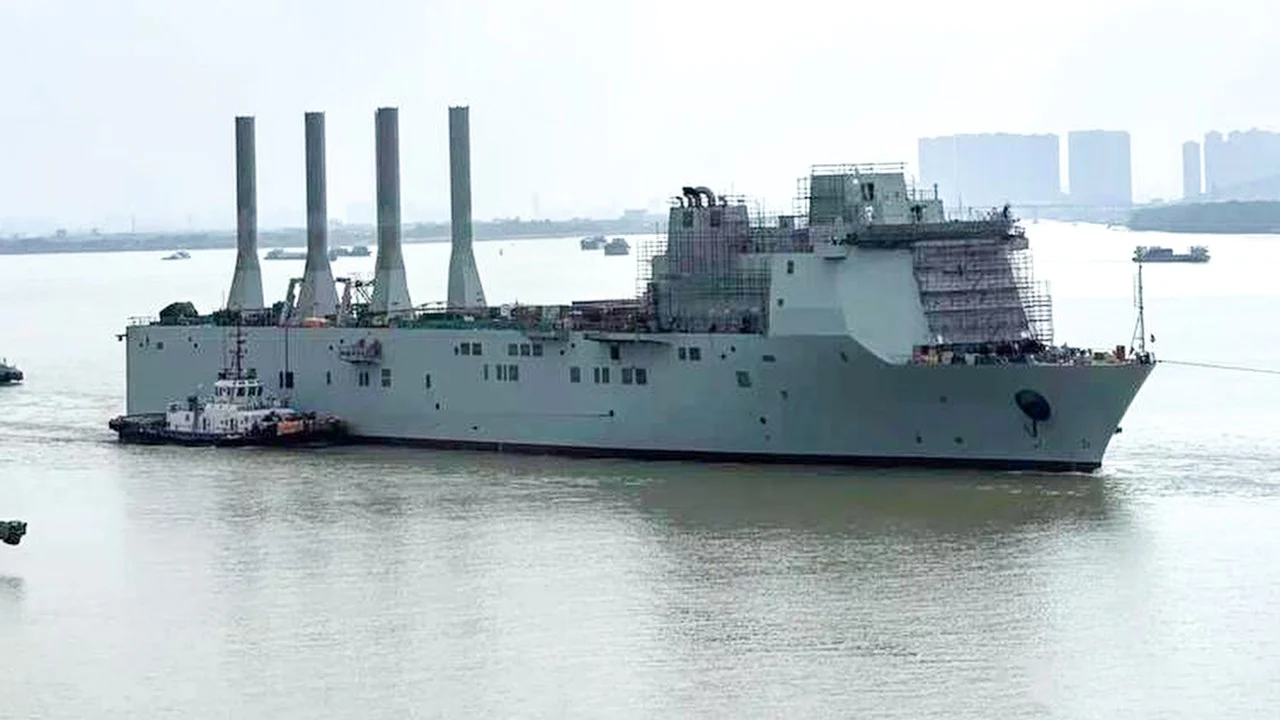
一艘疑似专为发射和回收大型水下无人机而设计的特殊中国船舶在广州再次出现,引发人们对北京是否正在研发一支专用母舰舰队以将其水下作战范围扩展至近海之外的质疑。
A second unusual Chinese vessel suspected of being designed to launch and recover large underwater drones has appeared in Guangzhou, raising questions over whether Beijing is developing a fleet of specialised motherships to extend its undersea operations beyond coastal waters.
在网络上流传的图片中,这艘较小的船舶正被拖在珠江上行驶,其外观与上个月在上海造船厂看到的一艘约200米长的船舶相似,该船舶此后已下水。
The smaller vessel, seen under tow on the Pearl River in images circulating online, resembles a ship about 200 metres long seen at a Shanghai shipyard last month that has since been launched.
这两艘船舶均在船尾部位显著配备了垂直结构,海军分析人士认为这些结构可能用于将大型水下无人机下放入水中并将其回收。
Both feature conspicuous vertical structures at the stern that naval analysts believe could be used to lower large underwater drones into the water and recover them.
如果被证实为军用母舰,这些船舶有望使中国人民解放军海军能够在远离中国港口的海域部署和回收大型无人潜航器(UUV),从而可能扩大其在西太平洋进行水下监视、海底测绘及其他军事任务的能力,包括台湾东部水域。然而,目前尚未确认这两艘船舶的预定用途及其操作方。
If confirmed as military motherships, the vessels could enable the People’s Liberation Army (PLA) Navy to deploy and recover large uncrewed underwater vehicles (UUVs) far from Chinese ports, potentially expanding its ability to conduct undersea surveillance, seabed mapping and other military missions in the western Pacific, including waters east of Taiwan. However, neither ship’s intended purpose nor operator has been confirmed.
总部位于美国的防务新闻网站《战争地带》(TWZ)表示,其卫星图像显示,10月2日,第二艘船舶位于广州造船国际有限公司位于龙雪岛的设施内,尚未下水。
The US-based defence news website TWZ said satellite imagery taken on October 2 showed the second vessel at the Guangzhou Shipyard International facility on Longxue Island before its launch.
《海军新闻》网站也将龙雪岛造船厂列为可能的建造者,但称需要更多影像来确认该船舶的来源及其后续装配地点。
The Naval News website also identified the Longxue Island shipyard as a possible builder, but said further imagery was needed to confirm the vessel’s origin and where it would be fitted out.
该媒体称,该船舶的图像来源于最初在中国社交媒体平台微博上流传的两段短视频,而该视频的真实性尚未得到证实。
The media outlet said images of the vessel came from two short videos originally circulated on the Chinese social media platform Weibo, and that the authenticity of the footage remained unconfirmed.
图片显示,拖船正在将该船舶移至广州番禺区附近水域。根据《海军新闻》的说法,船上仍搭有脚手架,而传感器和通信设备尚未安装。
The images show tugboats moving the vessel near Guangzhou’s Panyu district. Scaffolding remained on the ship, while sensor and communications equipment had yet to be fitted, according to Naval News.
Naval News 估计广州舰的长度约为150米,而上海舰的长度略多于200米(656英尺)。
Naval News estimated the Guangzhou vessel’s length at about 150 metres, compared with slightly more than 200 metres (656 feet) for the Shanghai vessel.
虽然它们的船体形状不同,但两者都在船首处设有升高的船舱、类似机库的空间以及船尾的大型开口。
Although their hull shapes differ, both have raised deckhouses towards the bow, hangar-like spaces and large openings at the stern.
广州舰在船尾附近有六根高大的垂直柱,而上海舰则有十二根高度不等的垂直柱。
The Guangzhou vessel has six tall vertical posts near its stern, compared with 12 of varying heights on the Shanghai ship.
新加坡拉惹勒南国际研究所军事研究计划的副研究员托马斯·林表示,这些舰艇似乎能够搭载多个水下无人机,船尾的开口和坡道支持了母舰假设。
Thomas Lim, an associate research fellow with the Military Studies Programme at the S. Rajaratnam School of International Studies in Singapore, said the vessels appeared to be able to carry multiple underwater drones, with the rear openings and ramps supporting the mothership hypothesis.
然而,他警告称,这些影像仅提供了“部分匹配”,要确认其预定角色,还需要完成的配套设施证据,包括起重机和船坞,以及“在部署或测试中的概念验证”。目前尚未观察到这两艘舰艇部署水下无人机。
However, he cautioned that the imagery offered only a “partial fit” and that confirming their intended role would require evidence of completed supporting facilities, including cranes and docks, as well as “proof of concept in deployment or tests”. Neither ship has been observed deploying underwater drones.
在Naval News 9月15日的报道中,分析师H.I. Sutton评估正在沪东中华造船厂建造的上海舰时认为,它可能是一种用于搭载超大型水下无人机的母舰。
In a Naval News report on September 15, analyst H.I. Sutton assessed the Shanghai vessel under construction at Hudong-Zhonghua shipyard as a possible mothership for very large underwater drones.
一位曾为《南华早报》审查同一天9月10日影像的有经验的军事影像分析师表示,他能够独立识别出明显的船尾发射和回收系统。
An experienced military imagery analyst who reviewed the same September 10 imagery for the South China Morning Post said he could independently identify the apparent stern launch-and-recovery system.
该分析师当时补充称,船尾后方的一个架子看起来足够窄,能够穿过其后部开口。
A cradle positioned behind the vessel seemed narrow enough to pass through its rear opening, the analyst added at the time.
根据Sutton的说法,这些疑似母舰的建造正在中国进行,而中国一直在海南测试两种估计长度分别为35米和45米的超大型水下无人机原型机。迄今为止,浮动船坞一直被用于将这些无人机运往海上进行测试,并在之后将其回收。
The construction of the suspected motherships comes as China has been testing two very large underwater drone prototypes measuring an estimated 35 and 45 metres long in Hainan, according to Sutton. So far, floating docks have been used to carry these craft out to sea for testing and recovery afterwards.
如果按此角色建造,这两艘舰艇可以通过向远距离作业区运输水下无人机、在任务后回收它们,并在部署间提供维护或准备设施,从而提供更大的灵活性。
If built for that role, the two vessels could offer greater flexibility by transporting underwater drones towards distant operating areas, recovering them after missions and providing facilities for maintenance or preparation between deployments.
澳大利亚退休副海军上将彼得·琼斯表示,较小的舰艇可能旨在支持“不同类别的水下无人系统”,或体现“另一种基船设计”,该设计可能为其建造者所熟悉。
Peter Jones, a retired Australian vice-admiral, said the smaller vessel might be intended to support “a different class of UUV” or reflect “another base ship design”, potentially one familiar to its builder.
他指出,如果水下无人机被证明有效,随着其数量增加,将需要更多的母舰。这可能需要改装现有舰艇或调整既定设计,以便“多个船厂满足需求”。
He said that if underwater drones proved effective, more motherships would be needed as their numbers increased. That could require modifying existing vessels or adapting established designs to allow “multiple shipyards to meet the demand”.
然而,林指出,尺寸差异可能反映同一设计内部的“多样性”,或满足“不同作战剧场”的需求,而不是中国正从实验阶段转向更广泛的水下无人机能力的证据。
Lim, however, noted that the differences in size could reflect “variety” within the same design or requirements for “different operational theatres”, rather than evidence that China was moving beyond experimentation towards a broader underwater drone capability.
虽然这些舰艇仍可能用于民用,但若以军事方式部署,在争夺水域中将面临风险。南华早报九月关于上海舰艇的报道中,中国军事分析家蒂莫西·希思警告称,如此大型的支援舰将是易受攻击的目标,更适合在相对靠近中国、敌对程度较低的环境中运行。
While the vessels might still be for civilian purposes, they face risks in contested waters if deployed militarily. In the SCMP’s report on the Shanghai vessel in September, China military analyst Timothy Heath warned that such a large support ship would be a vulnerable target, better suited to operating relatively close to China in less hostile conditions.