美国陆军加速新技术的项目公布了类人机器人竞赛的获奖者,该竞赛评估了新兴技术对未来军事行动的潜在贡献。
The U.S. Army’s program for accelerating new technologies announced the winners of a humanoid robot competition, which assessed how the emerging technology could contribute to future military operations.
根据9月29日的公告,陆军xTechHumanoid竞赛的五位获奖者包括ACES集团、IHMC Robotics、Hydroplane Limited、Ras Labs和Velocity Explorations。
According to the Sept. 29 announcement, the five winners of the Army’s xTechHumanoid competition include ACES Group, IHMC Robotics, Hydroplane Limited, Ras Labs and Velocity Explorations.
陆军首席技术官Alex Miller解释说,通过该项目,陆军试图识别类人机器人最适合使用的“问题、任务需求和机会”。
Alex Miller, the Army’s chief technology officer, explained that through the program, the service tried to identify “the problems, mission needs, and opportunities” humanoid robots could best be used.
Miller说:“xTech是我们调查行业格局并快速推进有前景技术的方法,而不是陷入多年研究的泥潭。”
“xTech is our method of surveying the industry landscape and fast-tracking promising technology rather than falling victim to years-long studies,” Miller said.
他补充道:“类人机器人是更广泛自主化推动的一部分,旨在提升机器人平台和部件的深度与广度,以满足各种任务的需求。”
“Humanoid robots are part of a broader autonomy push to increase the depth and breadth of robotic platforms and components industry can provide for a range of missions,” he added.
在竞赛中,陆军官员审阅了每家公司关于类人机器人的白皮书提案,并依据包括军事效用、技术价值和技术成熟度在内的多个标准对概念进行评估。
For the competition, Army officials reviewed each company’s white paper proposal for its humanoid robot. They evaluated the concepts based on several criteria, including military utility, technical merit and technological maturity.
在103份提交材料中,陆军选出10名决赛入围者,每家获赠25,000美元。随后,陆军通过现场实验活动确定了五位获奖者。
Of the 103 submissions, the Army selected 10 finalists, each of which received $25,000. The service then identified five winners through a live experimentation event.
根据2025年竞赛公告,活动在“作战情境下的军事小分队任务”背景下,对机器人进行了一系列集体任务的测试。活动期间,官员还审查了基线系统能力和先进子系统。
According to the 2025 competition announcement, the event tested the robots on a series of collective tasks “in the context of a military small unit mission conducted in a combat situation.”During the event, officials also reviewed the baseline system capabilities and advanced subsystems.
前者的示例包括检查站安保、跨越障碍或清除障碍以及灭火。后者则包括热传感器、电池寿命和自主性等技术。
Examples of the former include checkpoint security, gap crossing or obstacle clearing and firefighting. Whereas the latter included technologies like thermal sensors, battery life and autonomy.
然而,IHMC Robotics的高级研究员罗伯特·格里芬(Robert Griffin)告诉《军事时报》称,比赛的个人要求超出了当前技术的实现能力。
However, Robert Griffin, a senior researcher at IHMC Robotics, told Military Times that the competition’s individual requirements exceeded what current technology could achieve.
“这些列出的各项要求,在任何一个单一环节中,都超出了当前技术的可能范围,”格里芬说。
“The individual things that were outlined were, in any one element, beyond what is possible given the current state of the art,” Griffin said.
“例如,目前并不存在一台机器人能以28英里/小时的速度行走,同时携带50磅重量并连续运行24小时,”他说。“这在现实世界中根本不存在。”由于美军的“实际需求超出了当前的技术能力”,格里芬表示,开发者不得不在机器人的不同功能之间进行优先级排序,以进行演示。格里芬的团队专注于基础能力。
“For example, you don’t have a robot that can run 28 miles an hour while carrying 50 pounds and operating for 24 hours,” he said. “It’s not a thing that exists in the world.”Because the Army’s “actual full desirements were beyond what can currently be done,” Griffin said, developers had to prioritize different elements of their robots’ capabilities for the demonstrations. Griffin’s team focused on baseline capabilities.
“我们的重点是让机器人出现在比赛现场,在无支撑的情况下以合理速度移动,并能够响应指令,”他说。
“The big thing for us was to have the robot show up at the competition, move around in the world, unsupported, at a reasonable pace, and then respond to commands,” he said.
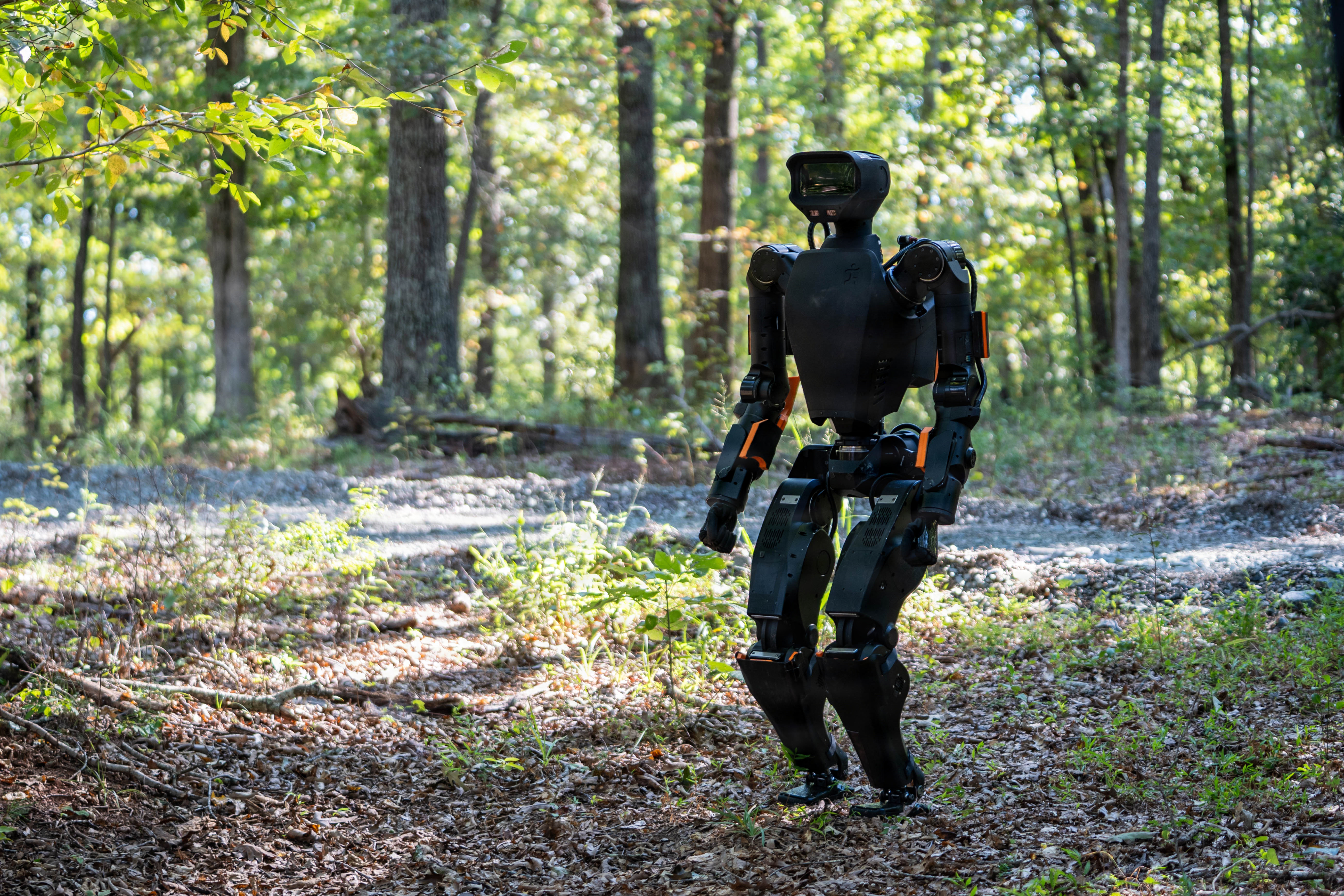
比赛视频显示,IHMC的机器人“Alex”遵循语音指令,先在田野中行走,随后在人类使用遥控器控制下,穿越林区和碎石路。
Video of the competition shows IHMC’s robot “Alex” following voice commands directing it to walk through a field and then, under the control of a human with a remote, through the woods and across gravel.
Alex还抓住一把小铲子,开始挖土并尝试将土壤倒入桶中。虽然未能成功,但它展示了移动能力。最终,Alex倒下,被抬上担架运送离场。其他竞争者则专注于子系统。
Alex also grasps a small shovel, begins to dig and attempts to pour dirt into a bucket. Although it doesn’t succeed, it demonstrates the movement. And finally, Alex collapses and has to be transported out on a gurney. Other competitors focused on subsystems.
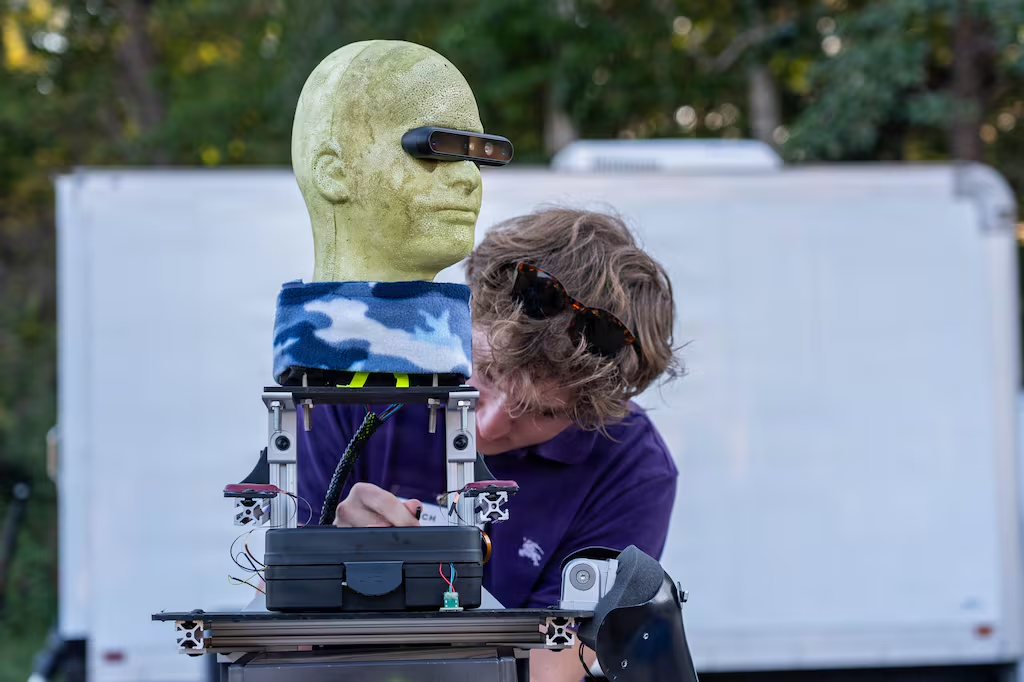
Hydroplane和ACES Group与其电池展开竞争,而Velocity Explorations则提交了软件,使其机器人能够倾听人与人之间的无线电通信,理解其移动和任务。利用这些信息构建更广阔的战场认知,该平台随后可判断如何行动。
Hydroplane and ACES Group competed with their batteries, while Velocity Explorations entered software that enabled its robot to listen to radio traffic between people and understand their movements and tasks. Using that information to develop an understanding of the broader battlespace, the platform could then determine how to act.
Ras Labs测试了高度敏感的指尖触觉传感器,使机器人能够处理精致的物体。
Ras Labs tested highly sensitive fingertip tactile sensors that allowed a robot to handle delicate objects.
虽然多家公司表示参与是因为这是测试产品的机会,但Hydroplane 创始人兼首席执行官 Anita Sengupta 博士解释说,她的公司传统上为大型结构和飞机提供服务,但最近开始研发更小型、便携式的系统。
While multiple companies said they participated because it was a chance to test their products, Dr. Anita Sengupta, Hydroplane’s founder and chief executive, explained that her company has traditionally done work for large structures and aircraft, but recently started working on smaller and portable systems.
她说:“我们发现为类人机器人(无论是人还是机器人)开发动力系统,与无人机的使用场景之间有很好的重叠,所以这对我们来说是一个有趣的技术应用案例。”
“We saw a good overlap between developing a power system for a humanoid, whether it’s a person or a robot, as well as the drone use case, so it just seemed like an interesting use case for us to take our technology to,” she said.
在比赛中,她的公司改装了一套原本为海军陆战队在 2024 年设计的 10 千瓦系统,但将其体积缩小,因为类人机器人只需要几千瓦的功率。该装置使用类似发电机的燃料电池,但不使用柴油燃料,而是使用氢气。Sengupta 解释说,其优势在于能量密度约为传统燃料的三倍,且转换效率更高。
For the competition, her company adapted a 10-kilowatt system originally designed for the Marine Corps in 2024, but made it smaller because the humanoid only needed a few kilowatts. The device utilizes a fuel cell similar to what a generator uses, but instead of using diesel fuel, it uses hydrogen. Sengupta explained that the benefits are that it has about three times the energy density and a higher conversion efficiency.
虽然 Hydroplane 并未直接用其燃料电池为类人机器人供电,但陆军对其进行了测试,以评估是否能够为类人机器人提供动力。随后,Hydroplane 协助制定了相关标准,旨在未来与类人机器人团队合作。
Although Hydroplane didn’t directly power a humanoid robot with its fuel cell, the Army tested it to see if it could power a humanoid robot. In turn, Hydroplane helped establish those standards, with the intent to eventually collaborate with a humanoid robot team.
在最近的公告中,陆军表示,这次比赛清晰展示了“商业行业在类人机器人领域取得的进展以及仍然存在的技术挑战”。该部门称,这些发现将帮助其将研究重点指向对作战人员回报最大的技术。
In the recent announcement, the Army said the competition revealed a clear picture of “both the progress commercial industry has made in humanoid robotics and the technical challenges that remain.”The findings, the service said, will help it direct research toward technologies that offer the greatest return for warfighters.
但 Griffin 认为,尽管类人机器人未来可能承担更复杂的军事任务,行业仍距离开发出《终结者》系列中阿诺德·施瓦辛格饰演的 T‑800 那样的机器还有很长的路要走。
But while humanoid robots might eventually take on more complex military tasks, Griffin said the industry is still a long way from developing machines like Arnold Schwarzenegger’s T-800 from The Terminator franchise.
“我不认为任何有道德感的人都会说我们需要让机器人来做生死抉择,”他说,并指出当前的人工智能模型很容易被混淆或操控。
“I don’t think that any person who has a modicum of ethics is going to say that we need to be having these robots making life or death decisions,” he said, noting how easily current AI models can be confused or manipulated.
相反,Griffin 表示,人形机器人的未来在一定程度上取决于投资者希望机器执行的任务。例如,工业公司可能看到自动化通常由人类完成的任务的机会。
Instead, Griffin said the future of humanoid robotics will depend in part on what investors want the machines to do. Industrial companies, for example, may see opportunities to automate tasks typically performed by humans.
“我们的目标是让机器人能够让人免于承担有害任务,”他关于自己的公司说,并以消防员进入燃烧建筑、核废料清理等情景为例。
“Our goal is to be able to make robots that remove people from having to do harmful tasks,” he said about his company, pointing to scenarios such as first responders entering burning buildings and nuclear cleanup.