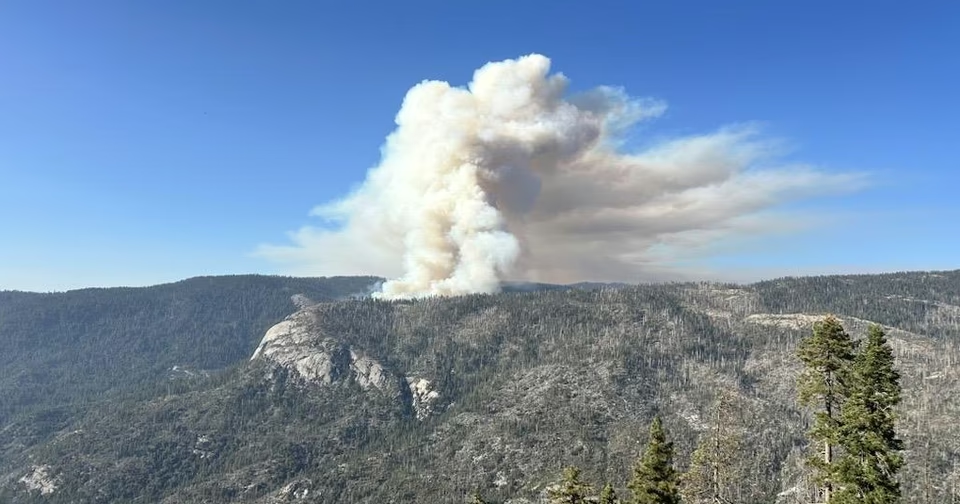
让优胜美地燃烧 消防员们正在为扑灭本可任其燃烧的火灾而牺牲。
Let Yosemite Burn Firefighters are dying trying to put out fires that could be left alone.
作者:约书亚·帕特洛 今年,特朗普政府给联邦消防员下达了指令:不再允许火灾自然燃烧。消防员和公共土地管理者之间的传统观念一直认为,让偏远地区的火灾自然发展可能是有益的。但如今,政府新成立的美国野外消防局被要求对每场野火实施“全面扑灭”政策,内政部长道格·伯格姆指示其员工,以避免危险蔓延的可能性。
By Joshua Partlow This year, the Trump administration gave federal firefighters a mandate: no more letting fires burn. Conventional wisdom among firefighters and public-land managers has held that allowing fires in remote areas to run their course can be beneficial. But now the administration’s new U.S. Wildland Fire Service was to pursue a policy of “full suppression” on every wildfire, Interior Secretary Doug Burgum instructed his workforce, to avoid the possibility of dangerous spread.
“加速初期攻击,”农业部长布鲁克·罗林斯在她对森林局的指令中如此表示。“早期扑灭火灾并限制其蔓延。”而当优胜美地国家公园上个月起火时,消防员们正是这么做的。
“Accelerate initial attack,” Agriculture Secretary Brooke Rollins put it in her own directive to the Forest Service. “Suppress fires early and limit growth.”And when Yosemite National Park caught on fire last month, that is what firefighters did.
公园上空的天空被浓雾笼罩,密布着飞机——飞机在林地斜坡上投放阻燃剂;直升机将热射队员送往火场。当时,至少有17架直升机在轮班执飞,此外还有超过1000名消防员。“我在优胜美地工作了近40年,也一直与优胜美地合作,”汤姆·尼科尔斯(国家公园服务局前消防与航空主管,与作家汤姆·尼科尔斯无亲属关系)告诉我。
The hazy skies above the park filled with aircraft—planes dropping fire retardant on forested slopes; helicopters ferrying hotshot crews to the blaze. At one point, at least 17 helicopters were in rotation, along with more than 1,000 firefighters. “I’ve worked in Yosemite and with Yosemite for almost 40 years,” Tom Nichols, a former head of fire and aviation for the National Park Service (and no relation to the writer Tom Nichols), told me.
“我从未见过如此规模的应对。”起初,积极进攻式地扑救火灾是合理的:火势起源于一条热门徒步小径附近,并在瓦沃纳小社区上方的山坡上燃烧。瓦沃纳是公园内一个小型社区。火势看来是人为造成的。在这些情况下,即使在这一年之前,联邦政策也要求消防员采用“全面扑灭”手段,尽快扑灭火灾,前优胜美地消防官员告诉我。
“I’ve never seen that kind of response.”At the start, attacking the fire aggressively made sense: It had started near a popular hiking trail and was burning on a slope above Wawona, a small community in the park. It looked to be human caused. In such situations, federal policy, even before this year, called for firefighters to use “full suppression” to try to put it out as quickly as possible, former Yosemite fire officials told me.
但随着火势的发展,这场大火开始向北和向东蔓延,逐渐远离任何住宅区或社区。尽管投入了大量资源来扑灭这场大火,但一些经验丰富的消防员对此感到困惑。正如一位前优胜美地公园官员所说:“真的没有必要采取如此激进的灭火措施。”(我为撰写这篇报道采访了多位消息人士,他们要求匿名,因为他们没有公开发言的权限,同时也希望避免因此而受到职业上的影响。)
But as it developed, the Dome Fire spread to the north and east, farther up the mountains, away from any homes or communities. The resources being poured into fighting it began to baffle some fire veterans. As a former Yosemite official put it to me, “There’s really no reason to be attacking a fire like that.” (I spoke with several sources for this story who requested anonymity because they were not authorized to speak publicly and hoped to avoid professional repercussions.)
这种激进的灭火方法其实非常危险。在灭火行动进行到第五天的时候,一架直升机在从附近湖泊向火场投水时发生了坠机事故,两名飞行员不幸遇难。
Such an aggressive approach can be dangerous. Five days into the effort to put it out, one of the helicopters was doing water-bucket drops from a nearby lake when it crashed.
“这一切都是为了什么?”一位联邦消防官员问道,“那里根本没有任何可扑灭的目标……就让大自然自行发挥作用吧。”另一位官员则不禁问道:“他们的牺牲真的白费了吗?”根据特朗普政府的“全面灭火”政策,今年迄今为止,消防员因被困在火场(即他们的位置被火焰包围)而遇难的情况比过去二十年都要多。根据野生消防员基金会(Wildland Firefighter Foundation)的数据,至少有17名野生消防员、飞行员和承包商在灭火过程中丧生,这一数字已经超过了过去十年的年均死亡人数。
Both pilots died. “For what?” one federal fire official told me. “There’s nothing out there. Just let nature do its thing.”Another official had to ask: “Did they die in vain?”Under the Trump administration’s policy of full fire suppression, so far this year entrapments—when firefighters’ positions are surrounded by flames—are above the average for the previous two decades. At least 17 wildland firefighters, pilots, and contractors have been killed, surpassing the full-year average over the past decade, according to the Wildland Firefighter Foundation.
其中,有四名消防员是在科罗拉多州发生的“诺尔斯火灾”(Knowles Fire)和“戈尔火灾”(Gore Fire)中牺牲的;当时火势在强风和低能见度的条件下迅速蔓延。那次事故发生后,几位民主党参议员呼吁内政部调查这种“全面灭火”政策是否让消防员陷入了不必要的危险之中。
That number includes four firefighters in Colorado who died this summer responding to the Knowles and Gore fires as flames spread amid high winds and low visibility. After that incident, several Democratic senators called on the Interior Department to investigate whether the full-suppression policy put firefighters at undue risk.
野火服务局局长布赖恩·芬尼西告诉我,他不认为新政策会让消防员面临更大的危险。穹顶大火中两名飞行员的死亡是一场悲剧——他希望自己的机构能够从中吸取教训——但“今年不适合在景观上实施受控燃烧,”他说。今年冬天异常温暖,美国西部大部分地区的积雪量处于历史低位。联邦当局不会让火灾无人看管地燃烧,即使是在荒野地区。
Brian Fennessy, the Wildland Fire Service chief, doesn’t think that the new policy is putting firefighters in more danger, he told me. The two pilots’ deaths in the Dome Fire were a tragedy—one he hopes his agency can learn from—but “this was not the year to allow managed fire on the landscape,” he said. The winter was historically warm, and snowpacks were at record lows across much of the western United States. Federal authorities were not about to let fires burn unattended, even in the wild.
他还说,政府的灭火政策意味着增加参与扑救特定火灾的人员和直升机数量:“以前可能是两辆消防车和一架直升机,现在可能是四辆消防车、两架直升机,也许还有一架空中加油罐机。”考虑到天气如此炎热干燥,如果消防员们没有专注于在优胜美地及其他地区扑灭火灾,情况本可能更糟,他说。
And the administration’s policy of suppression does mean increasing the number of people and helicopters fighting a given fire, he said: “Instead of two engines and a helicopter, maybe you’ve got four engines, two helicopters, maybe an air tanker.”Given how hot and dry it’s been, had firefighters not focused on putting out fires, in Yosemite and elsewhere, many could have been worse, he said.
在约塞米蒂,是否应该利用或扑灭火灾的问题尤为关键。正是在这里,美国关于该政策的正式辩论始于1864年,当时亚伯拉罕·林肯签署了一项法案,将约塞米蒂山谷和马里波萨巨型红杉林授予加利福尼亚州作为公共信托。负责监管该地区的委员会就美洲原住民每年进行焚烧的问题存在分歧,火灾史学家斯蒂芬·派恩告诉我。
The question of whether to harness or extinguish fire is particularly relevant in Yosemite. This is where America’s formal debate over that policy began, after Abraham Lincoln signed a bill in 1864 to grant the Yosemite Valley and the Mariposa Grove of giant sequoias to California as a public trust. The commission to oversee the area disagreed about the question of annual burning by Native Americans, Stephen Pyne, a historian of fire, told me.
派恩在其关于约塞米蒂火灾历史的著作中写道,阿瓦赫尼切人点燃的火是“刻意且有目的的,甚至可以说是有艺术性的”:他们焚烧是为了保持草原开阔并吸引鹿等野生动物来觅食新鲜草料;防止树木侵占一年草原;帮助收获橡果;刺激有用于编篮的柳枝生长;促进浆果生长。约塞米蒂的首批委员会成员中,有人看到了这种做法的价值。
Fires set by the Ahwahneechees were “deliberate and purposeful, even artful,” Pyne writes in his book about Yosemite’s fire history, : “They burned to keep grasslands open and attract game animals like deer to fresh forage; to keep trees from crowding out annual-grass prairies; to help harvest acorns; to stimulate willows useful for basketry; to promote berries.”Some of the Yosemite’s first commissioners saw the value in that.
而另一些人,如弗雷德里克·劳·奥姆斯特德,则认为这种火灾是破坏行为,正如他所说,这削弱了“保护的责任”。
Others, such as Frederick Law Olmsted, considered such fires vandalism that undermined, as he put it, “the duty of preservation.”
此后一个多世纪里,主张扑灭火灾的一方一直占上风,直到1974年,约塞米蒂的领导人允许一次由雷击引发的大火在伊利洛埃特溪流域燃烧,该溪流位于半圆顶著名秃山之后。这是该公园新政策的首次重大考验——即为了生态效益而管理某些火灾。此后,该流域经历了超过100次火灾,科学家们记录了其复兴过程。该流域被密集针叶林覆盖的比例下降了20%,草地和草原的马赛克格局随之出现。
For more than a century afterwards, the suppressionists prevailed until, in 1974, Yosemite leaders allowed a major lightning-caused fire to burn in the Illilouette Creek basin, whose creek runs behind Half Dome, the park’s famous bald mountain. This was the first big test of its new policy to manage certain fires for ecological benefit. Since then, more than 100 fires have come through that basin, and scientists have documented its renaissance. The proportion of the basin covered by dense conifer forest fell by 20 percent, and a mosaic of meadows and grasslands emerged.
生物多样性蓬勃发展,因为蜜蜂、蝙蝠和林下植物都繁盛起来。即便是溪流的流量也略有增加,因为竞争吸水的树木减少了,雪有更多空间堆积,加州大学伯克利分校野火科学教授斯科特·斯蒂芬斯告诉我。
Biodiversity bloomed, as bees and bats and understory plants thrived. Even streams flowed a bit more abundantly, as fewer trees competed for water and snow had more open space to accumulate, Scott Stephens, a professor of wildfire science at UC Berkeley, told me.
他还说,定期燃烧还能让流域更有能力应对未来的火灾,因为它能减少以破坏性强度燃烧的面积。如今它已成为“加州所有森林中最具韧性、功能最完善的森林之一”。在适当条件下进行的计划性燃烧也有助于防止更猛烈的大火。就在四年前,优胜美地的证据就十分明显:当沃什伯恩大火逼近马里波萨巨杉林及其备受尊崇的巨型红杉时,该地区自20世纪70年代以来已经进行了超过20次计划性燃烧。
The regular burning also makes the basin more capable of handling future fire, he said, by minimizing how much of it burns at a destructive intensity. It’s now “one of the most resilient, functioning forests in all of California.”Set under the right conditions, prescribed fires, too, can help prevent hotter-burning conflagrations. The evidence was plain just four years ago in Yosemite, when the Washburn Fire bore down on the Mariposa Grove and its revered giant sequoias. The park had conducted more than 20 prescribed fires in that area since the 1970s.
而当沃什伯恩大火逼近巨杉林时,火势就像遇到溪流中的巨石一样绕过了处理过的区域,使得这些红杉得以幸免——而在加州其他地区,巨杉正以大量数量被大火吞噬。
And when the Washburn Fire approached the grove, the flames moved around the treated areas as if they were boulders in a stream, sparing the sequoias that have been burning up in great numbers elsewhere in California.
但今年,至少在特朗普政府的领导下,该公园似乎也在退缩计划性燃烧。尽管近年来优胜美地多次进行了计划性燃烧,但今年公园一次也没有进行,甚至取消了原定于5月左右、纪念日附近、靠近马里波萨巨杉林的一项长期计划的计划性燃烧,这是根据两位知情人士透露的。他们还表示,公园总督雷·麦克帕登担心这会影响公园游客量,因为需要临时关闭巨杉林的部分区域。
But this year, at least, under the Trump administration’s leadership, the park seems to have stepped back from prescribed burns as well. Although in many recent years Yosemite has done several prescribed fires, this year the park has done none and even canceled a long-planned prescribed fire near the Mariposa Grove scheduled for May, around Memorial Day, according to two people familiar with the decision. They added that Ray McPadden, the superintendent of the park, was concerned it would affect park visitation because it required closing parts of the grove temporarily. (McPadden did not respond to a request for comment; the Wildland Fire Service said Yosemite was looking for an opportunity to complete the burn this fall.)
(麦克帕登未回应置评请求;野外消防服务表示,优胜美地正在寻找今年秋季完成该燃烧的机会。)从长远来看,回避火灾会让巨杉面临风险,去年刚刚退休的优胜美地前总督西西莉·穆尔东告诉我。而且除此之外,放弃可控燃烧——而可控燃烧最终能让火势保持较小——也意味着“你实际上是在让人们处于危险之中。”哪怕是一点小火——不管它是如何起源的——都能帮助防止未来发生更大的火灾。
Over the long term, avoiding fire puts the sequoias at risk, Cicely Muldoon, who retired as Yosemite’s superintendent last year, told me. And on top of that, jettisoning controlled burns, which ultimately keep fires modest, also means that “you’re really putting people in harm’s way.”A little fire—however it starts—can help prevent future huge fires.
在特朗普政府对联邦消防资源进行重组后,国家公园的总管不再决定如何处理其边界内发生的火灾。这一权力现在由位于内政部下属的野外消防服务(Wildland Fire Service)掌握。去年夏天,大峡谷发生龙布拉沃(Dragon Bravo)火灾——这是一场由闪电引发、摧毁了100多栋建筑的火灾——特朗普政府官员此后一直回避让火灾自然燃烧以维护景观健康的理念。
Under the Trump administration’s reorganization of federal firefighting resources, superintendents of national parks no longer decide how to manage fires that start within their borders. That authority now lies with the Wildland Fire Service, which is housed within the Department of the Interior. After last summer’s Dragon Bravo fire at the Grand Canyon, a lightning-caused fire that destroyed more than 100 buildings, Trump-administration officials have shunned the notion of letting fires burn for the health of the landscape.
从一开始,参与扑救圆顶火(Dome Fire)的人员——包括国家公园服务处的成员以及来自加州两个不同的跨部门事故管理团队——就一直尽全力扑灭火势,持续了数周。由于火势发生在偏远的山坡上,这些消防员严重依赖直升机到达火场、运送物资和投放水源。(这些团队还派出了骡子队和徒步行进的消防员。)消防员们在森林中扎营,同时用手工开设防火线。
From the beginning, people fighting the Dome Fire—including those from the National Park Service and two different California interagency incident-management teams—did all that they could to put the fire out, for weeks. Because it was burning on remote slopes, these firefighters relied heavily on helicopters to reach the flames, haul in supplies, and drop water. (The teams also sent in mule trains and firefighters hiking on foot.) Crews camped in the woods as they cut fire lines by hand.
这种应对方式也十分昂贵。根据国家跨部门火灾中心(National Interagency Fire Center)的数据,扑救一场未烧毁任何建筑、面积达6700英亩的火灾,到目前为止已花费至少5500万美元。野外消防服务在一份声明中表示,随着火势发展,火灾管理者对不同资产表示担忧,包括约塞米蒂西部(Yosemite West)——另一个附近社区——以及巴杰 Pass 滑雪区。
Such a response is expensive too. Fighting a 6,700-acre fire that has burned no buildings has cost at least $55 million so far, according to the National Interagency Fire Center. The Wildland Fire Service said in a statement that fire managers were concerned about different assets as the fire progressed, including Yosemite West—another nearby community—and the Badger Pass ski area.
在现场,工作的后勤非常复杂,节奏也很紧张。根据野外消防服务的报告,有六名消防员受伤或生病。人们报告称出现了跌倒、蜜蜂蜇伤、吸入烟雾等情况,一名消防员告诉我,事件发生的频率“比你想象的更多”,相较于他们通过将火势控制在可控范围内所获得的成果来说。这名消防员还说:“人们就像,‘’,”此人补充道。
In the field, the work was logistically complex, and its tempo was high. Six firefighters got injured or became ill, according to the Wildland Fire Service. People were reporting falls, bee stings, smoke inhalalation, one firefighter told me, and the frequency of incidents was “more than you’d expect” for what they were gaining from keeping the fire at bay, the firefighter said. “People were like, ,” this person added.
“人们对此提出了质疑。”直升机过多导致的拥堵也引发了安全担忧,包括9月19日在马里波萨-约塞米特机场附近发生的一起险情——一架灭火直升机与跳伞者之间的险些相撞。该机场是一个位于公园外的小型机场。尽管约塞米特跳伞公司的一名员工在当天早上的简报中已告知消防员他们的跳伞计划,但当天下午五人从14000英尺高度跳下时,他们降落时正好遇到一架载货直升机在其降落区域附近盘旋,约塞米特跳伞公司的老板保罗·威格诺尔告诉我。
“People were questioning that.”Congestion from so many helicopters caused safety concerns, too, including a close call on September 19 between a firefighting helicopter and skydivers near the Mariposa-Yosemite Airport, a small airfield outside the park. Although an employee from Skydive Yosemite had alerted firefighters about their plans in a morning briefing, when five people jumped from 14,000 feet later that day, they floated down as a helicopter carrying cargo hovered in the vicinity of their landing zone, Paul Wignall, the company’s owner, told me.
威格诺尔说,直升机飞行员当时似乎并未在监控来自跳伞飞机的无线电信息,而其中一名跳伞者漂落得足够近,以至于能够与直升机飞行员进行眼神接触。当该小组的其他人陆续降落时,直升机已经飞走了。威格诺尔特别担心直升机旋翼产生的强大气流。“如果他能看到降落伞正在靠近,他应该立刻离开那里,”威格诺尔说。
The helicopter pilot did not appear to be monitoring radio messages from the skydiving plane, Wignall said, and one of the divers drifted close enough to make eye contact with the helicopter pilot. By the time others in the group came down, the helicopter had flown off. Wignall was particularly concerned about the powerful rush of air from the helicopter’s blade. “If he can see a parachute coming, he should get the hell out of there,” Wignall said.
在事件中,直升机飞行员“采取了应对行动”,针对跳伞者,野外消防局在一份声明中表示,消防员随后与跳伞运营商会面,讨论了该事件。联邦航空管理局引入了临时管制塔,消防员移动了设备以避免潜在问题,穹顶火灾跨机构事件管理团队的一位发言人阿德里安娜·弗里曼告诉我。当局后来将机场关闭了一周。跳伞事件发生后的第二天,另一架直升机在扑灭火灾时坠毁。
During the incident, the helicopter pilot “took action in response” to the skydivers, the Wildland Fire Service said in a statement, and firefighters later met with the skydiving operator to discuss the incident. The FAA brought in a temporary control tower, and firefighters moved equipment to avoid potential problems, Adrienne Freeman, a spokesperson on one of the interagency incident-management teams for the Dome Fire, told me. Authorities would later close the airport for a week. The day after the skydiving incident, another helicopter went down fighting the fire.
9月20日致命坠机事故的情况仍在调查之中。消防界已为两名遇难飞行员格雷格·金和瑞恩·卡特的家人 rally 支持,并举行仪式以表彰他们的服务。这两名飞行员受雇于Precision公司,这是一家位于俄勒冈州的森林服务承包商。事故发生后,火灾上的飞机使用被暂停,因为森林服务管理人员正在评估安全风险。这些损失给整个行动蒙上了阴影。
The circumstances of the deadly crash on September 20 remain under investigation. The firefighting community has rallied support for the families of the two pilots who died—Greg King and Ryan Cutter—and held ceremonies to honor their service. The pilots worked for Precision, a Forest Service contractor based in Oregon. After the crash, the use of aircraft on the fire paused as Fire Service managers assessed the safety risk. The losses cast a shadow over the whole enterprise.
联邦消防局局长布赖恩·芬尼西表示,由于今年炎热干燥的条件,让火灾自然燃烧的危险可能比平时更高。但这类年份如今变得更为常见。下一个也可能是炎热干燥的。在约塞米蒂以及全美各地,一味选择扑灭火灾本身也带来风险。可燃物不断堆积,增加了下一次火灾规模如此之大以至于无人能够控制的可能性。
The danger of letting a fire burn might very well have been higher than normal because of the hot, dry conditions this year, as Brian Fennessy, the federal fire chief, said. But these types of years are more common now. The next one could be hot and dry too. In Yosemite, and across America, the choice to always put the fires out carries its own risks. The kindling keeps piling up, increasing the chance that the next one will be so big that no one can control it.