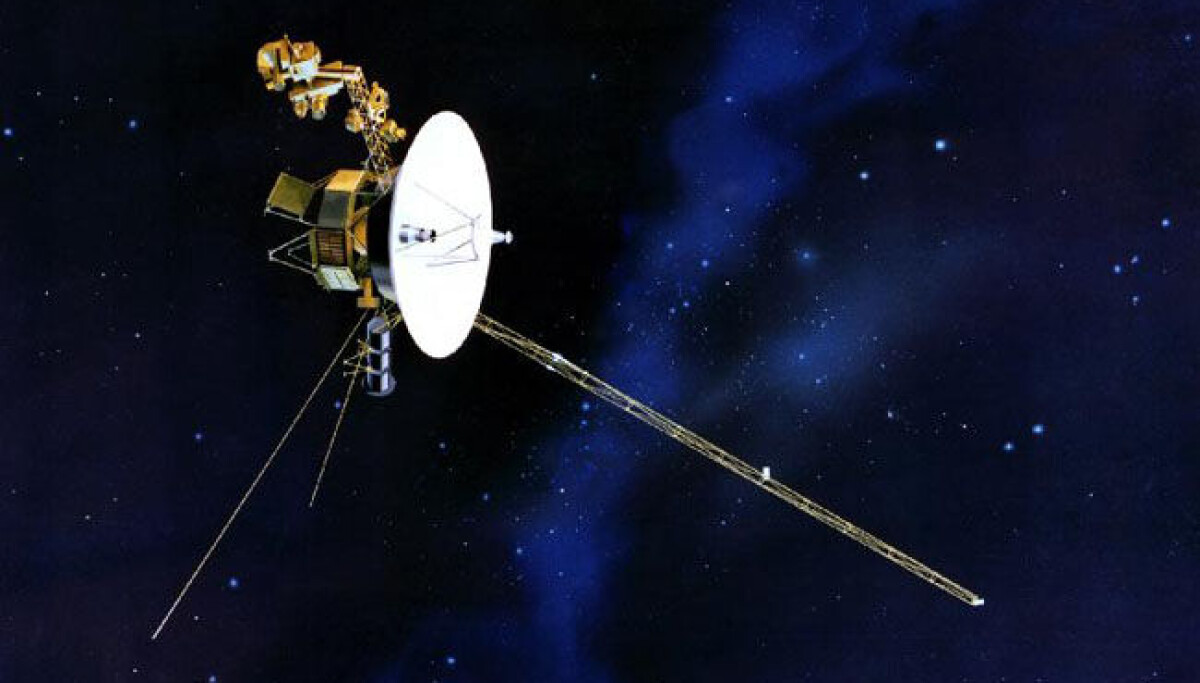
凯特尔旅行者号成像团队成员加里·亨特博士加入《注册报》的凯特尔播客,讨论他在任务中的角色,随着探测器接近地球一光日的距离。自旅行者号探测器从地球发射出发,踏上探索外太阳系的任务以来,已经过去了近半个世纪,而它们仍在运行。
KETTLE Voyager imaging team member Dr. Garry Hunt joins The Reg's Kettle podcast to talk about his role in the mission as probe approaches one light day's distance from Earth It's been nearly half a century since the Voyager probes launched from Earth on a mission to explore the outer solar system, and they're still running.
您可能熟悉旅行者号的一些标志性图像,比如苍白的蓝点,以及它对外行星的肖像。
You can You're probably familiar with some of Voyager's iconic images, like the Pale Blue Dot and and its portraits of the outer planets.
《注册报》广告 这些照片和观测如果没有旅行者号的成像团队是不可能实现的,该团队的八名成员来自世界各地的科学家。英国唯一的代表加里·亨特博士加入本期《凯特尔》播客,讨论他在旅行者号项目中的角色、任务的未来,以及英国、美国及更广泛地区的科学状况。以下是经过轻微编辑的文字稿:布兰登(00:01)大家好,欢迎收听《凯特尔》播客的又一期节目。
REG AD Those photos and observations wouldn't have been possible without Voyager's imaging team, eight members of which were selected from scientists from around the world. The UK's sole representative, Dr. Garry Hunt, joins us on this episode of The Kettle to discuss his role in the Voyager program, the future of the mission, and the state of science in the UK, US, and beyond. A lightly edited transcript is included below: Brandon (00:01) Hi everyone, and welcome to another episode of The’s Kettle Podcast.
我是主持人布兰登·维利亚罗洛,本周我们为大家准备了一期非常特别的节目。我们将暂时摆脱人工智能的末日论调和硅谷的荒唐,去谈论一些具有更深远历史意义的事情和人物。旅行者号太空任务将在明年迎来探索太阳系及更远地区五十周年的纪念。今天我们邀请到《注册报》记者理查德·斯皮德以及我们非常特别的嘉宾——英国天体物理学家加里·亨特博士,他曾是旅行者号原始成像团队的成员。
I'm your host, Brandon Vigliarolo, and we have a very special episode for you this week. We're gonna step away from the doom and gloom of AI and the silliness of Silicon Valley to talk about something and to someone of considerably more historic importance. The Voyager space missions will mark fifty years of exploring the solar system and beyond next year. With us to talk about this is Reg Reporter Richard Speed and our very special guest, British astrophysicist Dr. Garry Hunt who was a member of the original Voyager imaging team.
非常感谢亨特博士今天的到来。我今天要把主持权交给理查德,因为你们两人在为《注册报》撰写故事方面有着深厚的渊源,我很期待听到他将向您提出什么问题。所以,理查德,请开始吧。
Thank you so much, Dr. Hunt, for coming on. And I'm gonna turn this over to Richard today, since you two have such a history together working on stories for The Reg, and I'm excited to hear about what he's going to pick your brain about. So Richard, take it away.
理查德·斯皮德(00:46)嗯,亨特博士,我们多年来一直在讨论旅行者项目,但对于那些不了解它的人,我想请您概述一下这项任务的内容,我知道这要求很高,同时也想了解您在其中扮演的角色以及过去所扮演的角色。
Richard Speed (00:46) Well Dr. Hunt, we've spoken a lot about the Voyager project over the years, but for anyone who's not aware of it, I wonder if you could summarize the mission, which is, I know, a big ask, and also what your role in it is and was.
加里·亨特(01:00)嗯,确实如此。从某种意义上说,这是一项独特的任务,因为每176年,主要行星——木星、土星、天王星和海王星——几乎会排成一条直线。我们想探索外行星,因为我们以前从未去过那里。我说的是20世纪70年代,60年代末、70年代。因此,那是一个未知的世界。我们认为,主要行星是理解太阳系起源——事实上,也是生命起源的关键,因此派遣太空任务前往那里成为首要任务。
Garry Hunt (01:00) Well indeed, it's a unique mission in the sense that every 176 years the major planets Jupiter, Saturn, Uranus, Neptune, line up virtually in a straight line. And we wanted to explore the outer planets 'cause we've never been there before. I'm talking in the 1970s, late 1960s, '70s. So this is an unknown world. We thought that the major planets were keys to understanding the origin of the solar system, indeed the origin of life, so sending space missions there was a priority.
但这必须以非常经济的方式完成。由于行星排成一条线,这意味着我们可以以最快的方式到达那里,所需燃料更少,而且这是最佳的途径。于是,机会来了,NASA资助了一项任务,在这独特的时机发射两艘航天器前往主要行星,时间是在20世纪70年代中期,也就是1977年。
But it needed to be done in a very economical way. With the planets lined up, that meant we could get there in the quickest way, requiring less fuel, and it would be the best way of going about it. So the opportunity came and NASA funded a mission to send two spacecraft at this unique time, which was in the mid '70s, 1977, to the major planets.
NASA发出了投标邀请。他们选定了十种仪器。成像曾作为一个概念被提出,但他们希望组建一支真正的科学家团队,而不是天文学家,也不是基础天文学家。他们明白这是一个进行真正详细科学研究的机会——真正的物理学、真正的化学,以及对发生了什么的整体理解。因此,他们在寻找一个跨学科的人员团队。他们从投标邀请中选出了八人,我了解到当时有近一千人被提出,而在其中八人之中,我被选中了。
NASA sent out an invitation to tender. They selected the ten instruments. Imaging had as an instrument in concept had been suggested, but they wanted a team of real scientists, not astronomers, not basic astronomers. They understood this is a chance to do real detailed science, real physics, real chemistry, the whole understanding of what went on. So they were looking for an interdisciplinary group of people. They selected eight people from invitations and I gather there were about nearly a thousand people proposed and of those eight I was chosen.
我突然发现自己处于这样一个令人难以置信的境地:我的任务是代表大气物理学领域,去研究各大行星的物理特性与气象现象。这无疑是一个探索外行星、了解我们为何要前往木星、土星、天王星和海王星的好机会。然而,当时的资金非常紧张;当时的总统是尼克松,我们的预算仅够支持前往木星和土星的任务。因此,我们正在开拓全新的研究领域。
So I decided I suddenly found myself in this incredible position. I'm there to represent atmospheric physics. I want to understand the physics, the meteorology of the major planets. So here is an opportunity to explore the outer planets to learn about why we wanted to go to Jupiter, Saturn, Uranus, and Neptune. However, funding was tight. The president at the time was Nixon, and we only had funding as far as Jupiter and Saturn. So we were treading new territory.
在任务计划初步确定的时候,我们还尚未穿过小行星带——那么第一个问题就是:我们的探测器真的能够抵达那些遥远的天体吗?要知道,“先锋号”探测器才刚刚在20世纪70年代初发射升空,它们虽然成功穿越了小行星带,但也引发了许多未解之谜。我属于成像团队,这个团队里的成员个个都非常出色(我敢说他们都是各自领域的“专家”):从卡尔·萨根到气象学家维尔恩·苏奥米,再到布拉德·史密斯,他们都是该项目的核心成员。
At the time the mission was sort of decided, we had not been through the asteroid belt. So the first question was: would the spacecraft even get that far? And of course the Pioneers had just been launched at the beginning of the '70s and they managed to get through and raised a lot of questions. So I was part of the imaging team, this amazing set of what I will call prima donnas, because we all were. They were from Carl Sagan to Vern Suomi, who was a meteorologist, to Brad Smith, a whole collection of people.
我们的职责包括设计成像系统、选择合适的相机型号,以及参与制定整个任务的飞行轨迹等各个方面。
And we had to design the imaging system, the cameras, and be part of the organization that developed the choice of trajectories and all the other facets of this mission.
换句话说,我们必须同时评估这项任务所伴随的风险与潜在的回报——这确实是一项重大的责任。为了让大家更好地理解当时的情况:我在1972年12月才接到NASA的通知,确认自己被选中参与这项任务;我们的首次任务会议是在1973年2月召开的,而我们必须在1977年夏天之前完成探测器的发射工作。发射窗口仅有短短的十天时间,因此这无疑是一项对精度要求极高的任务。
In other words, we had to understand the risks as well as the potential rewards that came from it. So it was a big responsibility. And to put the whole thing in real context, I learnt in December '72 from NASA that I'd been selected. We had our first mission meetings in February of '73, and we had until the summer of 1977 to get the spacecraft launched. And the window for launching was ten days. So this was really a big precision job.
虽然这项任务肩负着巨大的责任,但也带来了许多机会:不仅能够开展科学研究,还将我在英国收集到的数据用于推动英国的行星科学研究。这确实是一个开启新认知、探索新世界的重大契机。正如我们多年来所见证的那样,我们的观测成果为人类科学史留下了重要印记。
So large responsibility and had many opportunities, not only to do the science, but the work that I was doing when I took the data back to the UK was to actually serve as a trigger for planetary research within the UK. So this really was a major major part of a new world, new understanding. And as we have learned over the years, we have made history and just about all the observations we've made.
好吧,太好了,谢谢。也就是说,正如您所说,它已经发布了半个世纪,自从航天器于50年前发射执行任务以来。您说,它们去了木星、土星、天王星、海王星等地方。我只是想知道,您认为它们为什么能坚持这么久?因为这真的太不可思议了,若真正思考的话。
Okay, great, thank you. So, I mean, as you said, it's been coming out for half a century, 50 years since the spacecraft were launched on their mission and they've been, as you say, Jupiter, Saturn, Uranus, Neptune, and so on. I was just wondering, why do you think they've lasted for so long? Because it's just incredible, really if you think about it.
首先,我要坦白说,喷气推进实验室(JPL)的工程师们是卓越的。我们遇到了一些小插曲,但他们都克服了。首先,我们也说我们要一个航天器。它将前往未知领域。我们不知道它能持续多久。可靠性是关键。因此它是围绕“海盗号”设计的,这些“海盗号”是早期前往火星及飞越金星任务的基石。这也是第一点。
Well, firstly I will put my hand up and say that the engineers of JPL are exceptional. We've had a few hitches and they've overcome it. First of all, we also said we want a spacecraft. It's going to unknown territories. We don't know how long it's going to last. Reliability was the key. So it was built around the Mariners, which have been the bedrock of the earlier missions to around Mars and flying by Venus. So that was the first thing.
因此,许多方面的设计都源自六十年代中期的设备。因此,能够在发射50年后仍飞行,使用当时已经在到达目的地前10年就已过时的设备,这更令人兴奋。这真正是可靠性的体现,而可靠性是瓶颈所在。当然,我们还设计了冗余结构。我们清楚,如果出现问题,必须能够轻易应对。既然它以每小时三万英里的速度飞驰,不可能像在地面上那样出去维修。
And so many of the aspects of it were built from equipment from the mid-sixties. So the issue is even more exciting to think that here we are 50 years after launch flying a spacecraft with equipment which was already 10 years old by the time we got it there. So this really is an example of reliability, which is the bottleneck. And of course, the other aspect of it we built in redundancy as well. So we knew that, if things went wrong, we had to find a way of easily overcoming it. As it's drifting away at the speed of thirty thousand miles an hour, you can't just sort of go out and repair it.
必须能够在航天器在运动状态下完成操作。因此,内置了可靠性冗余,以及周密的规划,还有那些至今仍在做着令人难以置信事情的绝佳工程师。
You've got to be able to do things while the spacecraft is in motion. So there's a certain amount of redundancy, built in reliability, incredibly good careful planning, absolutely brilliant engineers who to this day are doing the most incredible things.
嗯,我必须承认,我同意他们的观点。在与目前的“旅行者号”(Voyager)团队交流后,我发现他们确实是一群非常出色的专业人士。他们似乎正在竭尽全力让这艘航天器继续运行下去。虽然“旅行者号”目前依靠放射性热电发电机(RTGs)提供动力,但这些发电机最终会耗尽能量,导致航天器无法继续运行;不过他们应该能够让航天器持续运行到2030年代,甚至更久。
Well, yes, I have to say, I agree, having spoken to the current Voyager team, they are a bunch of very impressive individuals. And they seem to keep eking out more and more life from the spacecraft. I know it's powered by RTGs, which will eventually expire and there won't be enough power to keep it going. But it seems they'll be able to continue well into the 2030s, maybe even beyond. I mean, what do you think is going to end the mission because I mean it must be coming up.
那么,是什么会真正终结这次任务呢?是硬件故障吗?这些年来确实发生过一些航天器故障;还是其他更平凡的原因(比如资金短缺)呢?
Do you think it'll be a hardware failure? We have had some spacecraft failures over the years or do you think it's going to be more prosaic? Perhaps it'll be just a lack of funding.
从物理学角度来看,当航天器距离地球越来越远时,信号强度会按照距离的平方成比例减弱,因此目前接收到的信号已经非常微弱了。不过,多亏了像戈德斯通(Goldstone)、马德里(Madrid)和堪培拉(Canberra)这样的深空通信站,我们才能继续与“旅行者号”保持联系。此外,“旅行者号”上还配备了核反应堆(利用钚作为燃料),但这部分能源也在逐渐减少——每年能量都在流失。
Well, if you go back to our elementary school physics, we know that as it moves away the signal strength disappears like one over the square of the distance, so it's getting pretty weak. It's incredibly weak. The brilliance of the deep space network, Goldstone, Madrid, Canberra, that's key. Furthermore the power on board and we have our own nuclear power plant on board, which is decaying plutonium, which is the key aspect of the spacecraft. That's getting less and less.
预计到2035年左右,信号强度会变得极其微弱,我们可能就无法再接收到任何信号了。不过,这是否意味着任务会提前结束呢?这其实就涉及到政治因素与科学、工程技术的权衡了。
We're losing several watts per year. There will come a time when the signal is literally so weak we can't pick it up. So that is one thing that we predicted about 2035. Could it become out of touch before then? Well, that's then politics versus science and engineering.
当然,维持“旅行者号”的运行需要资金;但鉴于目前科学预算不断被削减,我们担心一旦明年夏天超过50年的期限,政客们可能会说:“你们的任务已经完成了,够了。”我希望这种情况不会发生。我个人希望在未来几年内,深空监测技术能有新的进展,让我们能够继续与“旅行者号”保持联系。或者,这真的只是因为距离太远、背景噪音太大而无法继续接收信号呢?
And yes, it costs money to keep this thing running, but the way in which science budgets are being hacked at every moment, we are worried that once we pass our our big date of fifty years next summer, that perhaps that the politicians will say: You've had your time, enough is enough. I really hope that's not the case. Personally I hope that there's some development in deep space monitoring over the next few years that would enable us to keep picking it up beyond that. Or do you think it's simply a matter of distance and background noise that it would be unreachable?
信号极其微弱。而且航天器本身的电量也不足以实际为其供电。他们必须采取某种形式的加热。在那边相当寒冷。或者实际上所有设备都已关闭。他们刚刚利用船载电源系统完成了一项重大操作。他们确实已经做了他们能做的一切。我们估计到2035年,我们仍然能够——那时大约就是地球上任何设备都无法接收到该信号的时候。因此,那就是我们预计任务将结束的时间,只要我们能让政客们不要插手。
The signal is incredibly weak. and there'd be insufficient power in the spacecraft to actually power it. They've got to have some form of heating. It's pretty cold out there. Or virtually everything has been turned off. They've just done a major activity with the onboard power system. They literally have done everything they can. We reckon to 2035 we will still be able – that'll be about the time it'll be too weak for anything on Earth to be able to pick it up. So that literally is the time we were anticipating the end would come, if we can keep the politicians out of the way.
嗯,绝对如此,我的意思是,我认为正如我们最近所讨论的,它现在正接近一光日的距离,这样才能让人对这些天体目前有多远有一个概念——即发送一条指令给航天器需要整整一天,而指令返回也需要一天。
Well, absolutely and I mean, I think as we spoke recently it's approaching a one light day to kind of get a feeling of how far away these things are now, where it takes an entire day to send a command to spacecraft a light day for the command to come back.
嗯,我认为问题在于它现在相距一光日。现在如果我要给你发送一个消息,假设我在和你说话,而你正在旅行者号上。我现在开始和你说话,你要等24小时才能收到我的消息,然后我们再发送回去也需要24小时才能到达。你能想象在这种条件下进行操作吗?这是一个非常重要的因素。这是我们目前能够记录到的、任何人造物体曾达到的最远距离。
Well, I think the issue is it's one light day in distance. Now if I'm sending you a message, suppose I'm speaking to you and you're on Voyager. I start talking to you now, it's 24 hours before you get my message, then it's 24 hours before we send it back again. Can you imagine operating like that? This is a very significant factor. This is the furthest anything it has ever got that we've been able to record.
旅行者2号大约要到2030年才能到达那里,我认为是这样。因为它走的是不同的轨道。但这些距离确实十分遥远。在此之前从未发生过这种情况。实际上,如果您想知道英国时间,这一事件将发生在11月18日上午10点06分[太平洋时间02点06分,东部标准时间05点06分]。所以届时请看一下您的手表,说这就是旅行者1号所在的位置。
Voyager 2 will not get there until about 2030, I think it is. Because it's on a different path. But these are immense distances. So it's never happened before. It actually occurs, if you want UK time, on the 18th of November at 10.06 in the morning [0206 Pacific Time, 0506 EST]. So look at your watch when that time comes up and say, that's where Voyager 1 is.
我必须承认,和喷气推进实验室团队交谈时,再次强调,我们从事技术工作,想到你们会向航天器发送指令,却要等到第二天或一两天后才能知道指令是否生效,到那时它可能已经对航天器造成了严重后果,而此时再想修复就太晚了。我实在无法理解这种风险分析和风险评估,而你们必须进行这种分析。
I must admit, speaking to the JPL team, and again, we work in technology, the thought of the fact you would send a command to the spacecraft, you won't even know if it's worked until the following day or a day or so later, at which point it could have done something awful to the spacecraft and it's too late to fix it. I just can't get my head around that kind of risk analysis and risk assessment, which you must do.
事实上,我们确实遇到过这种情况,因为你们可能记得,几个月前,他们不再响应信号,后来发现天线实际上偏离了目标方向,导致戈德斯通无法接收到信号,但他们设法找到了重新对准天线的方法,使其能够重新通信。但还有另一个问题。所有用于这台极其简陋计算机的代码——其性能甚至不及我佩戴的Apple Watch——都是用汇编语言编写的。
Well, we've we've had that situation occur because you probably remember several months ago, they wasn't replying to signals and they discovered that the dish was actually pointing slightly away so it could not be picked up in Goldstone, but managed to find a way of turning it around so it could actually recommunicate. But there was another problem. All the codes for the very, very poor computer which actually has less power in it than I have in my Apple Watch I'm wearing. They were written in assembler code.
而那些回溯到计算机早期的人都知道,汇编语言是最基础的代码之一。喷气推进实验室里没有人有这方面的经验。有人已经退休,但愿意返回来帮忙寻找这些代码。所有内容都记录在纸片上。于是,这变成了一场全新的挑战。但他们凭借这份专业知识和出色的文档,最终成功解决了这个特定问题。
Well those people who go back to the early days of computing, that is one of the very basic codes. There was nobody in JPL who had that experience. Somebody had retired and was willing to come back and find them. Everything was written down on pieces of paper. So it was a whole new ballgame. But they used that expertise and the excellent documentation and to actually resurrect that particular problem.
这真是太棒了。亨特博士,我想请您回忆一下,当时任务显然正在进行,成像部分仍在运行的时候。我是说,对您而言,什么是特别的亮点?
Now that's wonderful. Dr. Hunter, I wonder if you can cast your mind back to your time when the mission was obviously doing the, when the imaging portion of the mission was still running.
嗯,如果你想知道有史以来最令人惊叹的“照片”是什么,那一定会让你大吃一惊——那其实只是一个小小的蓝色点而已。但当我回想起我们在海王星轨道上观测时所看到的所有行星的景象,然后聚焦到那个极其微小的光点上时,我意识到那就是地球,那就是我们人类所在的星球。在浩瀚的宇宙中,我们显得如此渺小,只不过是星辰大海中的一粒尘埃罢了。
I mean, what was a particular highlight for you? Well, if you want to know what was the greatest picture ever taken, this will shock you, it's the little blue dot. But I think that one looking back at the family of all the planets when we were in the orbit of Neptune, and then focusing on and finding that little tiny speck, that's the Earth. That's us. We were insignificant, we were just a speck amongst the stars. So that was particularly incredible. But going back into the more physics side of it we've got situations like we found Jupiter had a ring.
这一发现确实令人难以置信。从物理学的角度来看,我们的探索成果还有很多:我们发现木星拥有环系,Io卫星上存在火山;当我们抵达土星时,我们揭示了其环系的真实结构;我们首次观测到了泰坦卫星;接着是天王星,它的磁场非常奇特(甚至偏离了中心位置);我们还发现了天王星的一颗卫星米兰达——这颗卫星的表面布满了高达15米的悬崖。
We discovered that Io had volcanoes. We weren't expecting it. We go to Saturn and we find the structure of the rings. We had a chance to look at Titan for the first time and then we get to Uranus and then we find the structure - good grief – the magnetic field is peculiar, it's off center. And we look we look at Miranda [a moon of Uranus], which it's clear is a reassembled satellite with cliffs which are fifteen meters high.
当我们进一步探索海王星时,又发现了那里存在强烈的天气系统以及卫星上活跃的氮气喷流。这一切都充满了未知与谜团。让我感到特别震撼的是:几乎每一本关于太阳系和行星的书籍都会提到“旅行者号”的观测成果——我们确实创造了历史。这简直就像是记录人类行星探索历程的“贝叶挂毯”一样。
And then go one step further to Neptune and find that's got weather systems, the fastest winds in the solar system, and active nitrogen geysers on one of its satellites. Everything was a puzzle. And one of the things I find quite incredible, every book I pick up with the solar system and the planets, it comes to the Voyager observations, we made history. This is almost like the Bayeux Tapestry, I guess, of a planetary exploration.
没错,这确实非常令人兴奋!每天、每个月、每年都有新的发现,而这些发现都是人类之前从未见过的;我无法想象那该有多令人激动……而且现在他们仍在继续探索,仍在从数据中寻找新的线索。
Mm-hmm. Absolutely, it's very exciting. It must have been very exciting that almost every day, month or year there was a new discovery, something which no one else had seen before you. I can't imagine how exciting that must have been, or still is, because I gather they're still looking, they're still finding things in the data now.
嗯,我可以确认他们确实如此,因为我们当时有八万张图像,如果你现在统计卫星的数量,当时在旅行者号发射时,土星周围只有几颗十几颗卫星。如今我们已经发现了数百颗。所以这些天体仍在被不断发现。而这也是其中一件令人欣喜的事情,即公民科学意味着每个人都能获取这些数据并参与其中。你可以处理这些数据,你也可以以我们当时只能依靠先进设备才能实现的方式分析这些图像。
Well I gather they are, because we had eighty thousand images and if you do a count of the number of satellites now, we only had a few ten or so around Saturn at the time of Voyager's launch. We're now in the hundreds. So the objects are still being found. And this is one of the other things which is so nice, is that citizen science means that everybody can have access to this data and work with it. You can process the data, you can analyze the pictures in a way we could only do with our sophisticated equipment.
太棒了。说到快速发射和船上的仪器,旅行者号探测器,总会有人问我一个问题。我经常被问到这个。我的意思是,如果你能重新打开这些相机,会发生什么?它们现在会看到什么?根本什么也没有。一片空白。我的意思是,它们当初是为特定的对比度而设计的。它们能被重新打开吗?如果打开的话,你会看到什么?不,它们根本做不到。甚至连自拍都做不到。
Excellent. Speaking of a quick shipment and the instruments on board, the Voyager probes, a question is always asked. It's asked of me a lot. I mean, what would happen if you could turn the cameras back on? What would they see now? Nothing at all. Blankness. I mean, they were designed for certain contrasts. Could they be turned on and what would you see? No, they couldn't do anything. They couldn't even do a selfie.
所以它们被关闭是件令人惋惜的事,但它们完成了非凡的任务。但你想想我们当时不得不做的所有权衡。我想看到大气特征,地质学家想研究表面特征,其他人则想了解电力系统的组成部分。因此,这是一项充满权衡的任务,也是一项运用了惊人才华的任务,但旅行者号带给我们最重要的遗产之一,就是我们如今正在做的事情——分享成果。
So that was a sad thing that they turned off, but it was a marvelous job. But you just think of all the trade-offs we had to do. I wanted to see atmospheric features, the geologists wanted to look at the surface features, other people wanted elements of the power systems as well. So it was a mission of trade-offs, it was a mission of using incredible talent, but one of the most important things that came out of Voyager was this doing what we're doing now, sharing the results.
我们每天早上都举办极其出色的新闻发布会。我们定期与媒体见面,也定期进行电视采访,一切都有条不紊,只是为了让公众及时了解进展。我一直认为,为这项任务买单的纳税人——它花费了8亿美元——相当于每个美国人每年只付8美分,这在性价比方面已经很不错了。我们应该把成果分享给他们。直到今天,我仍然到处去演讲,人们会问我一些基本问题,我很高兴能够把研究成果分享给他们。太棒了。是啊。
We had terrifically good press conferences every morning. We met regularly with the press and we did television, all regularly, just so people kept up to date. I always thought that the taxpayer who had paid for this mission and it cost 800 million dollars, well eight cents per American per year, which is pretty good in value for money. We should share the results with them. And to this day I go around giving talks to people, people ask me fundamental questions and I'm delighted to be able to share the results with them. That's great. Yeah.
现在看当前的情况,NASA以及整个美国航天计划,我显然已经脱离那方面很长时间了,但如今它似乎更加聚焦于商业部门。现在是商业供应商、商业提供商。首先,你认为像旅行者号这样的任务如今还能实现吗?NASA还会尝试这样的项目吗?其次,你对商业供应商所产生的影响有什么看法?
Now looking at the current situation, NASA and the US space program in general, I know obviously you've been out of that for quite some time, but it seems to be much more focused on the commercial sector these days. It's commercial providers, commercial vendors. One, do you think something like Voyager would even be possible now, would even be a thing that NASA would attempt? And what do you make of the impact that commercial vendors are having?
嗯,商业世界已经彻底改变了这一切。我们已经从探索转向了开发。
Well, the commercial world has changed it dramatically. We've gone from exploration to exploitation.
此外,政府在资金使用上的方式也发生了变化——从进行科学分析和真正深入的探索活动,转变为:好吧,我们必须把重点放在国防上,必须把重点放在与经济相关的其他方面。而大多数国家的经济都在挣扎。因此,科学支出目前变得有些棘手。于是商业方面开始寻求回报。如果我参与其中,而NASA的预算正在被削减,那么航天活动的资金就必须来自口袋深的人、投资者。
And also the way in which money is spent by governments has changed from doing scientific analysis and really deep exploratory activities to saying, okay, we've got to focus on defence, we've got to focus on other elements to do with the economies. And most nations' economies are struggling. So science spending is a bit of a delicate issue at the present time. So the commercial side wants return. If I'm in, and NASA's budget is being cut back, and therefore money for space activities has got to come from people with deep pockets, investors.
而现在,如果你是一个投资者,你会希望尽快看到资金回报,并对可靠的预期有一定认识。你愿意投资一个任务,而知道自己可能要等五十年才能看到回报吗?我表示怀疑。
And now if you're an investor, you'll want a return on your money quickly and have some idea of a reliable expectation. Would you invest on a mission where you wouldn't get your return for fifty years? I doubt it.
所以它将以某种形式进行科学探索,但资金有限。你会再次获得类似旅行者号的任务吗?嗯,我希望如此,但情况必须得到改善。我们需要更好的电力系统,我们需要各种不同的做事方式。但请记住,我们在这里谈论的是五十年前发射的任务,它曾前往天王星和海王星,那是在四十多年前。此后再也没有其他任务到达过那里。
So it will be some form of science exploration with a small amount of funding. Would you get a mission like Voyager again? Well, I hope so, but things have got to improve. We've got to have better power systems, we've got to have a whole variety of ways of doing things differently. But take it in mind, we're talking here about a mission launched fifty years ago, which went to Uranus and Neptune, over forty years ago. Nothing else has been there since.
如果你曾经一瞥这些天体,那只是一次快照。这真的是事物发生状况的真实指示吗?我们是否正确地看到了事物?是的,我们正从詹姆斯·韦伯望远镜获得良好的图像,它们正在为我们提供关于它的新图像,但这还不够。因此,我们需要在那儿开展任务,但这些任务不一定来自美国或欧洲,也可能来自中国。
If you've had a glimpse of these objects once, that was one snapshot. Is that a real indication of what takes place? Have we seen things properly? Yes, we're getting good pictures from the James Webb telescope and they're giving us a new picture of it, but that's not enough. So we've got to have missions out there, but they won't necessarily come from the US or indeed Europe, they could well come from China.
中国已经公开表示:我们计划前往天王星。所以谁知道将由谁来实现这一点。但商业与科学之间的平衡已经发生了巨大变化。是啊,过去并没有太多商业工作。而科学方面则取决于政府如何为其提供资金。坦率地说,目前情况相当糟糕。你们觉得呢?
Which has already publicly said: we're planning to go to Uranus. So who knows what's going to do it. But the balance between commercial and science has changed dramatically. Yeah, there wasn't much commercial work in the past. And the scientific side depends on the way governments fund it. And to be absolutely honest, at the present time it's pretty appalling. What do you guys think?
是啊,这甚至让我想到旅行者号任务当时感觉就像是对纳税人的一种期望,对吧?你需要分享这些信息。国家已经为它买单了。我觉得,即使有良好的科学工作在进行,如果它成为期望个人回报的私营产业的一部分,那么它可能不会像以前那样被广泛讨论,也不一定会成为一种国家层面的事情。
Yeah, and it even makes me think about how the Voyager mission felt like an expectation to the taxpayers, right? You need to share this information. The nation has paid for it. And I feel like maybe even if there was good science being done, it might not be as publicly discussed or as much of a sort of national thing if it's being part of a private industry that expects personal returns.
我认为这是个非常好的观点,因为普通人真的很感兴趣。看看媒体到底有多少科学内容被报道。非常少。而这正是令人悲伤的一点,但我们仍然有很多东西需要学习。我们必须保持好奇心。正是这种好奇心推动了人类的进步,而切断它、夺走这些机会是疯狂的。
I think that's a very good point because the average person is really interested. Look how much science really gets covered in the media. Very little. And this is one of the sad things, but there is so much we've got still got to learn. And we've got to be inquisitive. That is how the human race has made progress and to cut it off and to take away these opportunities is crazy.
说到去火星和火星样本返回任务。目前火星上躺着的是美国如此小心翼翼收集的所有岩石,它们已经准备好被未来任务捡起,而NASA并未为此提供资金。因此,中国不太可能去捡起这些样本,把它们带回来说:“我们有这些,我们认为它们是你们的,我们来为你们分析。”这种情况完全有可能发生。
Look about going to Mars and Mars sample return. Lying on Mars at the moment are all the rocks that America has so delicately collected, ready to be picked up by a future mission, which NASA is not funding. So the Chinese will not likely pick it up, bring it back and say, We've got these, we think they're yours, we'll analyze them for you. That could well happen.
我的意思是,资金是一个非常重要的问题,尤其是在科学领域。我的意思是,如果把目光放近一些,看看英国,还有可能的美国,你们对这些国家目前科学的状况有什么看法?相比30、40年前的公众认知,现在的情况如何?
I mean funding is a very important question, particularly around science. I mean looking closer to home and the UK, I mean and also the US perhaps, what do you make of the status of science in this nation, in these nations to date versus the perception maybe 30, 40 years ago?
我认为情况相当糟糕,坦白说。我认为一些令人震惊的错误已经被犯下。
I think it's pretty terrible, to be absolutely honest. I think that some shocking mistakes have been made.
我们曾经试水,建立了一个航天机构。那么我们该怎么办?我们是英国政府,他们把它并入了一个政府部门,我当时就说,大家也都这么认为,这是个荒唐的做法。因为你知道,一旦把它并入政府部门,它就会受制于政府如何调配资源;如果他们关闭或重组这个部门,这个机构可能就会消失,或者其资金可能被大幅调转。
We had stuck our toes in the water and set up a space agency. So what do we do? We were the UK government, they sucked it into a government department, which I immediately said, and so did everybody else, that's a barmy thing to do. Because you know that you've you've actually immediately said by sucking it into a government department, it's at the mercy of the way they juggle around with government and if they close down or reshape a government department, that could disappear, or its funding could be drastically rerouted.
而这就是目前正在发生的事情。我们对它实际上没有真正的控制权。所以我认为,在这个国家,事实上在美国,科学并没有得到适当的资助。在美国,这种反噬相当严重,因为一旦人们开始远离科学,产业也开始远离科学。
And that's exactly what's happening. We have no real control over it. So I think science, quite honestly, in this country and indeed in the United States is not being funded properly. The kickback in the US is pretty serious because as soon as people start drifting away from science, industry starts drifting away from science.
你们的研究、你们的博士学位的资助方式,它有很大的工业成分,而这正受到影响。因此,对于一个高度技术化的世界,我们既没有重视它,也没有以我认为合适的方式去使用和发展它。
And the way your research, your PhDs are funded, it has a big industrial component and that's being affected. So for a world which is highly technical, we are not focusing and not using it and not developing it in a way that I think is appropriate.
在20世纪70年代,我读到过关于英国人才流向美国等其他国家的脑 drain(人才流失)的担忧。我的意思是,您认为现在这种情况是否在某种程度上出现了逆转?也就是说,我们现在看到的是人才流向相反的方向?不是去美国,而是现在欧洲或更东方的地区正在吸引所有的技能和人才,真的如此。
In the 1970s, there was, I read about concerns about a brain drain from the UK to other countries like the US. I mean, do you think that's kind of reversed now in that we're seeing a brain drain going the other direction? Instead of going to the US, it's now Europe or further east that is attracting all the skills and brains, really.
嗯,我认为这是一个非常有趣的问题。我实际上亲身经历过“脑 drain”,你知道的,我就是从牛津被挖出来,去了加利福尼亚。而英国,你知道的,当你看到大学放弃物理系,削减重大项目,缩减科学课程时,还有什么吸引力呢?所以问题在于:未来的科学是什么?它不一定是我职业生涯发展过程中那种科学。它已经因为更自动化的技术运作方式而发生了变化。
Well I think it is a very interesting question. I actually did 'brain drain,' you know, I just plucked out of Oxford and went to California. And the UK is you know, when you've got universities giving up physics departments, cutting back on major projects, cutting about the science program, what's the attraction? So the question is what is science in the future? And it's not the sort of science in a way that my career necessarily developed, It is changed because of the more automated technical ways of operating.
对于欧洲来说,如果你考虑欧洲航天局(ESA),它有着很棒的想法,但其预算取决于每个国家能够提供多少作为其贡献。而我们必须密切关注并认真思考的问题是:国防是我们都必须考虑的一个主要组成部分。
For Europe, and if you take ESA, which has got terrific ideas, but its budget depends on what each country can provide as their contribution. And the issue we have to put our eyes on and think about very carefully is: defence is a major component we've all got to think about.
我们正在谈论太空以及太空是如何被发展的。我们谈到了商业方面,我们谈到了科学研究,但我们没有谈到科学国防。而正是国防方面,未来将投入最大的一笔资金。已经有案例表明,英国的卫星受到了俄罗斯卫星的影响。俄罗斯和中国已经具备在轨道上击落卫星的能力。
We're talking about space and how space is being developed. We talked about commercial, we we talked about scientific research, but we didn't talk about scientific defence. And it's the defence side where the largest slab of money will be going in the future. Where already, UK satellites have been affected by Russian satellites. The Russians and the Chinese already have the ability to shoot down satellites in orbit.
中国人是唯一能够在轨道上加油的人。因此,与国防相关的问题非常严重,我们必须非常担心一颗流氓卫星进入那里。
The Chinese are the only ones able to refuel in orbit. So there are a lot of very, very serious issues to do with defense and we've got to worry a great deal about a rogue satellite getting up there.
嗯,是的,我的意思是,你提到了国防。显然,在最近几周,我们长期怀疑的事情得到了证实,那就是美国证实了它……我不确定是否可以说它在轨道上有武器,也就是说,它们在轨道上有所谓的进攻性卫星。是的。嗯嗯。是的,他们当时表达得相当模糊。是的。
Well, yes, I mean, you mentioned defense. Obviously, in recent weeks, there was confirmation of what we've long suspected, which is that the US confirmed that it had, I don't know if one would say weapons in orbit, that they have, you know, aggressive satellites in orbit. Yeah. Mm-hmm. Yeah, they were pretty non specific. Yeah.
我认为我们可以进一步说,我们已经讨论过登月之类的事情,所有这些都相当有争议,并引发了问题。但如今人们已经在谈论让我们把核电站送入太空,我们可以,你知道的,将其作为轨道空间结构的一部分使用。让我们在月球上建造一个核电站。你想想那实际上意味着什么样的国防影响。很简单。
And I think it is in that we can go one stage further and say we've talked about going to the Moon and such like, all of which is pretty debatable and raises questions. But already people are talking about l let's put a nuclear power station up into space, we can, you know, use that as part of our space structure in orbit. Let's put a nuclear power plant on the moon. You think of the defence implications of what that actually means. Very simple.
嗯,嗯,还有关于轨道上所有碎片的问题,好莱坞一旦进入太空并开始拍电影,这个问题就会变得严重。嗯,我看过《太空堡垒1999》。我知道那一切是如何结束的。
Well yeah well the other the other point about about all the debris up there as well, as soon as Hollywood gets up there and starts making a film, this problem is serious. Well, I've seen Space 1999. I know how that all ends.
嗯,亨特博士,我想最后,希望能以一个更积极的方式结束,但我现在也不太确定了。基于你的经验,你会给一个正在考虑从事科学、太空探索职业的人什么建议?也许它现在没有40、50年前那样的吸引力了,但你认为,对于一个人来说,追求这样的职业是否值得?我的意思是,我们需要这样的人才管道。
Well, Dr. Hunt, I guess finally, on hopefully a more positive note, but I'm not so sure now, what advice would, based on your experiences, would you give to a person who was considering a career in science, in space exploration? It doesn't have the same, perhaps cachet it might have had 40, 50 years ago, but one, do you think it's a worthwhile career for a person to pursue? I mean, we need that pipeline of people.
这是一个非常好的问题。首先我想说的是,我从未拥有过职业生涯,也没有进入太空。那不是我的本意。我可以告诉你,我在攻读第一学位时学习的是数学。我学习的是数学物理。随后我在牛津获得了一项奖学金,这使我得以在哈韦尔的一个计算机研究实验室之间建立联系,并将我的技能从那里带入到牛津的大气物理学研究中,就这样发展下去了。所以它说明了你将要学习的内容,你必须具备的学科。我在它下面划了一条粗红线。
That's a very good question. And the first thing I would say is I never had a career, went into space. That wasn't my intention. I will give you that I read mathematics for my first degree. I did mathematical physics. I then had a fellowship at Oxford, which linked me between a computer research lab in Harwell and took my skills from there into working in atmospheric physics in Oxford and went that way. So it says what you'd be studying, the subjects you've got to have. And I put a big red line underneath it.
毫无疑问,你必须擅长数学。你必须擅长计算机科学,并且必须具备扎实的物理学基础。这就是你将要具备的三个方面。但你也将看到的,也是根本性的,是我们大学结构的戏剧性变化。美国已经拥有极具想象力的教育方式。亚利桑那州立大学和麻省理工学院已经在使用人工智能来重塑教育。当我们谈论的工作以及任何形式的太空探索或其他领域都是跨学科的时候,我们为什么还在按学科孤岛进行教学?
You've got to be good at mathematics, without question. You've got to be good at computer science, and you've got to have a good basis in physics. They're the three things you're going to have. But what you're also going to see, and what's also fundamental, is a dramatic change in our university structures. America already has a hugely imaginative way of going about its education. Arizona State and MIT are already using AI to restructure. Why are we still teaching in silos when the work that we're talking about and any form of space exploration or otherwise is interdisciplinary?
所以在发展你的职业生涯——或者说,至少要具备能够从事该领域工作的技能——太空可以是从律士、医生到科学家的任何角色。如今,众多学科都融入其中。你有了更广泛的参与方式来投入这类项目。但你必须擅长数学,必须擅长计算机科学,并且必须对物理学有良好的理解。就是这样。非常感谢你,亨特博士。是啊,非常感谢你来参加节目。非常感谢你。
So in developing your career, shall we say, or at least having the skills to be able to be employed in it, and space can be anything between a lawyer, a medic, as well as a scientist. A whole range of disciplines are in there now. You've got a much broader approach to be involved in that type of program. But you've got to be good at maths, you've got to be good at computer science, and you've got to have a good understanding of physics. There we go. Well, thank you very much. Dr. Hunt. Yeah, thank you so much for coming on. Thank you very much.
我真的很感激能有机会与一位在外太阳系太空探索历史上如此重要的人交谈。这真的太棒了,能有机会聊天并与我们的听众分享。我们真的希望您喜欢这期特别节目。您知道的,希望下次我们邀请亨特博士时,能分享一些关于太空计划和科学未来更乐观的消息。所以请务必
I really appreciate having a chance to talk with someone who is so important in the history of of the outer space exploration of the outer solar system. It's really fantastic, to have the chance to chat and to share it with our listeners. And to share it with our listeners at The. We really hope you enjoyed this special episode. And, you know, hopefully next time we have Dr. Hunt on, we can have some more optimistic news to share about the future of the space program and science. So be sure to