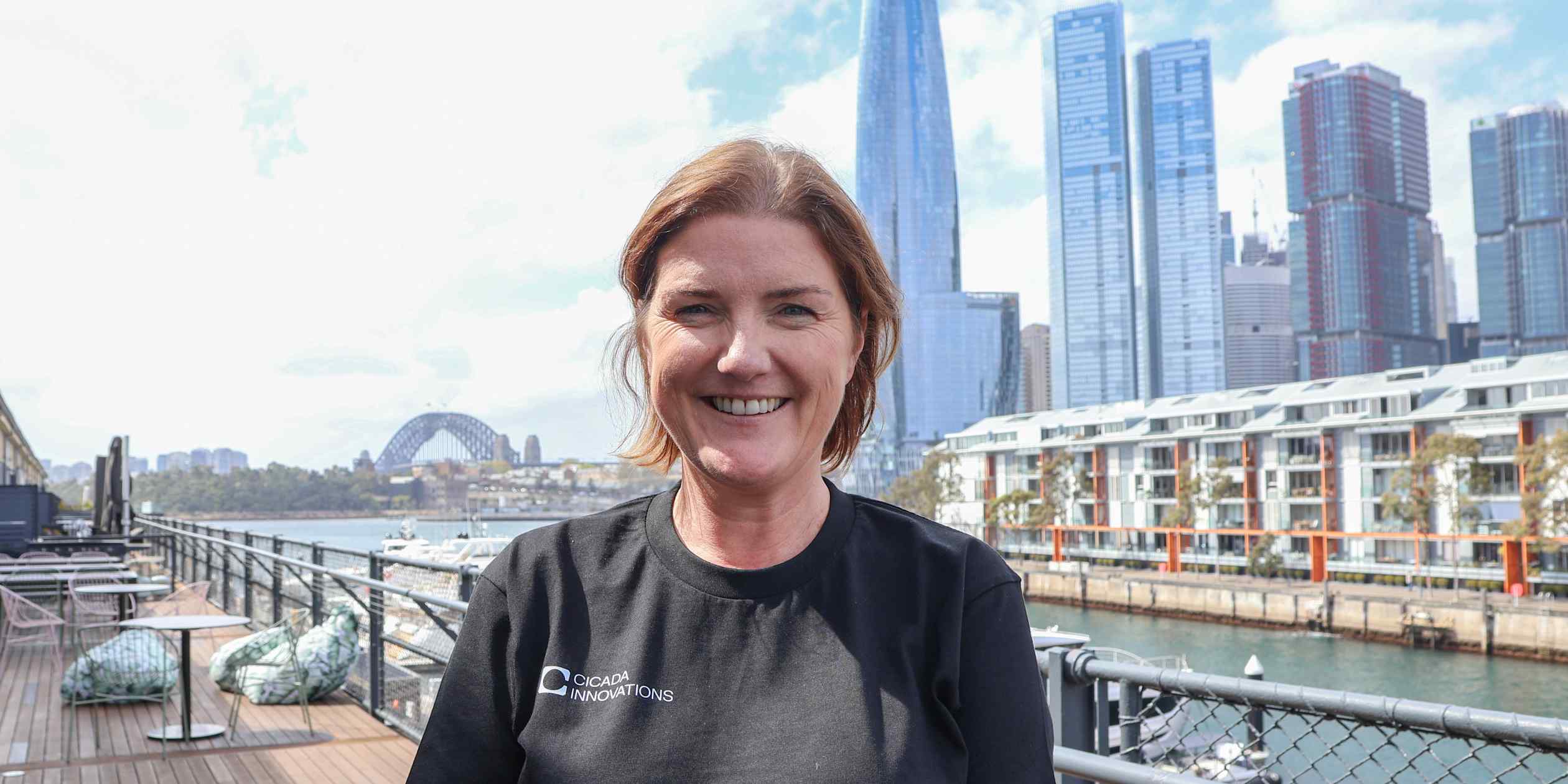
悉尼 — 根据该国领先的初创企业和成长型企业孵化器负责人的说法,澳大利亚具备发展世界领先的深度科技创新的能力,这些创新能够增强其在各行业的主权能力。
SYDNEY -- Australia has the capacity to develop world-leading deep-tech innovations that can bolster its sovereign capabilities across industries, according to the head of the country's leading startup and scaleup incubator.
“作为一个国家,我们需要在本土拥有更多这种能力,以便在全球动荡时期能够获取,”Cicada Innovations 首席执行官丽莎·努南在接受《日经亚洲》采访时表示。“我们是否在生产自己的疫苗?我们是否拥有自己的可再生燃料供应?这就是深度科技的意义所在,几乎所有深度科技都是主权能力。”
"As a country, we need to have more of that capability onshore that we can access in times of global disruption," Liza Noonan, CEO of Cicada Innovations, told Nikkei Asia in an interview. "Are we producing our own vaccine? Do we have our own renewable fuel supply? That's the thing about deep tech, almost all of it is sovereign capability."
“如果你能够从国内市场获取这些技术,然后形成这种飞轮效应——我们在国内采购,它们实现规模化,成长为具有全球竞争力的公司,这有助于改善澳大利亚的贸易条件,并且希望我们能为它们创造条件,使其在下一波创新浪潮中重新投入研发,”她补充道。“于是飞轮转动,规模不断扩大,对澳大利亚的益处也越来越大。”自2000年在悉尼成立以来,Cicada 已支持超过500家深度科技企业。其累计融资额达到65亿澳元(约45亿美元),并实现了超过14亿美元的退出规模。
"If you can source this from your own domestic market, and then have that flywheel -- we buy domestically, they scale, they grow into globally competitive companies, it helps Australia's terms of trade, and hopefully we create the conditions for them to reinvest in R&D for the next wave of innovation," she added. "So the wheel flies, and it gets bigger, and the benefits to Australia are greater." Since its inception in 2000 in Sydney, Cicada has supported more than 500 deep-tech ventures. It has raised A$6.5 billion ($4.5 billion) in funding and achieved over $1.4 billion in exits.
努南表示,澳大利亚的自然资源、广袤的土地、靠近亚洲的地理位置以及成熟的临床试验环境,使该国成为深度科技蓬勃发展的“有吸引力的选择”。
Noonan said Australia's natural resources, vast landscape, proximity to Asia and sophisticated clinical trial environment are conditions that make the country an "attractive proposition" for deep tech to thrive.
但澳大利亚目前存在“规模化问题”,她表示她的公司正致力于解决这一问题。
But Australia currently has a "scale-up problem", one she said her company was endeavoring to solve.
Cicada 汇聚了来自澳大利亚各地的100家初创企业,为创始人提供专用工作空间,包括定制实验室和专用硬件。
Cicada is home to 100 startups from across Australia, providing founders with dedicated workspaces, including custom laboratories and specialized hardware.
她指出的一个问题是,寻求制造实体产品的创新者面临规模扩大基础设施不足的问题。“通常在他们即将进入生产规模或验证生产规模能力的阶段时,他们可能没有足够的收入来承担自己专用设施和设备的资本需求。”Cicada目前在澳大利亚拥有100家初创企业,正通过为创始人提供专用工作空间(包括定制实验室和专用硬件)来满足部分需求。它还提供关于规模扩大、产品验证、知识产权战略和早期收入生成的指导。
One issue she has identified is inadequate scale-up infrastructure for innovators seeking to manufacture physical products. "Often at the stage they're at when they're tipping over to that production scale or the proving production scale capacity, they don't necessarily have the revenue to be underwriting the capital requirements of their own dedicated facility and equipment." Cicada, currently home to 100 startups across Australia, is addressing some of these needs by providing founders with dedicated workspaces, including custom laboratories and specialized hardware. It also offers guidance on scaling up, product validation, IP strategy and early revenue generation.
“澳大利亚在研究产出方面实力超乎其规模,因此接下来就要考虑我们如何将这些研究成果和科学知识转化为对国家具有经济价值的东西,无论是创造高技能岗位,还是如何提升供应链的韧性,以及如何增强我们的经济复杂性?”努南将量子计算发展称为澳大利亚的“真正机遇”。”你可能认为这是未来的事情,但Q-Day可能随时就会到来,”她说,指的是量子计算机变得足够强大,能够破解当前标准公钥加密的时间点。
"Australia punches above its weight in terms of what the research produces, so it then follows the logic of what are we doing to translate the outputs of that research and that scientific knowledge base into things that are economically valuable for the country, whether it's the creation of highly-skilled jobs or how we get more resilience in our supply chains and how we boost our economic complexity?" Noonan cites quantum computing development as a "real opportunity" for Australia. "You think it's something in the future, but Q-Day could be any time now," she said, referring to the point at which quantum computers become powerful enough to break today's standard public-key encryption.
Space CoLAB是Cicada为9月展示澳大利亚深度科技创新而选中的23家初创企业之一,正在研发能够在室温下运行的基于钻石的量子收发器,这些设备可用于对安全通信有需求的领域,如国防、情报和航天。
Space CoLAB, one of 23 startups selected by Cicada for a September showcase of Australia's deep tech innovations, is building diamond-based quantum transceivers that operate at room temperature and could be used in sectors that value secure communications, such as defense, intelligence, and space.
Space CoLAB创始人卡莉·斯科特表示,其量子收发器的设计旨在实现对通信被窃听尝试的即时警报。
Space CoLAB founder Carley Scott says its quantum transceivers are designed to enable immediate alerts about attempts to intercept communications.
“我们知道,各组织和对手正在为国家收集敏感信息,”创始人兼首席执行官卡莉·斯科特对《日经亚洲》表示。“系统正在被入侵,信息正在被窃取和收集,其想法是,等量子计算机出现时,我们就能破解这些信息。”目前,平均需要180天才能发现系统被入侵,但斯科特的收发器在拦截尝试发生时能够销毁信息并立即发出警报。
"We know that groups and adversaries are harvesting sensitive information for nations," founder and CEO Carley Scott told Nikkei Asia. "Systems are being hacked into now, information is being taken and harvested with the idea that when quantum computers come, we'll crack into that information then." Currently, it takes an average of 180 days to detect a system breach, but Scott's transceivers would be able to destroy a message and issue an immediate alert upon an interception attempt.
Space CoLAB的下一步是建造原型机,并在五年内将其部署到实际场景中。她还希望与澳大利亚国防部以及“五眼”情报盟友(包括美国、英国和日本)合作,开发可互操作的技术。
Space CoLAB's next step is to build a prototype and deploy it in real-world situations within five years. She is also looking to collaborate with the Australian defense department and "Five Eyes" intelligence allies, including the U.S., U.K. and Japan, to develop interoperable technology.
“我们能说在澳大利亚拥有这种能力,能够防范量子黑客,保护公用事业、医疗保健或银行等关键基础设施,这很重要,”西卡达的努南表示。
"The fact we could say we've got that in Australia, the ability to guard against quantum hackers and our critical infrastructure like utilities or healthcare or banking, that's significant," Cicada's Noonan said.
阿尔邦是今年入选西卡达Tech23全国展示的另一家初创公司,是一家气候科技公司,正在开发藻类-细菌系统来处理农业食品废水。该处理过程的副产品是生物炭,这是一种富含碳的土壤改良剂,可以帮助农民减少对化学肥料的依赖,同时提高作物产量。
Albon, another startup selected this year for Cicada's Tech23 national showcase, is a climate-tech company developing algae-bacteria systems to treat agri-food wastewater. A byproduct of that treatment process is biochar, a carbon-rich soil complement that can help farmers reduce their reliance on chemical fertilizers, while boosting crop yields.
“化学肥料会发生太多农民无法承受的波动事件,”联合创始人兼首席执行官约翰·菲普斯对《日经亚洲》表示,他指出俄罗斯-乌克兰战争和霍尔木兹海峡关闭等全球性中断事件,限制了运输并推高了国际价格。
"Just too many volatile things happen with chemical fertilizers that farmers can't afford to deal with," co-founder and CEO John Phipps told Nikkei Asia, pointing to global disruptions such as the Russia-Ukraine war and the closure of the Strait of Hormuz, which have restricted shipments and raised international prices.
阿尔邦首席执行官约翰·菲普斯表示,该气候科技公司处理农业食品废水的副产品,为农民提供了一种本土土壤改良方案,而不是依赖进口化学肥料。
Albon CEO John Phipps says the climate-tech company's byproduct from treating agri-food wastewater provides farmers with a local solution to enrich their soil, rather than relying on imports of chemical fertilizers.
“我们想做的是,如果能在农场层面捕捉到这种价值,并本地化这些养分的来源,就能帮助缓解施肥带来的许多风险,让土壤更健康,长远考虑土壤微生物健康,尤其是在我们面临气候变化的背景下,”菲普斯说。
"What we want to do is, if we can capture that value at the farm level, and then localize where these nutrients are coming from, we can help mitigate a lot of the risks that come with applying fertilizer, making your soil healthy, thinking about soil microbial health long term, especially as we're facing climate change," Phipps said.
关于澳大利亚的深度科技创新,西卡达的努南表示,“能够转向本国能力这一点非常重要,而且我们具备这种能力,而且非常充足。”但她补充说,政府和行业需要“在风险承担上更加从容,但要非常聚焦且透明”,以“释放”深度科技在构建主权能力方面的潜力。
Regarding Australia's deep-tech innovations, Cicada's Noonan said, "That ability to be able to turn to our domestic capability is really important, and we have it, we have it in spades." But the government and industries need "to be more comfortable with risk, but in a very focused and transparent way" to "unlock" deep tech's potential in building sovereign capabilities, she added.
“澳大利亚哪里有愿意大规模采用新创新的行业?哪里有拥有采购预算、能够成为这些创新者真正重要首批客户的政府机构?”努南说。“我们不仅需要投资,还需要在澳大利亚本地建立客户基础。”
"Where's the industry that's willing to adopt new innovation here in Australia at scale? Where are the government agencies who have procurement budgets who can be a really important first customer for these innovators?" Noonan said. "We need not just the investment. We need a customer base here in Australia."
“这些问题值得解决,澳大利亚应该有信心,我们确实具备这种能力。但我们的产业结构、商业结构,可能还有部分风险设定,以及国内市场规模,都意味着我们必须非常审慎地支持它。这不是挑选赢家,而是挑选国家需要解决的重要问题,而这正是我们应该加大投入的方向。”
"These are problems so worth solving, and Australia should feel confident that we do have this ability. But our industrial structure, our business structure, probably some of our risk settings, and just the size of our domestic market means we actually have to be very deliberate about backing it. It's not about picking winners. It's about picking problems that are important for the nation to solve, and that's what we should be doubling down on."